Modern European borders superimposed over Europe in 1914 immediately before World War ! – bit.ly/1BCI17c http://t.co/0vADDCvp2l—
Brilliant Maps (@BrilliantMaps) December 12, 2014
Modern European borders superimposed over Europe in 1914
06 Aug 2015 Leave a comment
in defence economics, economic history, war and peace Tags: France, Germany, Russia, UK politics, World War I
The British electorate is almost as right-wing as New Zealand’s
30 May 2015 Leave a comment
People in Britain who bothered to vote: on the whole, as @NickCohen4 points out, fairly Right-wing http://t.co/BFYRBVnray—
Michael Deacon (@MichaelPDeacon) May 30, 2015
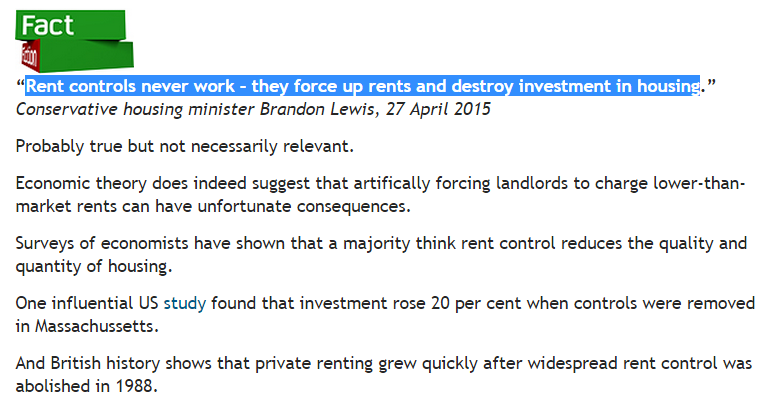
Rent controls never work – they force up rents and destroy investment in housing
24 May 2015 Leave a comment
in economics of regulation, politics - Australia, politics - New Zealand, politics - USA, urban economics Tags: British general election, expressive voting, offsetting behaviour, rational irrationality, rent controls, The fatal conceit, UK politics, unintended consequences
Labour lost the working-class vote a long time ago
13 May 2015 Leave a comment
in economic history, politics - Australia, politics - New Zealand, politics - USA, Public Choice Tags: British Labour Party, Labour Party, Leftover Left, Twitter left, UK politics, withering away the of proletariat


How the Socialists lost the British general election
12 May 2015 Leave a comment
Official: Lazy Socialists Lost the Election order-order.com/2015/05/12/off… http://t.co/zv9CfEjFbu—
Guido Fawkes (@GuidoFawkes) May 12, 2015
Nick Cohen gets to the nub of Labour’s vote winning problem
10 May 2015 Leave a comment
Brilliant paragraph by @NickCohen4 on how the Left hate the English. theguardian.com/commentisfree/… http://t.co/NIoQJUhUA0—
Guy Walters (@guywalters) May 10, 2015
The shy Tory voter versus the shy Labour voter (waiting for those hard left policies) – updated
09 May 2015 1 Comment
in constitutional political economy, politics - Australia, politics - New Zealand, politics - USA, Public Choice Tags: British general election, British Labour Party, expressive voting, Leftover Left, New Zealand general election, New Zealand Labour Party, opinion polls, rational ignorance, rational irrationality, UK politics, voter demographics
The go left young man, go left strategy is a view of many in the Labour Party in New Zealand, Australia and the UK is if they present hard left policies to the electorate, they will mobilise many more votes from people who are currently don’t vote or who are mysteriously parking their vote with the Tory party or other centre parties.

Michael Foot’s attempt at to get out shy Labour voters with a hard left campaign in the 1983 British general election, which lead to his manifesto earning the title the longest suicide note in history.
The eight foot high stone monolith Ed Miliband planned to erect in the garden of number 10 Downing Street, if he could get planning permission, was dubbed the heaviest suicide note in history.
The heaviest suicide note in history http://t.co/1xDQlnnWU7—
Phil Rodgers (@PhilRodgers) May 03, 2015
The New Zealand Labour Party went left at the 2014 general election and for its troubles earned its lowest party vote since the party was founded in 1919.
Central to the strategy of the New Zealand Labour Party in the 2014 general election was mobilising non-voters in their working-class electorates.

The median voter theorem be dammed! The New Zealand Labour Party in the 2014 general election honestly believed that hard left policies would induce these non-voters to vote.
These non-voters are called the missing million by the New Zealand left . Almost one million people did not vote in 2014; 250,683 were not enrolled, while 694,120 were enrolled but did not turn out to vote. Many of these voters were thought to be just parking their vote pending the arrival of true believers to lead the Labour Party if the Left over Left is to be believed! Many of these non-voters are younger voters who generally are more likely to vote left.
The Internet – Mana party also spent an immense amount of the $4 million donated by Kim.com in trying to turn out to the youth voter as well.
Chris Trotter was wise and prophetic on go left young man, go left and the shy Labour voters will come:
[T]he Left has been given an extraordinary opportunity to prove that it still has something to offer New Zealand …..
If Cunliffe and McCarten are allowed to fail, the Right of the Labour Party and their fellow travellers in the broader labour movement (all the people who worked so hard to prevent Cunliffe rising to the leadership) will say:
“Well, you got your wish. You elected a leader pledged to take Labour to the Left. And just look what happened. Middle New Zealand ran screaming into the arms of John Key and Labour ended up with a [pitiful] Party Vote …
So don’t you dare try peddling that ‘If we build a left-wing Labour Party they will come’ line ever again! You did – and they didn’t.”
Be in no doubt that this will happen – just as it did in the years after the British Labour Party’s crushing defeat in the general election of 1983. The Labour Right called Labour’s socialist manifesto “the longest suicide note in history” and the long-march towards Blairism … began.
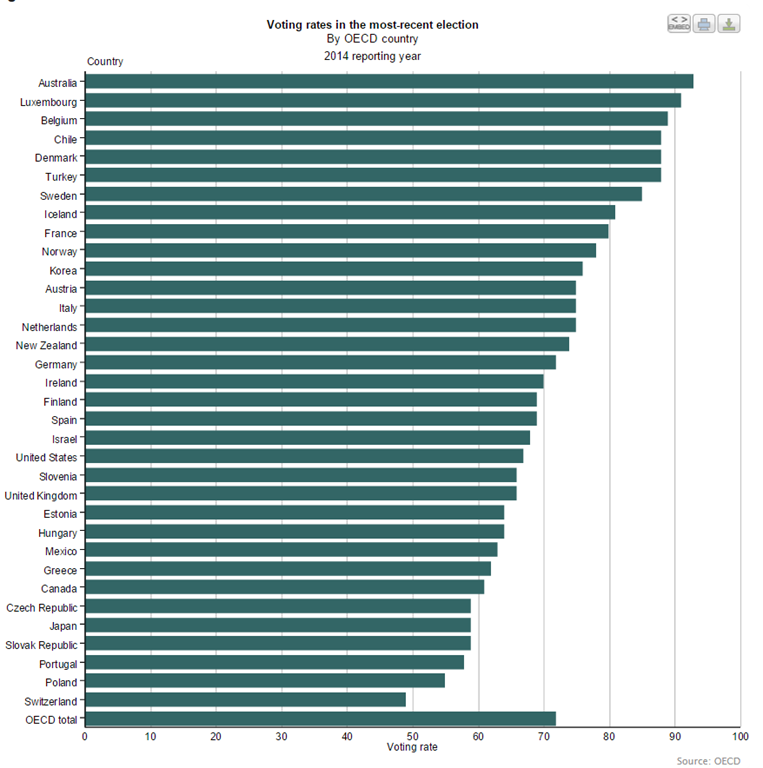
The most obvious flaw in the missing million and non-voter argument where they are waiting for true believers to offer hard left policies is a countries with much higher rates of voter turnouts and compulsory voting are not more likely to have left-wing governments.
There is much more evidence of shy Tory voters rather than shy Labour voters.
Shy Tory voters is a name invented by British opinion polling companies in the 1990s. The share of the vote won by the Tories in elections was substantially higher than the proportion of people in opinion polls who said they would vote for the party.
The final opinion polls gave the Tories between 38% and 39% of the vote – 1% behind the Labour Party. In the final results, the Conservatives had a lead of 7.6% over Labour and won their fourth successive general election.
Because of this turnout of shy Tory voters, the Tories won 3 million more votes than the Labour Party. This 14 million votes was more votes than they or any other British political party is ever won in a British general election, breaking the record set by Labour in 1951.
In a subsequent marketing research port, it was found a significant number of Tory party supporters refusing to disclose their voting intentions both the opinion poll companies, and exit polls.
This shy Tory factor is so large that opinion poll companies attempt to account for it in the weights they assign in their opinion polls surveys.
One of the explanations behind the turnout of the shy Tory vote in the 2015 British general election was a fear that a Labour Party minority government would be be holding to the hard left Scottish nationalists.
A number of British media commentators talked about running into many ordinary people expressing that very fear and they were undecided voters. About 20% of British voters were undecided on the eve the election, which is an unusually high amount.
Ironically, Neil Kinnock, the British Labour Party leader in the 1992 election, warned of a shy Tory factor a few days before the current British general election.
Tony Blair was much blunter a few months before the British general election about the relevance of the median voter theorem to British politics and the future of the British Labour Party. The most electorally successful politician in Labour history said that May’s general election risks becomes one in which a
traditional left-wing party competes with a traditional right-wing party, with the traditional result.
Asked by the Economist magazine if he meant that the Conservatives would win the general election in those circumstances, Mr Blair replied: “Yes, that is what happens.”
The post-mortem by the New Statesman called “10 delusions about the Labour defeat to watch out for” equally blunt about the role of Tony Blair in rescuing British labour from permanent oblivion:
Many of your drinks will be prompted by variations on this perennial theme. Labour accepted the austerity narrative. Labour weren’t green enough. Labour weren’t radical (which has somehow come to be used as a synonym for left-wing).
Given that the last time Labour won an election without Tony Blair was 1974 it’s hard to believe people still think the answer is to move left. But people still do. I sort of love these people for their stubbornness. But I don’t want them picking the next leader.
The shy Tory vote stirred by the fears of a hard left government happened in the 2014 New Zealand general election. On the Monday night for the election that Saturday, the Internet – Mana party board had an hour of television for their Moment of Truth. This included Edward Snowden beamed in from Moscow put forward a whole range of bizarre conspiratorial theories about NASA surveillance of New Zealand and analysis by base in Auckland.
David Farrar reported that in Tuesday night opinion polling, the National party’s party vote rose from 44% to 47%. In the subsequent general election that Saturday, the national party led all night for the first time. It won as many votes as it did in the previous election when it was expected to lose votes because the national party government was going into its third term.
One reason for shy Tory voters is expressive voting. People obtain more sense of identity by proclaiming themselves to be a left-wing voter than they do from saying that they are a right-wing voter.
The expressive aspect of voting is “action that is undertaken for its own sake rather than to bring about particular consequences” (Brennan and Lomasky 1993, 25). There is almost never a causal connection between an individual’s vote and the associated electoral outcome. Hence, a vote is not disciplined by opportunity cost.

With no opportunity cost of how you vote in terms of deciding the outcome, people vote expressively to affirm their identity. Voting is about who and what you boo and cheer for and how you present yourself to the world.

Through the fatal conceit and the pretence to knowledge, a left-wing vote allows people to identify with doing good and changing the world for the better. No point in voting that way if you don’t go around thumping your chest proclaiming yourself as doing good for others by voting Left including telling the truth to polling companies.
Grumpy voters don’t like their parties to be criticised
05 May 2015 Leave a comment
This is – when you think about – both staggering and deeply unsettling http://t.co/MiP9YUvrVN—
Kevin Hague (@kevverage) May 03, 2015
Labour stays silent over gender segregation at party rally
05 May 2015 Leave a comment
in discrimination, election campaigns, gender Tags: British general election, Left-wing hypocrisy, sex discrimination, UK politics
Labour stays silent over gender segregation at party rally specc.ie/1QcJHJf via @spectator http://t.co/Qs2FZV9Z7e—
Steerpike (@MrSteerpike) May 03, 2015
Up to a thousand expected at the great Labour Rally tomorrow at 4.00 being organised by @ansar_ali_khan http://t.co/Paec01bT8c—
Jack Dromey (@JackDromeyMP) May 01, 2015
UK labour has gone one up from the credit card pledges
04 May 2015 Leave a comment
in Public Choice Tags: British general election, Tony Blair, UK politics
Ed Miliband's stone slab. Labour says will be put up in Downing St garden if they win http://t.co/sQ44clVtYq—
lucy manning (@lucymanning) May 03, 2015

In a great irony, the stone monolith in the garden of No. 10 may not get local council planning permission, and more importantly, permission to alter an historic building from Historic England.
UKIP are a bunch of fellow travellers
27 Apr 2015 Leave a comment
in applied welfare economics, constitutional political economy, income redistribution, Public Choice, rentseeking Tags: British election, expressive voting, rational ignorance, rational irrationality, UK politics, UKIP
Should we redistribute money from rich to poor? What voters of each party said. blogs.lse.ac.uk/generalelectio… http://t.co/aqc8yO3OYE—
Martin Hickman (@martin_hickman) April 26, 2015
The UK Greens tax and spending plans
22 Apr 2015 Leave a comment
in income redistribution, Public Choice, public economics Tags: British general election, expressive voting, rational ignorance, rational irrationality, Uk Greens, UK politics

Essay questions for the Royal Economic Society Economics Essay Competition for 2015
19 Apr 2015 Leave a comment
in applied welfare economics, behavioural economics, economics of education, history of economic thought Tags: academic bias, British politics, UK politics
Here are the choices of essay questions for the RES Economics Essay Competition for 2015 beta.tutor2u.net/economics/blog… http://t.co/iurHfRGOd9—
tutor2u Economics (@economicsuk) April 19, 2015
The rapid emergence of Generation Rent in the UK and New Zealand
17 Apr 2015 1 Comment
in politics - New Zealand, urban economics Tags: Generation Rent, housing affordability, land supply restrictions, UK politics, zoning

I thought I should reproduce this chart for New Zealand to show the extent to which a Generation Rent has emerged in New Zealand in the last 10 years.
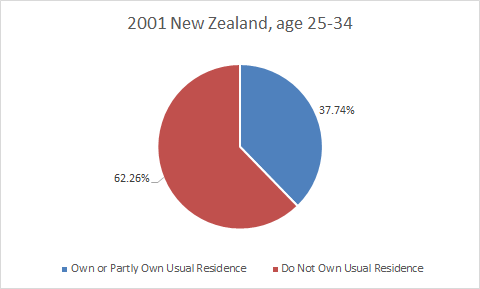
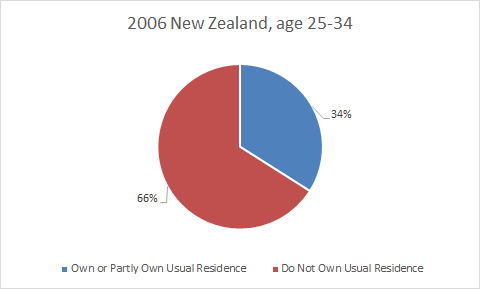
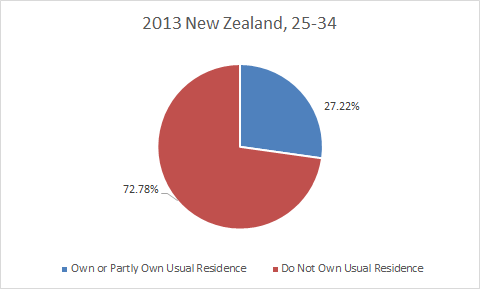
Source: 2013 Census QuickStats about housing.
Might be more interesting to breakdown the pie charts as a single time series for 25 to 29 and 30 to 34 year-olds as the latter are more likely to be settling down and buying a house.
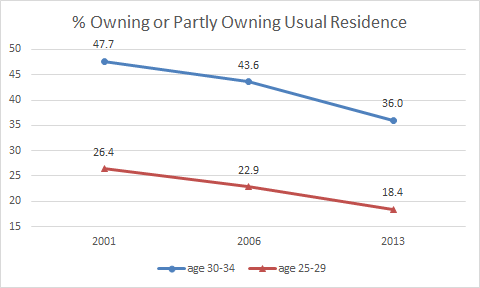
Source: 2013 Census QuickStats about housing.
The number of New Zealanders who own or partly owned their residence in the really 30s has dropped from almost one in two falling towards one in three since 2001. Generation Rent is very much the majority of New Zealanders aged 30 to 34.
For those New Zealanders aged 25 to 29, instead of one in four at least partly owning their residences, as was the case in 2001, the number of those aged 25 to 29 buying or owning their own house has dropped to less than one in five.
Generation Rent for those aged 25 to 29 has gone from a majority tendency to the dominant state for those in their late 20s. In both cases, the emergence of Generation Rent has sped up since 2006.
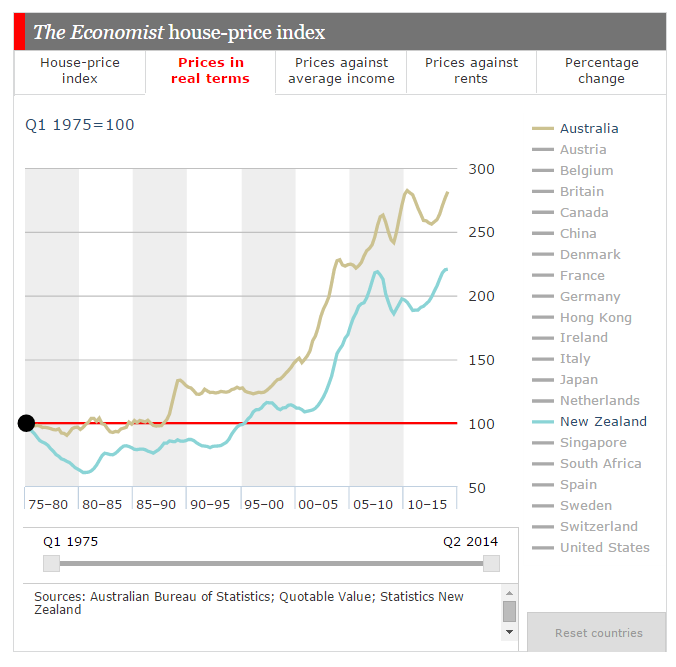
The emergence of generation rent coincided with a sharp increase in prices in real terms in New Zealand while housing prices against rents became far less competitive.
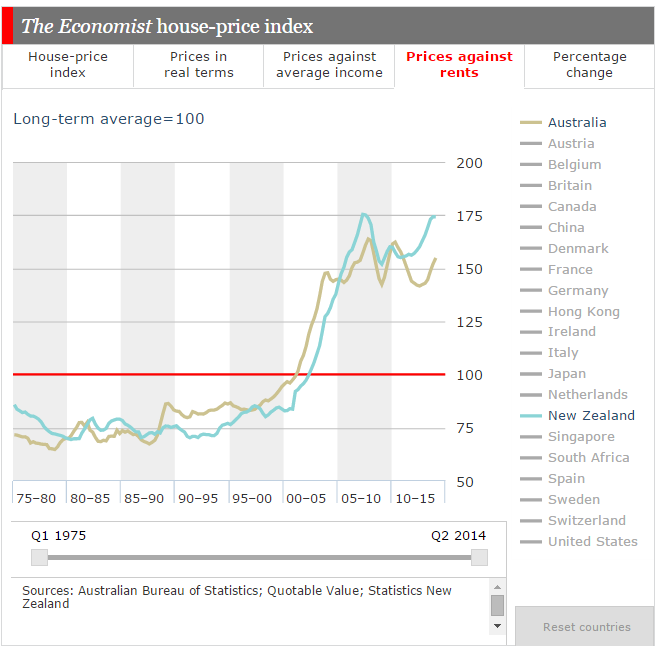
HT: Global house prices: Location, location, location | The Economist.
.
 Utopia, you are standing in it!
Recent Comments