How Mickey Mouse, Donald Duck, Dick Tracy, and other cartoons helped fight World War II: https://t.co/HAq5x0BLMu pic.twitter.com/M9fc2gmr9v
— New York Magazine (@NYMag) October 29, 2015
How cartoons helped fight World War II:
11 Nov 2015 Leave a comment
in economics of media and culture Tags: political propaganda, wartime propaganda, World War II
@jeremycorbyn was von Stauffenberg’s plot to assassinate Hitler a near tragedy?
08 Oct 2015 Leave a comment
in laws of war, war and peace Tags: British politics, Leftover Left, World War II
https://twitter.com/orbyuk/status/651819447326523392was
This is the man David Cameron calls “security threatening, terrorist-sympathising, Britain-hating” #OurCorbyn http://t.co/qAV9KUY0rj—
(@JeremyCorbyn4PM) October 07, 2015
Life in an American concentration camp (Beautiful photos from a Japanese-American “internment camp.”)
01 Oct 2015 Leave a comment
in economics of media and culture, laws of war, Music, politics - USA, war and peace Tags: Civil Liberties, Japan, Rap music, wartime detention, wartime interment, World War II
Temporary rules posted at Britain’s Richmond Golf Club in 1940
25 Sep 2015 Leave a comment
in sports economics, war and peace Tags: Battle of Britain, British history, golf, World War II
Temporary rules posted at Britain's Richmond Golf Club after German bombs hit the course in 1940 http://t.co/7L291a2d8m—
History In Pictures (@historyepics) July 10, 2015
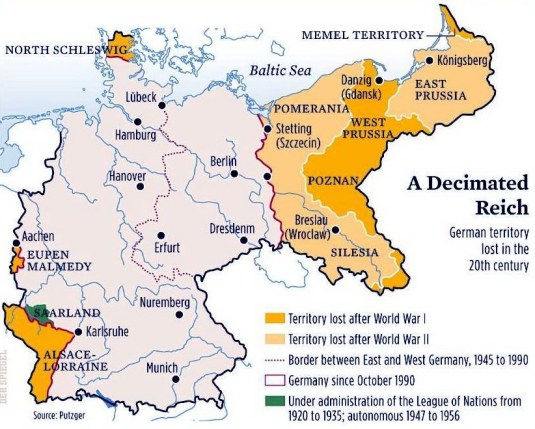
The territorial evolution of #Germany from 1867
21 Sep 2015 Leave a comment
in economic history, war and peace Tags: economics of borders, Germany, World War I, World War II
Hitler and Stalin completed their conquest of Poland today 1939
18 Sep 2015 Leave a comment
in Marxist economics, war and peace Tags: Nazi collaborators, Poland, Russia, Stalin, World War II
HT: Tom Palmer
1st #Churchill speech following the start of the #Blitz
16 Sep 2015 Leave a comment
in war and peace Tags: British history, London, The Blitz, Winston Churchill, World War II
How Senator Bilyk’s Dad found paradise in Australia @Catbilyk
11 Sep 2015 Leave a comment
in economic history, politics - Australia, war and peace Tags: Australia, economics of migration, Poland, Russia, Ukraine, World War II
An old Uni mate’s dad was rounded up by the Nazis in the Polish Ukraine in 1941 and carted off as a slave in factories in Germany. He survived the war. He ended up in a refugee camp. He met and married a Dutch lass.
He did not want to go back to the Ukraine because that part of the Ukraine was now Russian under Stalin. That part of the Ukraine was Polish before the war.
Soviet post-war expansion resulted in border changes, the creation of a Communist Bloc & the start of the Cold War. http://t.co/0Os3EPp6Th—
History Facts 247 (@historyfacts247) August 17, 2015
Australia was the first country to accept them as refugees. He raised a family in Tasmania, working in a factory to support them.
I knew one of his two sons who became economists both at the University of Tasmania and in Canberra. One of his daughter’s was elected to the Australian Senate in the 2007 general election.
After such a rough start in life, my old mate’s dad must regard Australia as paradise for him, his wife and their family.
1st #Churchill speech following the start of the #Blitz
10 Sep 2015 Leave a comment
in war and peace Tags: Winston Churchill, World War II
The Molotov-Ribbentrop Pact was signed #OnThisDay 1939
23 Aug 2015 Leave a comment
in economic history, Marxist economics, politics - Australia, politics - New Zealand, politics - USA Tags: communist party, left-wing traitors, World War II
The Molotov-Ribbentrop Pact was signed #OnThisDay in 1939. Stalin was no less evil than Hitler econ.trib.al/iCowG41 http://t.co/yxr5FCW1xg—
The Economist (@EconEurope) August 23, 2015
The war with Japan is over
15 Aug 2015 Leave a comment
in politics - USA, war and peace Tags: Paris, World War II
"War is Over," U.S. Servicemen and servicewomen, Paris, August 15, 1945. http://t.co/gQwd5lYvvO—
Old Pics Archive (@oldpicsarchive) April 03, 2015
The Power of Propaganda and the Japanese Empire
09 Aug 2015 Leave a comment
in laws of war, Public Choice, war and peace Tags: atomic bombings, credible commitments, game theory, Japan, World War II
The quote of Schuler is an excellent summary of the difficulty of bringing a war to an end rather than give time to regroup and attack again.
Economist Kurt Schuler has a fascinating post on the various currencies that were used in mainland East Asia during World War II over at the Free Banking group blog.
Unfortunately, there are three paragraphs in the post that attempt to take libertarians to task for daring to challenge both the narrative of the state and the narrative of the nation regarding that horrific reminder of humanity’s shortcomings. He is writing of the certainty of the US’s moral clarity when it came to fighting Japan (the post was published around Pearl Harbor remembrance day):
The 1940 U.S embargo of certain materials frequently used for military purposes was intended to pressure Japan to stop its campaign of invasion and murder in China. The embargo was a peaceful response to violent actions. Japan could have stopped; it would have been the libertarian thing to do. For libertarians to claim that the embargo was…
View original post 1,475 more words


Recent Comments