
The public wants parliament to have a central role in legislation, so why does the Retained EU Law Bill enhance the legislative power of ministers?

The Constitution Unit's avatarThe Constitution Unit Blog

The Retained EU Law (Revocation and Reform) Bill is controversial for many reasons – not least the sweeping powers it grants the executive to change a swathe of laws. Lisa James and Alan Renwick discuss recent Constitution Unit survey results, which suggest that members of the public instinctively favour a central role for parliament in law making.

The Retained EU Law (Revocation and Reform) Bill – or REUL Bill – is a complex and controversial piece of legislation. Its focus is the law which arose from the UK’s membership of the European Union. This ‘retained EU law’ is significant in both scale and scope: the government currently lists over 3700 pieces of such legislation, much of it implementing regulatory regimes across a number of major policy domains. Areas such as environmental protection, consumer rights and employment law are particularly affected.

The REUL Bill would automatically repeal most retained EU law…

View original post 1,281 more words

Image

When Did Charles II of England, Scotland and Ireland Become King? Part I.

liamfoley63's avatarEuropean Royal History

From The Emperor’s Desk: Today is the anniversary of the death of King Charles II of England, Scotland and Ireland on February 6, 1685. Instead of doing a usual biography of the king, today I will examine, in two parts, this philosophical question of when did Charles II become king after the execution of his father King Charles I.

May 29, 1660 is the traditional date of the Restoration to the throne of Charles II as King of England, Scotland and Ireland marking the first assembly of King and Parliament together since the abolition of the English monarchy in 1649.

Charles II was born at St James’s Palace on May 29, 1630, as the second but eldest surviving son of Charles I, King of England, Scotland and Ireland, and his wife Princess Henrietta Maria de Bourbon of France, sister of King Louis XIII of France and Navarre, and the…

View original post 604 more words

Image

Economic Recovery from the Pandemic

Jeremy Horpedahl's avatarEconomist Writing Every Day

How well have countries recovered from the declines in the pandemic? It’s actually a bit difficult to answer that question, because it depends on how you measure it. Even if we agree that GDP is the best measure, how do we measure recovery? One possibility is to simply ask whether the country has exceeded its pre-pandemic GDP level. Exactly which quarter to use as the baseline is debatable, but here is a chart that Joseph Politano made for G7 countries using the 3rd quarter of 2019 as the baseline.

But we know that absent the pandemic, most countries would have continued growing (absent a recession for some other reason), so just getting back to pre-pandemic levels isn’t necessarily a full recovery. But how much growth should we have expected? It’s a hard question, but here’s a chart along those lines from the Washington Post, using the CBO’s measure of…

View original post 606 more words

Image

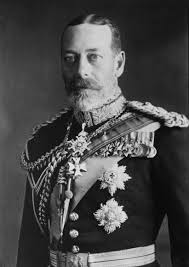
January 20, 1936: Death of King George V of the United Kingdom of Great Britain and Ireland and the British Dominions, and Emperor of India.

liamfoley63's avatarEuropean Royal History

George V (George Frederick Ernest Albert; June 3, 1865 – January 20, 1936) was King of the United Kingdom and the British Dominions, and Emperor of India, from May 6, 1910 until his death in 1936.

King George V’s relationship with his eldest son and heir, Edward, deteriorated in the later years. George was disappointed in Edward’s failure to settle down in life and appalled by his many affairs with married women. In contrast, he was fond of his second son, Prince Albert (later George VI), and doted on his eldest granddaughter, Princess Elizabeth; he nicknamed her “Lilibet”, and she affectionately called him “Grandpa England”.

In 1935, George said of his son Edward: “After I am dead, the boy will ruin himself within 12 months”, and of Albert and Elizabeth: “I pray to God my eldest son will never marry and have children, and that nothing will come between Bertie…
View original post 694 more words

Image

Rise and Fall of the Modern Warming Spike

Ron Clutz's avatarScience Matters

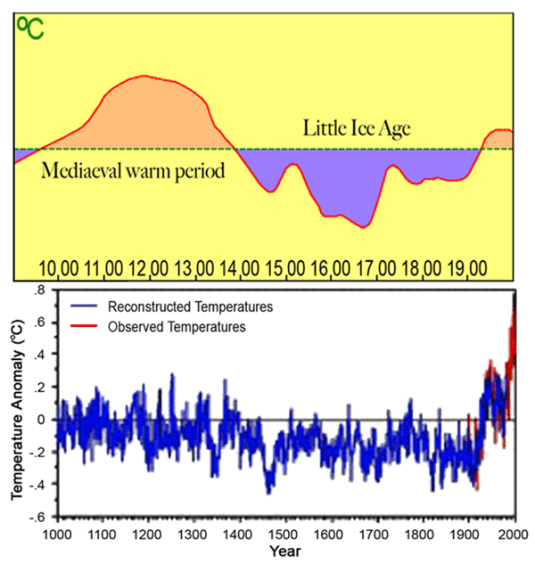
image_thumb9The first graph appeared in the IPCC 1990 First Assessment Report (FAR) credited to H.H.Lamb, first director of CRU-UEA. The second graph was featured in 2001 IPCC Third Assessment Report (TAR) the famous hockey stick credited to M. Mann.


A previous post Rise and Fall of CAGW described the process that began with Hansen’s flashy Senate testimony in 1988, later supported by Santer’s flashy paper in 1996. This post traces a second iteration that ensued following Michael Mann’s production of the infamous Climate Hockey Stick graph in 1998. The image at the top comes from the 2001 IPCC TAR (Third Assessment Report) signifying the immediate embrace of this alarmist tool by consensus climatists.  The message of the graph was to assert a spike in modern warming unprecedented in the last 1000 years.  This claim of a “Modern Warming Spike” required a flat temperature profile throughout the Middle Ages (since 1000…

View original post 3,437 more words

Image

Electric car makers put the brakes on UK production because they are too expensive to sell

Image

The Man who would be King

dirkdeklein's avatarHistory of Sorts

On January 8th 1935, two baby boys were born in Tupelo, Mississippi, to Vernon Elvis and Gladys Love, Jesse Garon Presley and 35 minutes later Elvis Aaron Presley. Jesse Garon was a stillborn, Elvis would live to become the Man who would be King.

Elvis’ first name comes from his father, Vernon Elvis Presley. However, the origins of Vernon’s middle name remain unclear to this day. One theory is that the name was an homage to a 6th-century Irish saint.

Elvis’ first big hit, “Heartbreak Hotel,” was inspired by a newspaper article about a man who killed himself by jumping from a hotel window in Florida. His suicide note read, “I walk a lonely street.”

On his 11th birthday, Elvis was really hoping for a new bike (some say a rifle), but much to his disappointment, was given a guitar instead.

Elvis Presley met Richard Nixon on December 21, 1970…

View original post 230 more words

Image

good point

Image

Tough Year for Investing (with one little-known, totally safe exception)

Jeremy Horpedahl's avatarEconomist Writing Every Day

There’s still a few more days left in the year, but at this point it is safe to say, unfortunately, that it was a very bad year for investing. This Google chart shows most of the bad news. Note: nothing in this post is investment advice about the future, just a summary of the past.

The S&P 500, the typical benchmark for US equities, was down 20%. Bonds, usually a safe haven, were down over 14% as measured by the Vanguard Total Bond fund (more on bonds later).

Gold, the traditional hedge against bad times, was flat. I guess that’s not so bad. But gold is also traditionally considered a hedge against inflation, and inflation will probably end up being somewhere in the range of 5-7% this year (depending on your preferred index). So in real terms, even gold was down. And the supposed new hedge against fiat currency? Bitcoin…

View original post 370 more words

Image

Xmas message

Image

College Major, Marriage, and Children Update

James Bailey's avatarEconomist Writing Every Day

In a May post I described a paper my student my student had written on how college majors predict the likelihood of being married and having children later in life.

Since then I joined the paper as a coauthor and rewrote it to send to academic journals. I’m now revising it to resubmit to a journal after referee comments. The best referee suggestion was to move our huge tables to an appendix and replace them with figures. I just figured out how to do this in Stata using coefplot, and wanted to share some of the results:

Points represent marginal effects of coefficient estimates from Logit regressions estimating the effect of college major on marriage rates relative to non-college-graduates. All regressions control for sex, race, ethnicity, age, and state of residence. MarriedControls additionally controls for personal income, family income, employment status, and number of children. Married (blue points) includes…

View original post 157 more words

Image

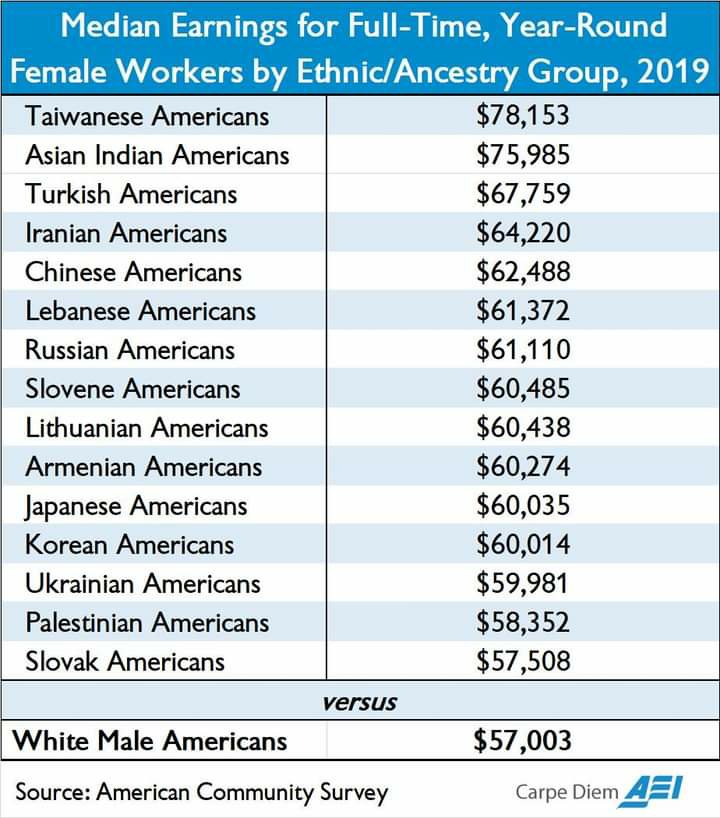
Gender wage gaps

Image

Masks and Covid lockdowns driven by politics not science

Whiskey&Pie's avatarNo Minister

You should read this article by the co author of a book on the pandemic with Matt Hancock, former UK Minister of Health during the pandemic. It is utterly revealing that the reaction was driven by politics from non medical professionals rather than “the science”. It is clear that the US reaction was driven by a similar kind of anti trump political reaction rather than genuine medical sceince.

As early as 3 February 2020 – long before anyone outside the Department of Health was taking the prospect of a pandemic seriously – ministers were told the masks make no significant difference. In April 2020, the New and Emerging Respiratory Virus Threats Advisory Group (Nervtag) reiterated this advice. At the end of that month, the Sage committee said much the same thing, telling ministers that it would be unreasonable to claim a large benefit. An ‘obsessed’ Cummings was the driving force…

View original post 226 more words

Image

#endcoal #globalwarming #climateemergency

Image

Fight for $15? $25? $40?

An amazing case of expressive politics and political rhetoric. I’m not so sure the campaign would have worked if it said fight to double the minimum wage rather than fight for 15

Jeremy Horpedahl's avatarEconomist Writing Every Day

Remember the “Fight for $15”? It’s a 10-year-old movement to raise the federal minimum wage to $15 per hour. While there hasn’t been any increase in the federal minimum wage since the movement began in 2012, plenty of states and localities have done so.

I won’t rehash the entire debate on the minimum wage here, but I will point you to this post from Joy on large minimum wage changes, and here are several other posts on this blog on the same topic. But lately I have seen an increasing call for even larger minimum wage increases, well beyond $15.

A prominent recent call for a higher wage comes from the SEIU, the second largest labor union in the nation. They are calling for a $25 minimum wage in Chicago, where the legal minimum wage just recently crossed $15 last year. Again, without getting into the detailed debates about…

View original post 375 more words

Image

Previous Older Entries Next Newer Entries

Bassett, Brash & Hide

Celebrating humanity's flourishing through the spread of capitalism and the rule of law

Truth on the Market

Scholarly commentary on law, economics, and more

The Undercover Historian

Beatrice Cherrier's blog

Matua Kahurangi

Celebrating humanity's flourishing through the spread of capitalism and the rule of law

Temple of Sociology

Celebrating humanity's flourishing through the spread of capitalism and the rule of law

Velvet Glove, Iron Fist

Celebrating humanity's flourishing through the spread of capitalism and the rule of law

Why Evolution Is True

Why Evolution is True is a blog written by Jerry Coyne, centered on evolution and biology but also dealing with diverse topics like politics, culture, and cats.

Down to Earth Kiwi

Celebrating humanity's flourishing through the spread of capitalism and the rule of law

NoTricksZone

Celebrating humanity's flourishing through the spread of capitalism and the rule of law

Homepaddock

A rural perspective with a blue tint by Ele Ludemann

Kiwiblog

DPF's Kiwiblog - Fomenting Happy Mischief since 2003

The Dangerous Economist

Celebrating humanity's flourishing through the spread of capitalism and the rule of law

Watts Up With That?

The world's most viewed site on global warming and climate change

The Logical Place

Tim Harding's writings on rationality, informal logic and skepticism

Doc's Books

A window into Doc Freiberger's library

The Risk-Monger

Let's examine hard decisions!

Uneasy Money

Commentary on monetary policy in the spirit of R. G. Hawtrey

Barrie Saunders

Thoughts on public policy and the media

Liberty Scott

Celebrating humanity's flourishing through the spread of capitalism and the rule of law

Point of Order

Politics and the economy

James Bowden's Blog

A blog (primarily) on Canadian and Commonwealth political history and institutions

Science Matters

Reading between the lines, and underneath the hype.

Peter Winsley

Economics, and such stuff as dreams are made on

A Venerable Puzzle

"The British constitution has always been puzzling, and always will be." --Queen Elizabeth II

The Antiplanner

Celebrating humanity's flourishing through the spread of capitalism and the rule of law

Bet On It

Celebrating humanity's flourishing through the spread of capitalism and the rule of law

History of Sorts

WORLD WAR II, MUSIC, HISTORY, HOLOCAUST

Roger Pielke Jr.

Undisciplined scholar, recovering academic

Offsetting Behaviour

Celebrating humanity's flourishing through the spread of capitalism and the rule of law

JONATHAN TURLEY

Res ipsa loquitur - The thing itself speaks

Conversable Economist

Celebrating humanity's flourishing through the spread of capitalism and the rule of law

The Victorian Commons

Researching the House of Commons, 1832-1868

The History of Parliament

Articles and research from the History of Parliament Trust

Books & Boots

Reflections on books and art

Legal History Miscellany

Posts on the History of Law, Crime, and Justice

Sex, Drugs and Economics

Celebrating humanity's flourishing through the spread of capitalism and the rule of law

European Royal History

Exploring the Monarchs of Europe

Tallbloke's Talkshop

Cutting edge science you can dice with

Marginal REVOLUTION

Small Steps Toward A Much Better World

NOT A LOT OF PEOPLE KNOW THAT

“We do not believe any group of men adequate enough or wise enough to operate without scrutiny or without criticism. We know that the only way to avoid error is to detect it, that the only way to detect it is to be free to inquire. We know that in secrecy error undetected will flourish and subvert”. - J Robert Oppenheimer.

STOP THESE THINGS

The truth about the great wind power fraud - we're not here to debate the wind industry, we're here to destroy it.

Lindsay Mitchell

Celebrating humanity's flourishing through the spread of capitalism and the rule of law

Alt-M

Celebrating humanity's flourishing through the spread of capitalism and the rule of law

croaking cassandra

Economics, public policy, monetary policy, financial regulation, with a New Zealand perspective

The Grumpy Economist

Celebrating humanity's flourishing through the spread of capitalism and the rule of law

International Liberty

Restraining Government in America and Around the World