Luke Froeb found that his MBA students fell asleep when he lectured on market failure and the standard possible public policy responses. His teaching evaluations were so poor that keen threatened firing him if he didn’t improve.
Froeb repackaged market failures as a business opportunity. His students sat up in class and paid close attention. The end result of his efforts is the best single MBA textbook around.
Inefficiency from market failure implies the existence of unconsummated, wealth-creating transactions.
Froeb told his students that the first to fill these gaps in the market or be the market maker for the missing market stands to profit.
Alert entrepreneurs make money by identifying unconsummated wealth-creating transactions and devise ways to profitably consummate them.
Froeb argued that mistakes are made – business opportunities are missed – for one of two reasons:
lack of information or
bad incentives.
To diagnose a problem, ask 3 questions:
Who is making bad decision?
Do they have enough info to make a good decision?
Do they have the incentive to do so?
The solution is in the answers to these questions:
Let someone else make the decision, someone with better information or incentives.
Change the information flow.
Change incentives
Froeb argues that the art of business consists of identifying assets in low-valued uses and devising ways to profitably move them to higher-valued ones.
Keynesian macroeconomics postulated that the economy slips into recessions for all sorts of reasons such as shifts and turns in the animal spirits and a loss of consumer confidence leading to a fall in autonomous investment and autonomous consumption. A collapse in autonomous investment and autonomous consumption is the Keynesian explanation for the great depression.
Both Keynesian macroeconomics and real business cycle theories, at least at the outset couldn’t explain why there were recessions. Both attributed to them to causes they were yet to explain. Keynesian macroeconomics could not explain what drove the waves of optimism and pessimism that either sharply increased or reduced investment.
Real business cycle theorists attributed recessions and booms to productivity drops in productivity surges, which initially were not explained in themselves. This theory sees productivity shocks as the cause of economic fluctuations. For example, if productivity falls, current returns to working and investing decline, so workers and firms choose to work and invest less and take more leisure. Real business-cycle theory views a recession as the optimal response by households and firms to a shift in productivity.
At least Prescott and other real business cycle theorists accepted that they must eventually unpack productivity drops and name causes that can be explored further and perhaps found persuasive or perhaps wanting.
Keynesian macroeconomics was quite happy to live with the waves of optimism and pessimism of the animal spirits that drove investors to push the economy into recessions. In his General Theory of Employment Interest and Money) Keynes puts it this way,
Most, probably, of our decisions to do something positive, the full consequences of which will be drawn out over many days to come, can only be taken as the result of animal spirits – a spontaneous urge to action rather than inaction, and not as the outcome of a weighted average of quantitative benefits multiplied by quantitative probabilities.
A far better explanation of the animal spirits is there is a productivity drop in one sector of the economy that leads that sector to reduce its demand for inputs supplied by the rest of the economy. This reduction in demand spreads across the economy. The slowdown in the economy is attributed to this reduction in demand, rather than the forces behind it, which is a fall in productivity in one sector of the economy.
Long and Plosser in 1983 wrote a famous article where they were able to generate business cycles in an economy with rational expectations, complete current information, stable preferences, no technical change, no long-lived commodities, no frictions and adjustments cost, no government, no money and no serial dependence in the stochastic elements of the environment.
In response to a productivity disturbance in one sector this economy, consumers will smooth a change in their consumption possibilities and production possibilities over a number of quarters by saving and dissaving and varying the amount of time they devote to work and leisure and they will invest more or less in light of the changing situation.
This consumption smoothing is enough to generate a slowdown in the economy from changes in one sector. Laid-off workers in the sector subject to a disturbance will take time to find jobs in other sectors of the economy and will be unemployed in this interim period of job search. Other workers who were previously employed in the sector subject to the productivity decline might wait for prospects to improve in that sector rather than search for a job in another occupation or location.
As research progressed, real business cycles were viewed as recurrent fluctuations in an economy’s incomes, products, and factor inputs—especially labour—due to changes in technology, tax rates and government spending, tastes, government regulation, terms of trade, and energy prices. In his Nobel lecture Ed Prescott explained that:
We learned that business cycle fluctuations are the optimal response to real shocks.
The cost of a bad shock cannot be avoided, and policies that attempt to do so will be counterproductive, particularly if they reduce production efficiency.
During the 1981 and current oil crises, I was pleased that policies were not instituted that adversely affected the economy by reducing production efficiency. This is in sharp contrast to the oil crisis in 1974 when, rather than letting the economy respond optimally to a bad shock so as to minimize its cost, policies were instituted that adversely affected production efficiency and depressed the economy much more than it would otherwise have been.
By the time Keynesian macroeconomics papered over the flaws mighty exposed by the 1970s stagflation, it rebranded itself New Keynesian macroeconomics. This is no more than becoming monetarist macroeconomists without having to admit all of your previous criticisms of Friedman were wrong.
At bottom, Keynesian macroeconomics makes an unjustified assumption that technological progress unfolds at a relatively smooth rate, and changes in government regulation, terms of trade, and energy prices were not important sources of economic fluctuations. As for tax rates and government spending, Keynesian macroeconomists saw these is a solution to recessions rather than their cause.
In time, real business cycles theory and Schumpeterian theories of business cycles will merge. new inventions and processes that are, by the nature of research and development, stochastically discovered. Part of this randomness in discovery will be that the emergence from time to time of great interventions – general purpose technologies -that result in economy wide changes and a wave of secondary inventions and the retraining of the workforce and reallocation of many workers into new sectors of the economy. These great inventions can be anything from electricity to information and computer technology and the Internet
The second IPCC report, in 1996, showed a 1,000-year graph demonstrating that temperature in the Middle Ages was warmer than today.
The 2001 report contained a new graph showing no medieval warm period. The technique they overweighed was one which the UN’s 1996 report had said was unsafe: measurement of tree-rings from bristlecone pines.
Scores of scientific papers show that the medieval warm period was real, global and up to 3C warmer than now.
Auckland University of Technology Associate Professor Gail Pacheco is not quoted as often she should be in the politics of the minimum wage in New Zealand. Her research repeatedly finds that the increases in the minimum wage over the last 10 to 15 years in New Zealand reduced employment, increased unemployment, and reduced skill acquisition among teenagers:
Tim Maloney and Gail Pacheco (2012) found that the real minimum wages increased by nearly 33% for adults and 123% for teenagers in New Zealand between 1999 and 2008. Where fewer than 2% of workers were being paid a minimum wage in 1999, more than 8% of adult workers and 60% of teenage workers are receiving hourly earnings close to the minimum wage. They estimated that a 10% increase in minimum wages, even without any offsetting reduction in earnings due to a loss in employment or hours of work, would lower the relative poverty rate by less than one-tenth of a percentage point!
Gail Pacheco (2011) review the impact of rising minimum wages on employment in New Zealand over the time period 1986–2004. She found significant negative employment effects of a higher minimum wage.
Pacheco and Cruickshank (2007) found the youth minimum wage increases resulted in some age groups undergoing a 91% rise in their real minimum wage over the last 10 years. They found that for 16–19 year olds, minimum wage rises have a statistically significant negative effect on educational enrollment levels. But the introduction of the minimum wage appears to have had a significantly positive impact on teenagers’ enrollment levels. This is a possible indication of the ineffective level the minimum wage was set at, in terms of reservation wages of youth in New Zealand.
Gail Pacheco & Vic Naiker (2006) reviewed the consequences of where in March 2001, the eligibility for adult minimum wage rates was lowered from 20 to 18 years while the youth minimum wage for 16–17 year olds was also increased from 60 to 70% of the adult minimum wage. Most minimum wage workers in New Zealand work in the four sectors: (1) Retail, (2) Textile and apparel, (3) Accommodation, cafes and restaurants, and (4) Agriculture, forestry, and fishing. Using an event study methodology we examine the economic impact of the substantial increase in youth minimum wage rates on employers in industries with high concentrations of minimum wage workers. All conclusions point to there being an insignificant impact on profit expectations for low wage employers by investors.
In summary, increases in the youth minimum wage in New Zealand reduced employment, increased unemployment but did not reduce the profits of employers.
If the minimum wage is operating off the monopsony power of employers, investors should have anticipated that the profits of these employers will fall, but they did not. Investors anticipated that most of the consequences of the minimum wage increases would fall upon low paid workers themselves in terms of loss of employment, greater intensity of work effort and reduce training opportunities.
The minimum wage is an inefficient way of tackling poverty because many minimum-wage earners are actually teenagers or second earners in wealthy households in New Zealand and in all other countries that have a minimum wage. As soon as one person is unemployed as a result of the minimum wage increase or otherwise disadvantaged, applied welfare economics comes into play with concepts like Pareto improvement. How do you trade-off the losses for one with another’s gains.
Most are those who support the minimum wage shift gears their applied welfare economics in all other social context to emphasise how the losers should be given priority and greater weight when adding up the social gains and social losses of economic change.
The social cost of the minimum wage is not discussed in this way: how many jobs are lost and that these job losses are much more important than any gains to society. All that is done is the number of jobs lost is compared with some other social metrics such as how much the wages go up for those that still have a job and that is enough to conclude that there is a socially beneficial change from a minimum wage increase.
Any low paid workers affected by the minimum wage increase are just reduced to numbers and added and subtracted with great ease and few moral compunctions about interpersonal comparisons of utility
A minimum wage increase is not free if one worker loses their job. The Paretian Criterion states that welfare is said to increase or decrease if at least one person is made better off or worse off with no change in the positions of others.
As Rawls pointed out, a general problem that throws utilitarianism into question is some people’s interests, or even lives, can be sacrificed if doing so will maximize total satisfaction. As Rawls says:
[ utilitarianism] adopt[s] for society as a whole the principle of choice for one man… there is a sense in which classical utilitarianism fails to take seriously the distinction between persons.
Minimum wage advocates fail to take seriously that low paid workers who lose their jobs because of minimum wage increases are real living people who suffer when their interests are traded off for the greater good of their fellow low paid workers, some of whom come from much wealthier households.
If the Left want to improve the lot of the poor, they would be doing better by either promoting an institutional framework that promotes general wage growth and by simply increasing the earned income tax credit.
The problem is that… there are several causal factors operating on interest rates and in different directions.
If the Fed expands the money supply, it does so by generating more bank reserves and thereby expanding the supply of bank credit and bank deposits. The expansion of credit necessarily means an increased supply in the credit market and hence a lowering of the price of credit, or the rate of interest. On the other hand, if the Fed restricts the supply of credit and the growth of the money supply, this means that the supply in the credit market declines, and this should mean a rise in interest rates.
And this is precisely what happens in the first decade or two of chronic inflation. Fed expansion lowers interest rates; Fed tightening raises them.
But after this period, the public and the market begin to catch on to what is happening. They begin to realize that inflation is chronic because of the systemic expansion of the money supply.
When they realize this fact of life, they will also realize that inflation wipes out the creditor for the benefit of the debtor. As creditors begin to catch on, they place an inflation premium on the interest rate, and debtors will be willing to pay it.
Hence, in the long run anything which fuels the expectations of inflation will raise inflation premiums on interest rates; and anything which dampens those expectations will lower those premiums. Therefore, a Fed tightening will now tend to dampen inflationary expectations and lower interest rates; a Fed expansion will whip up those expectations again and raise them.
There are two, opposite causal chains at work. And so Fed expansion or contraction can either raise or lower interest rates, depending on which causal chain is stronger.
Which will be stronger? There is no way to know for sure. Will In the early decades of inflation, there is no inflation premium; in the later decades, such as we are now in, there is. The relative strength and reaction times depend on the subjective expectations of the public, and these cannot be forecast with certainty
There are at least 98 regulated occupations in New Zealand covering about 20% of the workforce. In 2011, this amounts to 440,371 workers. The skills that are regulated range across all skill sets and many occupations:
49% of regulation is in the form of a licence;
18% of regulated work is in the form of licensing of tasks;
31% of regulated workers require a certificate; and
4% of regulated workers require registration.
There are 32 different governing Acts that regulated occupations in New Zealand with 55% of the workers subject to occupational regulation are employed in just five occupations:
98,000 teachers;
48,500 nurses;
42,730 bar managers;
32,733 chartered accountants; and
22,749 electricians.
The Health Practitioners Competency Assurance Act 2003 regulates 22 occupations and a total of 89,807 workers. The next best is the 10 occupations regulated by the Health and Safety in Employment Act 2002 which regulates an unknown number of occupations. The Civil Aviation Act 1990 regulates eight occupations and 19,095 workers, the Building Act 2004 regulates seven occupations and 21,101 workers and the Maritime Transport Act 1994 regulates six occupations and 20,500 workers. 12 of the regulated occupations are regulated under laws passed since 2007.
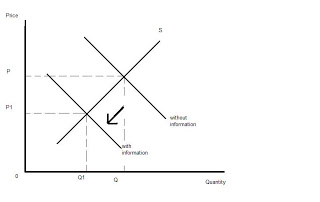
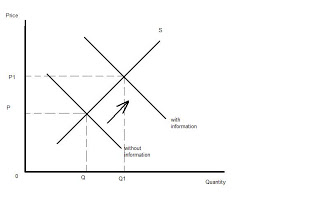
The purpose of occupational regulation is to protect buyers from quacks and lemons – to overcome asymmetric information about the quality of the provider of the service.
Adverse selection occurs when the seller knows more than the buyer about the true quality of the product or service on offer. This can make it difficult for the two people to do business together. Buyers cannot tell the good from the bad products on offer so many they do not buy to all and withdraw from the market.
Goods and services divide into inspection, experience and credence goods.
Inspection goods are goods or services was quality can be determined before purchase price inspecting them;
Experience goods are goods whose quality is determined after purchase in the course of consuming them; and
Credence goods are goods whose quality may never be known for sure as to whether the good or service actually worked – was that car repair or medical procedure really necessary?
The problem of adverse selection over experience and credence goods present many potentially profitable but as yet unconsummated wealth-creating transactions because of the uncertainty about quality and reliability.
Buyers are reluctant to buy if they are unsure of quality, but if such assurances can be given in a credible manner, a significant increase in demand is possible.
Any entrepreneur who finds ways of providing credible assurances of the quality of this service or work stands to profit handsomely. Brand names and warranties are examples of market generated institutions that overcome these information gaps through screening and signalling.
Screening is the less informed party’s effort, usually the buyer, to learn the information that the more informed party has. Successful screens have the characteristic that it is unprofitable for bad types of sellers to mimic the behaviour of good types.
Signalling is an informed party’s effort, usually the seller, to communicate information to the less informed party.
The main issue with quacks in the labour market is whether there are a large cost of less than average quality service, and is there a sub-market who will buy less than average quality products in the presence of competing sellers competing on the basis of quality assurance. This demand for assurance creates opportunities for entrepreneurs to profit by providing assurance.
David Friedman wrote a paper about contract enforcement in cyberspace where the buyer and seller is in different countries so conventional mechanisms such as the courts are futile in cases where the quality of the good is not as promised or there is a failure to deliver at all:
Public enforcement of contracts between parties in different countries is more costly and uncertain than public enforcement within a single jurisdiction.
Furthermore, in a world where geographical lines are invisible, parties to publicly enforced contracts will frequently not know what law those contracts are likely to fall under. Hence public enforcement, while still possible for future online contracts, will be less workable than for the realspace contracts of the past.
A second and perhaps more serious problem may arise in the future as a result of technological developments that already exist and are now going into common use. These technologies, of which the most fundamental is public key encryption, make possible an online world where many people do business anonymously, with reputations attached to their cyberspace, not their realspace, identities
Online auction and sales sites address adverse selection with authentication and escrow services, insurance, and on-line reputations through the rating of sellers by buyers.
E-commerce is flourishing despite been supposedly plagued by adverse selection and weak contract enforcement against overseas venders.
In the labour market, screening and signalling take the form of probationary periods, promotion ladders, promotion tournaments, incentive pay and the back loading of pay in the form of pension investing and other prizes and bonds for good performance over a long period.
In the case of the labour force, there are good arguments that a major reason for investments in education is as a to signal quality, reliability, diligence as well as investment in a credential that is of no value the case of misconduct or incompetence. Lower quality workers will find it very difficult if not impossible to fake quality and reliability in this way – through investing in higher education.
In the case of teacher registration, for example, does a teacher registration system screen out any more low quality candidates for recruitment than do proper reference checks and a police check for a criminal record.
Mostly disciplinary investigations and deregistrations under the auspices of occupational regulation is for gross misconduct and criminal convictions rather than just shading of quality.
Much of personnel and organisational economics is about the screening and sorting of applicants, recruits and workers by quality and the assurance of performance.
Alert entrepreneurs have every incentive to find more profitable ways to manage the quality of their workforce and sort their recruitment pools.
Baron and Kreps (1999) developed the recruitment taxonomy made up of stars, guardians and foot-soldiers.
Stars hold jobs with limited downside risk but high performance is very good for the firm – the costs of hiring errors for stars such as an R&D worker are small: mostly their salary. Foot-soldiers are employees with narrow ranges of good and bad possible outcomes.
Guardians have jobs where bad performance can be a calamity but good job performance is only slightly better than an average performance.
Airline pilots and safety, compliance, finance and controller jobs are all examples of guardian jobs where risk is all downside. Bad performance of these jobs can bring the company down. Dual control is common in guardian jobs.
The employer’s focus when recruiting and supervising guardians is low job performance and not associating rewards and promotions with risky behaviours. Employers will closely screen applicants for guardian jobs, impose long apprenticeships and may limit recruiting to port-of-entry jobs.
The private sector has ample experience in handling risk in recruitment for guardian jobs. Firms and entrepreneurs are subject to a hard budget constraints that apply immediately if they hire quacks and duds.
Blackboard economics says that governments may be able to improve on market performance but as Coase warned that actually implement regulatory changes in real life is another matter:
The policy under consideration is one which is implemented on the blackboard.
All the information needed is assumed to be available and the teacher plays all the parts. He fixes prices, imposes taxes, and distributes subsidies (on the blackboard) to promote the general welfare.
But there is no counterpart to the teacher within the real economic system
Occupational regulation comes with the real risk of the regulation turning into an anti-competitive barrier to entry as Milton Friedman (1962) warned:
The most obvious social cost is that any one of these measures, whether it be registration, certification, or licensure, almost inevitably becomes a tool in the hands of a special producer group to obtain a monopoly position at the expense of the rest of the public.
There is no way to avoid this result. One can devise one or another set of procedural controls designed to avert this outcome, but none is likely to overcome the problem that arises out of the greater concentration of producer than of consumer interest.
The people who are most concerned with any such arrangement, who will press most for its enforcement and be most concerned with its administration, will be the people in the particular occupation or trade involved.
They will inevitably press for the extension of registration to certification and of certification to licensure. Once licensure is attained, the people who might develop an interest in undermining the regulations are kept from exerting their influence. They don’t get a license, must therefore go into other occupations, and will lose interest.
The result is invariably control over entry by members of the occupation itself and hence the establishment of a monopoly position.
Friedman’s PhD was published in 1945 as Income from Independent Professional Practice. With co-author Simon Kuznets, he argued that licensing procedures limited entry into the medical profession allowing doctors to charge higher fees than if competition were more open.
Data Source: Martin Jenkins 2012, Review of Occupational Regulation, released by the Ministry of Business, Innovation and Employment under the Official Information Act.
Why Evolution is True is a blog written by Jerry Coyne, centered on evolution and biology but also dealing with diverse topics like politics, culture, and cats.
In Hume’s spirit, I will attempt to serve as an ambassador from my world of economics, and help in “finding topics of conversation fit for the entertainment of rational creatures.”
“We do not believe any group of men adequate enough or wise enough to operate without scrutiny or without criticism. We know that the only way to avoid error is to detect it, that the only way to detect it is to be free to inquire. We know that in secrecy error undetected will flourish and subvert”. - J Robert Oppenheimer.


 Auckland University of Technology Associate Professor Gail Pacheco is not quoted as often she should be in the politics of the minimum wage in New Zealand. Her research repeatedly finds that the increases in the minimum wage over the last 10 to 15 years in New Zealand reduced employment, increased unemployment, and reduced skill acquisition among teenagers:



 Utopia, you are standing in it!
Recent Comments