The great RCT bubble of 2013?

Kevin's avatarCherokee Gothic

Check out this awesome blogpost where Lant Pritchett cogently argues that Randomized Control Trials are nearing “peak hype”:

 I think there is little question that randomized techniques were underutilized in development practice and research in 1993.  I also think there is little question that in 2013 RCTs are now in an overvaluation bubble and nearing the Peak of Inflated Expectations.  (Of course one of the true signs of the peak of a bubble is the increasing vehemence with which people who invested their financial and human capital into the bubble deny that it is a bubble).    

At a World Bank Symposium on Assessment for Global Learning  last week Jishnu Das estimated there are in the neighborhood of 500 evaluations of education interventions underway at a cost of between 200K and 500K each.  Assuming a typical cost of 300K this is $150 million dollars being spent on RCTs…

View original post 72 more words

Turkey’s Baffling Coup and why India never had a military dictatorship..

Amol Agrawal's avatarMostly Economics

Last week saw yet another attempt to dethrone democracy in Turkey (it was more a case of demagoguery than democracy). There have been a quite a few already in its recent history. TYe government even tried to make Turkey coup-proof in 2006 which obviously did not work! But this recent one was baffling and amateurish at its best.

Dani Rodrik explains his bafflement:

Military coups – successful or otherwise – follow a predictable pattern in Turkey. Political groups – typically Islamists – deemed by soldiers to be antagonistic to Kemal Atatürk’s vision of a secular Turkey gain increasing power. Tensions rise, often accompanied by violence on the streets. Then the military steps in, exercising what the soldiers claim is their constitutional power to restore order and secular principles.

This time, it was very different. Thanks to a series of sham trials targeting secularist officers, President Recep Tayyip Erdoğan had managed to…

View original post 1,007 more words

Image

The Italian bank crisis – the one graph version

Lars Christensen's avatarThe Market Monetarist

Today I was interviewed by a Danish journalist about the Italian banking crisis (read the interview here). He asked me a very good question that I think is highly relevant for understanding not only the Italian banking crisis, but the Great Recession in general.

The question was: “Lars, why is there an Italian banking crisis – after all they did NOT have a property markets bubble?”

That – my regular readers will realise – made me very happy because I could answer that the crisis had little to do with what happened before 2008 and rather was about monetary policy failure and in the case of the euro zone also why it is not an optimal currency area.

Said, in another way I repeated my view that the Italian banking crisis essentially is a consequence of too weak nominal GDP growth in Italy. As a consequence of Italy’s structural problems…

View original post 419 more words

Image

Rather close to the bone on multiculturalism

Image

The Euro – Monetary Strangulation continues (one year on)

Lars Christensen's avatarThe Market Monetarist

Exactly one year ago today I was with the family in the Christensen vacation home in Skåne (Southern Sweden) and posted a blog post titled The Euro – A Monetary Strangulation Mechanism. I wrote that post partly out of frustration that the crisis in the euro once again had re-escalated as Greece fell deeply into political crisis.

One year on the euro zone is once again in crisis – this time the focal point it the Italian banking sector.

So it seems like little has changed over the past year. After nearly eight years of crisis the euro zone has still not really recovered.

In my post a year ago I showed a graph with the growth of real GDP from 2007 to 2015 in 31 different European countries – both countries with floating exchange rates and countries within the euro areas and countries pegged to the euro (Bulgaria…

View original post 305 more words

Minnie Riperton sings Lovin’ You for the last time April 17, 1979

Scared Straight or Scared to Death? The Effect of Risk Beliefs on Risky Behaviors

Jason Kerwin's avatarCeteris Non Paribus

Longtime readers of this blog (or anyone who has talked to me in the past few years) know that I have been working on a paper on risk compensation and HIV. Risk compensation typically means that when an activity becomes more dangerous, people do less of it. If the risk becomes sufficiently high, however, the rational response can be to take more risks instead of fewer, a pattern called “rational fatalism”. This happens because increased risks affect not only the danger of additional acts, but also the chance that you have already contracted HIV based on past exposures. While HIV testing appears to mitigate this problem, by resolving people’s HIV status, a similar logic applies for unavoidable exposures in the future; HIV testing cannot do anything about the sense that you will definitely contract the virus in the future. I test this model used a randomized field experiment in Malawi…

View original post 224 more words

How to Deal with Stupid: Part 1/10 – Defining Stupid

RiskMonger's avatarThe Risk-Monger

This article was originally published on 20 November 2015 and is republished as part of the RM site update. I will finish the series by the end of the summer and hopefully have the book: Science in the Age of Stupid published early in 2017.

See the French translation

The following is Part 1 of a ten-part blog on governance to be serialised over the holidays. Today our personal decision-making process is strongly influenced by the latest social media applications yet EU and American government policy mechanisms, developed in the last century, have not been adapted to these communications tools. This discrepancy has created opportunities for less-scrupulous activists to abuse the process, converting positions lacking in proper evidence and rationality into victories or disruptions in the regulatory arena. In other words, these campaigners have been able to turn “stupid” into policy. This series: How to Deal with Stupid, essentially a policy pamphlet…

View original post 1,575 more words

Saving The Planet Is Harder Than you Thought!

Russian cops don’t mess about.

https://twitter.com/Crashingtv/status/750165066159357952

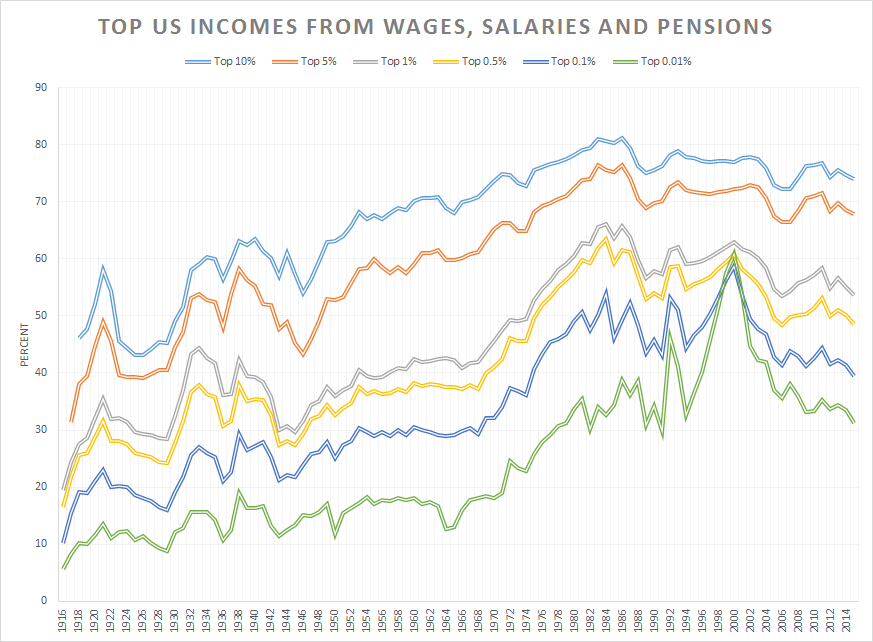
% US top incomes from wages, salaries and pensions, 1913 – 2015,

The rich in the USA long ago became a working rich; most top incomes are from wages and salaries.

image

Source: The World Wealth and Income Database.

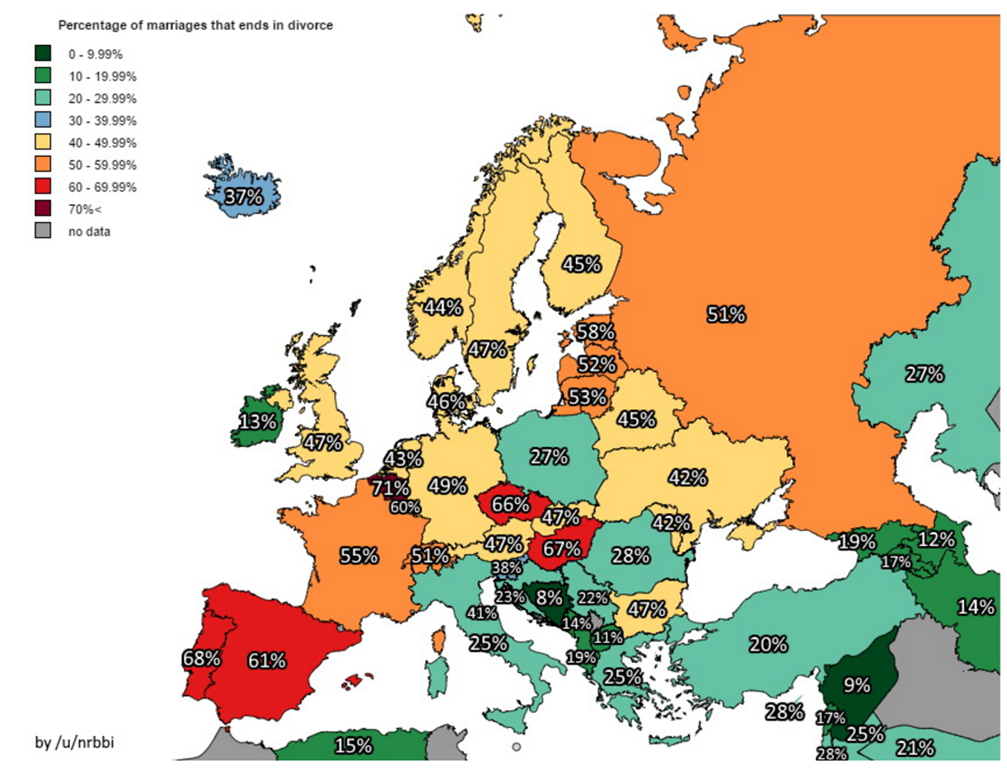
Percentage of marriages that ends in divorce

image

Source: Percentage of marriages that ends in divorce – Vivid Maps.

Bassett, Brash & Hide

Celebrating humanity's flourishing through the spread of capitalism and the rule of law

Truth on the Market

Scholarly commentary on law, economics, and more

The Undercover Historian

Beatrice Cherrier's blog

Matua Kahurangi

Celebrating humanity's flourishing through the spread of capitalism and the rule of law

Temple of Sociology

Celebrating humanity's flourishing through the spread of capitalism and the rule of law

Velvet Glove, Iron Fist

Celebrating humanity's flourishing through the spread of capitalism and the rule of law

Why Evolution Is True

Why Evolution is True is a blog written by Jerry Coyne, centered on evolution and biology but also dealing with diverse topics like politics, culture, and cats.

Down to Earth Kiwi

Celebrating humanity's flourishing through the spread of capitalism and the rule of law

NoTricksZone

Celebrating humanity's flourishing through the spread of capitalism and the rule of law

Homepaddock

A rural perspective with a blue tint by Ele Ludemann

Kiwiblog

DPF's Kiwiblog - Fomenting Happy Mischief since 2003

The Dangerous Economist

Celebrating humanity's flourishing through the spread of capitalism and the rule of law

Watts Up With That?

The world's most viewed site on global warming and climate change

The Logical Place

Tim Harding's writings on rationality, informal logic and skepticism

Doc's Books

A window into Doc Freiberger's library

The Risk-Monger

Let's examine hard decisions!

Uneasy Money

Commentary on monetary policy in the spirit of R. G. Hawtrey

Barrie Saunders

Thoughts on public policy and the media

Liberty Scott

Celebrating humanity's flourishing through the spread of capitalism and the rule of law

Point of Order

Politics and the economy

James Bowden's Blog

A blog (primarily) on Canadian and Commonwealth political history and institutions

Science Matters

Reading between the lines, and underneath the hype.

Peter Winsley

Economics, and such stuff as dreams are made on

A Venerable Puzzle

"The British constitution has always been puzzling, and always will be." --Queen Elizabeth II

The Antiplanner

Celebrating humanity's flourishing through the spread of capitalism and the rule of law

Bet On It

Celebrating humanity's flourishing through the spread of capitalism and the rule of law

History of Sorts

WORLD WAR II, MUSIC, HISTORY, HOLOCAUST

Roger Pielke Jr.

Undisciplined scholar, recovering academic

Offsetting Behaviour

Celebrating humanity's flourishing through the spread of capitalism and the rule of law

JONATHAN TURLEY

Res ipsa loquitur - The thing itself speaks

Conversable Economist

Celebrating humanity's flourishing through the spread of capitalism and the rule of law

The Victorian Commons

Researching the House of Commons, 1832-1868

The History of Parliament

Articles and research from the History of Parliament Trust

Books & Boots

Reflections on books and art

Legal History Miscellany

Posts on the History of Law, Crime, and Justice

Sex, Drugs and Economics

Celebrating humanity's flourishing through the spread of capitalism and the rule of law

European Royal History

Exploring the Monarchs of Europe

Tallbloke's Talkshop

Cutting edge science you can dice with

Marginal REVOLUTION

Small Steps Toward A Much Better World

NOT A LOT OF PEOPLE KNOW THAT

“We do not believe any group of men adequate enough or wise enough to operate without scrutiny or without criticism. We know that the only way to avoid error is to detect it, that the only way to detect it is to be free to inquire. We know that in secrecy error undetected will flourish and subvert”. - J Robert Oppenheimer.

STOP THESE THINGS

The truth about the great wind power fraud - we're not here to debate the wind industry, we're here to destroy it.

Lindsay Mitchell

Celebrating humanity's flourishing through the spread of capitalism and the rule of law

Alt-M

Celebrating humanity's flourishing through the spread of capitalism and the rule of law

croaking cassandra

Economics, public policy, monetary policy, financial regulation, with a New Zealand perspective

The Grumpy Economist

Celebrating humanity's flourishing through the spread of capitalism and the rule of law

International Liberty

Restraining Government in America and Around the World