The big shift in car designs
28 May 2017 Leave a comment
in economic history Tags: creative destruction, road safety
Washington Post: Kushner Tried To Set Up Secret Communications Channel With Russians
27 May 2017 Leave a comment
in economics

 The Washington Post released a bombshell story on Friday that alleges that senior White House aide (and presidential son-in-law) Jared Kushner met withSergei Kislyak, the Russian ambassador to Washington to set up a private communications channel with the Kremlin. The channel reportedly was sought for secret and secure and direct communications with the Russians. Once again, there is nothing on its face unlawful about either the meeting or the desire for a secure communications line. However, the allegation (if true) would deepen the unease over the associations between the Trump camp and the Russians. The increasing number of meetings has raised questions over why Trump officials were so solicitous to the Russians — a concern that reached its apex with Trump’s bizarre decision to entertain Kislyak and the Russian Foreign Minister in the Oval Office the day after firing former FBI Director James Comey.
View original post 552 more words
The Blunders of our Governments and the #DementiaTax – a lack of deliberation?
27 May 2017 Leave a comment
in economics

This is a review I wrote in 2013. It might just offer some illumination of how Theresa May’s Team have made such horlicks of the #DementiaTax.
The penultimate paragraph is probably the most important.
———
The Blunders of our Governments, Anthony King and Ivor Crewe. Oneworld Publications, September 2013.
 This is a must read book for anyone interested in British public affairs. It is seminal, not so much for the insight it offers – much of what it says has been said before – but in the way it brings together in one place the list of catastrophic blunders of government and their causes. There is something for everyone with an interest in government and governing here.
Politicians of the right will undoubtedly highlight the failures of government reported in this book and try to position it in the “private good, public bad” narrative of neoliberalism.
View original post 1,300 more words
Most Streets in Japan Don’t Have Names
27 May 2017 Leave a comment
in economics, economics of media and culture Tags: Japan
Crazy litigious climate : “citizens have a constitutional right to a stable climate system”
27 May 2017 Leave a comment
in economics
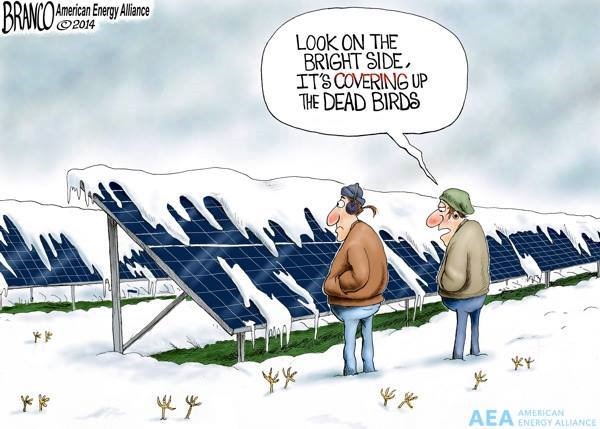
After–dark isn’t Big Solar’s only problem @GreenpeaceNZ
27 May 2017 Leave a comment
in energy economics, environmental economics Tags: Big Solar, green rent seeking, solar energy, solar power
Learn more about the importance of real-time #electricity pricing in Re-Powering Markets bit.ly/210JDVU https://t.co/NZVs9zh895—
(@IEA) February 21, 2016
The Economics of Airline Class
27 May 2017 Leave a comment
in applied price theory, transport economics Tags: peak load pricing, price discrimination
Mindfulness and sustainable behavior: how to find a correlation where none might exist
26 May 2017 Leave a comment
in economics

Since recently I discovered that there is a whole field of what is called ecopsychology. A couple days ago I started reading a paper by Amel, Manning, Scott and Koger (probably more about that later) and I wondered whether those four had previous papers as well on the subject. Apparently they had. Members of this group produced a bunch of papers with (an)other member(s). One of the those papers had the intriguing title “Mindfulness and Sustainable Behavior: Pondering Attention and Awareness as Means for Increasing Green Behavior” by Amel et al (2009). It was quite an intriguing read, hence this post.
The authors started from the observation that our rushed lifestyle separates us from nature and this let us fall back on automatic behaviors which are not necessarily sustainable. They investigated two aspects of mindfulness: acting with awareness (paying attention) and being in the here-and-now (observing sensations). The authors hypothesized…
View original post 1,357 more words
Changing the way the UK votes: the Conservative manifesto’s proposals relating to the conduct of elections
26 May 2017 Leave a comment
in economics


The main focus of media coverage of the Conservative manifesto has been on the party’s controversial social care policy, but it also includes some surprising and significant proposed changes to do with the conduct of elections – the abolition of the Fixed-term Parliaments Act, first past the post to replace the supplementary vote and requiring proof of ID to vote. Andrew Cook discusses these proposals and their implications.
The polls still suggest that the Conservatives are heading for victory in next month’s election. Nothing is certain. Nevertheless, the Conservative manifesto – Forward Together – is worth examining in detail. The media focus has been on the party’s controversial social care policy, but a section of the manifesto called ‘The Home of Democracy and the Rule of Law’ also includes some surprising and significant proposed changes to do with the conduct of elections. This post concentrates on these, while a larger comparison of…
View original post 1,313 more words
 Utopia, you are standing in it!
Recent Comments