What causes Alzheimer’s disease? What we know, don’t know and suspect

Tim Harding's avatarThe Logical Place

The Conversation

File 20170525 23232 1rvtxjj
A hallmark of Alzheimer’s disease is gradual deterioration of memory. Roman Kraft/Unsplash

Yen Ying Lim, Florey Institute of Neuroscience and Mental Health and Rachel Buckley, Florey Institute of Neuroscience and Mental Health

This is a long read. Enjoy!


Alzheimer’s disease is the most common form of dementia, which is an umbrella term used to describe general loss of memory, thinking skills and other day-to-day functions (such as cooking, paying bills, cleaning and even dressing).

A hallmark of Alzheimer’s disease is gradual deterioration of memory. But it is a biological disease, which means that, besides seeing outwards symptoms such as memory loss, we can also measure the breakdown that occurs in the brain as a consequence of disease progression.

Alzheimer’s is identified by the presence of two proteins in the brain, known as amyloid and tau. Amyloid proteins aggregate into sticky clumps called “plaques”. And tau proteins tend…

View original post 1,898 more words

Peace feelers in World War 1

Jim Rose's avatarUtopia, you are standing in it!

There were no meaningful peace proposals by the belligerent governments until 1916.

In late 1916 a series of peace proposals were suddenly put forward, all of them without exception advocating compromises. They contained no demands for unconditional surrender or a dictated peace.

There was Reichstag peace resolution on 19 July 1917. The resolution called for no annexations, no indemnities, freedom of the seas, and international arbitration. It was ignored by the German High Command and by the Allied Powers.

Pope Benedict XV tried to mediate with his Peace Note of August 1917 calling for a return to the pre-war borders.

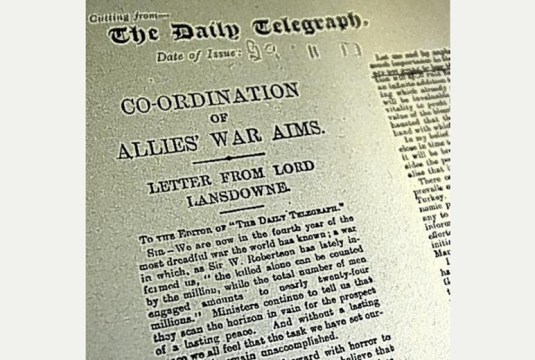
On November 14, 1917, Lord Landsdowne, a minister in the Asquith cabinet, put forward a letter to the Daily Telegraph on the need for peace negotiations.


The Landsdowne memorandum titled “Coordination of Allies’ War Aims” recommended a serious investigation of the possibility of a peace and advocated that a statement…

View original post 296 more words

Humanitarians redeemed Sudanese slaves by buying them out of slavery. Did it work out?

The unintended consequences of a successful war on drugs

Image

Airbus + China + ETS = Prisoner’s Dilemma

Mark's avatarECONFIX

Last week saw Chinese officials indicating that Chinese airlines will not buy European airplanes as long as the EU insists on including foreign airlines in its emission trading system. Orders of 35 Airbus A330 planes have been cancelled and another 10 A380’s were in danger of being cancelled because of the ETS. The Chinese argument is that it is not reasonable to charge Chinese airlines taxes at the same time that the plane is made in Europe. China currently buys more than 1 in 5 Airbus planes being produced and the total of Chinese orders amounts to US$9bn. Therefore one could say that the future of Airbus hinges on the ETS. This raises the question of climate change and what are the options that countries face.

Climate Change as Prisoner’s Dilemma
The initial impression from the discussions over climate change is that of a typical Prisoner’s Dilemma and some of…

View original post 406 more words

9 Times Method Actors Forgot Who They Really Were

I didn’t bring business cards to Japan. Big mistake.

The Paris Climate Agreement Won’t Change the Climate

The three kinds of economist jokes…:-)

Amol Agrawal's avatarMostly Economics

Michael Munger has a great post on economist humor. He is apparently writing a paper to on the topic and asks to send jokes.

Mark Twain said, in Pudd’nhead Wilson’s New Calendar, that “Man is the only animal that blushes. Or needs to.” Our propensity to tell, or enjoy, jokes seems to parallel this need to recognize that we don’t always live up to our inflated sense of our own importance.

Problems of inflation are often studied by economists. Having myself been catechized in that church, I am still a bit sensitive to the particular branch of humor called “economist jokes.” You’ve probably heard them, often along the lines of “Economists were invented to make the weatherman feel better about his predictions.”

Why do economist jokes exist?I’ve been working, with my Duke colleague Geoffrey Brennan, on a paper on “economist jokes.” We are trying both to catalog and to explain…

View original post 713 more words

On Roland Fryer’s 21st Century Inequality: The Declining Significance of Discrimination

How to Win People’s Approval – Ultra Spiritual Life episode 60

Heritage Foundation on dumping the Paris agreement

The craziest reactions to Trump pulling out of the #ParisAgreement

PRECARIOUS WORK AS THE FLIP SIDE OF EFFICIENCY WAGES

Efficiency wages were put forward as a cause of what is now called precarious work. The efficiency wage hypothesis breathed considerable new life into the old theory of dual labour markets (Katz 1986; Dickens and Lang 1985).
article-2303333-190f447b000005dc-765_964x621

The notion of a segmented labour market, of a primary and a secondary labour market, each with distinctly different wage setting mechanisms, was very much a fringe idea prior to the 1980s:

Efficiency wage theory provides a rare common meeting ground for mainstream and radical economists, because the far left in U.S. economics has taken the lead in developing theories of dual labor markets and for setting-out policy proposals for higher minimum wages based on the assumed validity of the efficiency wage approach (Gordon 1990, p. 1157).

The workers privileged enough to hired by firms paying an efficiency wage would enjoy job security, low job quit rates, good working conditions, career advancement, training and higher pay (Akerlof 1982, 1984; Bulow and Summers 1986; Dickens and Lang 1993). The remaining equally productive workers who were unlucky enough to be priced out of these good jobs by the job rationing implicit in an efficiency wage must fend for themselves in a secondary labour market; in precarious work with high quit rates, harsh workplace discipline, few promotions, little training and poor pay (Akerlof 1982, 1984; Katz 1986; Dickens and Lang 1985). Efficiency wages do not motivate greater employee effort unless the prospect of precarious work in this secondary labour market looms large in the back of their minds as their main alternative source of employment for those lucky enough to be employed in the good jobs in the primary labour market (Katz 1986; Bulow and Summers 1986).

Those workers crowded into these bad jobs in the secondary labour market find it to be a slow and difficult process to break into these better paying good jobs in the primary labour market. There are queues for the good jobs because they are paying above-market wages; many of those crowded into the bad jobs are women and minorities (Bulow and Summers 1986; Dickens and Lang 1985, 1993).

Akerlof, in his Nobel Prize lecture on behavioural macroeconomics, contended that the good and bad jobs caused by paying efficiency wages is central to explaining involuntary mass unemployment:

The existence of good jobs and bad jobs makes the concept of involuntary unemployment meaningful: unemployed workers are willing to accept, but cannot obtain, jobs identical to those currently held by workers with identical ability. At the same time, involuntarily unemployed workers may eschew the lower-paying or lower-skilled jobs that are available. The definition of involuntary unemployment implicit in efficiency wage theory accords with the facts and agrees with commonly held perceptions. A meaningful concept of involuntary unemployment constitutes an important first step forward in rebuilding the foundations of Keynesian economics (Akerlof 2002, p. 415).

Living wage activists already doubt that the market can provide steady wages growth and stable employment. Efficiency wages are a leading New Keynesian macroeconomic explanation for that. The living wage movement cannot pick and choose from what the efficiency wage hypothesis says about how well the labour market functions for those who are and are not in efficiency wage jobs.

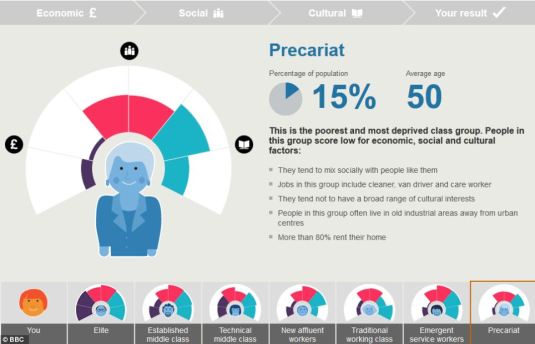
Living wage activists are unwittingly following a course of action that leads to more job rationing, more precarious work and more unemployment. Those priced out of council jobs by a living wage such as the 17 parking wardens are left to take their chances in the rest of the local labour market. These workers must take bad jobs while queueing for the good jobs in the primary labour market. Instead of being sources of opportunity in their communities, councils through a living wage policy risk becoming drivers of labour market segmentation and the fostering of a precariat.

This animated map shows how World War I changed Europe’s borders

Previous Older Entries

Bassett, Brash & Hide

Celebrating humanity's flourishing through the spread of capitalism and the rule of law

Truth on the Market

Scholarly commentary on law, economics, and more

The Undercover Historian

Beatrice Cherrier's blog

Matua Kahurangi

Celebrating humanity's flourishing through the spread of capitalism and the rule of law

Temple of Sociology

Celebrating humanity's flourishing through the spread of capitalism and the rule of law

Velvet Glove, Iron Fist

Celebrating humanity's flourishing through the spread of capitalism and the rule of law

Why Evolution Is True

Why Evolution is True is a blog written by Jerry Coyne, centered on evolution and biology but also dealing with diverse topics like politics, culture, and cats.

Down to Earth Kiwi

Celebrating humanity's flourishing through the spread of capitalism and the rule of law

NoTricksZone

Celebrating humanity's flourishing through the spread of capitalism and the rule of law

Homepaddock

A rural perspective with a blue tint by Ele Ludemann

Kiwiblog

DPF's Kiwiblog - Fomenting Happy Mischief since 2003

The Dangerous Economist

Celebrating humanity's flourishing through the spread of capitalism and the rule of law

Watts Up With That?

The world's most viewed site on global warming and climate change

The Logical Place

Tim Harding's writings on rationality, informal logic and skepticism

Doc's Books

A window into Doc Freiberger's library

The Risk-Monger

Let's examine hard decisions!

Uneasy Money

Commentary on monetary policy in the spirit of R. G. Hawtrey

Barrie Saunders

Thoughts on public policy and the media

Liberty Scott

Celebrating humanity's flourishing through the spread of capitalism and the rule of law

Point of Order

Politics and the economy

James Bowden's Blog

A blog (primarily) on Canadian and Commonwealth political history and institutions

Science Matters

Reading between the lines, and underneath the hype.

Peter Winsley

Economics, and such stuff as dreams are made on

A Venerable Puzzle

"The British constitution has always been puzzling, and always will be." --Queen Elizabeth II

The Antiplanner

Celebrating humanity's flourishing through the spread of capitalism and the rule of law

Bet On It

Celebrating humanity's flourishing through the spread of capitalism and the rule of law

History of Sorts

WORLD WAR II, MUSIC, HISTORY, HOLOCAUST

Roger Pielke Jr.

Undisciplined scholar, recovering academic

Offsetting Behaviour

Celebrating humanity's flourishing through the spread of capitalism and the rule of law

JONATHAN TURLEY

Res ipsa loquitur - The thing itself speaks

Conversable Economist

In Hume’s spirit, I will attempt to serve as an ambassador from my world of economics, and help in “finding topics of conversation fit for the entertainment of rational creatures.”

The Victorian Commons

Researching the House of Commons, 1832-1868

The History of Parliament

Articles and research from the History of Parliament Trust

Books & Boots

Reflections on books and art

Legal History Miscellany

Posts on the History of Law, Crime, and Justice

Sex, Drugs and Economics

Celebrating humanity's flourishing through the spread of capitalism and the rule of law

European Royal History

Exploring the Monarchs of Europe

Tallbloke's Talkshop

Cutting edge science you can dice with

Marginal REVOLUTION

Small Steps Toward A Much Better World

NOT A LOT OF PEOPLE KNOW THAT

“We do not believe any group of men adequate enough or wise enough to operate without scrutiny or without criticism. We know that the only way to avoid error is to detect it, that the only way to detect it is to be free to inquire. We know that in secrecy error undetected will flourish and subvert”. - J Robert Oppenheimer.

STOP THESE THINGS

The truth about the great wind power fraud - we're not here to debate the wind industry, we're here to destroy it.

Lindsay Mitchell

Celebrating humanity's flourishing through the spread of capitalism and the rule of law

Alt-M

Celebrating humanity's flourishing through the spread of capitalism and the rule of law

croaking cassandra

Economics, public policy, monetary policy, financial regulation, with a New Zealand perspective

The Grumpy Economist

Celebrating humanity's flourishing through the spread of capitalism and the rule of law

International Liberty

Restraining Government in America and Around the World