A new study debunks the myth of the gold-digging wife, finding that women are no more likely to marry above their social class than menBy Ben Spencer, Science Editor of The Sunday Times. Excerpts:”The young pretty women who seek to “marry up” for money and status, from the Bennet sisters in Pride and Prejudice to…
Jane Austen was wrong: women don’t marry up for money and status
Jane Austen was wrong: women don’t marry up for money and status
10 Mar 2025 1 Comment
in economics of love and marriage, economics of marriage, human capital, labour economics, law and economics, poverty and inequality Tags: dating markets, gender wage gap, marriage and divorce, sex discrimination
Gender gaps in education and declining marriage rates
06 Feb 2025 Leave a comment
in applied price theory, econometerics, economics of love and marriage, economics of marriage, human capital, labour economics, law and economics, poverty and inequality Tags: assortative mating, economics of fertility
Over the past half-century, the share of men enrolled in college has steadily declined relative to women. Today, 1.6 million more women than men attend four-year colleges in the U.S. This trend has not lowered marriage rates for college women, a substantial share of whom have historically married economically stable men without college degrees. Both […]
Gender gaps in education and declining marriage rates
Babies and the Macroeconomy
02 Feb 2025 Leave a comment
in applied price theory, development economics, economic history, economics of love and marriage, economics of marriage, human capital, labour economics, labour supply Tags: ageing society, economics of fertility, marriage and divorce
By Claudia Goldin. From NPR’s Planet Money.”Countries around the world have seen a jaw-dropping decline in fertility rates. In this paper, Claudia Goldin, the 2023 winner of the Nobel Prize in economic sciences, offers a new theory to help explain why (listen to The Indicator’s conversation with her back in 2021). Goldin starts by providing…
Babies and the Macroeconomy
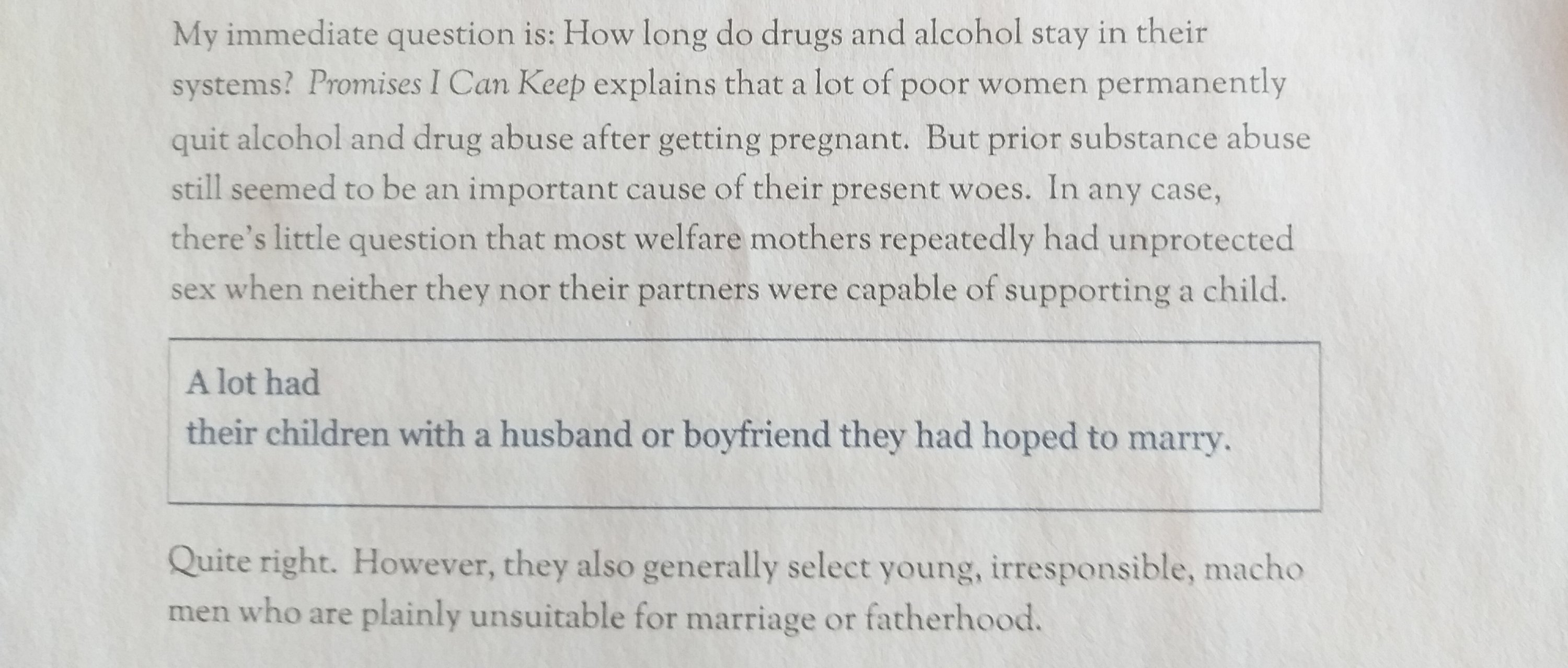
Out of wedlock births across the OECD area
21 Jun 2018 Leave a comment
in economic history, economics of love and marriage, economics of marriage

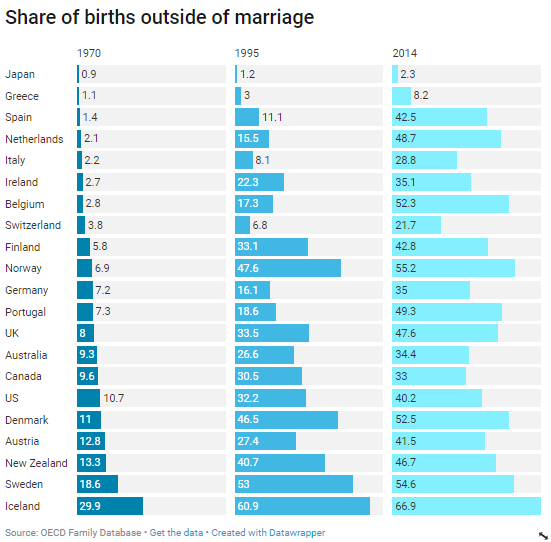
Good division of skills and challenges
20 Mar 2018 Leave a comment
in applied price theory, applied welfare economics, economics of bureaucracy, economics of education, economics of marriage, occupational choice, Public Choice
The rising marriage premium for power couples
19 Mar 2016 Leave a comment
in economics of education, economics of love and marriage, economics of marriage, labour economics, population economics, poverty and inequality
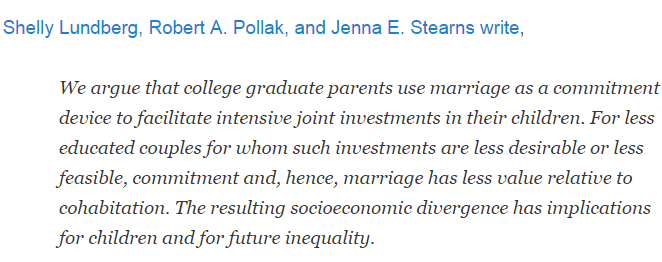
Source: Four Forces Watch | askblog.
How are women doing in the US when it comes to political & business leadership positions
23 Feb 2015 Leave a comment
in discrimination, economic history, economics of marriage, gender, labour economics, law and economics, occupational choice, politics - USA Tags: engines of liberation, gender wage gap
Economists find rare empirical evidence of love in unique marriage survey
20 Jan 2015 Leave a comment
in applied price theory, applied welfare economics, economics of love and marriage, economics of marriage, labour economics Tags: assortative mating

The key research questions that reveal all are:
- How happy are you in your marriage relative to how happy you would be if you weren’t in the marriage? [Much worse; worse; same; better; much better.]
- How do you think your spouse answered that question?
via Economists find rare empirical evidence of love in unique marriage survey.
Divorce Iranian Style
18 Mar 2014 Leave a comment
in development economics, economics of marriage, law and economics, Ronald Coase Tags: bride price, Coasian bargaining, divorce, doweries, dowry, economics of marriage, Iran, offsetting behaviour
Divorce Iranian Style is a great documentary about three Iranian couples seeking a divorce. The camera crew sat next to the judge and he often chats with them. Those before the court also talk direct to the camera and are interviewed at home too.
Divorce is frowned upon and the judge is always urging them to reconcile.

Women can bargain for a divorce from their husband by agreeing to return their dowry or not demanding the outstanding amount be paid by their now unwanted husband. The dowries were large: $10,000 for a taxi driver in a poor country. They act as a bond for good behaviour and as insurance against a divorce. The unpaid portion of the dowry hangs over the head of a would be miscreant husband. The film makers found that:
“The women are assertive, demanding, and persistent to a degree that confounds stereotypes of oppression. They challenge the judge, badger the uncooperative clerk for misplaced files, chew out their husbands and their husbands’ families.”
UPDATE: the correct name for what the documentary makers called a dowry is the mahriyeh (bridal treasures): This sum is usually not paid to the bride at the time of the marriage.
The marriage contract provides that the mahriyeh (bridal treasures) is to be paid in the event of divorce or is to be deducted from the husband’s estate before the inheritance is divided according to religious law. The bride-price is a separate up-front payment to the family of the bride to cover the cost of the wedding.
Update 2: see A Separation. This is a 2011 Iranian film about a divorce. HT: FleetwoodMacNCheese
 Utopia, you are standing in it!
Recent Comments