What does it cost to vote your conscience? Geoffrey Brennan
04 Aug 2022 Leave a comment
in applied price theory, comparative institutional analysis, constitutional political economy, Gordon Tullock, James Buchanan, Public Choice Tags: expressive voting
Subsidised Renewables Revolt: Entrenched Energy Poverty Source of Next Revolution
03 Aug 2022 Leave a comment


Power prices driven through the roof by subsidised and unreliable wind and solar means electricity is out of reach for thousands of struggling households.
Reliable and affordable electricity is at the heart of modern, socially stable societies. Deprive the masses of something that has been taken for granted for generations, and get set for serious civil unrest.
Across Europe, the effect of 20 years of a suicidal obsession with intermittent wind and solar is being keenly felt. Germans suffer the world’s highest power prices and power rationing for German industry is now routine.
Like their compatriots across the ditch, Britain’s energy consumers have been treated with utter contempt by their political betters. But, as the Global Warming Policy Foundation contends below, there is a reckoning in the wind.
As energy crisis threatens civil unrest, new study documents 30 years of the EU’s failed climate policies
The Global Warming Policy Foundation
View original post 662 more words
Democracy, the Treaty and the coup that is embedding tribal rule into our regulatory and legislative framework
03 Aug 2022 Leave a comment

By Muriel Newman
Finally, the mainstream media is reporting that a coup is under way in New Zealand – by the Māori tribal elite.
Admittedly that observation was penned by former Labour Minister and ACT Party leader Richard Prebble in an opinion piece for the Herald – but the newspaper published it and Radio NZ reported it.
The on-line Herald headline read “Three Waters is a coup — an attack on democracy”.
That bold and compelling headline, however, didn’t last. It was changed to remove the words “a coup” and now reads: “Three Waters is an attack on democracy”.
The obvious question is why?
A clue comes from an article written last year by political journalist Andrea Vance, about Jacinda Ardern’s PR machine:
The Government’s iron grip on the control of information has tightened. At every level, the Government manipulates the flow of information.”
She then explained,
“And the prime…
View original post 1,880 more words
Three Cheers for the Industrial Revolution
03 Aug 2022 Leave a comment

At the start of this interview, I cite Economic Freedom of the World and the Index of Economic Freedom to make the point that more economic liberty is correlated with more human prosperity.
For purposes of today’s column, I want to focus on the last half of the interview. I point out that a handful of nations began to escape poverty, largely back in the 1800s, when the fiscal burden of government was very small.
But that’s just a partial explanation. As Professors Donald Boudreaux and Deirdre McCloskey explained in short videos, the adoption of capitalism in a few nations enabled a stunning increase in living standards starting a couple of hundred years ago.
If you want a one-sentence summary, all you need to know is that capitalism enabled the industrial revolution and the industrial revolution triggered a huge increase in living standards.
If you prefer to see…
View original post 732 more words
Foot-and-mouth – the stock disease that could inflict a huge economic cost on our economy if Biosecurity defences fail
03 Aug 2022 Leave a comment

Ray Smith, director-general of the Ministry for Primary Industries, sent a shiver through the NZ China Summit in Auckland when he warned that foot-and-mouth disease getting into NZ would be a “scary” and a “gigantic thing”.
The highly contagious disease has been sweeping through Indonesia and since it was first discovered in May 429,000 cases have been identified through 24 provinces including Bali, a popular holiday destination for many New Zealanders.
Indonesia is struggling to bring the disease under control, underlining what a problem it could be for NZ’s main export industries.
The disease, which could cost the country billions of dollars and more than 100,000 jobs if it ran rampant among our livestock, is causing major concern in South Asia. After the disease was discovered in Bali fragments of the virus that cause the disease have also been found in meat products entering Australia from Indonesia, creating fresh concerns…
View original post 481 more words
What is Public Choice Theory? Geoffrey Brennan
03 Aug 2022 Leave a comment
in applied price theory, comparative institutional analysis, constitutional political economy, Gordon Tullock, James Buchanan, Public Choice, public economics Tags: expressive voting, rational ignorance
Electric Car Obsession
02 Aug 2022 Leave a comment

 Times Square Billboard
World Economic Forum Urges Public To Eliminate Ownership Of Private Vehicles
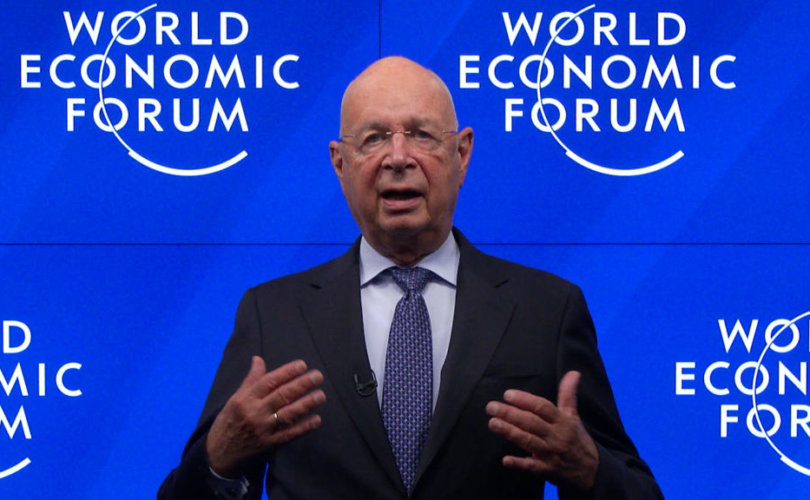 The World Economic Forum is advocating for the abolition of “wasteful” private vehicle ownership for the planet’s greater good as the organization attempts to advance its “Great Reset” agenda and transform the world so that the average person will “own nothing.”
“We need a clean energy revolution, and we need it now,” states a WEF’s July 18 article titled, “3 circular economy approaches to reduce demand for critical metals.”
“But this transition from fossil fuels to renewables will need large supplies of critical metals such as cobalt, lithium, nickel, to name a few. Shortages of these critical minerals could raise the costs of clean energy technologies,” the forum continues.
The unelected globalist group recommends the public “go from owning to using” by implementing “vehicle sharing initiatives” to decrease mass reliance on critical metals.
“The average car…
View original post 191 more words
Grid-Scale Power Storage Myth Busted: Giant Batteries Can’t Save Unreliable Wind & Solar
02 Aug 2022 Leave a comment

It only takes a moment’s reckoning to appreciate that the grid-scale storage electricity generated by wind or solar is a perfect nonsense.
Those profiting from hopelessly intermittent wind and solar still claim that mega-batteries are the solution to their obvious lack of reliability. Others point to pumped hydro and even ridiculously claim that “excess” wind and solar can be converted into ‘green’ hydrogen gas; the latter is total nonsense, thanks to the laws of physics and economics.
But then there is the gargantuan scale of the task if the object is to store sufficient wind and solar generated electricity to account for the period after sunset and sunrise when solar producers nothing and calm weather when wind power does likewise.
David Wojick has taken a keen interest in the subject over the last few years. Here he is again, demonstrating how the grid-scale storage of wind and solar-generated electricity is…
View original post 769 more words
August 1, 1714: Accession of George Louis, Elector of Hanover, Duke of Brunswick-Lüneburg as King of Great Britain and Ireland
02 Aug 2022 Leave a comment
Fifty-six Catholics with superior hereditary claims were bypassed.

George I (May 28, 1660 – June 11, 1727) was King of Great Britain and Ireland from August 1, 1714 and ruler of the Duchy and Imperial Electorate of Brunswick-Lüneburg (Hanover) within the Holy Roman Empire from January 23, 1698 until his death in 1727. He was the first British monarch of the House of Hanover.
George Louis was born on May 28, 1660 in the city of Hanover in the Duchy of Brunswick-Lüneburg in the Holy Roman Empire. He was the eldest son of Ernst August, Duke of Brunswick-Lüneburg, and his wife, Sophia of the Palatinate.
Sophia was the granddaughter of King James I-VI of England, Scotland and Ireland through her mother, Elizabeth Stuart, Queen of Bohemia, the wife of Elector Friedrich V of the Palatinate, who was briefly King of Bohemia.
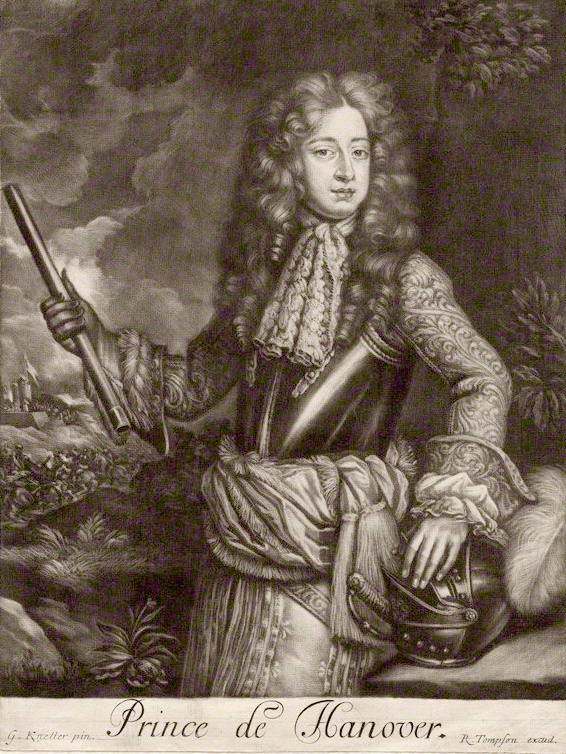 George in 1680, aged 20, when he was Prince of Hanover. After a painting by Sir Godfrey…
View original post 1,751 more words
August 1, 1914: Russia declares war on Germany
02 Aug 2022 Leave a comment
Nicholas II (May 18, 1868 – July 17, 1918), known in the Russian Orthodox Church as Saint Nicholas the Passion-Bearer, was the last Emperor of Russia, King of Congress Poland and Grand Duke of Finland, ruling from 1 November 1894 until his abdication on March 15, 1917.
Nicholas Alexandrovich was the eldest son of Emperor Alexander III of Russia and Princess Dagmar of Denmark the daughter of King Christian IX of Denmark and Princess Louise of Hesse-Cassel.
On November 26, 1894 Emperor Nicholas II married his cousin Princess Alix of Hesse and by Rhine the daughter of Grand Duke Ludwig IV of Hesse and by Rhine and Princess Alice of the United Kingdom.
Princess Alix converted to the Russian Orthodox Church and was renamed Alexandra Feodorovna.
On June 28, 1914 Archduke Franz Ferdinand of Austria-Este, heir to the Austro-Hungarian throne, was assassinated by a Bosnian Serb nationalist, Gavrillo Princeps, in…
View original post 554 more words
The Papacy: The Second Crusade and An English Pope (1144-1159)
02 Aug 2022 Leave a comment

Ten years came and went, and in this decade there were no less than four popes –Celestine II, Lucius II, Eugenius (“Eugene”) III, and Anastasius IV. It was an era marked by constant infighting between the two chief ruling families of Rome (Frangipani and Pierleoni) as well as the continual rise of King Roger II in Sicily. Lucius II was publicly stoned to death (perhaps by accident) after allowing the Senate to be reinstated in Rome, while Eugenius was a gentle soul who was easily driven from Rome amidst the heat of battle. However, abroad the Crescent was now conquering the Cross, as Edessa in present-day Turkey fell to an Arab army under Imad ed-Din Zengi. Thus Pope Eugenius sought the help of Louis VII of France and his wife Eleanor of Aquitaine to raise a Frankish army (Louis and Eleanor were soon to separate on grounds of sanguinity before…
View original post 682 more words
Reviewing Covid monetary policy – Part 2
02 Aug 2022 Leave a comment

In yesterday post, the first in this series, I tried to review and assess the Reserve Bank’s preparedness and its policy response to the Covid economic shock in the first 2-3 months (January to April 2020). They weren’t very well prepared, as it turned out, and this probably contributed to them rushing (and rushing The Treasury and the Minister) into some elements of the response that bore financial risks that were grossly proportionate to the likely economic or financial returns. But on the information they had at the time, and the way most other forecasters and commentators were thinking about the likely economic implications of Covid (and associated other policy responses), there wasn’t much doubt that a significant monetary policy response – easing monetary conditions – was well-warranted at the time. But there were mistakes – some perhaps not that consequential as it turned out (the pledge not to change…
View original post 3,315 more words
Expressive Voting – Public Choice Theory – Geoffrey Brennan
02 Aug 2022 Leave a comment
in applied price theory, comparative institutional analysis, constitutional political economy, economics of information, Public Choice Tags: expressive voting
How Tunneling in New York is Easier Than Elsewhere
01 Aug 2022 Leave a comment

I hate the term “apples-to-apples.” I’ve heard those exact three words from so many senior people at or near New York subway construction in response to any cost comparison. Per those people, it’s inconceivable that if New York builds subways for $2 billion/km, other cities could do it for $200 million/km. Or, once they’ve been convinced that those are the right costs, there must be some justifiable reason – New York must be a uniquely difficult tunneling environment, or its size must mean it needs to build bigger stations and tunnels, or it must have more complex utilities than other cities, or it must be harder to tunnel in an old, dense industrial metropolis. Sometimes the excuses are more institutional but always drawn to exculpate the political appointees and senior management – health benefits are a popular excuse and so is a line like “we care about worker rights/disability rights…
View original post 941 more words
Lucas and Sargent on Optimization and Equilibrium in Macroeconomics
01 Aug 2022 Leave a comment

In a famous contribution to a conference sponsored by the Federal Reserve Bank of Boston, Robert Lucas and Thomas Sargent (1978) harshly attacked Keynes and Keynesian macroeconomics for shortcomings both theoretical and econometric. The econometric criticisms, drawing on the famous Lucas Critique (Lucas 1976), were focused on technical identification issues and on the dependence of estimated regression coefficients of econometric models on agents’ expectations conditional on the macroeconomic policies actually in effect, rendering those econometric models an unreliable basis for policymaking. But Lucas and Sargent reserved their harshest criticism for abandoning what they called the classical postulates.
Economists prior to the 1930s did not recognize a need for a special branch of economics, with its own special postulates, designed to explain the business cycle. Keynes founded that subdiscipline, called macroeconomics, because he thought that it was impossible to explain the characteristics of business cycles within the discipline imposed…
View original post 2,037 more words


Recent Comments