Review of “Tip O’Neill and the Democratic Century” by John A. Farrell

Steve's avatarReading the Best Biographies of All Time

Tip O’Neill and the Democratic Century
by John A. Farrell
776 pages
Little, Brown and Company
Published: Mar 2001

Published in 2001, John Farrell’s biography remains the definitive review of Tip O’Neill’s life. Farrell is a former correspondent for The Boston Globe and has written biographies of Clarence Darrow and Richard Nixon (which was a 2018 Pulitzer Prize finalist). Farrell is currently working on a biography of Ted Kennedy which is expected to be published in the fall of 2022.

Tip O’Neill (1912-1994) is a colorful, larger-than-life political figure and anyone interested in his brash, back room style of politics will find much to enjoy in this biography. During O’Neill’s five-decade political career, he served in the Massachusetts House as well as the U.S. House of Representatives (where he ended his career with ten years of service as Speaker).

Farrell invested five years researching his subject’s life and his knowledge…

View original post 370 more words

The new Reserve Bank Board

Michael Reddell's avatarcroaking cassandra

The Minister of Finance yesterday afternoon finally announced the rest of the members of the new Reserve Bank Board that takes office, under its new authorising legislation yesterday. In my post earlier this week, I highlighted a number of weaknesses in the legislation around the (dis) qualifications of the Governor and other Board members. None of the appointments to the Board appear to be in breach of the Act, but several are questionable on various counts, and taken together (and one should think about the composition of the Board as a whole) the new Board represents a poor, and grossly inadequate, start to the new regime. It could have been a great opportunity for a really impressive fresh start for the governance of the Bank. Instead, the Orr-Robertson degrading of the Bank continues.

As one gets older, rose-tinted glasses about aspects of the past are a risk. I do recall…

View original post 2,187 more words

Milton Friedman – The Real World Effects Of Unions

Who Decides What the Constitution Is and Says? Quebec Modifies the Text of the Constitution Act, 1867

J.W.J. Bowden's avatarJames Bowden's Blog

Introduction

Law 96 has generated controversy and opposition amongst English-speakers in Quebec and, to a lesser extent, in the rest of Canada when the Legislature of Quebec enacted it last week for its provisions on language.

But it contains one other significant innovation which most of English Canada has overlooked. Through Law 96, the Legislature of Quebec enacted a constitutional amendment under the Section 45 Amending Procedure, which allows provincial legislatures to alter their provincial constitutions, and added two new sections directly to the text of the Constitution Act, 1867 as sections 90.1 and 90.2. Section 90 falls under Part V of the Constitution Act, 1867, the section on “Provincial Constitutions.”

As far as I know, provinces have thus far only impliedly repealed or amended provisions in Part V of the Constitution Act, 1867 through organic statutes without necessarily invoking the Section 45 Amending Procedure by name. But Quebec’s…

View original post 2,173 more words

Kenneth A Armstrong: A Matter for Another Day? Will the Supreme Court Accept the Lord Advocate’s Independence Referendum Reference?

UKCLA's avatarUK Constitutional Law Association

Scotland’s First Minister, Nicola Sturgeon has set out the ‘next steps’ in the campaign for Scotland’s independence, including asking the Lord Advocate for Scotland to make a reference to the UK Supreme Court on whether a draft Scottish Independence Referendum Bill relates to ‘reserved matters’ set out in Schedule 5 of the Scotland Act 1998. This reference brings to a head the question whether – without a section 30 order to expressly give the Scottish Parliament such a competence (as was done for the 2014 referendum) – a new independence referendum would have a sound legal basis.

But whereas many may have assumed that if this matter came before the Supreme Court it would do so via Section 33(1) of the 1998 Act once a Referendum Bill had been passed by the Parliament (but before Royal Assent was granted), the vehicle chosen is the wider power contained in paragraph 34…

View original post 1,474 more words

End of an era

Michael Reddell's avatarcroaking cassandra

Today marks the end of an era at the Reserve Bank, as the last of the “Governor as single decisionmaker” model is dismantled, and tomorrow the new Board takes over the primary responsibility for the Bank’s affairs. The single decisionmaker model was an experiment, but with time it was increasingly apparent that it was a poor one, increasingly unfit for purpose. No other country reforming its central banking and bank etc regulatory arrangements followed us. It is to the government’s credit that they have moved the governance model for the Reserve Bank back towards the international mainstream (even if the specifics of the 2018 and 2021 are less than ideal, and in some respect a dog’s breakfast).

(NB note that most of the new Board, to take up office tomorrow, has not yet been appointed – or at least announced. With the new Board reportedly supposed to be meeting tomorrow…

View original post 2,339 more words

Europe’s Soon-to-Implode Welfare States

Dan Mitchell's avatarInternational Liberty

What’s the most depressing chart in the world?

If you believe in limited government and you’re looking back in time, this example or this example are good candidates.

But if we’re looking into the future, this chart from a new study by the European Central Bank is very sobering.

And it’s a depressing chart because it doesn’t matter whether you believe in big government or small government. That’s because this chart shows a dramatic shift in population demographics.

Simply stated, Europe’s welfare states are in deep trouble because over time there will be fewer and fewer workers to pay taxes and more and more old people expecting benefits.

Here’s what the ECB experts, Katalin Bodnár and Carolin Nerlich, wrote about their findings.

The euro area, like many other advanced economies, has entered an era of drastic demographic change. …Declining birth rates and rising life expectancy are causing the number of…

View original post 396 more words

Guy Baldwin: The Proposed Bill of Rights and Constitutionalism in the UK

UKCLA's avatarUK Constitutional Law Association

On an orthodox approach, legislation of the UK Parliament is interpreted by courts, but not reviewed by them against legal standards. The Human Rights Act 1998 enables such review and empowers courts to declare Acts of Parliament in contravention of those standards. In so doing, it advances constitutionalism, in the sense of there being legal limits on governmental power (putting to one side other potential sources of limitation such as the now repealed European Communities Act 1972). However, there may be some tension between the balancing stage of the proportionality test applied in the adjudication of human rights violations and the position that the limits imposed by the Human Rights Act are “legal” in nature.

The UK government now proposes to repeal the Human Rights Act and replace it with a Bill of Rights. This post examines two aspects of the proposed Bill of Rights – the preservation…

View original post 2,224 more words

On the laws by Cicero

Simon's avatarBooks & Boots

We are born for justice and what is just is based, not on opinion, but on nature.
(De legibus, book I, section 28)

Cicero began writing the De legibus or On the laws during the same period as the De republica, i.e. the late 50s BC, but suspended work on it when he was compelled to go and be governor of Cilicia in 51 BC, and possibly never resumed it. It is certainly unfinished. We have just two books of 60-odd sections each and most of book 3 (49 sections) then the manuscript stops in mid-sentence. The 4th century AD philosopher Macrobius refers to the existence of a book 5. Maybe it was intended to have 6 books to parallel the De republica to which it is obviously a partner.

Like most of Cicero’s other works it is a dialogue though, unlike the De republica, it…

View original post 6,824 more words

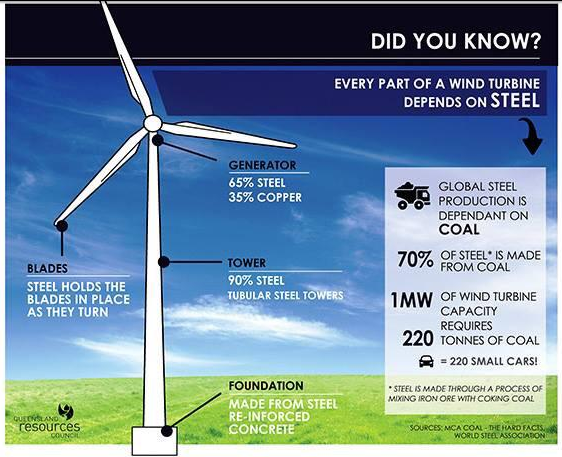
‘Green’ Energy Suicide: Australia’s Anti-Nuclear Power Stance Beggars Belief

stopthesethings's avatarSTOP THESE THINGS

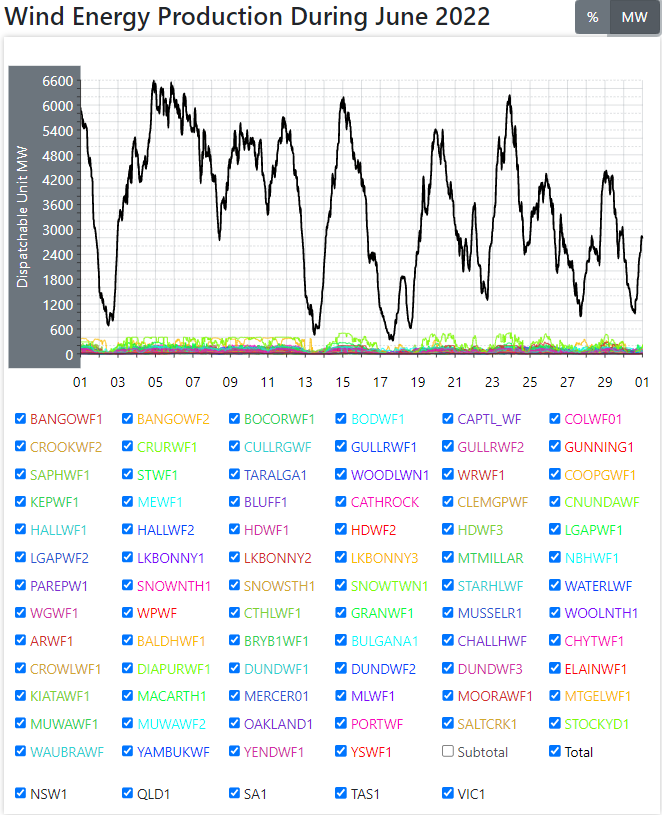
Australia’s politics is bereft of leadership and there’s no better example thereof than the failure to advance nuclear power in this country. Notwithstanding the unfolding power pricing and supply calamity – driven by chaotically intermittent and heavily subsidised wind and solar – its new Labor Prime Minister, Anthony Albanese, more Elmer Fudd than Bob Hawke, refuses to even discuss the prospect of nuclear power generation, and is left to waffle about mythical battery storage and pie-in-the-sky ‘green’ hydrogen schemes somehow saving his country from the consequence of attempting to rely upon the perpetually unreliable.

The Labor/Green Alliance will always run the anti-nuke mantra – they’re far too invested (literally and figuratively) in the mythical ‘transition’ to an all wind and sun-powered future.

The Australian voting public, on the other hand, is decidedly in favour of a nuclear-powered future, and has been for some time.

Most Australians want nuclear power to…

View original post 1,438 more words

June 28, 1914: Assassination of Archduke Franz Ferdinand of Austria-Este at Sarajevo

liamfoley63's avatarEuropean Royal History

Archduke Franz Ferdinand Charles Ludwig Joseph Maria of Austria-Este (December 18, 1863 – June 28, 1914) was the heir presumptive to the throne of Austria-Hungary. His assassination in Sarajevo was the most immediate cause of World War I.

Archduke Franz Ferdinand was the eldest son of Archduke Charles Ludwig of Austria, the younger brother of Emperor Franz Joseph I of Austria.

Archduke Franz Ferdinand’s mother was Archduke Charles Ludwig’s second wife, Princess Maria Annunciata of Bourbon-Two Sicilies. In 1875, when he was eleven years old, his cousin Francis V, Duke of Modena, died, naming Franz Ferdinand his heir on condition that he add the name “Este” to his own.

Crown Prince Rudolph of Austria died in 1889 part of a murder-suicide with his mistress Mary Vetsera at his hunting lodge in Mayerling. With the death of his father Archduke Charles Ludwig in 1896 from Typhoid, Archduke Franz Ferdinand became the…

View original post 589 more words

Shifts in Labor Participation: The Great Resignation Becomes the Great Reshuffling

Scott Buchanan's avatarEconomist Writing Every Day

More than 47 million workers quit their jobs in 2021, in what has become known as The Great Resignation. However, many of these workers are getting re-hired elsewhere. Hiring rates have outpaced quit rates since November, 2020.

The U.S. Chamber of Commerce has published some statistics on this reshuffling of the labor force, which I will reproduce here.  As shown in the chart below, quit rates in leisure and hospitality  (which require in-person attendance and pay lower salaries) were enormous. However, the recent hiring rates have been even higher in this area, so the shortage of labor there is only moderate.

When taking a look at the labor shortage across different industries, the transportation, health care and social assistance, and the accommodation and food sectors have had the highest numbers of job openings.

But yet, despite the high number of job openings, transportation and the health care and social assistance…

View original post 336 more words

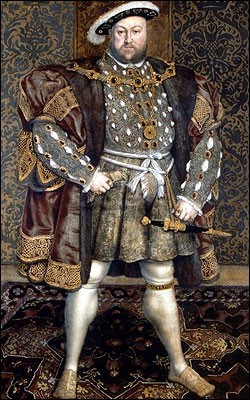
June 28, 1491: Birth of Henry VIII, King of England and Ireland

liamfoley63's avatarEuropean Royal History

Henry VIII (June 28, 1491 – January 28, 1547) was King of England from April 22, 1509 until his death in 1547. Henry was Lord of Ireland until 1542. At home, he oversaw the legal union of England and Wales with the Laws in Wales Acts 1535 and 1542, and he was the first English monarch to rule as King of Ireland following the Crown of Ireland Act 1542.

Born on June 28, 1491 at the Palace of Placentia in Greenwich, Kent, Henry Tudor was the third child and second son of King Henry VII and Elizabeth of York. Of the young Henry’s six (or seven) siblings, only three – his brother Arthur, Prince of Wales, and sisters Margaret and Mary – survived infancy.

Henry is best known for his six marriages, and for his efforts to have his first marriage (to Catherine of Aragon) annulled. His disagreement with Pope…

View original post 360 more words

Cheap Energy Surge: Asia’s Economic Miracle Driven By Reliable & Affordable Coal-Fired Power

stopthesethings's avatarSTOP THESE THINGS

Between them, China and India have already dragged hundreds of millions out of abject poverty, thanks to cheap and reliable coal-fired power. There’s no mystery to it; having electricity as and when households and businesses need it is central to an ordered, prosperous and civil society. Cheap power is at the heart of manufacturing and manufacturing is what’s driven the rise of China and India.

Woke Western wonks still spout drivel about the purported “death of coal”, but, in reality, the demand for the black stuff has never been stronger in the history of humankind.

Robert Bryce explains the relationship below.

India and China Coal Production Surging By 700M Tons Per Year: That’s Greater Than All U.S. Coal Output
Real Clear Energy
Robert Bryce
3 June 2022

If you think the world is moving beyond coal, think again. The post-Covid economic rebound and surging electricity demand have resulted in big…

View original post 747 more words

Mark Bennett: Protecting Free Speech whilst Preventing Terrorism: The Higher Education (Freedom of Speech) Bill and the ‘Prevent Duty’

UKCLA's avatarUK Constitutional Law Association

The Higher Education (Freedom of Speech) Bill continues its progression in Parliament, having initially been introduced in the House of Commons by the then-Education Secretary Gavin Williamson in May 2021, and recently “carried over” into the new (2022-23) parliamentary session; the Bill was debated at (and subsequently passed) Report stage and Third Reading in the House of Commons on Monday 13th June, and is due to be read a second time in the House of Lords today. (A useful summary of the Bill’s progress up to April 2022 can be found here.)

In this post, I argue, firstly, that the Bill appears to be addressing a “problem” that, in reality, is far smaller than the Government perceives it to be; and, secondly, it does so in a manner that fails to tackle the deeper issues that, if anything, may be harming free speech in practice. That is, the…

View original post 3,502 more words

Previous Older Entries Next Newer Entries

Bassett, Brash & Hide

Celebrating humanity's flourishing through the spread of capitalism and the rule of law

Truth on the Market

Scholarly commentary on law, economics, and more

The Undercover Historian

Beatrice Cherrier's blog

Matua Kahurangi

Celebrating humanity's flourishing through the spread of capitalism and the rule of law

Temple of Sociology

Celebrating humanity's flourishing through the spread of capitalism and the rule of law

Velvet Glove, Iron Fist

Celebrating humanity's flourishing through the spread of capitalism and the rule of law

Why Evolution Is True

Why Evolution is True is a blog written by Jerry Coyne, centered on evolution and biology but also dealing with diverse topics like politics, culture, and cats.

Down to Earth Kiwi

Celebrating humanity's flourishing through the spread of capitalism and the rule of law

NoTricksZone

Celebrating humanity's flourishing through the spread of capitalism and the rule of law

Homepaddock

A rural perspective with a blue tint by Ele Ludemann

Kiwiblog

DPF's Kiwiblog - Fomenting Happy Mischief since 2003

The Dangerous Economist

Celebrating humanity's flourishing through the spread of capitalism and the rule of law

Watts Up With That?

The world's most viewed site on global warming and climate change

The Logical Place

Tim Harding's writings on rationality, informal logic and skepticism

Doc's Books

A window into Doc Freiberger's library

The Risk-Monger

Let's examine hard decisions!

Uneasy Money

Commentary on monetary policy in the spirit of R. G. Hawtrey

Barrie Saunders

Thoughts on public policy and the media

Liberty Scott

Celebrating humanity's flourishing through the spread of capitalism and the rule of law

Point of Order

Politics and the economy

James Bowden's Blog

A blog (primarily) on Canadian and Commonwealth political history and institutions

Science Matters

Reading between the lines, and underneath the hype.

Peter Winsley

Economics, and such stuff as dreams are made on

A Venerable Puzzle

"The British constitution has always been puzzling, and always will be." --Queen Elizabeth II

The Antiplanner

Celebrating humanity's flourishing through the spread of capitalism and the rule of law

Bet On It

Celebrating humanity's flourishing through the spread of capitalism and the rule of law

History of Sorts

WORLD WAR II, MUSIC, HISTORY, HOLOCAUST

Roger Pielke Jr.

Undisciplined scholar, recovering academic

Offsetting Behaviour

Celebrating humanity's flourishing through the spread of capitalism and the rule of law

JONATHAN TURLEY

Res ipsa loquitur - The thing itself speaks

Conversable Economist

In Hume’s spirit, I will attempt to serve as an ambassador from my world of economics, and help in “finding topics of conversation fit for the entertainment of rational creatures.”

The Victorian Commons

Researching the House of Commons, 1832-1868

The History of Parliament

Articles and research from the History of Parliament Trust

Books & Boots

Reflections on books and art

Legal History Miscellany

Posts on the History of Law, Crime, and Justice

Sex, Drugs and Economics

Celebrating humanity's flourishing through the spread of capitalism and the rule of law

European Royal History

Exploring the Monarchs of Europe

Tallbloke's Talkshop

Cutting edge science you can dice with

Marginal REVOLUTION

Small Steps Toward A Much Better World

NOT A LOT OF PEOPLE KNOW THAT

“We do not believe any group of men adequate enough or wise enough to operate without scrutiny or without criticism. We know that the only way to avoid error is to detect it, that the only way to detect it is to be free to inquire. We know that in secrecy error undetected will flourish and subvert”. - J Robert Oppenheimer.

STOP THESE THINGS

The truth about the great wind power fraud - we're not here to debate the wind industry, we're here to destroy it.

Lindsay Mitchell

Celebrating humanity's flourishing through the spread of capitalism and the rule of law

Alt-M

Celebrating humanity's flourishing through the spread of capitalism and the rule of law

croaking cassandra

Economics, public policy, monetary policy, financial regulation, with a New Zealand perspective

The Grumpy Economist

Celebrating humanity's flourishing through the spread of capitalism and the rule of law

International Liberty

Restraining Government in America and Around the World