TweetHere’s a letter to AP Fact Check. Editor: Melissa Goldin does a deep dive into the cause(s) of the U.S. “agricultural trade deficit” (“FACT FOCUS: Trump blames Biden for the agricultural trade deficit. It’s not that simple,” December 10). To what extent is this “deficit” caused by the policies of Biden? To what extent is…
Humanity Has a Huge Surplus of Economic Misunderstanding
Humanity Has a Huge Surplus of Economic Misunderstanding
13 Dec 2025 Leave a comment
in applied price theory, history of economic thought, industrial organisation, international economics, politics - USA, Public Choice, rentseeking Tags: free trade, tarrifs
Getting NZ building again
11 Dec 2025 Leave a comment
in applied price theory, economics of regulation, law and economics, politics - New Zealand, property rights
Congressional leadership is corrupt
11 Dec 2025 Leave a comment
in applied price theory, econometerics, economic history, financial economics, politics - USA, Public Choice
Using transaction-level data on US congressional stock trades, we find that lawmakers who later ascend to leadership positions perform similarly to matched peers beforehand but outperform them by 47 percentage points annually after ascension. Leaders’ superior performance arises through two mechanisms. The political influence channel is reflected in higher returns when their party controls the…
Congressional leadership is corrupt
Productivity growth (or lack of it)
10 Dec 2025 Leave a comment
in applied price theory, econometerics, economic growth, economic history, fiscal policy, labour economics, macroeconomics, politics - New Zealand

In a post last week I included this chart of the latest annual OECD data on labour productivity, expressed in PPP terms. It was grim, in a familiar sort of way. New Zealand’s overall economic performance has long been poor (the halcyon days when New Zealand was in the top 3 in the world relegated […]
Productivity growth (or lack of it)
Evaluating the Sale of Warner Bros Discovery to Netflix from an Antitrust Perspective
09 Dec 2025 1 Comment
in applied price theory, economics of regulation, industrial organisation, market efficiency Tags: competition law

Warner Bros. Discovery (WBD) has announced that it is selling its major assets to Netflix, including Warner Bros. Pictures (home of Harry Potter), DC Studios, and HBO Max. Netflix was chosen among a group of bidders that also included Paramount and Comcast. This post explores some of the antitrust issues and hurdles that a combined…
Evaluating the Sale of Warner Bros Discovery to Netflix from an Antitrust Perspective
Antitrust at the Agencies: Meta Analysis Edition
09 Dec 2025 Leave a comment
in applied price theory, economics of regulation, industrial organisation, law and economics, politics - USA Tags: competition law

The memorandum and order in FTC v. Meta Platforms Inc. that U.S. District Court Judge James E. Boasberg filed Nov. 18, ruling in favor of Meta, has now been followed by a Dec. 2 revised order that contained fewer redactions. The memorandum doesn’t exactly provide the law & economics analysis I would have produced, had…
Antitrust at the Agencies: Meta Analysis Edition
Quotation of the Day…
09 Dec 2025 Leave a comment
in applied price theory, entrepreneurship, environmental economics, environmentalism

Tweet… is from page 223 of Art Carden’s and GMU Econ alum Caleb Fuller’s superb book, Mere Economics [original emphasis; footnotes deleted; link added]: The “finite resources” argument also begs the question because it assumes we know which materials are “resources” and which are not. Something is only a resource insofar as we can use…
Quotation of the Day…
The myth of the $140,000 poverty line
08 Dec 2025 Leave a comment
in applied price theory, labour economics, labour supply, poverty and inequality
That is my latest piece for The Free Press, focusing on the claims of Michael W. Green. Excerpt: Most of all, there is a major conceptual error in Green’s focus on high prices. To the extent that prices are high, it is not because our supply chains have been destroyed by earthquakes or nuclear bombs. […]
The myth of the $140,000 poverty line
Unfettered: Fishback 25 Years Later
07 Dec 2025 Leave a comment
in applied price theory, economic history, history of economic thought, labour economics, labour supply, poverty and inequality
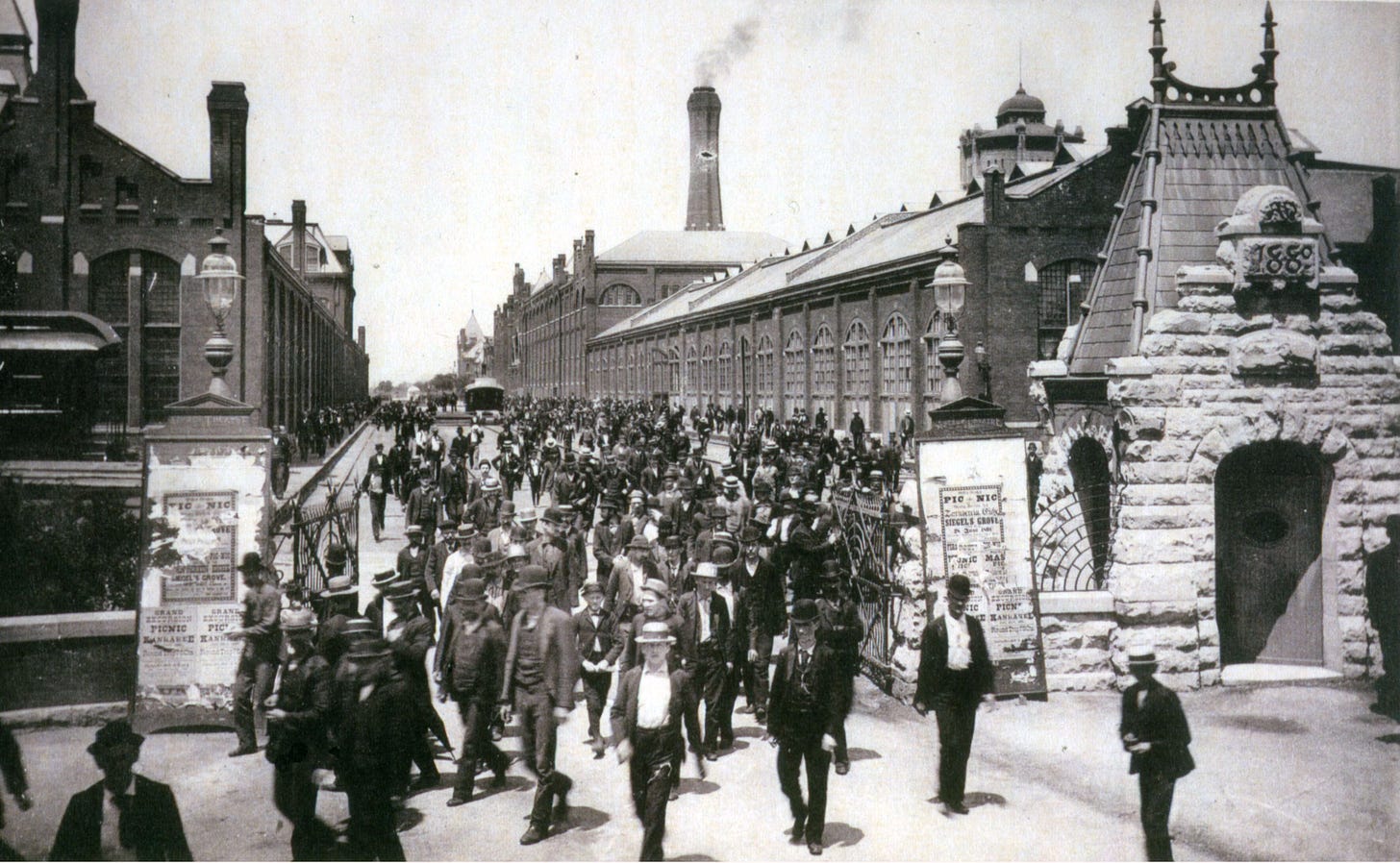
A quarter century ago, economist Price Fishback published “Operations of ‘Unfettered’ Labor Markets: Exit and Voice in American Labor Markets at the Turn of the Century” 1,762 more words
Unfettered: Fishback 25 Years Later
Climate Doomsday Prophecy Peddled By Academia Retracted In Disgrace
07 Dec 2025 Leave a comment
in applied price theory, applied welfare economics, climate change, econometerics, economics of climate change, economics of education, energy economics, environmental economics, environmentalism, global warming, politics - USA Tags: academic bias, climate activists
A widely-referenced 2024 study that predicted massive global economic damages due to climate change has now been retracted, The New York Times (NYT) reported on Wednesday.
Climate Doomsday Prophecy Peddled By Academia Retracted In Disgrace
Metrics, Markets, and Merger Scrutiny: A Netflix-WBD Combination
06 Dec 2025 Leave a comment
in applied price theory, economics of regulation, entrepreneurship, industrial organisation, politics - USA Tags: competition law, creative destruction

This morning’s announced merger between Netflix and Warner Bros. Discovery (WBD) would create a global media company of unprecedented scale. The transaction will also almost certainly attract scrutiny from antitrust regulators—most likely the U.S. Justice Department (DOJ) Antitrust Division, rather than the Federal Trade Commission (FTC). The deal would offer a direct test of the…
Metrics, Markets, and Merger Scrutiny: A Netflix-WBD Combination
Is Competitiveness Transforming Competition Policy?
06 Dec 2025 Leave a comment
in applied price theory, economics of regulation, entrepreneurship, industrial organisation, international economics Tags: competition law, creative destruction
Nations around the world are reassessing antitrust policy (generally called “competition policy” overseas). Governments, regulators, and industry leaders are increasingly asking whether traditional antitrust enforcement is holding back the “competitiveness” of domestic firms. The term now shows up in speeches by European commissioners, in UK government directives, in U.S. merger battles, and in Canadian legislative…
Is Competitiveness Transforming Competition Policy?
The Great Means-Testing Debate
05 Dec 2025 Leave a comment
in applied price theory, history of economic thought, human capital, labour economics, labour supply, Milton Friedman, occupational choice, poverty and inequality, unemployment, welfare reform
Nine years ago, I critically analyzed the Cohen-Friedman debate on means-testing Social Security. Only recently, though, did I find the original footage from 1971. As far as I know, this is the first time that any prominent social scientist made the “A program only for the poor will always be a poor program” argument that…
The Great Means-Testing Debate
The taxing problem of zombie and phoenix companies
04 Dec 2025 Leave a comment
in applied price theory, economics of bureaucracy, economics of crime, fiscal policy, law and economics, macroeconomics, politics - New Zealand, property rights, Public Choice, public economics, rentseeking Tags: Germany
Eric Crampton writes – Damien Grant isn’t normally the one making the case that the government needs to take more in tax. The liquidator and libertarian-minded columnist at the Sunday Star Times more typically wants what libertarians generally want – a government that spends less and that can let each of us keep more of […]
The taxing problem of zombie and phoenix companies
My Econoboi Poverty Debate vs. Matt Bruenig
04 Dec 2025 Leave a comment
in applied price theory, human capital, labour economics, labour supply, occupational choice, politics - USA, poverty and inequality, welfare reform Tags: child poverty, family poverty, social insurance
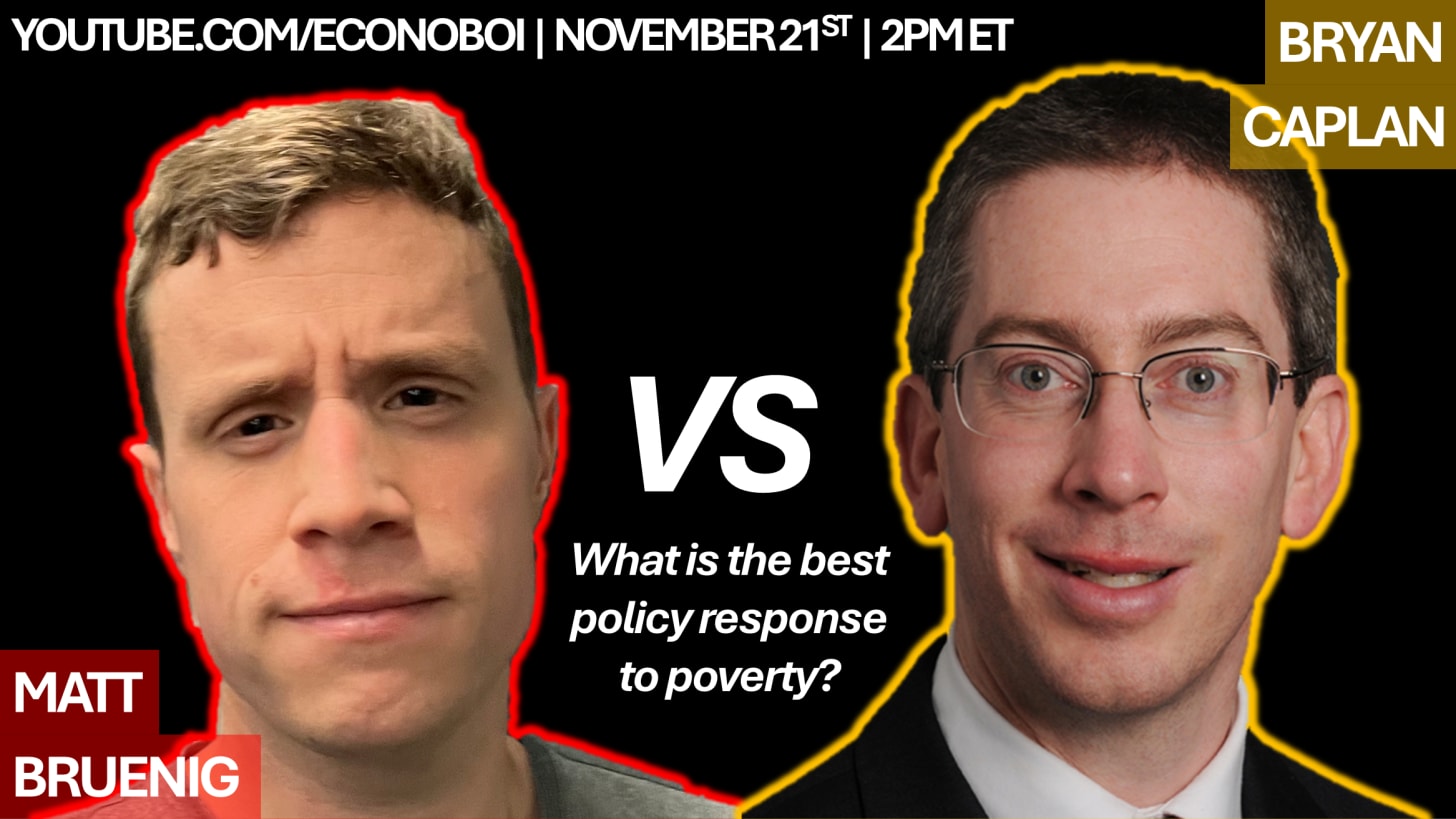
Tomorrow at 2 PM ET, I’ll be debating “What is the best policy response to poverty?” versus Matt Bruenig. Venue: Econoboi channel P.S. You might recall that… 9 more words
My Econoboi Poverty Debate vs. Matt Bruenig
 Utopia, you are standing in it!
Recent Comments