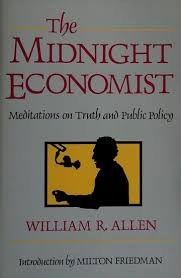
Tweet… is from page 181 of the late UCLA economist William Allen’s superb 1989 collection of the transcripts of his radio addresses, The Midnight Economist; specifically, it’s from Allen’s April 1985 address “Employment and Wages, Competition and Fairness”: The more valuable the worker, the higher the bid for his services. The high wage offer reflects…
Newsroom has an article on the 10 SOEs that a Government could sell. I’ve done a matrix looking at which could be best to sell. Asset Competitive Value Sensitivity Prospects QV B $54m D Y Landcorp A $1.6b B Y AsureQuality B $100m C Y Kordia B $62m C Y Kiwibank B $2.6b A Y…
The US economy is the largest in the world, and at least among the large-population countries of the world (setting aside smaller economies strongly influenced by international capital flows like Monaco, Cayman Islands, and Ireland or by oil resources), it also has the highest per capita GDP. But at the same time, according to the…
The Supreme Court has ruled that four Uber drivers are employees of Uber, despite written agreements they are contractors, not employees. The practical effect of this decision is terrible. Uber has been great for passengers. Not only can we hold drivers to account through ratings, we save a lot of money. An Uber to the…
I’ve never really been persuaded that it is a good idea for public servants to be giving speeches, unless perhaps they are simply and explicitly explaining or articulating government policy. If they are, instead, purporting to run their own views or those of their agency it is almost inevitable that we will be getting less […]
I’m still riding high after Javier Milei’s political party won a landslide in last month’s mid-term elections in Argentina. And I’m very much hoping and expecting that gives him enough legislative support to enact big reforms next year to further liberate the Argentinian economy (tax reform, free trade, and labor market liberalization). But let’s take […]
Pragmatic analysis says maybe we should, but we should also consider nationalisation. We should certainly consider better regulation. Brian Easton writes – An earlier column argued that we should make the government’s net worth – the value of its assets less its liabilities – more prominent in fiscal policy. Net worth is also fundamental when we are […]
One of Argentine President Milei’s radical reforms was to “take a chainsaw” to rent control laws. Argentina had had some of the most restrictive rent control regimes ever. All of that was abandoned almost over night. Many media outlets noted with glee that rents fell dramatically. Even most economists were surprised by how much supply…
I supported Brexit for two reasons. The European Union is a sinking ship and a vote for Brexit spares British taxpayers from being on the hook when massive bailouts occur. Leaving the European Union would give the United Kingdom more leeway to choose a pro-market, Singapore-on-Thames policy agenda. The good news is that Point #1 […]
In my own family, the reverence that we have for the dishwasher (and other time-saving devices) is such that we have a cat named “Josephine” after the Josephine Cochrane–the inventor of the first commercially viable dishwasher. (Also named because, as a kitten, she liked to forage in the back of the dishwasher.) Erin Braid provides…
Antitrust should center on dynamic market forces that drive major technological change, rather than on static “big is bad” market analysis, based on the work of the 2025 economics Nobel Prize winners. Antitrust enforcers in the United States and around the world could benefit by incorporating these insights into their policy development. Focus on Dynamic […]
Economists and [insert basically every other group of people] often don’t agree. Take, for instance, the recent discussion of price controls. The headline of this opinion piece on the subject in The New York Times literally begins with “Economists Hate This Idea.” Yet voters aren’t so skeptical. (I’m not ready to say the idea has…
Tweet… is from page 158 of Milton Friedman’s 1953 paper “The Case for Flexible Exchange Rates,” as this paper is reprinted in Friedman’s 1953 collection, Essays in Positive Economics: In brief, it [free trade] is desirable in its own right as one of the basic freedoms we cherish; it promotes the efficient use of resources…
The author is economist Jennifer Doleac, and the subtitle is A Revolution in Criminal Justice. Excerpt: We found that adding anyone charged with a felony to the law enforcement DNA database in Denmark reduced future criminal convictions by over 40 percent. Again, people responded to the higher probability of getting caught by committing fewer cimres. …
Why Evolution is True is a blog written by Jerry Coyne, centered on evolution and biology but also dealing with diverse topics like politics, culture, and cats.
In Hume’s spirit, I will attempt to serve as an ambassador from my world of economics, and help in “finding topics of conversation fit for the entertainment of rational creatures.”
“We do not believe any group of men adequate enough or wise enough to operate without scrutiny or without criticism. We know that the only way to avoid error is to detect it, that the only way to detect it is to be free to inquire. We know that in secrecy error undetected will flourish and subvert”. - J Robert Oppenheimer.



 Utopia, you are standing in it!
Recent Comments