Larry White | UCLA Price Theory and Macroeconomics | Economic Forces Podcast Episode 1
05 Feb 2022 Leave a comment
in applied price theory, history of economic thought, macroeconomics, monetary economics
The political foundations of Northern Ireland are at risk of crumbling
04 Feb 2022 Leave a comment


Not for the first time in recent memory, Northern Irish politics is in flux, the UK government’s Brexit deal is causing ructions and the power-sharing institutions are on the brink of collapse. Alan Whysall assesses the current crisis and argues that the foundations of the Belfast/Good Friday Agreement are at serious risk of crumbling.
Northern Ireland appears headed for further political turbulence, and it is not clear that devolved government will survive. Two steps within 24 hours by the Democratic Unionist Party (DUP), currently the largest party in the Assembly, have triggered this.
On Wednesday night, the DUP Agriculture Minister, Edwin Poots, announced that his staff would no longer carry out checks required at Northern Ireland ports under the Northern Ireland Protocol.
On Thursday afternoon, the DUP First Minister (FM) of Northern Ireland, Paul Givan, announced that he would resign his office on Friday morning over the Protocol, although…
View original post 1,188 more words
Vernon Smith on Behavioral in 2008
04 Feb 2022 Leave a comment

Like last week, this post is adjacent to the internet chattering over whether behavioral economics is “dead”.
Vernon Smith wrote a book Rationality in Economics that came out in 2008. I’m going to pull some quotes from that book that I think are relevant. This is not an attempt to summarize the main point of the book.
I began developing and applying experimental economics methods to the study of behavior and market performance in the 1950s and 1960s…
Preface, pg xiii
Repetitive or real-time action in incomplete information environments is an operating skill different from modeling based on the “given” information postulated to drive the economic environment that one seeks to understand in the sense of equilibrium, optimality, and welfare. This decision skill is based on a deep human capacity to acquire tacit knowledge that defies all but fragmentary articulation in natural or written language.
Preface, pg xv
I think…
View original post 430 more words
Not Green: Offshore Wind ‘Industry’ Destroying Fishing Grounds, Birds & Marine Life
04 Feb 2022 Leave a comment


Taking wind turbines out to sea not only escalates the cost of the occasional power they produce, it destroys coastal landscapes, birds and other marine life.
Millions of birds of battered out of existence by these things every year. And offshore turbines are driving puffins and other threatened species to the brink of extinction.
Wind turbine noise has been proven to disrupt whales’ sonar guidance and communication systems, creating another threat to the already threatened Atlantic Right Whale.
The damage done by offshore wind farms to fishing grounds is met with practiced contempt by wind power outfits and malign indifference by their political enablers.
And, as Viv Forbes puts it, offshore wind power facilities threaten the lives and lifestyles of coastal communities, everywhere.
Whirling ‘Triffids’ are now cluttering our coastlines
Spectator Australia
Viv Forbes
29 December 2021
‘I saw them now with a disgust that they had…
View original post 433 more words
Teaching Price Controls (Poorly)
04 Feb 2022 Leave a comment

Economics textbooks differ in their treatment of price controls. None of them does a great job, in my opinion. The reason is mostly due to the purpose of textbooks. Despite what you might suspect, most undergraduate textbooks are not used primarily to give students an understanding of the world. They are often used as a bound list of things to know and to create easy test questions. If a textbook has to change the assumptions of a model too much from what the balance of the chapter assumes, then the book fails to make clear what students are supposed to know for the test.
I think that this is the most charitable reason for books’ poor treatment of price controls – even graduate level books. The less charitable reasons include sloppy exposition due to author ignorance or an over-reliance on math. I honestly would have trouble believing these less charitable…
View original post 1,102 more words
Josh Wright | UCLA Law and Economics, Relational Contracts, and Antitrust
04 Feb 2022 Leave a comment
in applied price theory, applied welfare economics, Armen Alchian, comparative institutional analysis, economics of regulation, F.A. Hayek, history of economic thought, industrial organisation, law and economics, Ronald Coase, theory of the firm Tags: competition law
It’s Energy Will Make or Break the World Now
02 Feb 2022 Leave a comment

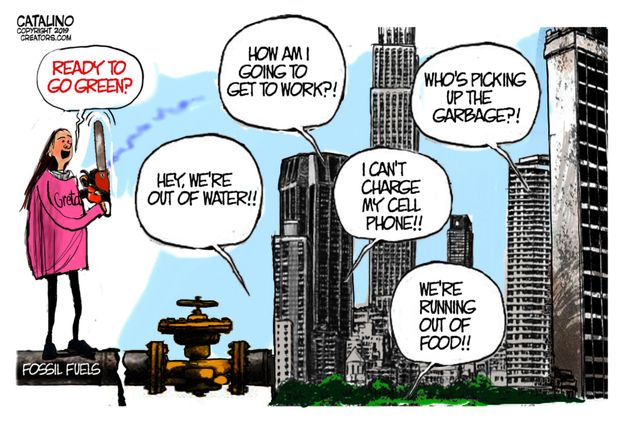 Ayaan Hirsi Ali explains how Energy has become the first and foremost world public concern in her Spectator article Energy is the most important issue in the world. Excerpts in italics with my bolds and added images.
Gas prices are climbing, Russia is building pipelines, yet we’re focused instead on appeasing climate activists
One issue more than any other will dominate airtime and influence policy in 2022: energy.Americans are seeing the highest prices at the pump in seven years. Since Biden took office, average gas prices are up by more than $1 a gallon. In November, gas prices in Mono County, California hit more than $6 per gallon, forcing some residents to drive to Nevada (where gas taxes are lower) to buy fuel.

The price of natural gas in the US is at its highest in seven years, and up more than 180 percent in the last year…
View original post 762 more words
Plans to ‘blanket’ plant trees across Wales could ‘decimate’ farming communities
02 Feb 2022 Leave a comment
One in three homes will need electricity boost for heat pumps to work
02 Feb 2022 Leave a comment

 Domestic Air Source Heat Pump [image credit: UK Alternative Energy]
Another example of how ‘net zero’ dogma is going to be highly disruptive and expensive for energy customers, all in the name of appeasing climate obsessives.
– – –
Installing a heat pump will require one in three homes to have an electricity upgrade, a power company has said.
Heat pumps and electric car chargers will mean a big increase in a household’s electricity demand, with many older properties requiring upgrades that can cost thousands of pounds, though most companies are planning to start “socialising” the cost by spreading it out among bills, says the Telegraph.
Western Power Distribution (WPD), which manages the electricity network for the Midlands, South Wales and the South West, said providing power to heat homes was one of the “biggest challenges” of the heat pump rollout.
“We anticipate that this will lead to the…
View original post 184 more words
Religious school tells parents it will apply its religious beliefs
01 Feb 2022 Leave a comment

The above heading doesn’t sound very exciting, does it? Isn’t that what one would expect, that a school set up to educate students in a particular religious view would apply those beliefs in its practices? But the press in Australia sees it differently, apparently. “School rules: Brisbane college expects students to denounce homosexuality” is the way that the Sydney Morning Herald puts it (Jan 31). Citipointe Christian College has sent a letter to parents spelling out its views on a number of issues, letting them know that the College expects students and parents to be aware of these views if students are to be sent there. Here I will comment on whether the College is legally justified in so doing.
View original post 1,509 more words
‘GREEN FANATSY’ Plans to ban sale of new petrol and diesel cars slammed by fuming voters
01 Feb 2022 Leave a comment
Brace For Blackouts: World’s Reliance On Unreliable Wind & Solar Spells Energy Disaster
01 Feb 2022 Leave a comment
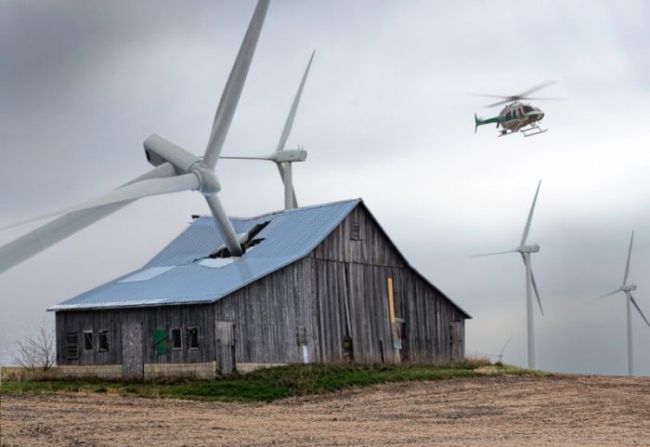
Topping the list of things that seemed like a good idea at the time sits wind and solar power.
What, with the energy sources that drive them free and natural; with no visible emissions of spent gas or fumes; with their shiny panels harvesting the sun’s rays and delivering electricity for five or six hours a day (rain and cloud cover permitting); with their majestic 50-60m blades lovingly caressing benevolent breezes and thereby ‘powering’ hundreds of thousands of homes (around-the-clock, according to wind industry marketing blurb), why wouldn’t the gullible masses be sucked into the belief that sunshine and breezes will soon deliver all of our energy needs, forevermore?
That was then. This is now.
The increasing reliance on the unreliables has been revealed for what it is: sheer lunacy.
But this is stupidity with a kicker: the blackouts caused by sudden and unpredictable collapses in wind and solar output…
View original post 571 more words
The Hanoverians: Victoria (1837-1901)
31 Jan 2022 Leave a comment

Born in 1819, Victoria was the only child of Prince Edward, Duke of Kent and Strathearn, and Princess Victoria of Saxe-Coburg-Saalfeld, Duchess of Kent. Tragically, her father died shortly after Victoria was born and her mother then fell under the alluring spell of John Conroy, her comptroller and personal secretary, a man upon whom the eyes of history have not looked favorably. He was considerably ambitious, apparently plotting with Victoria’s mother to keep the young princess locked away in Kensington Palace under the strict tutelage of her governess, Baroness Lehzen. Young Victoria had a secluded and lonely life. She was reared to be neither weak nor submissive, as in the tradition of the Whigs, but her freedom and joy was very much repressed under what became known as the “Kensington System,” a rigid series of rules intended to keep Victoria a puppet when she eventually became queen, as well as…
View original post 2,571 more words
On Lockdowns and Hospital Capacity
31 Jan 2022 Leave a comment

My home province of Quebec in Canada has been under lockdown since the Holidays (again). At 393 days of lockdown since March 11th 2020, Quebec has been in lockdown longer than Italy, Australia and California (areas that come as examples of strong lockdown measures). Public health scientists admit that the Omicron variant is less dangerous. But the issue is not the health danger, but rather the concern that rising hospitalizations will cause an overwhelming of an exhausted health sector.
And to be sure, when one looks at the data on hospital bed capacity and use-rates, you find that the intensity of lockdowns is well-related to hospital capacity. Indeed, Quebec is a strong illustration of this as its public health care system has one of the lowest levels of hospital capacity in the group of countries with similar income-levels. The question then that pops to my mind is “how elastic is…
View original post 415 more words


Recent Comments