The day that evil and arrogance was hanged.

dirkdeklein's avatarHistory of Sorts

Eichmann

On May 31st 1962 Adolf Eichmann was executed for his crimes by hanging.

I have read a lot about Eichmann and have seen a lot of documentaries. He was a particularly evil man, he never showed any remorse for all the crimes he committed or ordered to be carried out. Throughout his trial he remained arrogant.

Adolf Eichmann’s last words, before he was hanged were “I hope that all of you will follow me,”

arrogance

Eichmann was one of the architects of the Holocaust. OnJanuary 20 1942, he met with top Nazi officials at the Wansee Conference near Berlin.The conference marked a turning point in Nazi policy toward the Jews. Plans to transport Jews to Madagascar was abandoned, as were other plans for relocation. The focus was on the final solution, the eradication of the Jews.

The most disturbing aspect of the conference was the business like attitude adopted for the…

View original post 227 more words

The Most Important Election of 2021

Dan Mitchell's avatarInternational Liberty

If you want visual proof of Chile’s “improbable success,” this chart tells you everything you need to know.

Thanks to free-market reforms in the 1980s and 1990s, growth exploded, Chile became the Latin Tiger and poverty plummeted.

It’s remarkable how quickly per-capita GDP has increased compared to the average of other major Latin American economies (Argentina, Bolivia, Brazil, Colombia, Ecuador, Mexico, Peru, Paraguay, Uruguay, and Venezuela).

Some folks on the left (including editors at the New York Times) bizarrely think Chile’s “neoliberal experiment” has been a failure. Given their upside-down perspective, they probably think Venezuela is a smashing success.

But today’s column is not about what’s happened in the past. It’s about what may happen in the future because of an upcoming presidential election.

Let’s start with this article from the Economist, which expressed concern back in November that the first round…

View original post 1,146 more words

A Call of the House

sball1832's avatarThe Victorian Commons

When party management at Westminster was still being developed the only means of ensuring good attendance at parliamentary debates was to ‘call the House’, an event described in 1855 as ‘one of the most interesting and exciting scenes’ the Commons ever witnessed. At a time when MPs’ attendance at debates was often poor, the practice was employed when important questions required the full attention of the House.

The earliest authenticated call of the House took place in 1549, although the procedure is thought to have originated in a statute of Richard II. Usually MPs were given at least one week’s notice that a call was to take place, although the interval could vary between one day and six weeks. On the day appointed the order might be discharged (i.e. dropped), but if proceeded with the Members’ names were called over according to their counties, which were arranged alphabetically, the English…

View original post 1,161 more words

Numerical Nonsense: Why The Case For Intermittent Wind Power Never Adds Up

stopthesethings's avatarSTOP THESE THINGS

Because every MW of wind power capacity is matched with a MW of reliable coal, gas or nuclear power, the ‘case’ for subsidised wind will never add up

Generating electricity 30% of the time – albeit that wind power outfits can never tell you in advance which 30% of the time that might be – the cost of ‘backing up’ intermittent wind power becomes astronomical. These days reliable generation is referred to euphemistically as ‘firming capacity’ – conjuring up the notion of some kind of Viagra for putting a little stiffness in the grid.

Duplicating a reliable generation system with an unreliable one, not only duplicates the capital cost it also increases the cost of running the former, as coal and gas generators are forced to ramp up and down, according to the weather. All of which results in monumental waste and astronomical costs.

Jay Lehr takes a look at…

View original post 1,089 more words

Net Neutrality and a Lesson about Regulation

Dan Mitchell's avatarInternational Liberty

If you’re a policy wonk, you’ll enjoy this history of how government regulation has hindered the development of telecommunications technology.

I want to focus on the part of the video, beginning about 30:00, which discusses “net neutrality.” The interview with Professor Hazlett took place in 2017, at a time when there was lots of fighting over this issue.

The pro-regulation crowd claimed that net neutrality was needed to protect consumers from slow and expensive service. And they made all sorts of ridiculous claims about the Trump Administration’s plans to get rid of the Obama-era regulation.

At the time, this tweet from the Democratic members of the U.S. Senate got a lot of attention.

So what actually happened after net neutrality was repealed?

I suppose the first question to answer is:

Did..

…the…

…Internet…

…slow…

…to…

…a…

…crawl?

Not exactly. Robby Soave gives us the details in a…

View original post 302 more words

Claim: Researchers uncover the surprising cause of the Little Ice Age

oldbrew's avatarTallbloke's Talkshop

A portion of the Atlantic meridional overturning circulation [image credit: R. Curry, Woods Hole Oceanographic Institution @ Wikipedia]
This article starts off confident that the researchers are right – ‘we now know’ etc. – but later retreats and says ‘the cooling appears to have’ etc. But as the Little Ice Age is an interesting topic it’s worth a look.
– – –
New research from the University of Massachusetts Amherst provides a novel answer to one of the persistent questions in historical climatology, environmental history and the earth sciences: what caused the Little Ice Age?

The answer, we now know, is a paradox: warming, says Phys.org.

The Little Ice Age was one of the coldest periods of the past 10,000 years, a period of cooling that was particularly pronounced in the North Atlantic region.

This cold spell, whose precise timeline scholars debate, but which seems to have set in…

View original post 779 more words

Serial Homicide before ‘Serial Killers’: British Poisoners

Cassie Watson's avatarLegal History Miscellany

Despite the now well-established academic interest in homicide, criminal justice historians have paid relatively little attention to a sub-group of murderers with whom the media has long been obsessed: the so-called serial killers. Whilst there remains a debate about how many victims a killer must claim before the ‘serial killer’ label is applied,[1] and a distinction should be made between spree and serial killers,[2] for our purposes it is more important to note that the term is now used mainly to describe male sex killers of the type personified by the infamous Jack the Ripper of 1888.[3] Those who kill successive victims for purely financial reasons tend to inspire less enduring fascination. However, they too are serial murderers and, as such, offer historians valuable insights on the investigative and legal tactics used to identify and convict uniquely dangerous repeat offenders. In Britain, poisoners were among the earliest…

View original post 1,822 more words

Mediterranean Weather In The Arctic

Boris Johnson’s Bizarre Persistence With Unreliable Wind Power Defies All Logic & Reason

stopthesethings's avatarSTOP THESE THINGS

Insanity is doing that same thing over and over again and expecting different results, which is why STT raises an eyebrow (or two) at Boris Johnson’s persistent love affair with heavily subsidised and chaotically intermittent wind power. His belief that taking it all offshore will make a difference, only confirms that this man has a tenuous grip on reality. Indeed, the belief that a modern, industrialised economy can rely upon a stone-age power source is positively bonkers.

Boris and his fellow travellers have now had the benefit of Europe’s Big Calm – a period when winds slackened across Western Europe and the UK – leaving thousands of these things completely idle. And yet, the amorous obsession remains.

Then there’s the astronomical cost of trying to generate occasional electricity tens and even hundreds of kilometres offshore and returning it to terra firma using cables prone to failure, and difficult and costly…

View original post 520 more words

HYEFU bits and bobs

Michael Reddell's avatarcroaking cassandra

I don’t have too much to say about yesterday’s HYEFU, but two things caught my eye.

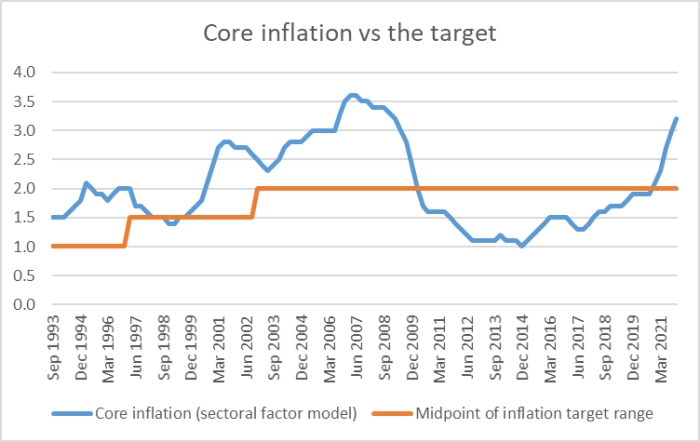
The first was a bit of attention on the $6 billion “operating allowance” the government has given itself to increase spending (or, I suppose, cut taxes) at next year’s Budget. It is a big number, but it doesn’t mean a great deal. In principle, the operating allowance covers things where the government has some discretion (whereas, by legislation, tax revenue tends to rise each year as nominal GDP does, and welfare benefits rise each year as inflation/wages do, and without new legislation the government of the day has no choice in the matter).

But governments tend to care about purchasing/delivering real goods and services, and they need actual people to work for them. And when there is inflation, the dollar cost of purchasing goods, services, and labour tends to rise. Governments don’t have to…

View original post 1,254 more words

Galileo’s modern critics

Ken's avatarOpen Parachute

What is it with some philosophical and historical commenters who take sides against Galileo in his 17th century dispute with the Church?

Perhaps because we now have many documents from that period (17th century) – including Galileo’s original writings, official documents from the Inquisition and the church,  and the text of complaints made to the inquisition about Galileo’s beliefs and teachings. This itself can fuel different perspectives.

However, I think another source of this lively debate lies in the preconceived notions and beliefs of the modern protagonists. That, to me, is the only explanation for a trend (a trend – I don’t blame all) among commenters on the history of science that seeks to blame the victim (in this case Galileo) for the affair. To claim that Galileo was scientifically wrong. That the Church was correct to suppress research into a heliocentric model for the solar system. And to…

View original post 1,458 more words

Video

Eagles Go Legal: Audubon Society Sues to Shutdown California’s Golden Eagle Mincers

stopthesethings's avatarSTOP THESE THINGS

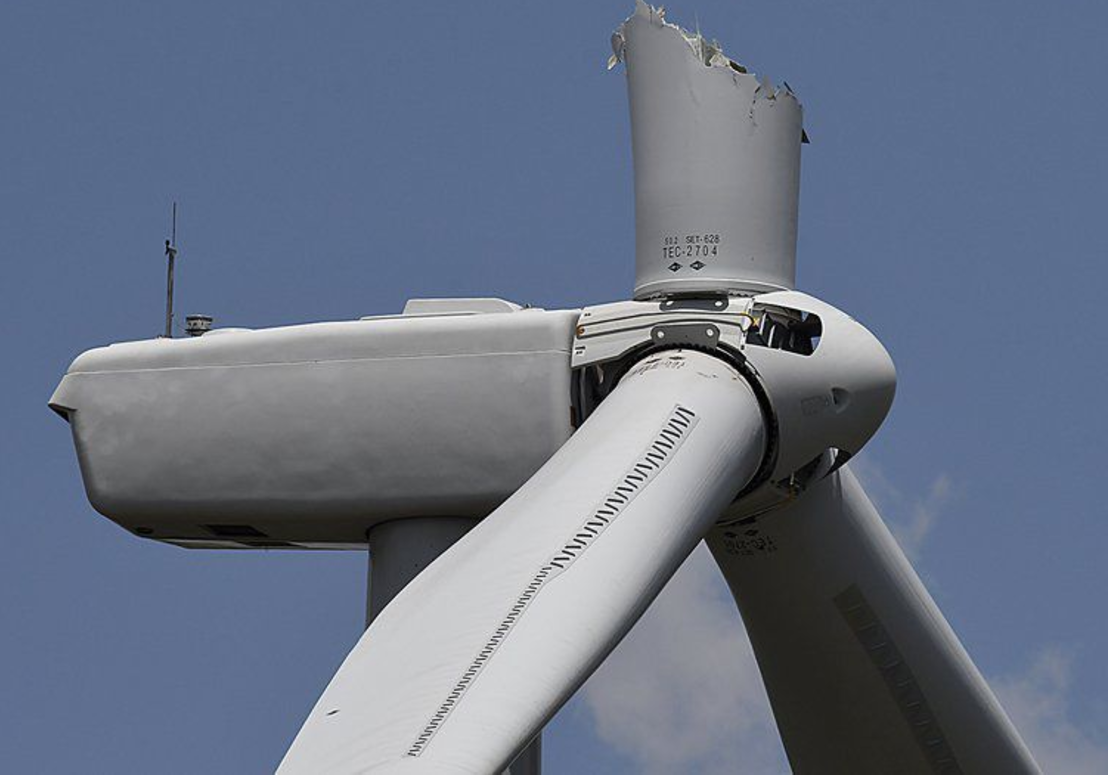
The rampant slaughter of millions of birds and bats, including America’s iconic bald and golden eagles, is met with a shrug by wind power acolytes, everywhere. When confronted, the wind industry simply resorts to lies and obfuscation and – when the corpses can no longer be hidden and the lying fails – issue court proceedings in an effort to literally bury those facts (see our post here).

Cars, cats and skyscrapers don’t kill Eagles – like the critically endangered Tasmanian wedge-tailed eagle, but 60m wind turbine blades with their tips travelling at 350Kph routinely smash them out of existence.

For concentrated carnage, though, California’s Altamont Pass takes the cake. With thousands of turbines slicing and dicing dozens of golden eagles, owls, hawks, and kites every day, it’s more like an abattoir than a power generation facility.

Finally, America’s Audubon Society has lawyered up in an effort to…

View original post 491 more words

The Reserve Bank appears underwhelming

Michael Reddell's avatarcroaking cassandra

First thing this morning the Reserve Bank fronted up at Parliament’s Finance and Expenditure Committee for their Annual Review hearing.

The Governor kicked off with some introductory remarks that were celebratory (the focus of the hearing was notionally on the last financial year) but superficial. In some cases barely even honest. He was “very proud” of all the Bank had achieved, talked up monetary policy as having been “highly effective in preventing deflation”, claimed (wrongly) to have been one of the first central banks to have raised policy interest rates again, and ended with a paean to “diversity and inclusion” talking of having “many plans” and “much action” on that front. There was no mention, for example, of the $5 billion of taxpayers’ money they had lost, or of the continuing churn at the top of the organisation.

Last evening they had had to announce that two more senior managers…

View original post 1,833 more words

December 14, 1895: Birth of Prince Albert of York, future King George VI of the United Kingdom

liamfoley63's avatarEuropean Royal History

George VI (Albert Frederick Arthur George; December 14, 1895 – February 6, 1952) was King of the United Kingdom and the Dominions of the British Commonwealth from December 11, 1936 until his death in 1952. He was concurrently the last Emperor of India until August 1947, when the British Raj was dissolved. King George VI was the father of the United Kingdom’s current monarch, Queen Elizabeth II.

The future George VI was born at York Cottage, on the Sandringham Estate in Norfolk during the reign of his great-grandmother Queen Victoria. His father was Prince George, Duke of York (later King George V), the second and eldest surviving son of the Prince and Princess of Wales (later King Edward VII and Queen Alexandra).

His mother, the Duchess of York (later Queen Mary), was the eldest child and only daughter of Francis, Duke of Teck, and Mary Adelaide of Cambridge, Duchess of…

View original post 614 more words

Previous Older Entries Next Newer Entries

Bassett, Brash & Hide

Celebrating humanity's flourishing through the spread of capitalism and the rule of law

Truth on the Market

Scholarly commentary on law, economics, and more

The Undercover Historian

Beatrice Cherrier's blog

Matua Kahurangi

Celebrating humanity's flourishing through the spread of capitalism and the rule of law

Temple of Sociology

Celebrating humanity's flourishing through the spread of capitalism and the rule of law

Velvet Glove, Iron Fist

Celebrating humanity's flourishing through the spread of capitalism and the rule of law

Why Evolution Is True

Why Evolution is True is a blog written by Jerry Coyne, centered on evolution and biology but also dealing with diverse topics like politics, culture, and cats.

Down to Earth Kiwi

Celebrating humanity's flourishing through the spread of capitalism and the rule of law

NoTricksZone

Celebrating humanity's flourishing through the spread of capitalism and the rule of law

Homepaddock

A rural perspective with a blue tint by Ele Ludemann

Kiwiblog

DPF's Kiwiblog - Fomenting Happy Mischief since 2003

The Dangerous Economist

Celebrating humanity's flourishing through the spread of capitalism and the rule of law

Watts Up With That?

The world's most viewed site on global warming and climate change

The Logical Place

Tim Harding's writings on rationality, informal logic and skepticism

Doc's Books

A window into Doc Freiberger's library

The Risk-Monger

Let's examine hard decisions!

Uneasy Money

Commentary on monetary policy in the spirit of R. G. Hawtrey

Barrie Saunders

Thoughts on public policy and the media

Liberty Scott

Celebrating humanity's flourishing through the spread of capitalism and the rule of law

Point of Order

Politics and the economy

James Bowden's Blog

A blog (primarily) on Canadian and Commonwealth political history and institutions

Science Matters

Reading between the lines, and underneath the hype.

Peter Winsley

Economics, and such stuff as dreams are made on

A Venerable Puzzle

"The British constitution has always been puzzling, and always will be." --Queen Elizabeth II

The Antiplanner

Celebrating humanity's flourishing through the spread of capitalism and the rule of law

Bet On It

Celebrating humanity's flourishing through the spread of capitalism and the rule of law

History of Sorts

WORLD WAR II, MUSIC, HISTORY, HOLOCAUST

Roger Pielke Jr.

Undisciplined scholar, recovering academic

Offsetting Behaviour

Celebrating humanity's flourishing through the spread of capitalism and the rule of law

JONATHAN TURLEY

Res ipsa loquitur - The thing itself speaks

Conversable Economist

In Hume’s spirit, I will attempt to serve as an ambassador from my world of economics, and help in “finding topics of conversation fit for the entertainment of rational creatures.”

The Victorian Commons

Researching the House of Commons, 1832-1868

The History of Parliament

Articles and research from the History of Parliament Trust

Books & Boots

Reflections on books and art

Legal History Miscellany

Posts on the History of Law, Crime, and Justice

Sex, Drugs and Economics

Celebrating humanity's flourishing through the spread of capitalism and the rule of law

European Royal History

Exploring the Monarchs of Europe

Tallbloke's Talkshop

Cutting edge science you can dice with

Marginal REVOLUTION

Small Steps Toward A Much Better World

NOT A LOT OF PEOPLE KNOW THAT

“We do not believe any group of men adequate enough or wise enough to operate without scrutiny or without criticism. We know that the only way to avoid error is to detect it, that the only way to detect it is to be free to inquire. We know that in secrecy error undetected will flourish and subvert”. - J Robert Oppenheimer.

STOP THESE THINGS

The truth about the great wind power fraud - we're not here to debate the wind industry, we're here to destroy it.

Lindsay Mitchell

Celebrating humanity's flourishing through the spread of capitalism and the rule of law

Alt-M

Celebrating humanity's flourishing through the spread of capitalism and the rule of law

croaking cassandra

Economics, public policy, monetary policy, financial regulation, with a New Zealand perspective

The Grumpy Economist

Celebrating humanity's flourishing through the spread of capitalism and the rule of law

International Liberty

Restraining Government in America and Around the World