Carbon taxation Esteban Rossi-Hansberg
13 Jul 2021 Leave a comment
in applied price theory, applied welfare economics, comparative institutional analysis, energy economics, environmental economics, global warming, industrial organisation
Daron Acemoğlu | Remaking the Post-Covid World | Oxford Union Web
13 Jul 2021 Leave a comment
in applied price theory, development economics, economic history, economics of education, entrepreneurship, human capital, industrial organisation, labour economics, labour supply, occupational choice, poverty and inequality
Another nail – but whose coffin? Redrawing Britain’s constituency map (again) and the future of the UK’s voting system
12 Jul 2021 Leave a comment

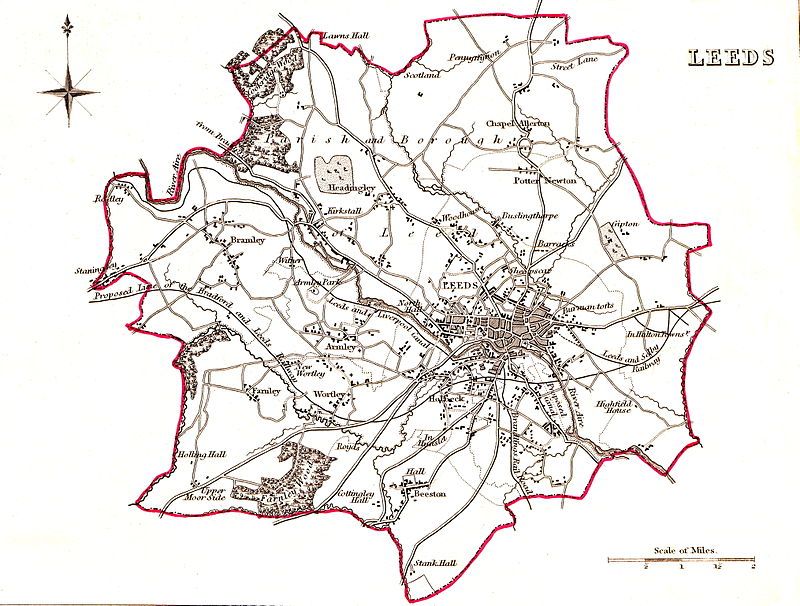
For the third time in just over a decade, a new map of parliamentary constituencies is being designed. This one will likely be implemented. Charles Pattie and David Rossiter argue that, despite the misconceptions of both Labour and the Conservatives, the review is neither a ‘gerrymander’ against one, nor redressing an imbalance that harmed the other. But these entrenched views could yet threaten the future of First Past the Post as the system for Westminster elections.
Here we go again. For the third time since 2010, a new map of Westminster parliamentary constituencies is being designed. The Boundary Commission for England released its preliminary proposals on 8 June (the Commissions for Scotland, Wales and Northern Ireland will follow suit in the coming months). Final recommendations will appear in the summer of 2023. This time (the previous two attempts at redistricting faltered before being implemented) the new map is very likely…
View original post 1,706 more words
Long Death(?) of Environmentalism
12 Jul 2021 Leave a comment

by Judith Curry
Schellenberger and Nordhaus of the Breakthrough Institute posted an interesting essay last week entitled “The Long Death of Environmentalism.” The summary reads:
Last week Breakthrough co-founders Michael Shellenberger and Ted Nordhaus returned to Yale University for a retrospective on their seminal 2004 essay, “The Death of Environmentalism.” In their speech they argued that the critical work of rethinking green politics was cut short by fantasies about green jobs and “An Inconvenient Truth.” The latter backfired — more Americans started to believe news of global warming was being exaggerated after the movie came out — the former made false promises that could not be realized by cap and trade. What is an earnest green who cares about global warming to do now? In this speech, Nordhaus and Shellenberger reflect on what went so badly awry, and offer 12 Theses for a post-environmental approach to climate change.
View original post 1,845 more words
5 minutes
12 Jul 2021 Leave a comment
by Judith Curry
How would you explain the complexity and uncertainty surrounding climate change plus how we should respond (particularly with regards to CO2 emissions) in five minutes?
View original post 869 more words
Will free markets beat climate change?
12 Jul 2021 Leave a comment
in applied price theory, applied welfare economics, comparative institutional analysis, development economics, economic history, energy economics, entrepreneurship, environmental economics, global warming, growth disasters, growth miracles Tags: climate alarmists
The Dutch government in exile
12 Jul 2021 Leave a comment

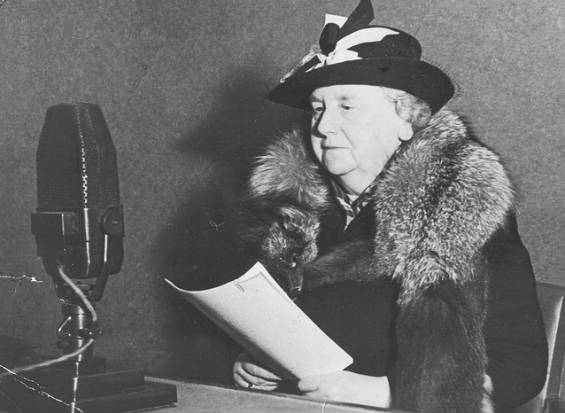 The Dutch government in exile , also known as the London Cabinet () was the government in exile of the Netherlands, headed by Queen Wilhelmina, that evacuated to London after the German invasion of the country during World War II.It was established on May 13 1940.
Prior to 1940, the Netherlands was a neutral country, generally on good terms with Germany. In May 1940 Queen Wilhelmina escaped to London; the Dutch government under Prime Minister De Geer would follow a day later, after the German invasion.
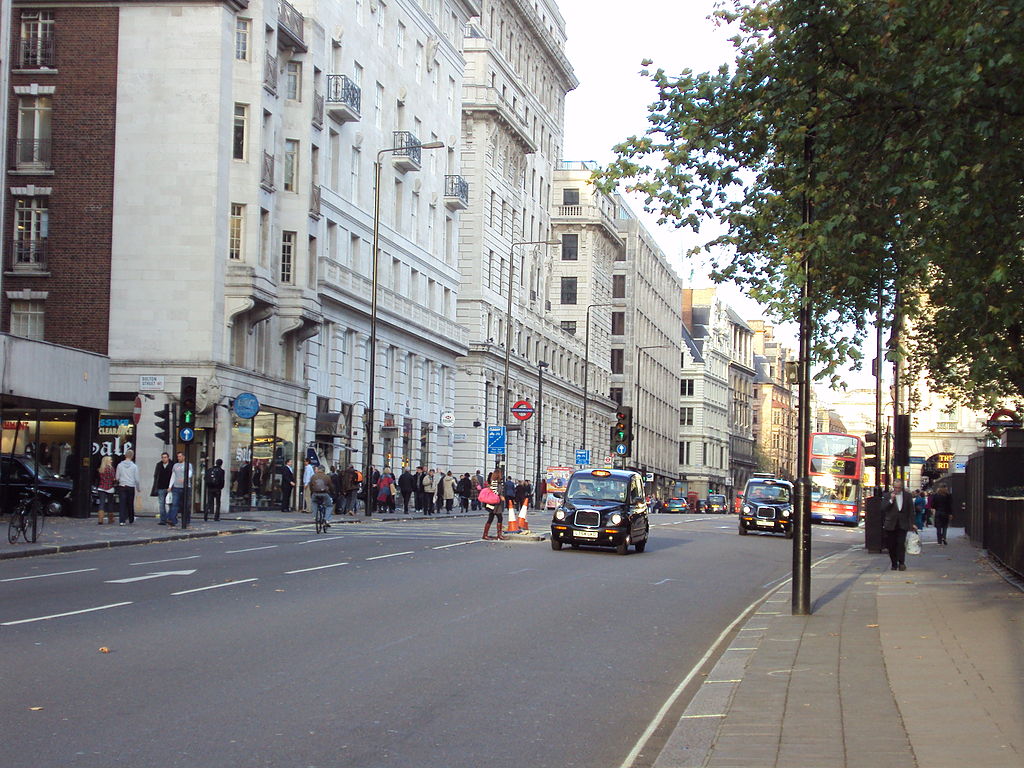
The government was established at Stratton House in the Piccadilly area of London, opposite Green Park.
Initially their hope was that France would regroup and liberate the country. Although there was an attempt in this direction, it soon failed, because the Allied forces were surrounded and forced to evacuate at Dunkirk.
The government-in-exile was soon faced with a dilemma. After France had been defeated…
View original post 279 more words
The UK’s flexible labour market needs to be allowed to do its job
12 Jul 2021 Leave a comment

The Treasury is right to begin to wind down the furlough scheme – and not a moment too soon. The UK economy is springing back to life and the labour market is not far behind.
It will take a while for this to be confirmed in the official data. We still only have the headline numbers for unemployment in April and some early estimates of payroll employment in May. But these show that the unemployment rate has levelled out below 5% (some had feared it could be as high as 10%), and that the economy is rapidly regaining the jobs lost last year.
The more timely business surveys and ‘faster indicators’ are even more encouraging. For example, the KPMG and REC Report on Jobs showed that recruitment surged again in June, with other sources confirming that vacancies and online job ads are hitting new highs.
Indeed, many sectors are…
View original post 828 more words
Still No Global Warming June 2021
11 Jul 2021 Leave a comment

The post below updates the UAH record of air temperatures over land and ocean. But as an overview consider how recent rapid cooling has now completely overcome the warming from the last 3 El Ninos (1998, 2010 and 2016). The UAH record shows that the effects of the last one are now gone as of April 2021. (UAH baseline is now 1991-2020).
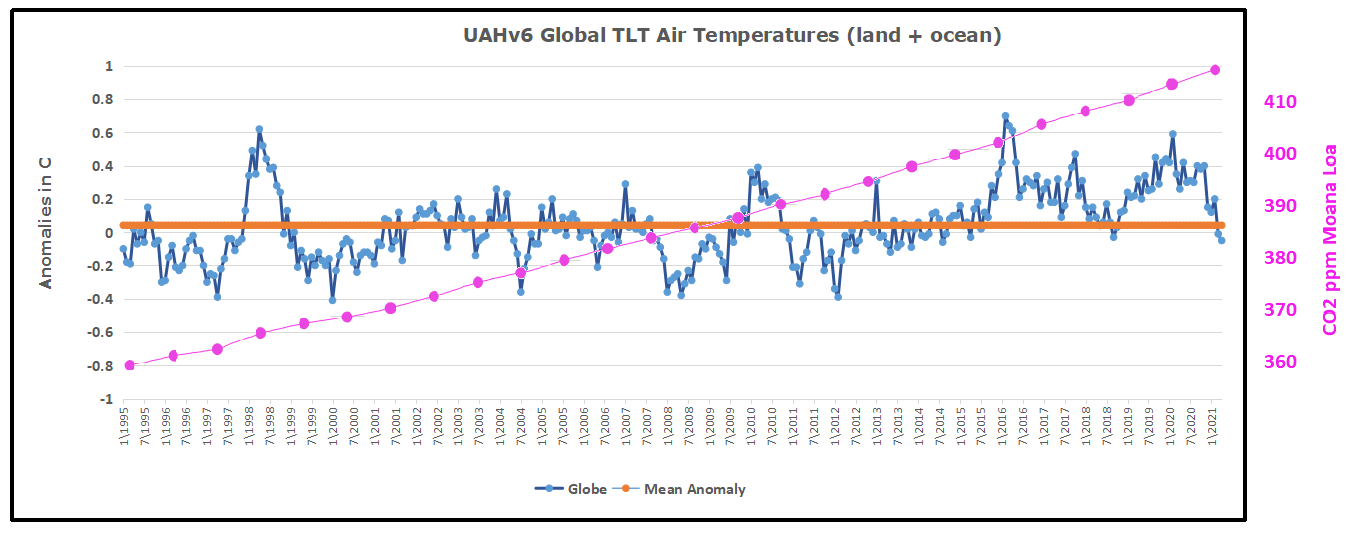 For reference I added an overlay of CO2 annual concentrations as measured at Moana Loa. While temperatures fluctuated up and down ending flat, CO2 went up steadily by ~55 ppm, a 15% increase.
Furthermore, going back to previous warmings prior to the satellite record shows that the entire rise of 0.8C since 1947 is due to oceanic, not human activity.
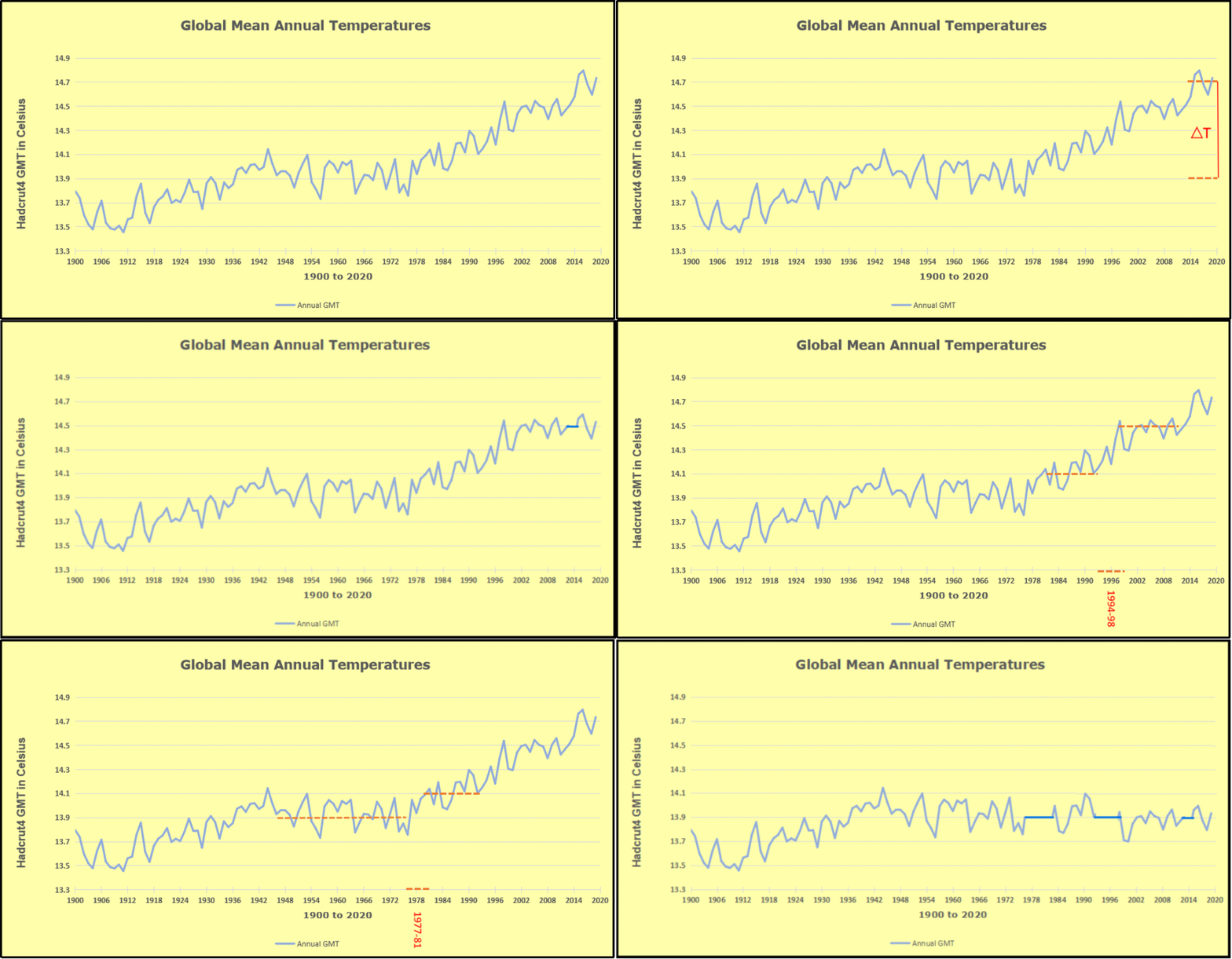
The animation is an update of a previous analysis from Dr. Murry Salby. These graphs use Hadcrut4 and include the 2016 El Nino warming event. The exhibit…
View original post 1,144 more words
Wind energy in crisis as expansion stalls in Germany
10 Jul 2021 Leave a comment

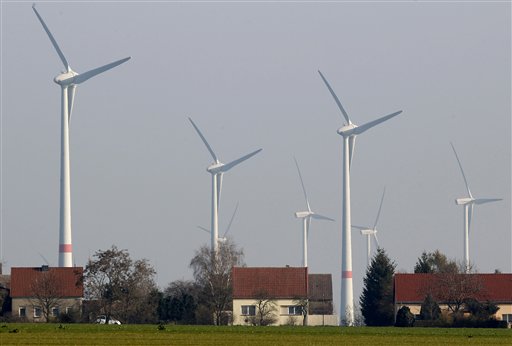 Feldheim village near Berlin, Germany.
Subsidies drying up. Public resistance to wind turbines in the neighbourhood. Is the climate steamroller running out of puff in Germany?
– – –
The German wind power industry is suffering setback after setback, says The GWPF.
Hardly any new turbines are being built, and more and more old wind turbines are being phased out. Now wind industry lobbyists are calling for new subsidies and construction rules to be relaxed.
In the Free State of Bavaria there is almost nothing going on when it comes to wind power.
View original post 154 more words
Reviewing The Pink Panther Series
10 Jul 2021 Leave a comment


The Pink Panther (1963)
Release Date: December 18, 1963
Director: Blake Edwards
Studio: United Artists
The Pink Panther is the first film in the “Pink Panther” series featuring Peter Sellers as the bumbling but lovable French inspector, Jacques Clouseau. This first film focuses on the story of Sir Charles Lytton (played by David Niven) who moonlights as the jewel thief, the “Phantom.” It was an amusing film however later films are superior because they focus mainly on the foibles of Inspector Clouseau.

A Shot in the Dark (1964)
Release Date: June 23, 1964
Director: Blake Edwards
Studio: United Artists
In many ways A Shot In The Dark is the first true “Pink Panther” film, despite technically being the second “Pink Panther” movie following the prior year’s The Pink Panther (1963). With Peter Sellers accidentally tearing up pool tables, walking into walls, stumbling into fountains, getting arrested numerous times, and accidentally…
View original post 556 more words
July 9, 1762: Catherine II becomes Empress of Russia via a coup d’état. Part I
10 Jul 2021 Leave a comment

Catherine II (born Sophie of Anhalt-Zerbst: May 2, 1729 – November 17, 1796), most commonly known as Catherine the Great, was Empress of All Russia from 1762 until 1796 – the country’s longest-ruling female leader. She came to power following a coup d’état that overthrew her husband and second cousin, Peter III. Under her reign, Russia grew larger, its culture was revitalised, and it was recognised as one of the great powers of Europe.
Catherine was born in Stettin, Pomerania, Kingdom of Prussia (now Szczecin, Poland) as Princess Sophie Friederike Auguste von Anhalt-Zerbst-Dornburg. Her father, Christian August, Prince of Anhalt-Zerbst, belonged to the ruling German family of Anhalt. He tried to become the duke of the Duchy of Courland and Semigallia but in vain. At the time of his daughter’s birth Christian August held the rank of a Prussian general in his capacity as governor of the city of Stettin.
View original post 752 more words


Recent Comments