Liberia II

MSW's avatarWeapons and Warfare

fkuky

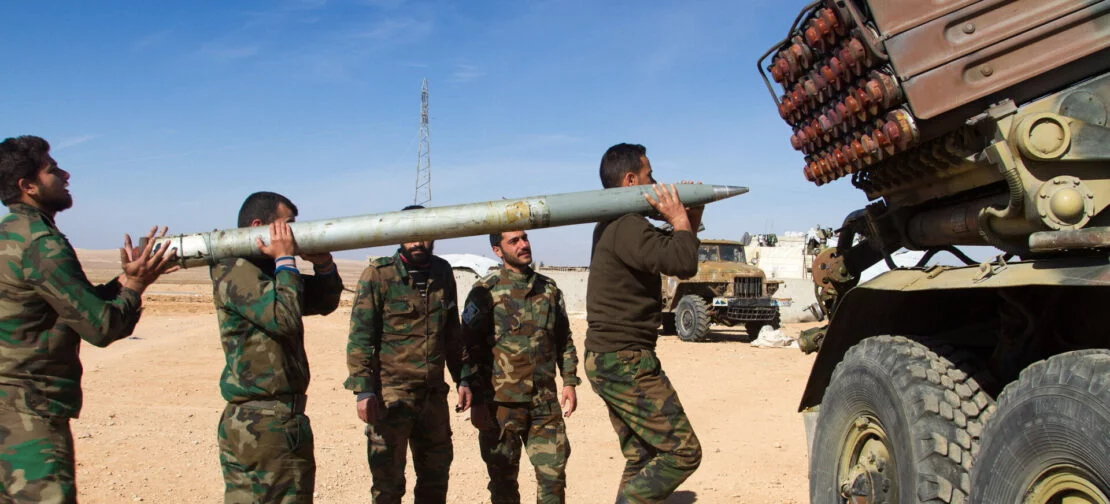
Because AKs are inexpensive, easy to fire, require almost no training, need few repairs or maintenance, they are ideally suited for child soldiers. As many as 80 percent of the Revolutionary United Front (RUF) rebels in Sierra Leone, shown here, were boys and girls between seven and fourteen.

Within seven months of his invasion, barely noticed by the outside world, Taylor and an estimated five thousand guerillas reached the outskirts of Monrovia with their sights set on the presidential mansion where Doe had hunkered down. Despite his oppressive regime, Doe’s government had received more than half a billion dollars from the United States since the 1980s. In exchange, Doe pushed out the Soviets and permitted U.S. access to ports and land.

During the capital’s siege, U.S. Marines offered Doe safe passage out of Liberia in August along with U.S. citizens and other foreign nationals, but he refused. Doe’s rule ended…

View original post 1,353 more words

The End of Roman Britain I

MSW's avatarWeapons and Warfare

029838967b68bfb1e11a64019eba714a

anglo-army

Anglo.Saxon.migration.5th.cen

In AD 378 the Romans suffered a catastrophic defeat at Adrianople where two-thirds of their eastern army was destroyed. Troops had to be brought from the west, which included those in Britain. In addition provincial barbarians led by their own kings and chieftains filled the ranks. In Britain there were campaigns against the Picts and the Scots led by Magnus Maximus, a Spaniard, who had been with Theodosius in Britain in AD 367–9 and had been sent back to organize the province’s defences. He was successful in these campaigns but was resentful that he had not been promoted to higher office. In AD 383, making himself popular with the troops and taking advantage of their resentment against Gratian, he got himself acclaimed emperor. He left for Gaul, taking with him a large number of troops from Britain, probably from some of the forts in Wales and the northern Pennines that…

View original post 2,082 more words

Finance Manager Interview #007 – David Friedman

Not really

Michael Reddell's avatarcroaking cassandra

Late on Friday afternoon I saw a tweet from Stuff politics and economics journalist Thomas Coughlan linking to a new and substantive article he’d written under the headline “Reserve Bank repeatedly warned Government money printing would lead to house price inflation”. Several other journalists who’ve each had a bee in their bonnet about the Reserve Bank’s asset purchase programme weighed in in support. None of them is too keen on Grant Robertson, and so it was presented as if they’d found evidence that the Minister of Finance had spent the year ignoring things that were not only totally predictable, but of which he had been advised by his officials. The Bank knew (we are told), as did The Treasury, but Robertson fiddled while Rome burned. Or so the story goes.

Now I yield to no one in my distaste for this government’s 3.5 years of appalling indifference to the…

View original post 2,519 more words

.@ClimateCommNZ has banned new restaurants

COLONEL WILLIAM J. DONOVAN

MSW's avatarWeapons and Warfare

Lt. Col. Donovan , 165th Reg. Inf. formerly 69th Regt. Inf. N.Y.N.G., 42nd division. Note the stripes indicating the D.S.C. which he won for bravery at Château-Thierry and the french Croix de Guerre which he was awarded on another occasion. Hazavant, France. 6 September 1918

William J. Donovan was combat leader, envoy, unconventional warrior, spymaster, and ambassador. His leadership in the 165th Infantry Regiment of Pershing’s American Expeditionary Forces (AEF) during the Great War demonstrated his courage, ability, and potential to become one of the most influential (and famous) Americans of his time. He received some of the nation’s highest decorations for heroism and public service. In doing so, he became the future patron of two elite U.S. organizations – the Central Intelligence Agency and the U.S. Army’s Special Forces – both of which claim descent from the Office of Strategic Services he would later found to conduct the deadly…

View original post 3,759 more words

And so it begins: UK Government mulls emergency measures that would enable networks to switch off your electricity without warning or compensation

White Defeat in the Russian Civil War

MSW's avatarWeapons and Warfare

The Red versus White struggle was decided on the battlefield, but the outcome of civil wars also depends on the contenders’ ability, through politics and propaganda, to convince people to fight for them (or at least not to raise arms against them). In this field, governance, the Whites were a spectacular failure. Consequently, no matter how successful their main military thrusts were, when the tide turned and advances morphed into retreats, the Whites had nothing to fall back on. Hence the precipitous collapse of the AFSR, the North-West Army, and Kolchak’s Russian Army.

This is not to say that the Whites did not try to compete with the Bolsheviks on the political plane—however much their background in the Russian military tended to incline them to regard “politics” as a dirty word (a feeling amplified by the disasters of 1917). Both Kolchak and Denikin actually elaborated political programs in 1919 that…

View original post 2,166 more words

The Red Army of the Russian Civil War

MSW's avatarWeapons and Warfare

The supreme achievement of the Soviet government in the civil-wars years: the creation of the Red Army. Much of the credit for this has, rightly, been apportioned to war commissar L. D. Trotsky.

The foregoing account of the 1919 campaigns concentrated on the White advances because the Reds tended not to make grand strategic decisions in that year. Rather, they reacted to the probings of their opponents and took advantage when the latter collapsed. That, however, is not to downplay the supreme achievement of the Soviet government in the civil-wars years: the creation of the Red Army. Much of the credit for this has, rightly, been apportioned to war commissar L. D. Trotsky.

The Red Army was born out of the disintegration of the Imperial Russian Army, which the Bolsheviks had done so much to foster (regarding the army as a nest of real and potential counterrevolutionaries). Prior to October…

View original post 2,795 more words

Global warming may have started before industrial revolution, study says

oldbrew's avatarTallbloke's Talkshop

Coral reef [image credit: Toby Hudson / Wikipedia]
We can’t have effects preceding causes, so something seems to be amiss with the ‘human-caused warming’ dogma, if this study is correct.
– – –
Studies of coral reefs in the Paracel Islands suggest that the South China Sea started warming up in 1825, at the start of the industrial revolution, according to a study by Chinese scientists.

That was the year the world’s first railway began operating in England and most ocean-going ships still used wind power, says The South China Morning Post.

Man-made carbon dioxide emissions could not fully explain such an early rise in the warming trend, they said in a peer-reviewed paper published in Quaternary Sciences on Friday.

The Paracel coral record “will fill in some important gaps in global high resolution marine environment records and help us better understand the history of environmental change in tropical…

View original post 331 more words

HT: Tim Andrews

Norway Proves Our Electrification Strategy Is Doomed To Disaster

What did the Treaty of Waitangi say?

Waikanae watchers's avatarWaikanae Watch

People in Wellington have a good understanding of the Treaty of Waitangi and what needed to be done to honour it.” –Wellington City Councillor, Jill Day, in supporting Maori wards

Honour the Treaty

By Roger Childs

Honour the Treaty” is a catch cry we hear often these days, but which Treaty? Silly question? No, there is a choice:

  • The Treaty of Waitangi (Te Tiriti o Waitangi) in Maori signed at Waitangi on 6 February 6 1840. Nine copies were made and sent to 34 locations around the country. 512 chiefs, including 13 women, signed.
  • The Freeman Treaty in English which was signed by 39 chiefs at Waikato Heads and Manakau. This version was needed because Maori versions of the original were not available. Unfortunately Freeman added some flourishes and additions of his own. (See more below.)
  • The English draft prepared by British Resident James Busby from Captain…

View original post 511 more words

69th Anniversary of the Accession of Queen Elizabeth II of the United Kingdom

liamfoley63's avatarEuropean Royal History

Today, February 6, 2021 marks the anniversary of the death King George VI of the United Kingdom and marks the beginning of the 69th year on the throne for his daughter and heir, Her Majesty Queen Elizabeth II (Elizabeth Alexandra Mary, born 21 April 1926) who is Queen of the United Kingdom and 15 other Commonwealth realms.

Elizabeth was born in Mayfair, London, as the first child of the Duke and Duchess of York (later King George VI and Queen Elizabeth). Her father ascended the throne on the abdication of his brother King Edward VIII in 1936, from which time she was the heir presumptive. She was educated privately at home and began to undertake public duties during the Second World War, serving in the Auxiliary Territorial Service. In 1947 she married Philip, Duke of Edinburgh, a former prince of Greece and Denmark, with whom she has four children: Charles…

View original post 554 more words

David Friedman on Physics, Coase, Anarcho-Capitalism, and Cancel Culture

Previous Older Entries Next Newer Entries

Vincent Geloso

Econ Prof at George Mason University, Economic Historian, Québécois

Bassett, Brash & Hide

Celebrating humanity's flourishing through the spread of capitalism and the rule of law

Truth on the Market

Scholarly commentary on law, economics, and more

The Undercover Historian

Beatrice Cherrier's blog

Matua Kahurangi

Celebrating humanity's flourishing through the spread of capitalism and the rule of law

Temple of Sociology

Celebrating humanity's flourishing through the spread of capitalism and the rule of law

Velvet Glove, Iron Fist

Celebrating humanity's flourishing through the spread of capitalism and the rule of law

Why Evolution Is True

Why Evolution is True is a blog written by Jerry Coyne, centered on evolution and biology but also dealing with diverse topics like politics, culture, and cats.

Down to Earth Kiwi

Celebrating humanity's flourishing through the spread of capitalism and the rule of law

NoTricksZone

Celebrating humanity's flourishing through the spread of capitalism and the rule of law

Homepaddock

A rural perspective with a blue tint by Ele Ludemann

Kiwiblog

DPF's Kiwiblog - Fomenting Happy Mischief since 2003

The Dangerous Economist

Celebrating humanity's flourishing through the spread of capitalism and the rule of law

Watts Up With That?

The world's most viewed site on global warming and climate change

The Logical Place

Tim Harding's writings on rationality, informal logic and skepticism

Doc's Books

A window into Doc Freiberger's library

The Risk-Monger

Let's examine hard decisions!

Uneasy Money

Commentary on monetary policy in the spirit of R. G. Hawtrey

Barrie Saunders

Thoughts on public policy and the media

Liberty Scott

Celebrating humanity's flourishing through the spread of capitalism and the rule of law

Point of Order

Politics and the economy

James Bowden's Blog

A blog (primarily) on Canadian and Commonwealth political history and institutions

Science Matters

Reading between the lines, and underneath the hype.

Peter Winsley

Economics, and such stuff as dreams are made on

A Venerable Puzzle

"The British constitution has always been puzzling, and always will be." --Queen Elizabeth II

The Antiplanner

Celebrating humanity's flourishing through the spread of capitalism and the rule of law

Bet On It

Celebrating humanity's flourishing through the spread of capitalism and the rule of law

History of Sorts

WORLD WAR II, MUSIC, HISTORY, HOLOCAUST

Roger Pielke Jr.

Undisciplined scholar, recovering academic

Offsetting Behaviour

Celebrating humanity's flourishing through the spread of capitalism and the rule of law

JONATHAN TURLEY

Res ipsa loquitur - The thing itself speaks

Conversable Economist

In Hume’s spirit, I will attempt to serve as an ambassador from my world of economics, and help in “finding topics of conversation fit for the entertainment of rational creatures.”

The Victorian Commons

Researching the House of Commons, 1832-1868

The History of Parliament

Articles and research from the History of Parliament Trust

Books & Boots

Reflections on books and art

Legal History Miscellany

Posts on the History of Law, Crime, and Justice

Sex, Drugs and Economics

Celebrating humanity's flourishing through the spread of capitalism and the rule of law

European Royal History

Exploring the Monarchs of Europe

Tallbloke's Talkshop

Cutting edge science you can dice with

Marginal REVOLUTION

Small Steps Toward A Much Better World

NOT A LOT OF PEOPLE KNOW THAT

“We do not believe any group of men adequate enough or wise enough to operate without scrutiny or without criticism. We know that the only way to avoid error is to detect it, that the only way to detect it is to be free to inquire. We know that in secrecy error undetected will flourish and subvert”. - J Robert Oppenheimer.

STOP THESE THINGS

The truth about the great wind power fraud - we're not here to debate the wind industry, we're here to destroy it.

Lindsay Mitchell

Celebrating humanity's flourishing through the spread of capitalism and the rule of law

Alt-M

Celebrating humanity's flourishing through the spread of capitalism and the rule of law

croaking cassandra

Economics, public policy, monetary policy, financial regulation, with a New Zealand perspective

The Grumpy Economist

Celebrating humanity's flourishing through the spread of capitalism and the rule of law