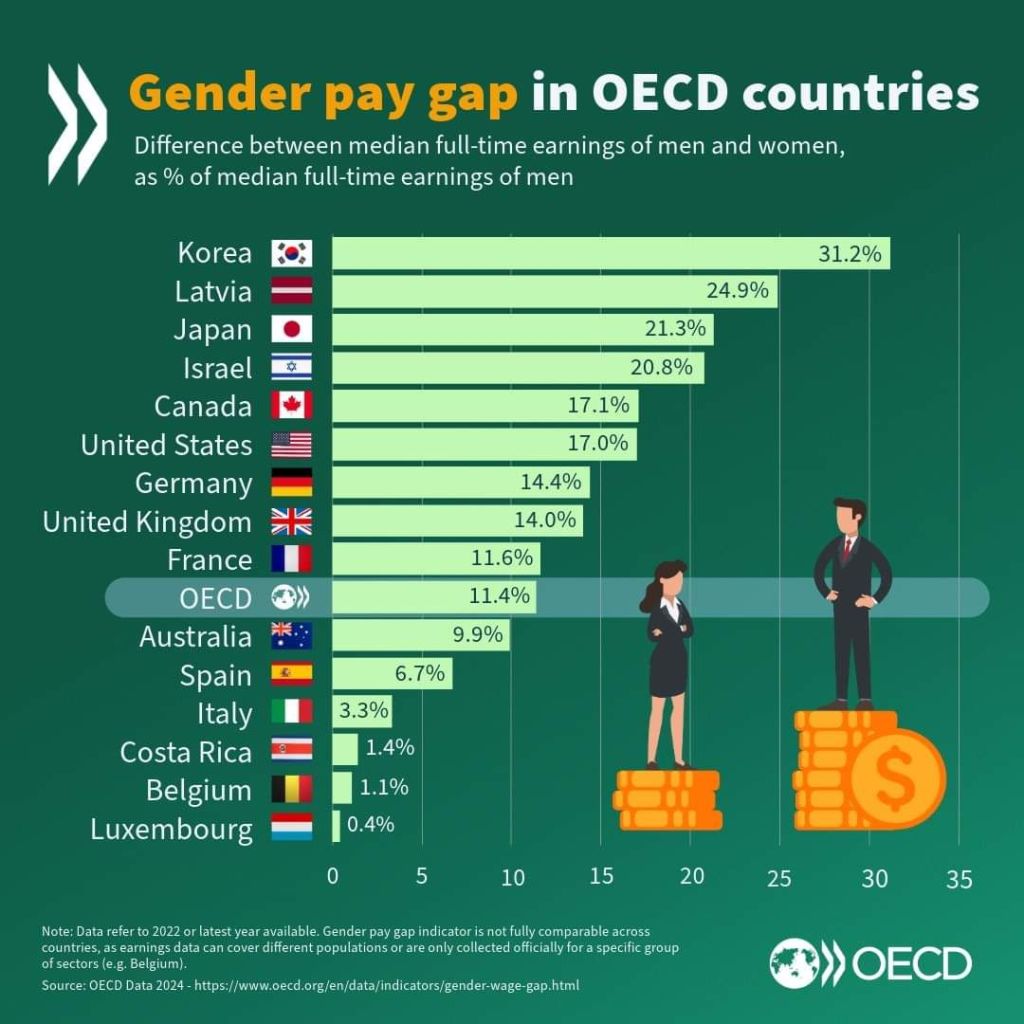
https://www.facebook.com/share/yS53Vjmx4bt5LXvR/?mibextid=xfxF2i
Celebrating humanity's flourishing through the spread of capitalism and the rule of law
31 Oct 2024 Leave a comment
in applied price theory, discrimination, gender, human capital, labour economics, labour supply, poverty and inequality Tags: gender wage gap
31 Oct 2024 Leave a comment
in applied price theory, health economics, politics - USA Tags: health insurance

Among the major issues not being discussed in the US presidential campaign are those facing the US healthcare system. The two main concerns are well-known. One is high cost. The US economy spends about $12,500 per person on health care in 2022, according to the OECD. The second- and third-highest countries, Switzerland and Germany, spend…
A Prescription for Fixing the US Healthcare System
31 Oct 2024 Leave a comment
in applied price theory, economics of information, environmental economics, law and economics, property rights, Ronald Coase
Here’s the latest video from Marginal Revolution University. It covers negative externalities–drawing, of course, from the most innovative and interesting principles of economics textbook, Modern Principles of Economics. MRU videos are free for anyone’s use anytime, anywhere and don’t forget there are also two new econ-practice games on negative externalities and positive externalities and a fun choose […]
New MRU Video! Negative Externalities
30 Oct 2024 Leave a comment
in applied price theory, applied welfare economics, budget deficits, business cycles, econometerics, economic growth, economic history, economics of bureaucracy, economics of regulation, energy economics, entrepreneurship, environmental economics, financial economics, fiscal policy, global warming, health economics, income redistribution, industrial organisation, law and economics, macroeconomics, monetary economics, politics - USA, property rights, Public Choice, public economics, rentseeking Tags: 2024 presidential election, drug lags, taxation and entrepreneurship, taxation and investment
Milton Friedman used to advise researchers to focus on large policy changes rather than attempting to separate a small change’s signal from the noise. In this sense, the “ambitious” policy agenda of the Biden-Harris administration was expected to be a gift to the research community. Accepting this gift, since 2020 I have been making forecasts…
Biden-Harris policies and their consequences were no surprise to those paying attention
30 Oct 2024 Leave a comment
in applied price theory, economic growth, economics of bureaucracy, industrial organisation, macroeconomics, Public Choice, public economics, survivor principle, transport economics, urban economics Tags: Japan
Japan is known for many things, but two of them are the Shinkansen high-speed trains and the nation’s three Lost Decades of slow economic growth. Unfortunately, most tourists who go to Japan see the former and don’t see the latter and especially don’t see the connection between the two. The … Continue reading →
The Shinkansen and Japan’s Lost Decades
25 Oct 2024 Leave a comment
in applied price theory, economic growth, economic history, economics of climate change, economics of regulation, energy economics, entrepreneurship, environmental economics, environmentalism, global warming, liberalism, macroeconomics Tags: creative destruction
Here is one excerpt: Over-regulation was the enemy at many presentations, but this wasn’t a libertarian conference. Everyone agreed that safety, quality, the environment, etc, were important and should be regulated for. They just thought existing regulations were colossally stupid, so much so that they made everything worse including safety, the environment, etc. With enough political will, […]
Scott Alexander on the Progress Studies conference
23 Oct 2024 Leave a comment
in applied price theory, comparative institutional analysis, constitutional political economy, development economics, economic history, economics of bureaucracy, economics of crime, energy economics, growth miracles, income redistribution, labour economics, labour supply, law and economics, liberalism, libertarianism, property rights, Public Choice Tags: Dubai, economics of immigration

On my way to India, I connected through Abu Dhabi, capital city of the United Arab Emirates (UAE). During my one-day layover, I toured not only Abu Dhabi, but its more famous sister-city, Dubai. Here are my main thoughts.In Dubai, these are not empty words.Per-capita, UAE is the most amazing country I’ve ever seen. With…
Reflections on United Arab Emirates
22 Oct 2024 Leave a comment
in applied price theory, applied welfare economics, economic history, industrial organisation, international economics, politics - USA, survivor principle Tags: 2024 presidential election, tarrifs
TweetI can pick a few nits with this eight-minute-long video from the Wall Street Journal on tariffs – for example, for all of their many problems, tariffs do not (contrary to what’s reported in the video) cause any net, economy-wide loss of jobs. Nevertheless, this video is quite good, not least because it features the…
WSJ Video on Trump-Biden-Trump Tariffs
17 Oct 2024 Leave a comment
in applied price theory, economic history, health economics
Since 2000, pharmaceuticals for common psychiatric conditions aged out of patent protection. After generic entry, supply increases as more sellers enter the market, leading to lower prices – about 80-85% less! Cheaper prescriptions and more treatment are the stated goal of policies to improve affordability. …Drug prices definitely fell during this period. For the SSRI sertraline, consumer cost per month dropped from ~35 dollars in […]
Incentives matter, the demand curve slopes downward, mental health edition
16 Oct 2024 1 Comment
in applied price theory, comparative institutional analysis, constitutional political economy, development economics, economic growth, economic history, economics of bureaucracy, growth disasters, growth miracles, history of economic thought, income redistribution, law and economics, macroeconomics, Marxist economics, property rights, Public Choice, public economics, regulation, rentseeking Tags: economics of colonialism, India

I’m back from my first trip to India, where I visited Mumbai, Delhi, Agra, and Amritsar. I enjoyed fine company in all four cities. In Mumbai, my new friend Sachin Aggarwal, head of the local EconTalk Club, rolled out the red carpet — and ACX Mumbai joined the festivities. (Thank you, Scott Alexander, for creating…
Reflections on India
15 Oct 2024 Leave a comment
in applied price theory, comparative institutional analysis, constitutional political economy, development economics, economic growth, economic history, economics of bureaucracy, economics of regulation, growth disasters, growth miracles, history of economic thought, income redistribution, macroeconomics, Public Choice, public economics, rentseeking
The Nobel prize goes to Daron Acemoglu, Simon Johnson and James Robinson for their work on institutions, prosperity, and economic growth. Here is a key piece summarizing their work: Institutions as a Fundamental Cause of Long-Run Growth. This paper develops the empirical and theoretical case that differences in economic institutions are the fundamental cause of […]
Acemoglu, Johnson and Robinson Win Nobel Prize for Institutions and Prosperity
15 Oct 2024 Leave a comment
in applied price theory, comparative institutional analysis, constitutional political economy, development economics, economic history, growth disasters, growth miracles, history of economic thought
The Sveriges Riksbank Prize in Economic Sciences in Memory of Alfred Nobel 2024 has been awarded to Daron Acemoglu, Simon Johnson and James Robinson “for studies of how institutions are formed and affect prosperity.” Each year, the Nobel Committee helpfully publishes both a “Popular information” overview of of the award and a “Scientific Background” essay that goes into greater depth.…
A Nobel for Acemoglu, Johnson, and Robinson: Institutions and Prosperity
14 Oct 2024 Leave a comment
in applied price theory, comparative institutional analysis, constitutional political economy, economics of bureaucracy, economics of regulation, environmental economics, income redistribution, law and economics, politics - New Zealand, property rights, Public Choice, public economics, rentseeking, resource economics, transport economics, urban economics Tags: zoning
13 Oct 2024 Leave a comment
in applied price theory, income redistribution, industrial organisation, Public Choice, public economics, rentseeking, survivor principle
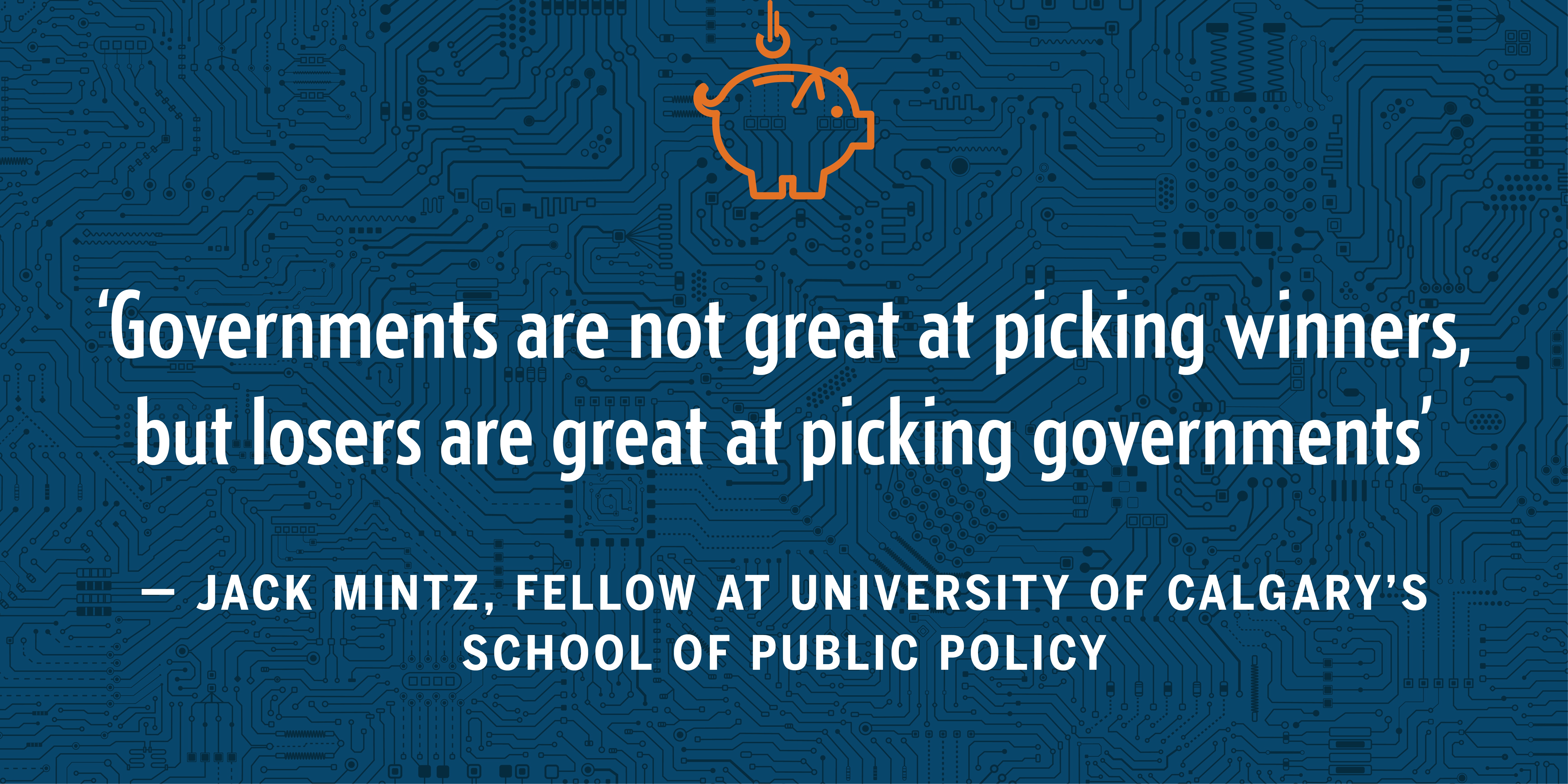
Industrial policy is when politicians and bureaucrats use various combinations of tax, spending, and regulatory policies to steer the economy. In other words, they are putting their thumbs on the scale to pick winners and losers. It means replacing the “invisible hand” of the market with the “grabbing hand” of politics. I’m motivated to write […]
Industrial Policy: The Triumph of Hope over Experience
12 Oct 2024 Leave a comment
in applied price theory, applied welfare economics, economics of climate change, energy economics, environmental economics, environmentalism, global warming
Bjørn Lomborg brings some much needed reason to counter the emotion in the climate change debate, saying it’s a concern not a catastrophe : Apropos of this, Lomborg writes of climate fictions: Whatever happened to polar bears? They used to be all climate campaigners could talk about, but now they’re essentially absent from headlines. Over […]
A concern not a catastrophe
Celebrating humanity's flourishing through the spread of capitalism and the rule of law
Scholarly commentary on law, economics, and more
Beatrice Cherrier's blog
Celebrating humanity's flourishing through the spread of capitalism and the rule of law
Celebrating humanity's flourishing through the spread of capitalism and the rule of law
Celebrating humanity's flourishing through the spread of capitalism and the rule of law
Why Evolution is True is a blog written by Jerry Coyne, centered on evolution and biology but also dealing with diverse topics like politics, culture, and cats.
Celebrating humanity's flourishing through the spread of capitalism and the rule of law
Celebrating humanity's flourishing through the spread of capitalism and the rule of law
A rural perspective with a blue tint by Ele Ludemann
DPF's Kiwiblog - Fomenting Happy Mischief since 2003
Celebrating humanity's flourishing through the spread of capitalism and the rule of law
The world's most viewed site on global warming and climate change
Tim Harding's writings on rationality, informal logic and skepticism
A window into Doc Freiberger's library
Let's examine hard decisions!
Commentary on monetary policy in the spirit of R. G. Hawtrey
Thoughts on public policy and the media
Celebrating humanity's flourishing through the spread of capitalism and the rule of law
Politics and the economy
A blog (primarily) on Canadian and Commonwealth political history and institutions
Reading between the lines, and underneath the hype.
Economics, and such stuff as dreams are made on
"The British constitution has always been puzzling, and always will be." --Queen Elizabeth II
Celebrating humanity's flourishing through the spread of capitalism and the rule of law
Celebrating humanity's flourishing through the spread of capitalism and the rule of law
WORLD WAR II, MUSIC, HISTORY, HOLOCAUST
Undisciplined scholar, recovering academic
Celebrating humanity's flourishing through the spread of capitalism and the rule of law
Res ipsa loquitur - The thing itself speaks
Celebrating humanity's flourishing through the spread of capitalism and the rule of law
Researching the House of Commons, 1832-1868
Articles and research from the History of Parliament Trust
Reflections on books and art
Posts on the History of Law, Crime, and Justice
Celebrating humanity's flourishing through the spread of capitalism and the rule of law
Exploring the Monarchs of Europe
Cutting edge science you can dice with
Small Steps Toward A Much Better World
“We do not believe any group of men adequate enough or wise enough to operate without scrutiny or without criticism. We know that the only way to avoid error is to detect it, that the only way to detect it is to be free to inquire. We know that in secrecy error undetected will flourish and subvert”. - J Robert Oppenheimer.
The truth about the great wind power fraud - we're not here to debate the wind industry, we're here to destroy it.
Celebrating humanity's flourishing through the spread of capitalism and the rule of law
Celebrating humanity's flourishing through the spread of capitalism and the rule of law
Economics, public policy, monetary policy, financial regulation, with a New Zealand perspective
Celebrating humanity's flourishing through the spread of capitalism and the rule of law
Restraining Government in America and Around the World
 Utopia, you are standing in it!
Recent Comments