Jason Brennan and Larry Temkin on Capitalism: The Good, The Bad, and The Ugly
12 Jul 2020 Leave a comment
in applied price theory, applied welfare economics, Austrian economics, development economics, economic history, entrepreneurship, health and safety, history of economic thought, human capital, income redistribution, industrial organisation, international economics, Joseph Schumpeter, labour economics, labour supply, law and economics, liberalism, libertarianism, Marxist economics, occupational choice, poverty and inequality, property rights, Public Choice, Rawls and Nozick, survivor principle, unemployment, unions, welfare reform Tags: capitalism and freedom
Bryan Caplan on Marxism, Social Democracy and Democratic Socialism
12 Jul 2020 Leave a comment
in applied price theory, Austrian economics, comparative institutional analysis, constitutional political economy, development economics, economic history, economics of bureaucracy, entrepreneurship, history of economic thought, income redistribution, industrial organisation, labour economics, labour supply, law and economics, Marxist economics, poverty and inequality, privatisation, property rights, Public Choice, public economics, rentseeking, survivor principle
“5 Years To Climate Breakdown”: How to generate computer model scares
11 Jul 2020 Leave a comment

 Credit: nationalreview.com
Climate models are too unreliable to be any serious guide to the future, as the author points out. But getting decision makers to understand that is near-impossible in many countries, hence the acceptance of alarmist nonsense.
– – –
Shock, horror: According to the WMO and the Met Office, there is a 3% chance of the forthcoming five-year global temperature average exceeding 1.5°C, says Dr. David Whitehouse @ The GWPF.
There are several definitions of hustle. One of them is to use forceful actions to promote an action or point of view.
It’s everywhere of course and in all aspects of climate change. It’s all too apparent when scientists want grants, jobs and headlines.
It’s no new discovery that combining hustle with statistics can get you anywhere.
The recently released news from the World Meteorological Organisation (WMO), prepared by the UK Met Office, that there is a…
View original post 174 more words
Flak towers: then and now
11 Jul 2020 Leave a comment


The construction of Flaktürme (Flak towers) in major cities began in response to the first bombs falling on Berlin in August 1940. Flak tower complexes consisted of a G-Tower (Gefechtsturm, Combat tower) and an L-Tower (Leitturm, Lead tower). In total eight of these complexes were completed: in Berlin (3), Hamburg (2) and Vienna (3). Another 14 were planned, potentially extending coverage to Bremen and Munich, and increasing the defences in Berlin and Hamburg, but none of these were begun. While the towers in Berlin have been drastically reduced in stature due to post-war demilitarisation, those in Hamburg and Vienna still dominate the cityscapes, standing out against their surroundings. That several of the towers still stand today, and those which have been destroyed required enormous amounts of explosives post-WWII, bears testimony to their amazing strength as air raid shelters. However, their use as armed defences is questionable. Were they actually expensive…
View original post 399 more words
W O K E
11 Jul 2020 Leave a comment

YouTube has banned this video. Linked from my twitter account. Epic 2 mins.
July 9, 1762: in a Palace Coup, Catherine the Great becomes the Ruling Empress of Russia.
10 Jul 2020 Leave a comment

Catherine II (May 2, 1729 – November 17, 1796), most commonly known as Catherine the Great, was Empress of Russia from 1762 until 1796—the country’s longest-ruling female leader. From 1793 on she also became Lady of Jever. She came to power following a coup d’état that she organised, resulting in her husband, Peter III, being overthrown. Under her reign, Russia was revitalised; it grew larger and stronger, and was recognised as one of the great powers of Europe and Asia.
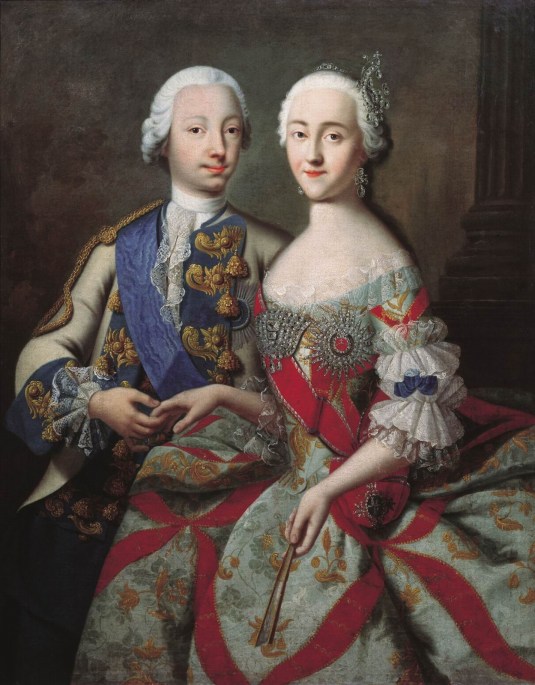
Charles Peter Ulrich of Schleswig-Holstein-Gottorp and Princess Sophie Friederike Auguste von Anhalt-Zerbst-Dornburg. Future Peter III and Catherine II, Emperor and Empress of Russia.
Catherine was born in Alt-Stettin, Pomerania, Kingdom of Prussia (now Szczecin, Poland) as Princess Sophie Friederike Auguste von Anhalt-Zerbst-Dornburg. She was the daughter of Christian-August, Prince of Anhalt-Zerbst and Johanna Elisabeth of Holstein-Gottorp, sister of King Adolf-Frederik of Sweden, daughter of Prince Christian-August of Schleswig-Holstein-Gottorp, Prince of…
View original post 927 more words
Cat People, Beware — Posing With Your Pet Could Make You Appear Less Dateable
10 Jul 2020 Leave a comment
Climate Change Not the End of the World (Shellenberger)
10 Jul 2020 Leave a comment

This post is to celebrate an extended extract with permission, from Michael Shellenberger’s new book, Apocalypse Never: Why Environmental Alarmism Hurts Us All, (HarperCollins 2020), 432 pages. It is published at Quillette Why I Believe Climate Change Is Not the End of the World A few excerpts from the article in italics with my bolds.
Summary in My Words:
There is no crisis requiring these climate policies.
If there were a crisis, these policies will not help.
Implementing these policies will create a social and economic crisis.
The End is Nigh, They Say
Andrea Dutton, a paleoclimate researcher at the University of Wisconsin–Madison, said, “For some reason, the media latched onto the 12 years (2030), presumably because they thought that it helped to get across the message of how quickly we are approaching this and hence how urgently we need action. Unfortunately, this has led to a complete…
View original post 2,578 more words
National’s five-point plan
10 Jul 2020 Leave a comment

At the end of my post yesterday morning I noted briefly
Of course, if Labour’s approach is bad, at least (being the government) it is on the table. It is now less than two months until voting starts and we have no idea what National’s approach might be, but no reason to suppose it would be materially different or better.
Within a couple of hours we had a plan from National, or at least what Todd Muller describes as “the framework for the party’s Plan to create more jobs and a better economy”. Just like the Prime Minister, he has a five-point plan, outlined in a speech given in Christchurch yesterday. If you want the potted version there is even a one-page graphic.
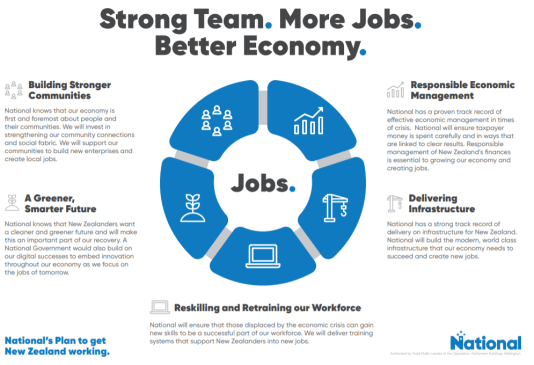
I was no more impressed than with Muller’s previous speech, although at least he has dropped the (historically ill-grounded) paeans to Michael Joseph Savage. There…
View original post 1,708 more words
DAVID RANKIN – A MAORI VOICE FOR HONESTY
10 Jul 2020 Leave a comment

Ngapuhi leader David Rankin gets angry about the mainstream media’s soft-soaping with maori hypocrisy.
He issued the statement below in response to the contrived fashion-following maori furore over statues such as Captain Cook.
View original post 91 more words
RE Rent Seekers Become Virus Victims: Wind & Solar Investment Collapses Post-Pandemic
09 Jul 2020 Leave a comment

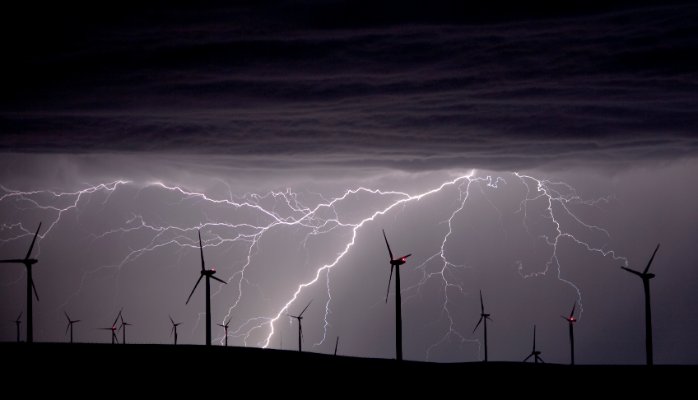
Desperate times, call for desperate measures and there’s no group more desperate than the wind and solar ‘industries’. With the global economy in meltdown – thanks to crippling and seemingly interminable coronavirus lockdowns – investment in the unreliables has plummeted.
In the USA, the wind and solar sector lost 106,000 jobs in March, with many more jobs lost since then. That slaughter prompted a march on Washington, as rent seekers clamoured for relevance and cash; only to be rebuffed and sent packing without a penny: Corona Mania: US Wind & Solar Industries Demand $Billions In Subsidies From Virus Stimulus Package
Now that they’re faced with their very own doomsday, the ‘End of Days’ rhetoric has changed course. As JoNova reports.
In the pandemic, investors fled from “Green Energy”. Desperate industry predicts 40 deaths a month in wake
Jo Nova Blog
Jo Nova
24 June 2020
Is that the dark smell of…
View original post 458 more words
Plague, prorogation and the suspension of the courts in fifteenth-century England
09 Jul 2020 Leave a comment

In another timely blog from our History of Parliament researchers, today Dr Simon Payling, senior research fellow for the Commons 1461-1504 project, discusses Parliament’s response to another plague outbreak as the courts of justice were suspended in June 1464.
On Wednesday 6 June 1464, at the beginning of Trinity term, a small piece of theatre was played out in Westminster Hall. Three justices of the court of common pleas ordered everyone present to hear the King’s command. The seal of a royal writ, dated ten days earlier, was then broken and the writ read aloud: the King, absent in the north campaigning against the Lancastrians, had heard of the plague raging in London and Westminster and decided to suspend the court for the whole of Trinity term. This sensible precaution reminds us that, although no visitation of the plague to these shores approached the devastating mortality of the Black…
View original post 1,040 more words
Ranking Presidents: Was Woodrow Wilson the Worst of the Worst?
08 Jul 2020 Leave a comment

I certainly don’t intend to do this for everyone who has made it to the White House, but I have produced big-picture economic assessments of several presidents.
- Herbert Hoover
- Franklin Roosevelt
- Richard Nixon
- Ronald Reagan
- George H.W. Bush
- Bill Clinton
- George W. Bush
- Barack Obama
Today, let’s go back farther in history and take a look at Woodrow Wilson.
At the risk of understatement, he did a very bad job. Indeed, it’s quite likely that he ranks as America’s worst president, at least when judging economic policy. His mistakes were either huge or disgusting.
Creating the income tax – The internal revenue code began when Wilson signed into law an income tax on October 3, 1913. The initial tax wasn’t overly onerous – with a top rate of just 7 percent – but it predictably evolved into the punitive levy that currently plagues America.
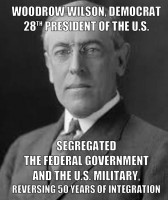 Creating the Federal Reserve – You…
View original post 1,806 more words
Seeing results of large emission cuts on global warming may take decades – study
08 Jul 2020 Leave a comment
 Fine summer weather [image credit: BBC]
In climate fantasy world, everything is near-constant except human-caused trace gas emissions. Pathetic that this is considered to be serious science, rather than juvenile nonsense.
– – –
Humans may need to “wait for decades” to see the results of large emission cuts on global surface temperatures, scientists have said.
Researchers in Norway used computer simulations to analyse various scenarios that looked at the effects of rapid reductions in several types of greenhouse gas emissions, such as carbon dioxide (CO2), methane and black carbon, says TalkTalk.
They found that although large-scale emission cuts are needed to achieve the global climate goals, it may take decades before the effects of the reductions on temperatures can be measured.
View original post 192 more words


Recent Comments