The Push for Climate Death Certificates
24 May 2020 Leave a comment
So now we have the climatists calling for attributing many more deaths to warmer temperatures in order to blame CO2 emissions. No doubt they noticed how powerful were the Covid19 death statistics in getting the public to comply with lockdown regulations. Their logic is clear: When people die with multiple diseases, pick the one that’s politically useful. (“Never let a crisis go to waste.”) Never mind that 90+% of Covid deaths were people with cancers, chronic lung disease, obesity, diabetes, and so on.
Ideological Perversion of Science
This push for climate death certificates demonstrates a recurring pattern: reducing life’s multitude of factors and values down to a single dimension as the be all and end all. Environmentalism puts nature first, ignoring that humans are a part of nature, and have a managerial role to play. Many naturalists have reduced further into climatists, who extrapolated the 1978 to 1998 warming into…
View original post 300 more words
Airline security: why is El Al different from all others?
23 May 2020 Leave a comment
In the wake of the failed Xmas bombing on Northwest Airlines flight 253 to Detroit, some people wonder why El Al (Israel’s national airline) is succeeding where the TSA is making a pig’s breakfast of things. (Instapundit has never hidden his opinion that the TSA is a make-work program that may incidentally provide some security benefits, rather than the other way around.)
As a frequent long-haul business traveler, I obviously have a vested interest in airlines getting their act together on this one. Here are some impromptu observations on El Al security (in part based on my own experiences):
- El Al openly and unapologetically profiles. (Passengers reportedly get “presorted” in risk level categories: Israeli Jews the lowest, non-Israeli Arab Muslims the highest.) [BTW, as by clockwork, the usual suspects are calling on the TSA not to adopt profiling in the wake of the latest incident. (H/t: C2) This perhaps for…
View original post 543 more words
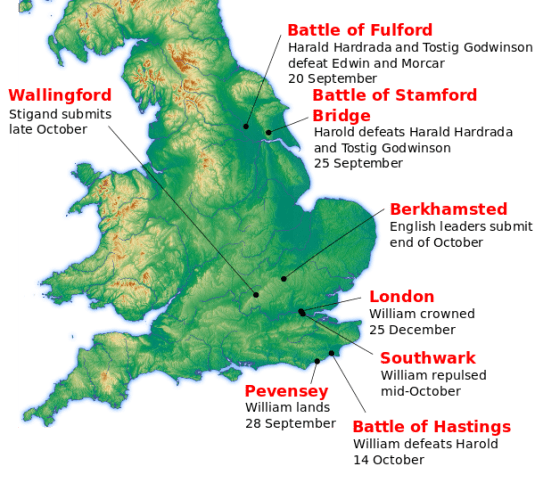
How did modern Germany come about? A very short history of German unification under Bismarck
23 May 2020 Leave a comment
Many people don’t realize that modern Germany, as a political entity, is a comparatively recent creation (1871). So where did it come from, and how did we get there?
How far back in the mists of dawn shall I go? All the way to Charlemagne (Karl der Große), arguably the first Holy Roman Emperor? Yes, the “First Reich” was the Holy Roman Empire (HRE) — “not holy, not Roman, and not an empire” as Voltaire famously quipped.
The 300+ German principalities of the Holy Roman Empire
Let us fast-forward to the 1648 Peace of Westphalia, which ended the overlapping European Wars of Religion, chief among them the particularly bloody and traumatic Thirty-Years War. Many political scientists use the term “Westphalian sovereignty” for the modern conception of state sovereignty.
At that point, the Holy Roman Empire was a patchwork of some 300 principalities, all tributaries to the Holy…
View original post 2,518 more words
On socialism, incentives, and kibbutzim
23 May 2020 Leave a comment
Ran Abramitzky’s work on voluntary socialism is best there can be,
Mark Perry discusses the failure of socialism. Among the cardinal features he singles out is the fact that, if you allow me to translate him into engineering lingo, the system is “not robust”: all it takes for the system to fail is a few people behaving like, well, jerks. In contrast, imperfect as capitalism may be, it’s the equivalent of a piece of machinery that only works “well enough”, but keeps going and going even if severely abused — a “robust” design.
Aside from that, Perry particularly stresses the role of incentives. Now if I’m ever asked to summarize economics while standing on one foot (the Talmudic version of “give an elevator pitch”), I’d say: “Humans respond to incentives. All the rest is commentary.” I am sure Steven Levitt would like this as a summary of his bestselling “Freakonomics” series.
Periodically, people bring up the Israeli kibbutzim in this debate —…
View original post 821 more words
Chesterton’s fence
23 May 2020 Leave a comment
#notmywords:
Chesterton’s fence is the principle that reforms should not be made until the reasoning behind the existing state of affairs is understood.
The quotation is from G. K. Chesterton’s 1929 book The Thing, in the chapter entitled “The Drift from Domesticity”:
In the matter of reforming things, as distinct from deforming them, there is one plain and simple principle; a principle which will probably be called a paradox.
There exists in such a case a certain institution or law; let us say, for the sake of simplicity, a fence or gate erected across a road.
The more modern type of reformer goes gaily up to it and says,
“I don’t see the use of this; let us clear it away.”
To which the more intelligent type of reformer will do well to answer:
“If you don’t see the use of it, I certainly won’t let you clear it…
View original post 65 more words
We can’t go on like this
23 May 2020 Leave a comment
The economic data for April were bound to be awful and those for the public finances were no exception. Government borrowing last month alone (a record £62.1 billion) was almost as large as the deficit in the whole of last year (£62.7 billion). This included £14 billion for the first full month of the coronavirus job retention scheme. How long can we keep this going? And how do we wean ourselves off this extraordinary level of state subsidy, before it is too late?
For now, it is right not to panic about the budget deficit itself. There is a huge difference between a temporary increase in borrowing in response to a one-off shock, like coronavirus, and a longer lasting or structural deterioration in the public finances.
In the case of the former, we should simply take the hit on annual borrowing, even if this year’s deficit turns out to be…
View original post 617 more words
MEXICO Pulls The Plug On ‘UNreliables’
23 May 2020 Leave a comment
UNreliables | Climatism
“Renewable energy technologies simply won’t work;
we need a fundamentally different approach.”
–– Top Google engineers
“We get a tax credit if we build a lot of wind farms.
That’s the only reason to build them.
They don’t make sense without the tax credit.
–– Warren Buffett
“Suggesting that renewables will let us phase rapidly off fossil fuels
in the United States, China, India, or the world as a whole
is almost the equivalent of believing in the Easter Bunny and Tooth Fairy.
– James Hansen
(The Godfather of AGW alarmism / former NASA climate chief)
***
JUST as socialist central-planning failed miserably before it was replaced by free market economies, green central-planning will have to be discarded before Australia and other Western nations will see a return to energy security, competitive pricing and business prosperity.
GOOD to see Mexico heading in the smart…
View original post 1,236 more words
The Boer War 1899-1902 by Thomas Pakenham (1979)
23 May 2020 Leave a comment
16 July 2012
The Boer War by Thomas Pakenham seems to be the best one-volume history of the war, even though it was published in 1979. Pakenham taped interviews with Boer War veterans as long ago as 1970. Has nothing in Boer War studies changed since then, I wonder. (You can read the first half dozen chapters online.)
At nearly 600 pages of text ‘The Boer War’ is a long and thorough and absorbing read. From among the jungles of detail a few themes emerge:
1. The British caused the war Gladstone guaranteed the two Boer republics – the Transvaal and the Orange Free State – their independence in 1881, after the first Boer War. Let them farm their miles of featureless veld far in the interior. But two things happened a) the discovery of diamonds at Kimberley and gold at Witwatersrand led tens of thousands of Brits and…
View original post 1,914 more words
The Cod Wars
23 May 2020 Leave a comment
In 1958, when Iceland declared a twelve-mile limit to her territorial waters instead of the conventional three miles, it was mainly trawlers from Hull and Grimsby that were affected, though a few boats from Aberdeen and other Scottish ports sailed in the area. The Royal Navy was still keen to enforce its own version of the freedom of the seas and it attempted to protect the trawlers inside the new limit against harassment by Icelandic patrol boats (or ‘gunboats’ as the British press called them). This operation was based at Port Edgar, already the home of the Fishery Protection Squadron, under a captain who reported to the Flag Officer Scotland. The main force consisted of four second-rate frigates of the Captain Class including HMS Duncan, the flotilla leader. Ships from other areas called in at Rosyth for refuelling and a final briefing from the staff of the Fishery Protection Squadron…
View original post 1,017 more words
The Franco-Prussian War by Sir Michael Howard (1961)
23 May 2020 Leave a comment
Distinguished military historian Sir Michael Eliot Howard, OM, CH, CBE, MC, FBA published his definitive history of the Franco-Prussian War in 1961. In the foreword he apologises for adding to the enormous literature on the subject. This is ironic since nowadays it’s quite hard to find books about this conflict, compared with, say, the endless flood of books about the two world wars. While many of the other texts he refers to seem to have disappeared, his has emerged as the best one-volume history, even fifty years after publication.
Howard sets the tone on page 57:
Thus by a tragic combination of ill-luck, stupidity and ignorance France blundered into war with the greatest military power that Europe had yet seen, in a bad cause, with her army unready and without allies.
Background Otto von Bismarck, Prime Minister of Prussia, engineered wars with Denmark (1864) and Austria (1866) in order to unify…
View original post 1,041 more words
A Line In The Sand: Britain, France and the Struggle That Shaped the Middle East by James Barr
22 May 2020 Leave a comment
I had no idea the French were behaving so tyrannically’ (Winston Churchill, when informed how the French were planning to rig the supposedly ‘free’ elections to be held in Syria in 1943, quoted page 249)
One should kill the British wherever one finds them. They are pathological liars and that is how they have ruled the whole world. (French policeman chatting with a released Jewish terrorist, quoted on page 342)
This is a really shocking book about the long-running rivalry between the British and French in the Middle East from the outbreak of the First World War through to Britain’s ignominious withdrawal from Palestine in 1947. It makes you really despise, and even hate, the French for their corruption, cowardice, brutality and pomposity.
The book’s last part is a detailed account of Jewish terrorist campaigns against the British, not only in Palestine but in London, where…
View original post 8,144 more words
Unequal Pay: For Women Only – Part Two (There really is a Part One.)
22 May 2020 Leave a comment
Editor’s note: this old essay by Dr Delacroix might be worth reading in tandem with this article. It’s titled “Sasquatch and Liberal Academe.”
I agreed in Part One of this essay that there may be a small average pay difference of five percentage points between employed American women and men. It’s possible that even after you take into account all the facts mentioned before, lower education, less seniority, lesser presence in well paid industries, women, on the average, earn 95 cents on men’s one dollar. (That’s also on the average.) I agreed that this may be evidence of discrimination against women in the work place. But is it the obvious explanation? Is it the only explanation? Is it even credible at all?
There is a reason this is an essay for women only. I want to help you evoke forbidden topics, topics never or rarely approached in the social sciences…
View original post 2,019 more words
Recent Comments