High Court of Justice for the trial of Charles I: January 20, 1649.
20 Jan 2020 Leave a comment
The High Court of Justice was the court established by the Rump Parliament to try King Charles I of England. This was an ad hoctribunal created specifically for the purpose of trying the king, although the name was used for subsequent courts.
After the first English Civil War, the parliamentarians accepted the premise that the King, although wrong, had been able to justify his fight, and that he would still be entitled to limited powers as King under a new constitutional settlement. By provoking the second Civil War even while defeated and in captivity, Charles was held responsible for unjustifiable bloodshed. The secret “Engagement” treaty with the Scots was considered particularly unpardonable; “a more prodigious treason”, said Oliver Cromwell, “than any that had been perfected before; because the former quarrel was that Englishmen might rule over one another; this to vassalize us to a foreign nation.” Cromwell up to this…
View original post 958 more words
The Cruel Hypocrisy: West Drops Wind Power as it Forces ‘Fake Electricity’ on the World’s Poor
20 Jan 2020 Leave a comment
Run on ‘real’ electricity: the City of Light,
brought to you courtesy of the Atom.
****
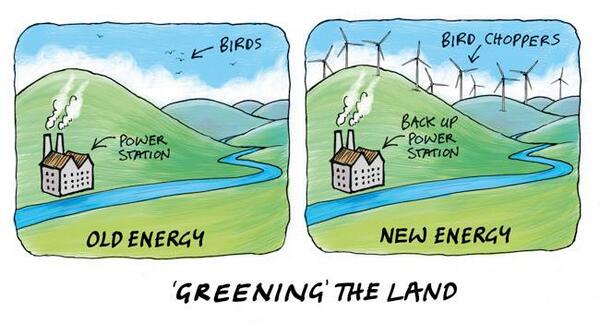
After the Paris Climate Jamboree, the wind industry, its parasites and spruikers are licking their chops at the prospect of having the rich world fund the construction of millions of these things in the dark corners of the Planet. Sensible first world economies have tumbled (albeit, belatedly) to the fact the wind power is patent nonsense.
Paris, aka ‘The City of Light’ has been lit up by nuclear power for over 50 years, and that’s not about to change any time soon.
Britain has seen the light and has scrapped subsidies to wind power, with the number of threatened wind farms going from a roar to a whimper:
UK Wind Industry Collapses as David Cameron Slashes Subsidies for Wind Power
The Spanish were beguiled for a while by the wind industry’s promises of millions…
View original post 2,040 more words
Hearts of Darkness: Richest Nations Push Unreliable Renewables to Keep Africans Forever Poor
20 Jan 2020 2 Comments
There’s something altogether cynical about well-healed nations forcing the impoverished to embrace expensive and unreliable wind and solar. It is, of course, all done in the name of ‘saving the planet’. [Note to Ed: Not to mention saving the manufacturers of industrial wind turbines and solar panels, who are struggling back home].
As any economist specialising in development will eagerly tell you, the first step out of poverty for the Third World’s unfortunates is access to reliable and affordable energy. Relieving households of the daily drudgery of gathering sticks and dung to cook and heat homes; providing light and electricity to those homes by which the children might read and become educated; pumping and purifying the water they use; and giving a reliable source of power to miners, manufacturers, food processors and the like is – if you’re serious about creating a path out of poverty – all to the…
View original post 1,450 more words
.@cwcalomiris “Thinking Historically about Banking Crises and Bailouts”
20 Jan 2020 Leave a comment
in applied price theory, business cycles, econometerics, economic history, economics of information, economics of regulation, entrepreneurship, industrial organisation, law and economics, macroeconomics, monetary economics, politics - USA, Public Choice, public economics, rentseeking Tags: bank panics, bank runs, deposit insurance
Andrew Sullivan on the Democratic candidates
20 Jan 2020 Leave a comment
Andrew Sullivan’s “Intelligencer” column is a breath of fresh air in an increasingly woke New York Magazine. His Friday pieces are usually in three parts, and this week’s (click on screenshot below) is no exception. The three topics are, in order, the progress we’ve made in gay rights and women’s rights, and those who deny it (Sullivan doesn’t mention the demonization of Steve Pinker for his progressivism), the Democratic candidates with Sullivan’s assessment, and a bit of “shade” thrown at Meghan Markle for marrying into the royal family, knowing what she was getting into, and then kvetching about it. (“Sorry, but if you choose to marry into royalty, you have to take the rough with the smooth: The fame and luxury of being a princess comes packaged with bad press, intrusive photographers, and constant public duty. If Meghan didn’t expect this, it’s hard to understand how not.”)
Surprisingly, Andrew…
View original post 654 more words
Doomsday Climate Predictions: Wrong Then, Wrong Now
19 Jan 2020 Leave a comment
From the team at CFACT ~
How many doomsday predictions about the Earth’s climate must fail before they finally get broadly ignored and dismissed out of hand? Considering the track record of climate predictions that turned out to be false, we are well passed the moment of ridicule.
The latest climate prediction fiasco, about glaciers disappearing in Glacier National Park by 2020, is the latest reminder of the falsity of the man-made global warming movement. It’s 2020; the glaciers remain.
Predictions of climate catastrophe drone on, and get more hysterical, including many from the same people whose credibility was destroyed long ago. Yet, the climate alarmists remain undaunted and impervious to embarrassment. Instead, they simply move the goal posts by predicting more planetary weather Armageddon in the future and proposing more insanely expensive solutions to “address” it (notice they rarely promise to reverse assumed man-made warming).
It is not just…
View original post 678 more words
Young People Reject Socialism in the Classroom
19 Jan 2020 Leave a comment
Redistribution has a corrosive impact on both ends. Recipients are harmed because they get trapped in dependency, and workers are harmed because taxes discourage productive behavior.
Yet young people seem susceptible to this ideology, even when they are among the main victims.
While it might be tempting to shrug and assume they’re hopelessly clueless, this video shows young people are quite capable of grasping why redistribution is a bad idea.
I’ve previously shared a similar video, as well as a couple of written versions of this redistribution challenge.
In this case, though, we have some additional analysis.
Here are some excerpts from the accompanying article.
…for the first time ever, more young people say they’d prefer to live in a socialist country over a capitalist one. Whether it’s free healthcare, free college tuition, or universal basic income, students around America increasingly support higher…
View original post 400 more words
How Do We Rescue Young People from Socialism?
19 Jan 2020 Leave a comment
I started fretting about the socialist tendencies of young people early last decade.
And when Sanders attracted a lot of youth support in 2016, I gave the issue even more attention, and I’ve since continued to investigate
why so many young people are sympathetic to such a poisonous ideology with a lengthy track record of failure and deprivation.
Some of the recent polling data is very discouraging.
And if you want to be even more depressed, here are some tweets with the most-recent data about the the views of young people.
It’s not just that they have warm and fuzzy thoughts about so-called democratic socialism.
I’m completely horrified to learn that more than one-third of young people even have a positive perception of communism.
View original post 1,177 more words
January 18, 1871: Proclamation of the German Empire.
19 Jan 2020 Leave a comment

The future king and emperor was born Wilhelm Friedrich Ludwig of Prussia in the Kronprinzenpalais in Berlin on March 22, 1797. As the second son of Louise of Mecklenburg-Strelitz and King Friedrich Wilhelm III, himself son of King Friedrich Wilhelm II, Wilhelm was not expected to ascend to the throne. His grandfather died the year he was born, at age 53, in 1797, and his father Became the King of Prussia.
Ever since the Holy Roman Empire was dissolved in 1806 uniting the German lands into a modern Nation State, a new empire, was the goal of many statesman as well as the populace of the multi German states that had made up the Holy Roman Empire.
The first attempt to create the Second German Reich occurred in 1848. In the wake of the revolutions of 1848 that swept across Europe, where the people of the many autocratic monarchies demanded…
View original post 845 more words
Hoppit J. (1986) Financial crises in 18th-century England
18 Jan 2020 Leave a comment
Hoppit, Julian (1986) “Financial Crises in Eighteenth-Century England”, The Economic History Review, 39/1, 39-58.
Introduction
“Because the financial system in the 18th century was evolving and becoming more sophisticated, […] the nature of crises developed and changed”. Historians have long disagreed on the very definition of what constituted a crisis in early modern England (p.40). The author defines a crisis as a moment when expectations change leading owners of wealth to abandon a type of asset for another leading to the falls in prices of the former. The more widely available the newly-sought asset is, the lesser the crisis.
View original post 608 more words
Kid’s Climate Lawsuit Dismissed on Appeal
18 Jan 2020 Leave a comment
beyond the power of an Article III court to order, design, supervise, or implement the plaintiffs’ requested remedial plan where any effective plan would necessarily require a host of complex policy decisions entrusted to the wisdom and discretion of the executive and legislative branches.
The panel reluctantly concluded that the plaintiffs’ case must be made to the political branches or to the electorate at large.
Juliana et al. Vs US Federal Government is Dismissed.
A federal appeals court on Friday threw out a lawsuit by children and young adults who claimed U.S. government climate policy put their future in jeopardy, a major blow to the high-profile case after a string of failed similar bids.
In a 2-1 decision, the 9th U.S. Circuit Court of Appeals said the plaintiffs, who were ages 8 to 19 when the lawsuit began, lacked legal standing to pursue their case, and that the issues they raised should be decided by other branches of the federal government.
The decision derails the potentially far-reaching case, one of more than half a dozen similar cases filed in state courts, from Washington to Alaska, by an Oregon-based youth advocacy non-profit called Our Children’s Trust.
The lawsuit had first been filed in an Oregon federal court in 2015, charging that the U.S. government’s environmental…
View original post 579 more words


Recent Comments