I’ve posted about many new jobs like this. See related posts below. Also, this post is based on yesterday’s post You Spent $6,000 on a Secondhand Chanel Bag. Now Find Out if It Is Real. It had excerpts from an article by Chavie Lieber of The WSJ. Here are excerpts related to today’s post:”Many secondhand luxury shoppers…
Handbag authenticators (creative destruction and how the economy just keeps creating new types of occupations & professions)
Handbag authenticators (creative destruction and how the economy just keeps creating new types of occupations & professions)
10 Apr 2024 Leave a comment
in applied price theory, development economics, economics of information, human capital, industrial organisation, labour economics, labour supply, occupational choice, poverty and inequality Tags: consumer fraud, creative destruction
A Conversation with Gary Becker
10 Apr 2024 Leave a comment
in applied price theory, behavioural economics, comparative institutional analysis, discrimination, economic history, economics of education, economics of information, Gary Becker, gender, history of economic thought, human capital, labour economics, labour supply, occupational choice, poverty and inequality
Pricing the Atlantic
09 Apr 2024 Leave a comment
in applied price theory, entrepreneurship, industrial organisation, survivor principle
A WSJ article by Alexandra Bruell reports that three years ago the Atlantic magazine ran a $20 million deficit which led to layoffs. A new boss, Nick Thompson, was tasked with turning this around. Along with editorial changes toward longer investigative pieces rather than breaking news, the Atlantic raised subscription prices 50%. How did he…
Pricing the Atlantic
Deirdre McCloskey: Innovation Begins in Our Minds
09 Apr 2024 Leave a comment
in applied price theory, applied welfare economics, comparative institutional analysis, constitutional political economy, development economics, economic history, entrepreneurship, growth miracles, history of economic thought
Coffee’s Supply & Demand Dance during Prohibition
08 Apr 2024 Leave a comment
in applied price theory, economic history, economics of regulation, health economics Tags: economics of prohibition

I’ve written about coffee consumption during US alcohol prohibition in the past. I’ve also written about visualizing supply and demand. Many. Times. Today, I want to illustrate how to use supply and demand to reveal clues about the cause of a market’s volume and price changes. I’ll illustrate with an example of coffee consumption during […]
Coffee’s Supply & Demand Dance during Prohibition
Cuba Libre
05 Apr 2024 Leave a comment
in applied price theory, comparative institutional analysis, constitutional political economy, development economics, economic history, economics of bureaucracy, economics of crime, growth disasters, history of economic thought, human capital, income redistribution, industrial organisation, labour economics, labour supply, law and economics, liberalism, Marxist economics, politics - USA, poverty and inequality, Public Choice, public economics, rentseeking Tags: Cuba
Martin Gurri has a very good, deep-dive on the current situation in Cuba. The wreckage of the Cuban economy really can’t be exaggerated. The perpetual blackouts are an apt symbol of a country that is headed for the dark ages. For the first time since the revolution, Cuba is begging the United Nations for food aid. Nearly […]
Cuba Libre
Unfettered: Fishback 25 Years Later
04 Apr 2024 Leave a comment
in applied price theory, applied welfare economics, comparative institutional analysis, discrimination, economic history, health and safety, human capital, labour economics, labour supply, law and economics, occupational choice, poverty and inequality, unemployment, unions Tags: racial discrimination
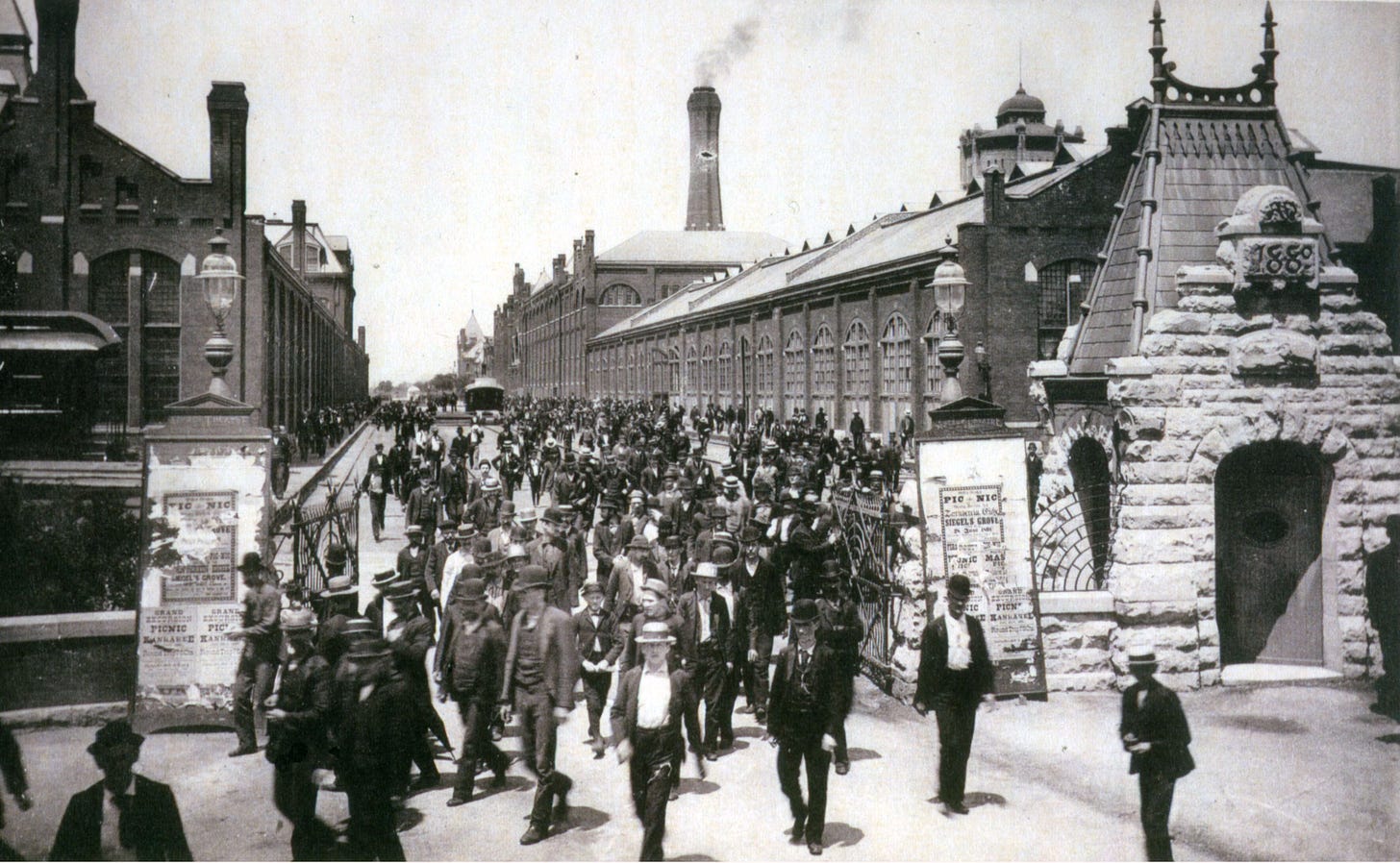
A quarter century ago, economist Price Fishback published “Operations of ‘Unfettered’ Labor Markets: Exit and Voice in American Labor Markets at the Turn of the Century” 1,762 more words
Unfettered: Fishback 25 Years Later
Productivity Syndrome and the Investment Prescription
30 Mar 2024 Leave a comment
in applied price theory, development economics, economic growth, economic history, growth miracles, history of economic thought, human capital, industrial organisation, labour economics, labour supply, macroeconomics

Economic productivity is about growing the size of the pie. I sometimes point out that no matter what your goal–spending increases, tax cuts, greater support for the poor, environmental protection–that goal is easier when the economic pie is growing. When the economic pie isn’t growing, after all, then all priorities have to pit potential winners…
Productivity Syndrome and the Investment Prescription
How the Carbon Cult Subverts Political Discourse
30 Mar 2024 Leave a comment
in applied price theory, applied welfare economics, comparative institutional analysis, economics of regulation, energy economics, environmental economics, global warming Tags: Canada, climate alarmism

Trudeau Turns the Carbon Tax Screws on Canadians April 1 Ross Mckitrick explains the smoke and mirrors in Trudeau’s justifications for his racheting carbon tax in a National Post article Wanted: A leader who is honest about climate policy. Excerpts in italics with my bolds and added images. Pierre Poilievre is leading anti-carbon tax rallies […]
How the Carbon Cult Subverts Political Discourse
Will strong AI raise or lower interest rates?
29 Mar 2024 Leave a comment
in applied price theory, energy economics, entrepreneurship, industrial organisation Tags: artificial intelligence
That is the topic of my latest Bloomberg column. Here is one excerpt: First, as a matter of practice, if there is a true AI boom, or the advent of artificial general intelligence (AGI), the demand for capital expenditures (capex) will be extremely high. Second, as a matter of theory, the productivity of capital is […]
Will strong AI raise or lower interest rates?
Universal Basic Income: The Freiman-Caplan Debate
27 Mar 2024 Leave a comment
in applied price theory, applied welfare economics, fiscal policy, human capital, income redistribution, labour economics, labour supply, macroeconomics, politics - USA, poverty and inequality, Public Choice Tags: child poverty, family poverty, negative income tax
As expected, I really enjoyed the Institute for Liberal Studies’ UBI debate between myself and Chris Freiman. Chris was definitely the least enthusiastic UBI supporter I’ve debated. All the way to the point of, “Given all the truly promising ideas we have, and the downside risks of the UBI, perhaps I shouldn’t even publicly defend…
Universal Basic Income: The Freiman-Caplan Debate
How credible is the Milei plan?
24 Mar 2024 Leave a comment
in applied price theory, budget deficits, business cycles, development economics, economic growth, financial economics, fiscal policy, growth disasters, income redistribution, international economics, macroeconomics, monetary economics, Public Choice, public economics Tags: Argentina
Here is a good Substack essay by Nicolas Cachanosky, excerpt: Inflation expectations depend on what is expected to happen to the budget in the months to come. It is natural, then, to ask whether the observed surpluses are sustainable in the months ahead. Answering this question requires looking at two things. First, how was the fiscal […]
How credible is the Milei plan?
Eat the Rich: Warren Plan Would Impose Wealth Tax, Captivity Tax, and $100 Billion for Increasing Tax Audits
23 Mar 2024 Leave a comment
in applied price theory, applied welfare economics, economic growth, fiscal policy, income redistribution, labour economics, labour supply, macroeconomics, poverty and inequality, Public Choice, public economics Tags: taxation and entrepreneurship, taxation and investment, taxation and labour supply

The wealth tax is back. We have previously discussed the constitutional and policy concerns surrounding the push by Democrats like Sen. Elizabeth Warren (D., Mass.) to introduce a wealth tax that would start with billionaires. It would not likely end there. The law would also apply the same type of California approach to wealthy families […]
Eat the Rich: Warren Plan Would Impose Wealth Tax, Captivity Tax, and $100 Billion for Increasing Tax Audits
Do Me a Personal Favor: Please Pre-Order *Build, Baby, Build* Now
22 Mar 2024 Leave a comment
in applied price theory, applied welfare economics, comparative institutional analysis, constitutional political economy, economics of bureaucracy, economics of regulation, income redistribution, law and economics, liberalism, Marxist economics, politics - USA, property rights, Public Choice, public economics, rentseeking Tags: land supply, zoning

I started writing Build, Baby, Build: The Science and Ethics of Housing Regulation, in the early weeks of Covid. Now, with the kind cooperation of the Cato Institute, my second non-fiction graphic novel releases on May 1, 2024. That’s less than six weeks away.The official coverPlease forgive my laughable arrogance, but I assure you that…
Do Me a Personal Favor: Please Pre-Order *Build, Baby, Build* Now
 Utopia, you are standing in it!
Recent Comments