Why we must ban Christmas
19 Dec 2019 Leave a comment

Originally published on December 24, 2012 and part of the updating of my old blog-site. It is interesting to see how, seven years on, many of my claims to show how ridiculous the anti-Christmas lot were, now seem to be borderline politically incorrect. How fast the narrative can shift!
Christmas means carnage – this is the great insight of Ferdinand the Duck in the 1995 movie, Babe.
Christmas is a time of consumption, and for many of us in the West, over-consumption. That may mean too much to eat and drink (including foie gras and caviar), too many gifts we don’t need or want (decorated in senseless wrapping paper to hide their significant resource depletion) and long trips to spend a day with people we might rather not see during the other 364 days in the year. We chop down trees to put in our homes, lighting them up…
View original post 1,031 more words
How the Model T drove hats out of fashion
18 Dec 2019 Leave a comment

Last week, I came across this tweet from an account I follow on Twitter.
Take a closer look at the picture.
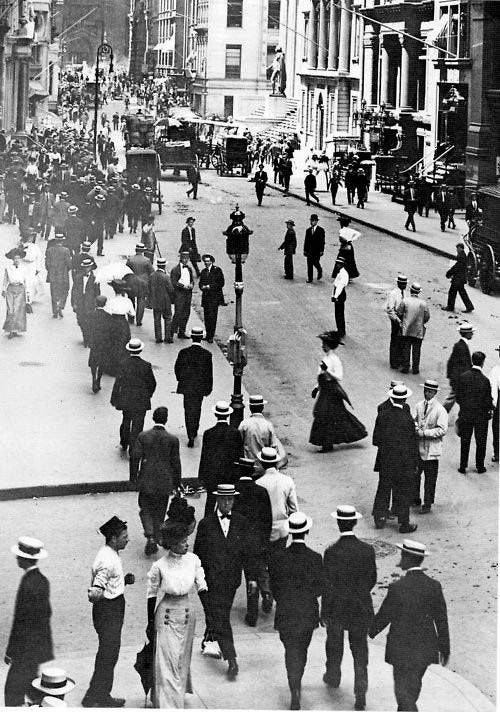
Every single person in this picture, man or woman, was wearing a hat. There isn’t a single person in that picture that isn’t wearing a hat. People even wore broad-rimmed and Panama hats to the beach (unless they were swimming).
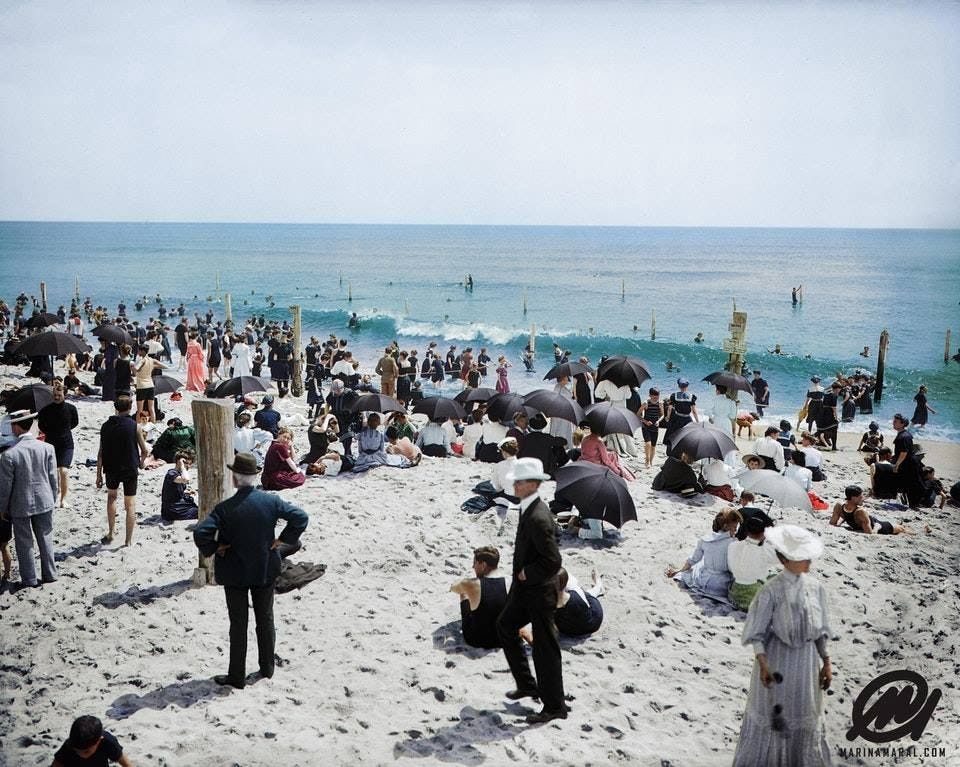
Of course, createstreets was pointing out the large sidewalks and tiny roads in the picture, reminding the audience that this was at a time when everybody was walking or riding a horse, and very few people drove cars.
I’m not really sure how my train of thought ended up where it did, but I quickly asked this question: did hats fall out of fashion because of cars?
I ended up getting into a conversation with Andrew, who previously worked in the fashion world, about this particular subject, and…
View original post 1,039 more words
Why Tax Rates Matter More Than Taxes
18 Dec 2019 Leave a comment
in applied price theory, applied welfare economics, entrepreneurship, industrial organisation, labour economics, labour supply, politics - USA, Public Choice, public economics Tags: taxation and entrepreneurship, taxation and investment, taxation and labour supply
Coal demand to remain stable amid climate concerns: IEA
18 Dec 2019 2 Comments

 Credit: Coal India Limited
As the COP 25 summit ends in disarray, all attempts to stoke up fears of a man-made ‘climate crisis’ are not going well, in some parts of the world at least. Hard to see developing countries turning away from reliable and affordable energy any time soon.
The demand for coal will remain steady over the next four years due to demand from Asia, which comes despite fears of the climate crisis, the International Energy Agency (IEA) said Tuesday.
Coastal areas across Southeast Asia have already seen major floods and seawater incursion linked to climate change, claims Phys.org.
“Global coal demand has rebounded since 2017,” the IEA said in a report.
View original post 148 more words
Not all ‘occupied territories’ are equal for the BBC
18 Dec 2019 Leave a comment

As readers are no doubt well aware the BBC rarely, if ever, passes up on an opportunity to remind its audiences that certain geographical areas appearing in its coverage are “occupied territories” or “occupied Palestinian land” and that “settlements are illegal under international law”. The BBC’s ‘style guide’ on “Israel and the Palestinians” has instructions for its journalists on the topic – including:
“Israel occupied East Jerusalem in 1967. A law in 1980 formalised an administrative measure tantamount to the annexation of land taken as a result of the 1967 War. The claim to East Jerusalem is not recognised internationally. Instead, under international law, East Jerusalem is considered to be occupied territory. […]
The BBC should say East Jerusalem is ‘occupied’ if it is relevant to the context of the story. For example: “Israel has occupied East Jerusalem since 1967. It annexed the area in 1980 and sees it as its…
View original post 344 more words
Quotes from COP25: It’s a nothing-burger
17 Dec 2019 Leave a comment


Here are key quotes from leaders, experts and activists on the UN Climate Change Conference (COP25) outcome.

Antonio Guterres, UN secretary general
“I am disappointed with the results of COP25. The international community lost an important opportunity to show increased ambition on mitigation, adaptation and finance to tackle the climate crisis.”
View original post 650 more words
Policy Briefs: John Cochrane on Why a Complicated Tax Code Leads to Negative Outcomes
17 Dec 2019 Leave a comment
in applied price theory, applied welfare economics, comparative institutional analysis, constitutional political economy, economic history, entrepreneurship, industrial organisation, labour economics, labour supply, politics - USA, Public Choice, public economics Tags: taxation and entrepreneurship, taxation and investment, taxation and labour supply
ISIS: INSIDE THE ARMY OF TERROR by Michael Weiss and Hassan Hassan
17 Dec 2019 Leave a comment


Each evening the nightly news seems to zero in on another story that relates to the Islamic State in Iraq and Syria (ISIS). We are bombarded with border crossings into Syria from Turkey, the state of the effort by Iraqi forces to retake Tikrit, fears concerning Iran’s role in Iraq should ISIS finally be defeated, the capture of a former American Air Force veteran seized at the Turkish border and extradited to the United States, and yesterday’s brutal attack in Tunisia. This nightly visual obsession has produced a number of new books on the rise of ISIS and suggestions on how we should deal with them. One of the better or perhaps the best of this new genre, explaining ISIS, is Michael Weiss and Hassan Hassan’s ISIS: INSIDE THE ARMY OF TERROR. The book is written in a very straight forward historical narrative that tries to explain how we have…
View original post 1,050 more words
The void where hope might have been
17 Dec 2019 Leave a comment

If, as I do, you’ve lived for almost 25 years 100 yards or so from the old Erskine College you have a fairly good sense of what National was on about in this snippet from their new “Building NZ, RMA Reform and Housing” policy discussion document released yesterday.
Objections to proposals for residential reuse of the old Erskine School site in Wellington held it up for more than 20 years. It involved claims that the decaying buildings had heritage value, as well as the routine RMA neighbour objections. Long after the school closed the buildings were red-stickered by Wellington City Council as being unsafe for occupancy. After two decades of costly objections and delays, development eventually started on the site providing 94 dwellings for families.
The school closed in 1985. Some of the land was developed decades ago, but the main site is only now getting the first few occupants…
View original post 1,328 more words
ASSAD OR WE BURN THE COUNTRY: HOW ONE FAMILIES LUST FOR POWER DESTROYED SYRIA by Sam Dagher
17 Dec 2019 Leave a comment
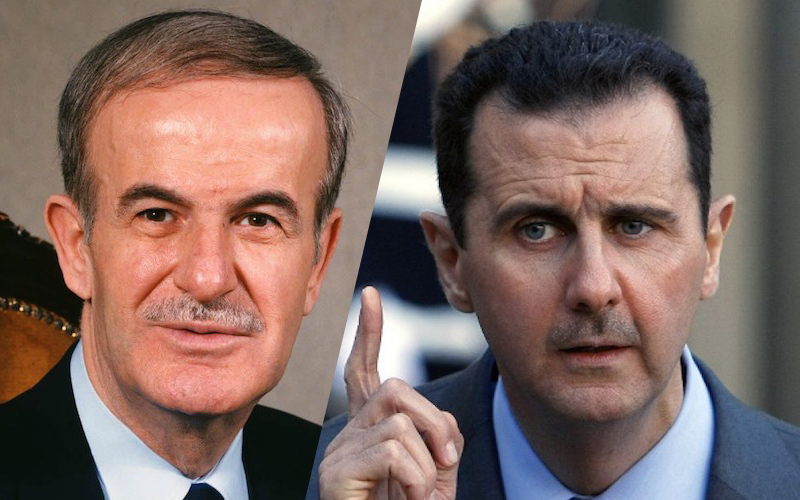
(Hafez al-Assad and son Bashar al-Assad)
In the last few years a number of important books dealing with the Syrian tragedy have appeared. They all reflect the gruesome nature of how Bashar al-Assad and his family have clung to power as they have slowly destroyed their country by killing over 500,000 people and creating millions of refugees. Many of these books are journalistic accounts of Assad’s murderous policies or personal memoirs as their authors scream on the written page for the world to listen and act. Sam Dagher, a reporter for the Wall Street Journal new contribution to this ever-growing list is his ASSAD OR WE BURN THE COUNTRY: HOW ONE FAMILIES LUST FOR POWER DESTROYED SYRIA which focuses on the generational saga of the Assad and Tlass families, once deeply intertwined and now estranged by Assad’s bloody quest to retain the country that his father seemingly bequeathed to him.
View original post 1,567 more words


Recent Comments