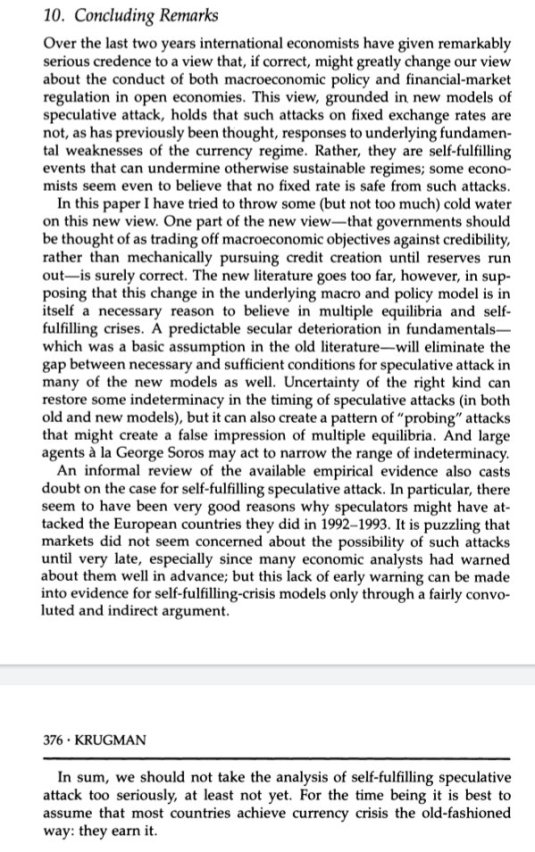
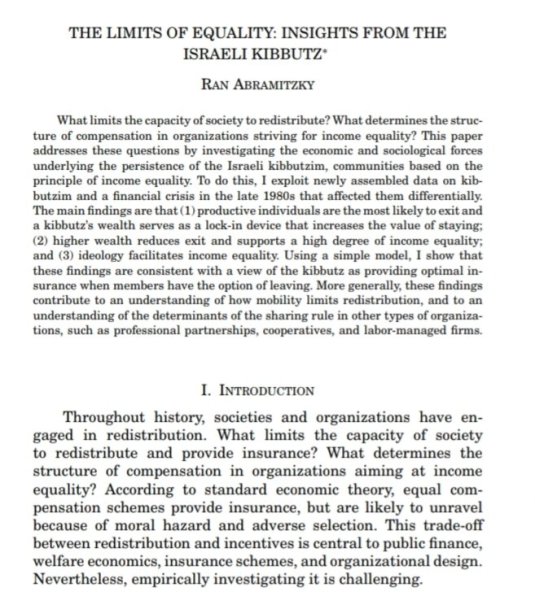
From https://www.aeaweb.org/articles?id=10.1257/jep.33.3.185
Celebrating humanity's flourishing through the spread of capitalism and the rule of law
09 Nov 2019 Leave a comment
in applied price theory, business cycles, econometerics, economic history, job search and matching, labour economics, labour supply, macroeconomics, unemployment Tags: search and matching
08 Nov 2019 Leave a comment
In the last few years, California experienced a long, severe drought. It was extremely painful, but not as painful as it might have been because California has water markets that helped the water flow to those who needed it most. Strengthening and expanding water markets could have furthered reduced this pain.
Courtesy of Jose Manuel Suarez
Yet in Water Deeply, environmental activist Gary Wockner bemoans that so many environmentalists are embracing markets to resolve environmental conflicts. His critique says more about the growing schisms between environmentalists than the merits of water markets.
Wockner offers three criticisms of water markets: (1) they commoditize water; (2) he hasn’t seen a quantified analysis of whether they are successful, under a test that he has devised but does not articulate; and (3) they, along with other free market environmental reforms, are pushing environmentalists away from his preferred model of lobbying and litigation (political…
View original post 889 more words
08 Nov 2019 Leave a comment
One of the greatest strengths of free market environmentalism approaches to environmental problems is that they facilitate the development of new information about the environment and provide an effective means for people to act on that information. Where there’s a market for some environmental benefit, the people who value it have a strong incentive to discover more information about it and, thanks to the price signal, others can act on that new knowledge without having to know it themselves.
For instance, suppose a plucky environmentalist discovers that a farmer’s practices reduce water quality to a distant stream through a complex hydrological process. If there’s a cost effective substitute or a means of mitigating its effects on the stream, the environmentalist can pay the farmer to change his behavior. If the price is right, the farmer will change his behavior without having to understand the complex process by which his…
View original post 602 more words
08 Nov 2019 Leave a comment
The kingdoms of England and Scotland were formally united into a single Kingdom of Great Britain in 1707 by the Act of Union. Queen Anne consequently assumed the title “Queen of Great Britain, France and Ireland, Defender of the Faith, etc.”. It remained in use until 1801, when Great Britain and Ireland combined to become the United Kingdom. George III used the opportunity to drop both the reference to France and “etc.” from the style. It was suggested to him that he assume the title “Emperor”, but he rejected the proposal. Instead, the style became “King of the United Kingdom of Great Britain and Ireland, Defender of the Faith”.

King of the United Kingdom of Great Britain and Ireland, Defender of the Faith
In 1876 “Empress of India” was added to Queen Victoria’s titles by the Royal Titles Act 1876, so that the Queen of the United Kingdom, the ruler…
View original post 464 more words
08 Nov 2019 Leave a comment
in applied price theory, economics of love and marriage Tags: dating market, marriage and divorce, marriage market

From Steven Landsburg https://slate.com/culture/2000/12/why-men-pay-to-stay-married.html
08 Nov 2019 Leave a comment
Since the 1980s, Maui County’s wastewater treatment plant has discharged millions of gallons of recycled water into groundwater. Over several months, this pollution migrates to the ocean where it affects the health of coral reefs. Under the Clean Water Act, any addition of any pollutant from any point source to a navigable water requires a costly and time-consuming permit. Yet the county has never obtained a permit, believing that the conveyance of the pollution by groundwater rather than a pipe rendered the permit requirement inapplicable.
This week, the Supreme Court confronted the question whether a permit is required. But, if the oral argument is any indication, the answer is anything but clear. And that opaqueness raises significant concerns about how pollution can be addressed effectively while also giving fair notice to property owners. Although the Court’s consideration was limited to the statute as it exists today, the debate…
View original post 1,007 more words
08 Nov 2019 Leave a comment
UK Constitutional Law Association

The European Union (Withdrawal Agreement) Bill will make no further progress before the general election. The Bill is however of potentially huge constitutional significance, and a new government could well look to pass it quickly. It was therefore imperative that it be subjected to parliamentary scrutiny in the short period between its forestalled second reading on 22 October and Parliament’s dissolution on 6 November.
On this basis the House of Lords Constitution Committee on Tuesday published an interim report on the Bill. The Committee makes clear that it does not pass judgement on the policy issues in the Bill or those related to the United Kingdom’s withdrawal from the European Union (EU) more broadly. But such is its complexity that it sees value in both explaining the purpose and effect of the Bill and in exploring at this stage the technical legal challenges that the Bill seeks to address.
The…
View original post 2,226 more words
07 Nov 2019 Leave a comment
Reformation to Referendum: Writing a New History of Parliament
I is for impeachment, a parliamentary prosecution in which classically the lower House of the legislature acts to present the alleged malefactor for trial, and the upper House sits in judgement.
Much has been heard about the procedure in recent years, first because of its deployment in Brazil against the President, Dilma Rousseff, resulting in her removal from office in August 2017, and secondly because of the much-discussed (but remote) possibility of impeachment proceedings against President Donald Trump in the United States. In both the latter cases, impeachment has been embedded within a written constitution and recognised procedures. Although the origins of impeachment lie in English politics, impeachments were highly unusual, and always subject to intense political and legal argument about procedure and fairness. In almost each case the procedures were reinvented and argued over (a summary of the procedure here reasonably explains the broadly outlines, but conveys a rather…
View original post 2,061 more words
07 Nov 2019 Leave a comment
This blog from Paul Seaward, British Academy/Wolfson Research Professor at the History of Parliament Trust, is part of our Named Parliaments series. He explores the so-called exclusion crisis of the late seventeenth century. You might also be interested in Paul’s recent blog on the Cavalier Parliament.
Three short Parliaments – those that assembled in March 1679, in October 1680, and March 1681 – are collectively referred to as the ‘Exclusion’ Parliaments, for they were dominated by the issue of the exclusion from the throne of Charles II’s heir, his brother, James, Duke of York. The astonishing revelation that York had undergone conversion to the Roman Catholic faith – confirmed in 1672, but widely known well before – was the central element in a political crisis that destabilised the English government for much of the rest of Charles II’s reign. The issue of how England’s Protestant church could be…
View original post 966 more words
07 Nov 2019 Leave a comment

The final blog in our trio for LGBT+ History Month comes from our Public Engagement Officer, Sammy Sturgess. She considers how nineteenth century legal reform in the British Empire impacted the regulation of homosexuality and its Commonwealth legacy…
2019 is the 70th anniversary of the Commonwealth so
it seems appropriate to consider the legacy of British colonial-era legislation
on Commonwealth nations. Specifically, given that it’s LGBT+ History Month,
here we’ll discuss the nineteenth century codification of law and how this
related to homosexual offences in the British Empire and continues to affect
the lives of LGBTI+ people in the Commonwealth today.
2018 saw the legacy of British colonial-era legislation relating to the criminalisation of homosexuality take centre stage in the press on more than one occasion. In April 2018 Trinidad and Tobago declared that section 13 and 16 of their Sexual Offences Act which related to male…
View original post 1,001 more words
07 Nov 2019 Leave a comment


Proposals for another Brexit referendum will be at the heart of the election campaign and it is therefore important that the viability of politicians’ plans are thoroughly tested. Drawing on recent research, Alan Renwick, Meg Russell and Lisa James here set out five key questions. They suggest that Labour’s plans for a referendum within six months are challenging, though not necessarily impossible. A poll which pitted Boris Johnson’s deal against Remain would be simpler and quicker, avoiding additional negotiation time. This would also have the advantage of enhancing the referendum’s legitimacy among Brexit supporters.
The parties are finalising their election manifestos, and several will propose a further referendum on Brexit. These policies will come under close scrutiny during the campaign. This post draws on and updates a detailed report published by the Constitution Unit last year. It sets out the possible routes to a further Brexit referendum, the key choices…
View original post 2,011 more words
07 Nov 2019 Leave a comment
Animal rights campaigners claim service dogs are unfairly bred to benefit humans.
Charlie Parker, November 6, 2019, The Times
Blind people are being verbally abused by animal rights activists for owning guide dogs.
Owners say they were targeted while walking their specially trained labradors, who wear high-visibility harnesses to identify them as helpers.
Some animal welfare campaigners claim that service dogs are unfairly bred to benefit humans.
Jonathan Attenborough, from Fife, was born without sight in his right eye and aggressive glaucoma claimed the sight in his left five years ago. He was paired with Sam, a three-year-old labrador, in April last year.
Mr Attenborough, 30, described his pet as a “constant companion” who had enabled him to lead a more fulfilling life. He is convinced that Sam lives a happy life as his helper.
However, after two verbal attacks from people claiming to be campaigners against animal cruelty, he…
View original post 9 more words
Celebrating humanity's flourishing through the spread of capitalism and the rule of law
A History of the Alt-Right
Econ Prof at George Mason University, Economic Historian, Québécois
Celebrating humanity's flourishing through the spread of capitalism and the rule of law
Scholarly commentary on law, economics, and more
Beatrice Cherrier's blog
Celebrating humanity's flourishing through the spread of capitalism and the rule of law
Why Evolution is True is a blog written by Jerry Coyne, centered on evolution and biology but also dealing with diverse topics like politics, culture, and cats.
Celebrating humanity's flourishing through the spread of capitalism and the rule of law
A rural perspective with a blue tint by Ele Ludemann
DPF's Kiwiblog - Fomenting Happy Mischief since 2003
Celebrating humanity's flourishing through the spread of capitalism and the rule of law
The world's most viewed site on global warming and climate change
Tim Harding's writings on rationality, informal logic and skepticism
A window into Doc Freiberger's library
Let's examine hard decisions!
Commentary on monetary policy in the spirit of R. G. Hawtrey
Thoughts on public policy and the media
Celebrating humanity's flourishing through the spread of capitalism and the rule of law
Politics and the economy
A blog (primarily) on Canadian and Commonwealth political history and institutions
Reading between the lines, and underneath the hype.
Economics, and such stuff as dreams are made on
"The British constitution has always been puzzling, and always will be." --Queen Elizabeth II
Celebrating humanity's flourishing through the spread of capitalism and the rule of law
WORLD WAR II, MUSIC, HISTORY, HOLOCAUST
Undisciplined scholar, recovering academic
Celebrating humanity's flourishing through the spread of capitalism and the rule of law
Res ipsa loquitur - The thing itself speaks
In Hume’s spirit, I will attempt to serve as an ambassador from my world of economics, and help in “finding topics of conversation fit for the entertainment of rational creatures.”
Researching the House of Commons, 1832-1868
Articles and research from the History of Parliament Trust
Reflections on books and art
Posts on the History of Law, Crime, and Justice
Celebrating humanity's flourishing through the spread of capitalism and the rule of law
Exploring the Monarchs of Europe
Cutting edge science you can dice with
Small Steps Toward A Much Better World
“We do not believe any group of men adequate enough or wise enough to operate without scrutiny or without criticism. We know that the only way to avoid error is to detect it, that the only way to detect it is to be free to inquire. We know that in secrecy error undetected will flourish and subvert”. - J Robert Oppenheimer.
The truth about the great wind power fraud - we're not here to debate the wind industry, we're here to destroy it.
Celebrating humanity's flourishing through the spread of capitalism and the rule of law
Recent Comments