I was not intending to blog this case. I fear the bald facts lend themselves to a curiosity born out of prurience. I myself was intrigued so I am not in any position to judge. It is merely a natural reaction to the facts, as laid out in the case. Transcript
The bare facts of the case are: On reflection, I decided to blog as it raises the issue of Sex By Deception, currently a criminal offence. There is talk about reviewing the law. Stonewall are one of the organisations lobbying for this:
Whilst there could be a progressive case for reviewing the law around sex by deception (I am thinking of Spy cops) it’s also fraught with risk. I am mainly thinking of #CottonCeiling here. The term #CottonCeiling was coined by a trans porn actor and activist, Drew DeVeux. It describes the “exclusionary”…
The fundamental point is that a group of people exercising political power decided that they were justified in ignoring a court of law which was delineating the scope of their authority. This is key, because if the executive is free to set the limits on the boundaries of executive power, then the separation of powers becomes a mockery, and no effective safeguards against tyranny remain.
As the dust settles following Miller (No. 2)/Cherry, tension inevitably mounts over the next instalment of the Brexit saga, and how the Prime Minister will interpret his commitment to respecting the Benn Act. Against this backdrop, it is interesting to speculate as to whether recent events in Spain will have any impact upon his decisions, because the Tribunal Supremo in Madrid has just sentenced the Catalan politicians who chose to disregard both the Spanish Constitution and the courts. In short, although cleared of the most serious charge of rebellion, the majority were convicted of the lesser (but still extremely grave) offence of sedition, whilst others were found to be guilty of misusing public funds.
Even though the incarcerated separatists and their followers argue that this was a political decision, maintaining that they are prisoners of conscience, there is no evidence to support such an allegation. Indeed, it flies…
I didn’t think I’d learn anything, and I really haven’t. The only change in my attitudes is that I like Elizabeth Warren less and Pete Buttigieg more, and everyone else pretty much the same as before. Even though “Mayor Pete” seems to have little chance to be the Democratic nominee, Warren’s evasion of questions grates on me. She dissimulates too much.
At least Bernie admits that “Medicare for All” will entail an increase in taxes for everyone, but says—and this is the way to couch it—that although taxes will go up, medical care costs for the poor and middle class will go down more. In net, he says, they’ll be paying less. I’m not sure that’s true, and I don’t favor “Medicare for all” (I favor a public option), but at least he’s honest. Warren can’t even admit that.
Wager of law was a central part of a serious disagreement between the courts of King’s Bench and Common Pleas in the last decades of Elizabeth I’s reign. The dispute concerned the availability and acceptability of the writ of assumpsit being used to sue for debts when those debts could also be recovered using the writ of debt.[1] The writ of debt was the long-established remedy for such claims and it permitted a defendant to wage her law or have the case tried by a jury. The insurgent writ of assumpsit permitted only trial by jury.
A defendant sued using a writ of debt could successfully defend their claim by completing the formal process of waging their law. Coming before the judges in Westminster Hall, the defendant would have to swear an oath denying their liability. Oath-helpers would then swear to…
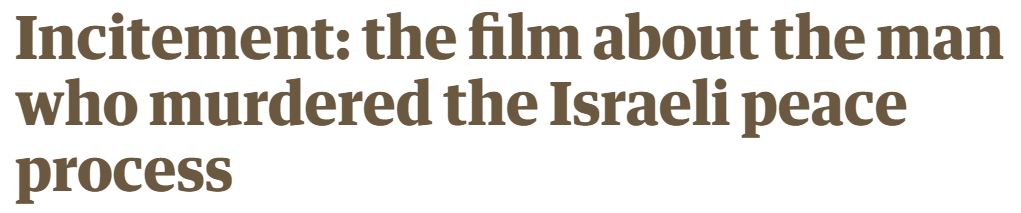
The narrative that the assassination of Yitzhak Rabin by extremist Yigal Amir killed the Israeli-Palestinian peace process is advanced in the headline of an Oct. 11th Guardian review of a new Israeli film on the 1995 tragedy:
It’s also included in the opening paragraph of the review, written by Anne Joseph:
The murder of an Israeli prime minister by an Orthodox Jew was inconceivable,” says American-Israeli film-maker Yaron Zilberman. “For anyone who was pro-peace, it was beyond anything that we could fathom.” The assassination of Yitzhak Rabin by the religious ultra-nationalist law student Yigal Amir, at a peace rally on 4 November 1995, was one of the most traumatic events in Israel’s history. Rabin’s death buried the prospect of peace, further divided an already riven society and left an indelible mark on Israel’s politics.
The Guardian claim doesn’t hold up to scrutiny.
First, shortly after Rabin’s assassination, Likud leader…
This is the kind of question that arises when you adopt full-blown intersectionalism. It’s apparently been decided that it’s okay to culturally “appropriate up“, i.e., Chinese people can wear jeans, and Africans suits, but it’s not okay to “appropriate down“, so that white people can’t wear cornrows or play jazz—at least not without explicitly acknowledging the borrowing and, as this article by Bianca Lambert, a freelance beauty writer, maintains, studying all the nuances of that borrowing.
The article at hand is, of course, at PuffHo, and the answer to the question in the title is a clear “yes: it’s appropriation for minorities to adopt black culture.” But it’s apparently not wrong for blacks to adopt Hispanic or Hindu culture. Click on the screenshot to read:
Most of the article is the usual culture-protection and calling-out of appropriators, and not worth commenting on again; but the thesis…
Heather MacDonald, on how the Delusion of Diversity Destroys Our Common Humanity. Well, yes. “Diversity” has become one of the big judgemental words. You have to measure up! But why and who is doing the measuring?
I would suggest that you can find more real diversity among groups of all one race, or all one ethnic origin than among a university’s sophomore class, But it’s always valuable to question one’s assumptions! That’s one of Heather MacDonald’s greatest skills.
“Jeremy Bowen is the BBC’s Middle East editor. One of Britain’s best-known war correspondents, over the last 35 years he has brought the region’s most important stories to our screens – despite being shot, robbed at gunpoint, threatened, arrested and even thrown in jail. In this in-depth interview, Jeremy relives some of his most pivotal moments, from his first foreign assignment covering the invasion of Kuwait in 1990 to his recent battle with cancer; discusses the practical challenges of reporting impartially on issues like Israel, when both sides complain every report is biased and even the choice of individual words have to be taken carefully; and takes us behind the scenes of his interview with Syrian president Bashar al-Assad.”
Listeners to that podcast (transcript available here) may have been surprised by the extent…
International climate agreements like the Kyoto Protocol may discourage much-needed investment in renewable energy sources, and hence be counterprodutive, according to new research.
Why Evolution is True is a blog written by Jerry Coyne, centered on evolution and biology but also dealing with diverse topics like politics, culture, and cats.
In Hume’s spirit, I will attempt to serve as an ambassador from my world of economics, and help in “finding topics of conversation fit for the entertainment of rational creatures.”

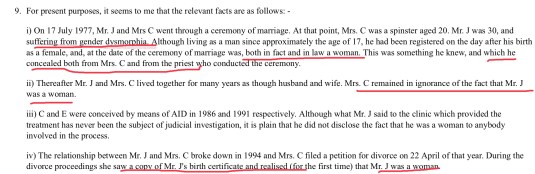 On reflection, I decided to blog as it raises the issue of Sex By Deception, currently a criminal offence. There is talk about reviewing the law. Stonewall are one of the organisations lobbying for this:
 Whilst there could be a progressive case for reviewing the law around sex by deception (I am thinking of Spy cops) it’s also fraught with risk. I am mainly thinking of #CottonCeiling here. The term #CottonCeiling was coined by a trans porn actor and activist, Drew DeVeux. It describes the “exclusionary”…
 As the dust settles following





Recent Comments