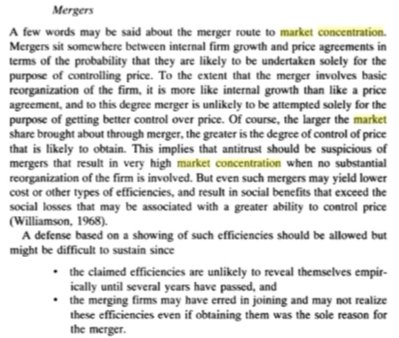
Harold Demsetz on the risks of merging to enhance market power. Corporate reorganizations often fail.
28 Aug 2019 Leave a comment
in applied price theory, financial economics, industrial organisation, law and economics, managerial economics, organisational economics, politics - USA, survivor principle Tags: competition law
A Prosperity Contest: America’s Poor Vs. the Middle Class in other Nations
28 Aug 2019 Leave a comment

My primary job is dealing with misguided public policy in the United States.
I spend much of my time either trying to undo bad policies with good reform (flat tax, spending restraint, regulatory easing, trade liberalization) or fighting off additional bad interventions (Green New Deal, protectionism, Medicare for All, class warfare taxes).
Seems like there is a lot to criticize, right?
Yes, but sometimes the key to success is being “less worse” than your competitors. So while I’m critical of many bad policies in the United States,  it’s worth noting that America nonetheless ranks #6 for overall economic liberty according to the Fraser Institute.
As such, it’s not surprising that America has higher living standards than most other developed nations according to the “actual individual consumption” data from the Organization for Economic Cooperation and Development.
And America’s advantage…
View original post 394 more words

Parliament & World War I
27 Aug 2019 Leave a comment

In partnership with the Parliamentary Archives alongside their current exhibition on Parliament and the First World War, we recently held events in Parliament exploring the institution during the war years…
 Parliament and the First World War exhibition, Westminster Hall
The Parliamentary Archives exhibition on Parliament and the First World War, still open in Westminster Hall, proved an excellent opportunity for us to gather together historians and discuss the impact of the First World War on Parliament.
Firstly, Dr Mari Takayanagi (Vote 100) spoke on ‘The Girl Porters and the Court Twins: Women Staff in Parliament in the First World War.’ Dr Takayanagi’s research had uncovered several women who had, because of the shortage of labour, had the opportunity to work in occupations within Parliament that had previously been closed to them because of their gender. She spoke of two examples: firstly the ‘girl porters’ who took messages…
View original post 676 more words
Poverty Eradication Program: India Dials Up Reliable & Affordable Coal-Fired Power
27 Aug 2019 Leave a comment

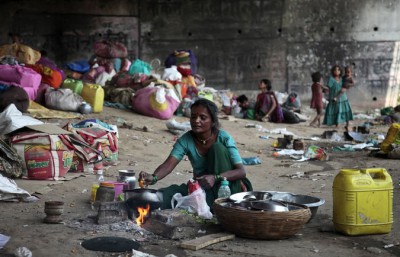
It never takes them long to work out that wind power is the greatest economic and environmental fraud of all time. Eco-zealots have attempted to ram wind and solar power down the throats of Third World governments under the auspices of saving the planet and with the purported purpose of dragging millions out of poverty. As the initiated well-know, wind power rates zero on both scores.
Pointless and expensive, wind and solar power is a kind of first world disease being spread by UN endorsed lunatics, across the developing world.
In India, solar power is seen as ‘fake electricity’, by those being forced to use it: The Cruel Hypocrisy: West Drops Wind Power as it Forces ‘Fake Electricity’ on the World’s Poor
With a population of 1.3 billion – and hundreds of millions of those screaming out for reliable and affordable electricity – which promises to lift them out of grinding…
View original post 778 more words
Sustainability: Ideology versus Reality (Part II: Wind Turbines)
27 Aug 2019 Leave a comment

Editor Note: This post is part of the three-part series with Part I yesterday on Biofuels and Solar and Part III tomorrow on The Big Picture.
“Environmentalists are focused on banning plastic straws! Their inability to differentiate between imaginary, wildly inflated ecological problems and not the here-and-now issues of renewable energies is what the UN powers should address–but will not.”
Mandated, subsidized wind energy requires millions of acres for turbines and ultra-long transmission lines, plus billions of tons of concrete, steel, copper, rare earth metals and fiberglass. The turbines produce intermittent, unreliable electricity that (absent subsidies) costs much more than coal or gas-fueled electricity – and must be backed by fossil fuel generators that must go from standby to full-power many times a day, very inefficiently, every time the wind stops blowing.
Wind turbines kill numerous raptors, other birds and bats every year. Their light flicker and subsonic noise
View original post 1,031 more words
#OIA to @NZHumanRights: any research on the extent of pay transparency and pay secrecy
27 Aug 2019 Leave a comment
in applied price theory, economics of information, economics of regulation, labour economics, labour supply, occupational choice, politics - New Zealand Tags: gender wage gap, The fatal conceit
Sobering Facts about Global Warming
27 Aug 2019 1 Comment

 A Short List Of Facts Global Warming Alarmists Don’t Want To Face by Issues and Insights Editorial Board. Excerpts in italics with my bolds.
Democrats nearly had a brawl last week in California after the party’s Resolutions Committee rejected a proposed climate debate among Democratic presidential candidates. Global warming so fully occupies the thinking of some that there’s no room for information that will contradict their faith.
If they’d only open their minds they’d see:
The U.S. hasn’t warmed since 2005. America isn’t the entire world. But the alarmists gleefully point out regional heatwaves and the “hottest day on record” when cities endure summer scorchers. So let’s look at the data. The U.S. Climate Reference Network, “a sophisticated climate-observing network specifically designed and deployed for quantifying climate change on a national scale,” has found there’s been no warming in the U.S. going back to 2005.
In fact, says meteorologist…
View original post 560 more words

What free speech isn’t
27 Aug 2019 Leave a comment

Ken White is an attorney specializing in free-speech issues, and is the main contributor to the well-known and useful law website Popehat. This week he has a good article in The Atlantic about American free-speech law, which you can read by clicking on the screenshot below:
We talk a lot about free speech on this website, as it’s an important issue in politics, especially on American college campuses. But “free speech” as construed by students often differs considerably from free speech as the courts have defined it under the First Amendment. White’s article aims to let us know what the law really is, not what it should be. As he says:
What speech should be protected by the First Amendment is open to debate. Americans can, and should, argue about what the law ought to be. That’s what free people do. But while we’re all entitled to our…
View original post 574 more words
Exploring Liberty: The Problem of Political Ignorance
27 Aug 2019 Leave a comment
in applied price theory, comparative institutional analysis, constitutional political economy, economics of information, law and economics, politics - USA, Public Choice, public economics, rentseeking Tags: rational ignorance
Reason’s Remy With a Beatles Parody
26 Aug 2019 Leave a comment

Here is Reason’s Remy with a parody of the Beatles, with Remy playing the whole band. Making fun of the Left is always great fun, and Remy is good at it.
minimum wage research is more complicated than you think
26 Aug 2019 Leave a comment

When it comes to minimum wage research, most folks join one of two teams. First, Team Econ 101 will tell you, sensibly in my view, that when raise the price of something, people buy less of it. Labor is not exception. Second, Team Common Man says that this is misleading. Sensibly, they argue that firms have slack and customers who purchase services offered by low wage workers, such as fast food, can usually pay a little more. To make things worse, Team Econ 101 and Team Common Man love to cherry pick studies that show why they are right.
So what’s the deal? I recently listened to this very long and extensive interview with Jacob Vigdor, professor of public policy at the University of Washington, that sheds light on this issue. He is in a very special position to discuss minimum wage research because he designed the only major…
View original post 568 more words
Girl Power: The Spice of Life?
26 Aug 2019 Leave a comment

Preferred Pronouns. A harmless courtesy?
During my trawl through legal cases involving Transgender Prisoners I came across this case:
Paedophile: Victim and Perpetrator
The prisoner had committed sexual offences against young boys. Their offences started whilst young and continued to adulthood. The prisoner had also been a victim of childhood sexual abuse. Makes for a pretty grim catalogue of offences.

It is hard to read without reflecting on the damage done to young males, by early sexual contact, whether by direct force or grooming. I did wonder how this shapes their attitude to their own bodies, warps their boundaries and perpetuates a cycle of abuse. Are some of the transitioners trying to escape the physical shell in which their abuse took place?
Child Sexual abuse in Transgender Community
For the purposes of this blog, however, my focus is on how the judicial system deals with the needs of these prisoners…
View original post 1,798 more words


Recent Comments