Discussions of the @RobinHoodTax are top of the list of the time I want bank on my death bed
30 Jul 2019 Leave a comment
in applied price theory, financial economics, income redistribution, politics - USA, Public Choice, public economics Tags: Tobin tax

Do-gooders strike again
30 Jul 2019 Leave a comment
in applied price theory, applied welfare economics, labour economics, minimum wage Tags: The fatal conceit

AIR TRAVEL IS “IRRESPONSIBLY CHEAP” SAY GERMAN COMMUNISTS
29 Jul 2019 Leave a comment
Iowa Climate Science Education
This article is a warning to us all that unless we stand up for our standard of living we could easily be governed by these latter day Cromwellian hard liners. We used to be ruled by religious zealots, many still are, but the new religion of Climatology is waiting in the wings fanned on by the eco-extremists.
via climate science
July 29, 2019 at 01:30AM
OUR MAN: RICHARD HOLBROOKE AND THE END OF THE AMERICAN CENTURY by George Packer
29 Jul 2019 Leave a comment
(Richard Holbrooke)
Perhaps the most colorful and able diplomat in American history has been Richard Holbrooke. The possessor of an irascible personality who was not the most popular individual with colleagues and presidents that he served but was a highly effective strategic thinker and negotiator with a number of important accomplishments to his credit. The success that stands out the most is his work that produced the Dayton Accords in 1995 that brought closure somewhat to the civil war that raged in the former Yugoslavia throughout the 1990s. But he should also be given credit for his work as Ambassador to the United Nations, Assistant Secretary for East Asian Affairs, and his last position as Special Representative for Afghanistan and Pakistan for which he gave his life.
Holbrooke exhibited a powerful ego that did not always play well with others be they friend or foe, but in the end, he…
View original post 1,356 more words
should sociologists copy economists? no, but we could certainly learn from them
29 Jul 2019 Leave a comment
A few months ago, I gently chided scolded like a drill sergeant sociologists for not building a platform for creating policy influence. I noted that economists taught policy analysis in the curriculum, hired economist PhDs with policy experience, founded organizations to spread economic ideas and sociologists … kind of didn’t.
People have asked me many times since then, “do we need to copy economists?” My answer is “you can learn a lot from them.” Notice that I did not say that we need to completely mimic them. That would be crazy as economics is simply different than sociology. They are essentially applied decision scientists while sociologists have a more holistic and multi-method approach. Economists are very comfortable in the halls of power and sociologists tend to be oppositional in attitude.
Still, that doesn’t mean we can’t learn a lot. What are the lessons? Here are a few simple ones:
- Actionable…
View original post 385 more words
Williamson and Wright summarise new monetary macroeconomics
28 Jul 2019 Leave a comment
in applied price theory, business cycles, economic growth, fiscal policy, history of economic thought, job search and matching, macroeconomics, monetary economics, Robert E. Lucas Tags: new monetary macroeconomics

Thomas Sowell on losing his religion
28 Jul 2019 Leave a comment
in applied price theory, comparative institutional analysis, constitutional political economy, economic history, economics of bureaucracy, entrepreneurship, industrial organisation, labour economics, labour supply, law and economics, Marxist economics, Public Choice, Thomas Sowell Tags: The fatal conceit

Holocaust Denial and Reason Magazine: 1976
28 Jul 2019 Leave a comment
What I imagine the editorial room of Reason looked like way back in 1976
Although they deny it, in 1976 Reason magazine published an issue devoted to Holocaust denial. The issue didn’t contain any claims of a worldwide Jewish conspiracy about how the Holocaust was a hoax. It was “softcore” Holocaust denial which Deborah Lipstadt defines as:
Softcore denial uses different tactics but has the same end-goal. (I use hardcore and softcore deliberately because I see denial as a form of historiographic pornography.) It does not deny the facts, but it minimizes them, arguing that Jews use the Holocaust to draw attention away from criticism of Israel. Softcore denial also makes all sorts of false comparisons to the Holocaust. In certain Eastern European countries today, those who fought the Nazis may be lauded, but if they did so with a communist resistance group they may be
View original post 1,227 more words
Alan Manning on monopsony, the gender wage gap and the accumulation of job search capital by job shoppers
28 Jul 2019 Leave a comment
in applied price theory, discrimination, gender, labour economics, labour supply
@NZComCom has a very 1960s view of competition and new entry too
28 Jul 2019 Leave a comment
in applied price theory, economics of bureaucracy, economics of regulation, industrial organisation, law and economics, politics - New Zealand, Public Choice, public economics, survivor principle Tags: competition law

Larry White on the emptiness of Minsky moments
28 Jul 2019 Leave a comment
in applied price theory, business cycles, economic history, economics of information, entrepreneurship, global financial crisis (GFC), great depression, great recession, history of economic thought, macroeconomics, monetary economics Tags: Post-Keynesian macroeconomics

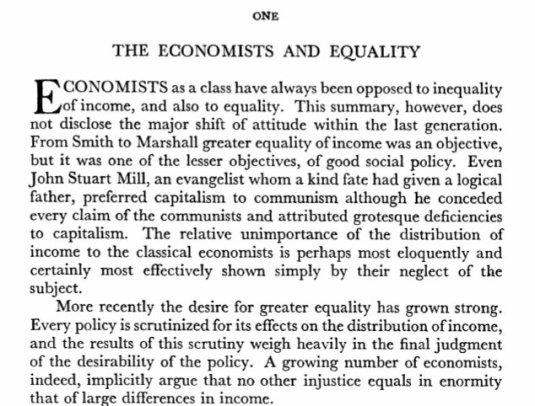
George Stigler on the long list of critics of capitalism
28 Jul 2019 Leave a comment
in applied price theory, applied welfare economics, comparative institutional analysis, constitutional political economy, development economics, economic history, economics of information, economics of regulation, environmental economics, George Stigler Tags: anti-market bias, pessimism bias


Recent Comments