End Software Patents Alex Tabarrok
08 Jun 2019 Leave a comment
in applied price theory, comparative institutional analysis, economics of information, industrial organisation, law and economics, politics - USA, property rights, Public Choice Tags: patents and copyright
Milton Friedman – Why Economists Disagree
08 Jun 2019 Leave a comment
in applied price theory, applied welfare economics, budget deficits, business cycles, comparative institutional analysis, economic growth, economics of regulation, fiscal policy, international economics, macroeconomics, Milton Friedman, monetary economics
Squeezing blood from a stone: eighteenth century debtors’ prisons worked
07 Jun 2019 Leave a comment
by Alex Wakelam (University of Cambridge)
Wood Street Compter, 1793. Image extracted from page 384 of volume 1 of Old and New London, Illustrated, by Walter Thornbury. Available at Wikimedia Commons.
While it is often assumed that debtors’ prisons were illogical and ineffective, my research demonstrates that they were extremely economically effective for creditors though they could ruin the lives of debtors.
The debtors’ prison is a frequent historical bogeyman, a Dickensian symptom of the illogical cruelty of the past that disappeared with enlightened capitalism. As imprisoning someone who could not afford to pay their debts, keeping them away from work and family, seems futile it is assumed creditors were doing so to satisfy petty revenge.
But they were a feature of most of English history from 1283, and though their power was curbed in 1869, there were still debtors imprisoned in the 1920s. The reason they persisted, as my…
View original post 519 more words
Joe Stiglitz was a consultant to Freddie and Fanny in 2002 on the chances of their mortgage underwriting portfolio going south
07 Jun 2019 Leave a comment
in applied price theory, business cycles, financial economics, global financial crisis (GFC), great recession, law and economics, macroeconomics, monetary economics, politics - USA Tags: moral hazard
Milton Friedman 1991
07 Jun 2019 Leave a comment
in applied price theory, comparative institutional analysis, development economics, economic history, economics of education, economics of regulation, environmental economics, industrial organisation, labour economics, law and economics, macroeconomics
We’re All Gonna Die: Climate Change Apocalypse by 2050
06 Jun 2019 Leave a comment
Worst-case scenarios mislead far more than they enlighten.
RONALD BAILEY | 6.5.2019 Reason
Man-made climate change (now dubbed “climate crisis” by The Guardian‘s editors) poses potentially serious risks for humanity in this century. But acknowledging the hazard is not enough for a growing claque of meteorological apocalypse porn peddlers who insist that if their prescriptions for solving the problem are not followed then civilization will momentarily come to an end.
Recent hawkers of fast approaching climate doom include David Wallace-Wells in his book The Uninhabitable Earth: Life After Warming, Cumbria University professor Jem Bendell’s“Deep Adaptation” paper, and environmental activist Bill McKibben’sFalter: Has the Human Game Begun to Play Itself Out? (my review is forthcoming).
Now comes a policy paper, Existential climate-related security risk: A scenario approach, from an Australian climate action advocacy group the Breakthrough National Centre for Climate Restoration. The headline over at
View original post 79 more words
First Systematic Study Of The Advice People Would Give To Their Younger Selves
06 Jun 2019 Leave a comment
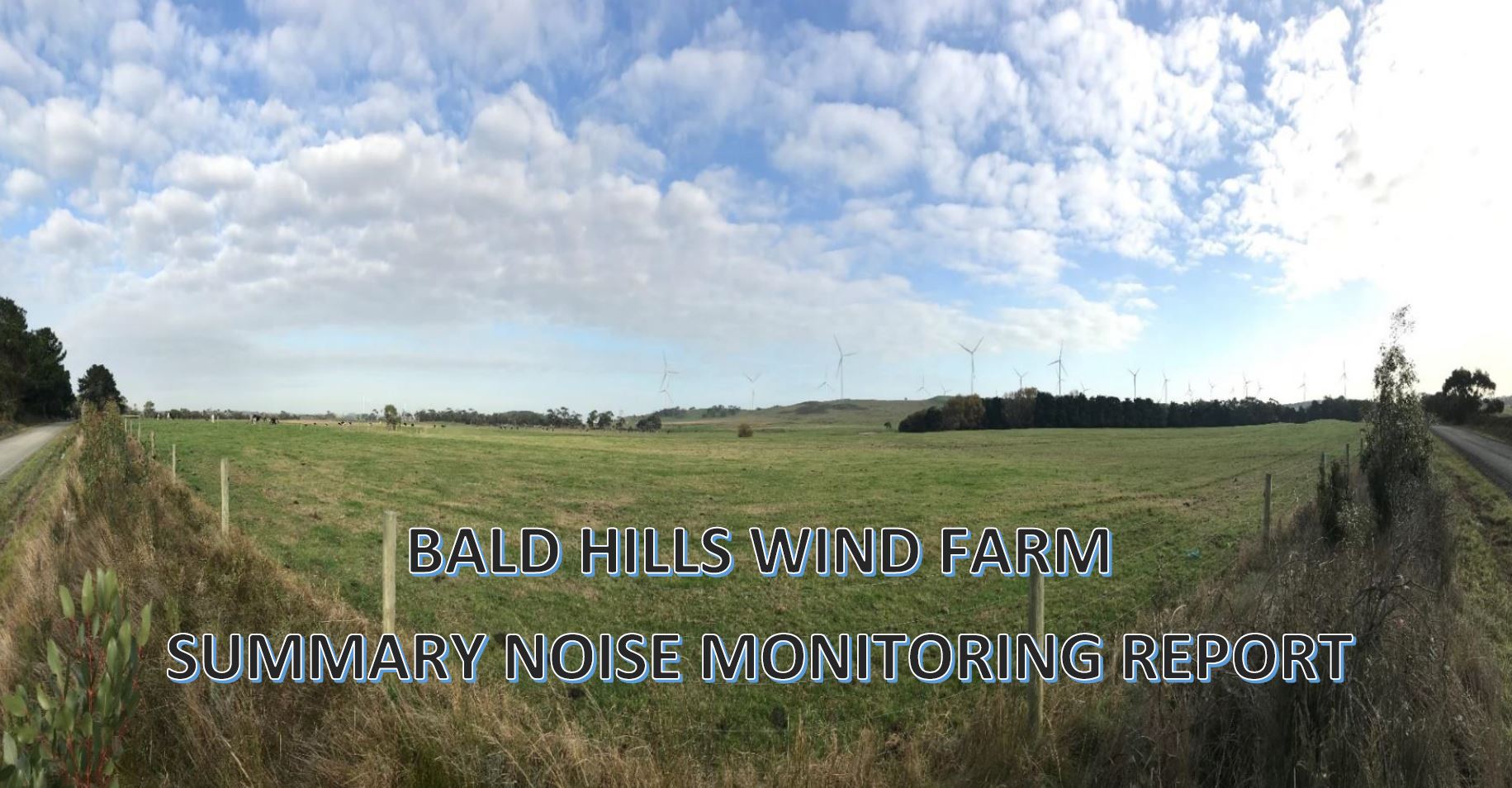
Wind Industry Victims Vindicated: Endless Noise Complaints Force Giant Wind Farm Shutdown in Ontario
06 Jun 2019 Leave a comment
Finally, Huron County farmers driven nuts by incessant wind turbine noise have forced the shut down of their giant industrial tormentors.
Ontario’s government has been in bed with the wind industry from the beginning, ignoring, bullying and berating wind farm neighbours with the temerity to complain about the grinding, thumping cacophony dished up by these things on a daily basis. Now, finally, after years of fighting simply to be heard, Ontario’s farmers are getting a taste of what representative and responsible government might look like.
In a result that couldn’t come soon enough for the Huron County farming families forced to live with it, an Order has just been made shutting down 140 turbines near Ashfield-Colborne-Wawanosh. The order was made simply because their operator, K2 Wind can’t comply with the conditions of its planning permit or even Ontario’s (extremely lax) noise regulations. Needless to say, the local farmers’ delight is…
View original post 822 more words
Milton Friedman Speaks – Myths That Conceal Reality
06 Jun 2019 Leave a comment
in applied price theory, budget deficits, business cycles, economic history, economics of bureaucracy, economics of regulation, fiscal policy, great depression, income redistribution, industrial organisation, international economics, labour economics, labour supply, law and economics, macroeconomics, Milton Friedman, monetary economics, politics - USA, Public Choice, public economics, rentseeking, survivor principle Tags: capitalism and freedom
Austerity Britain: Smoke in the Valley, 1948–51 by David Kynaston (2007)
05 Jun 2019 Leave a comment
David Kynaston (b.1951) has written about 16 history books on broadly three topics: cricket, the City of London, and Britain after the Second World War. His post-war histories have been published as three volumes, each of which – rather confusingly – contained two books:
- Austerity Britain, 1945–51 (2007) containing:
- Family Britain, 1951–57 (2009)
- Modernity Britain, 1957–62 (2014) which contained:
- Opening the Box, 1957–59
- A Shake of the Dice, 1959–62
This is a review, or notes on, book two of volume one, Austerity Britain: Smoke in The Valley, which covers the years 1948 to 1951 i.e. from the inauguration of the National Health Service on 5 July 1948 to Labour’s defeat in the October 1951 general election.
In 1940 Somerset Maugham published a collection of short stories titled The Mixture As…
View original post 2,157 more words
The Plantagenets (1) by Dan Jones (2012)
05 Jun 2019 Leave a comment
The House of Plantagenet held the English throne from 1154 (with the accession of King Henry II) until 1485 (when Richard III was killed at the Battle of Bosworth).
The origin of ‘plantagenet’
The family name comes from Geoffrey V, Count of Anjou in north-west France (tucked in behind Normandy and Brittany) from 1113 to 1151, and here’s why:
When Henry I of England’s only son and heir, William Aetheling, drowned in the White Ship disaster of 1120, Henry took a second wife, Adeliza, in the hope of having another son, but their marriage was childless. So Henry named his daughter, Matilda, born in 1102, as his heir and called the nobles of England together to vow to accept her as monarch after his death. All he had to do now was marry her off to another royal family. Henry received various offers for Matilda’s hand and eventually chose the 15-year-old…
View original post 5,022 more words
The sack of Constantinople in 1204
05 Jun 2019 Leave a comment
There was never a greater crime against humanity than the Fourth Crusade. (Sir Steven Runciman, 1954)
Until I read John Julius Norwich’s account of the Fourth Crusade, which ended with the devastating sack of Constantinople in 1204, I hadn’t appreciate what a seismic and unmitigated disaster it was.
Norwich’s account of the Latins’ destruction of the biggest, richest city in the world was so harrowing I was depressed for days and found it difficult to continue reading the book in which he describes it, Byzantium: The Decline and Fall.
Like reading detailed accounts of Hiroshima, I just felt that…. after seeing humanity revealed in such appalling colours, why… why go on with anything?
For me, personally, the reason to go on is to understand better. Not to understand perfectly, which I am confident, or acknowledge, is beyond human wit. But just because perfect understanding is an impossible platonic absolute…
View original post 6,259 more words
A Dialogue Between a Trans Woman and a Feminist Who Isn’t Just A Figment of The Trans Woman’s Mind
05 Jun 2019 Leave a comment

Well now. Isn’t this nice. In the middle of a huge fight in which I spend a great deal of my time trying to persuade male people that we’re not just projections that exist in their heads, but are actually, y’know, whole real people in our own right, the trans philosopher Rachel Anne Williams has decided to resurrect an ancient philosophical device and treat us to some imaginings about us.
Let’s see what we say shall we?
—————
If you’ve ever had the pleasure of getting into an internet debate with “gender critical” feminists when it comes to issues surrounding gender, you’d know that one of their constant demands is for trans women to define “woman”. This is their ultimate “gotcha” — their best attempt to prove that trans activists are full of bullshit.
- Yup, that’s right, our concerns about the definition of the political category to which we belong and…
View original post 4,307 more words
Two pieces on Martin Luther King, Jr. and the new allegations against him
05 Jun 2019 Leave a comment
It is curious that the accusations of sexual misconduct committed by Martin Luther King, Jr., recently published in Standpoint by his biographer, the distinguished civil rights historian David Garrow, have largely been ignored by the mainstream press. I think it’s because the press doesn’t know how to respond to accusations of rape-enabling and abuse of women by someone as distinguished as Dr. King—someone who did more than anyone else to bring civil rights to African Americans in the last century. Given the cognitive dissonance among the Authoritarian Left when two of their values collide (another example is feminism vs. Islamic misogyny), I wondered if King would be given more of a pass than others because of his accomplishments. Although the accusations against King are still under legal seal until 2027, many have been deemed guilty by allegations as unsubstantiated as those against Dr. King.
My own take so far…
View original post 1,265 more words
Milton Friedman on Donahue – 1979 (First Appearance)
04 Jun 2019 Leave a comment
in applied price theory, comparative institutional analysis, economic history, economics of education, economics of regulation, entrepreneurship, industrial organisation, law and economics, Milton Friedman, property rights, Public Choice, public economics, survivor principle, transport economics Tags: offsetting behaviour, The fatal conceit, The Great Enrichment, top 1%


Recent Comments