Robert Craig: Can the Government Use the Royal Prerogative to Extend Article 50?

Constitutional Law Group's avatarUK Constitutional Law Association

Introduction

The possibility of extending the Article 50 process is being discussed in media outlets and social media. There are a number of potential scenarios where a short extension might be sought:

  1. to implement the Withdrawal Agreement in law
  2. to manage the process of a no deal Brexit
  3. to hold a general election
  4. to hold a second referendum

This post seeks to explore some of the legal questions that arise if an extension were attempted. It should be noted that the effect of an extension would be to continue membership of the EU, for the time being. It will be assumed, solely for the purposes of this post, that political agreement of the EU is obtained to extend the Article 50 period as required as a matter of EU law.

In reality, such consent cannot be assumed, as Eleanor Sharpston has pointed out. She also suggests that it might…

View original post 2,779 more words

Poles Apart: Polish Government Bans New Wind Farms & All Existing Turbines Gone by 2035

stopthesethings's avatarSTOP THESE THINGS

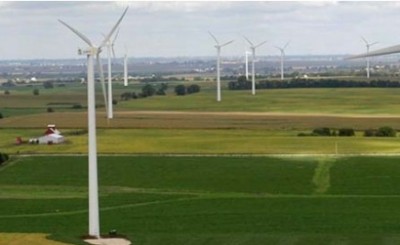
Faced with thousand of furious rural voters sick of being overrun by industrial wind turbines, Poland has effectively banned all new onshore wind farms.

The prices fixed for new wind power contracts are so low as to mock hopeful developers, making it highly unlikely that any new contracts will be entered.

And, clearly spooked by hostile rural voters, the government has determined that every last wind turbine must be removed from Polish soil by 2035, including their monstrous 3-400 m³ steel reinforced concrete bases.

The hostility to wind power is not limited to rural communities, voters across the country are furious about spiralling power costs, too.

The result is due in no small part to lawyer, Marcin Przychodzki, the founder of the “Stop Wiatrakom” (“Stop the Wind Farms”) blog – who is now the Director of the Ministry’s of Infrastructure Legal Department.

The translation below is a…

View original post 992 more words

Armen Alchian, Harold Demsetz and Ben Klein Should Win the 2009 Nobel Prize in Economics

Chad Jones’ awkward remarks on top tax rates and innovation spillovers

The price in death of do-gooders shying away from difficult decisions

Image

Nancy Stokey’s Plenary at SED 2018 on technology diffusion

2001: A Space Odyssey by Arthur C. Clarke (1968)

Simon's avatarBooks & Boots

Origins

It all started with a short story Clarke wrote for a BBC competition in 1948 when he was just 21, and titled The Sentinel. It was eventually published in 1951 under the title Sentinel of Eternity.

13 years later, after completing Dr. Strangelove in 1964, American movie director Stanley Kubrick turned his thoughts to making a film with a science fiction subject. Someone suggested Clarke as a source and collaborator, and when they met, later in 1964, they got on well and formed a good working relationship.

Neither of them could have predicted that it would take them four long years of brainstorming, viewing and reading hundreds of sci-fi movies and stories, and then honing and refining the narrative, to develop the screenplay which became the film 2001: A Space Odyssey, released in 1968 and one of the most influential movies of all time.

The original plan…

View original post 5,528 more words

Image

Reviewing the BBC’s record of reporting on Israeli elections

Hadar Sela's avatarBBC Watch

Despite a very lively campaign that has so far included the dismantling of previous alliances, the registration of numerous new parties and the standing down of some veteran Israeli politicians, BBC reporting on Israel’s upcoming April 9th general election has to date been confined to a report about the announcement of the election and a mention in a subsequent BBC Radio 4 programme which ignored that announcement.

Before the BBC’s Jerusalem bureau commences coverage of the 2019 election it is worth taking a look at its record of reporting on previous Israeli elections.

In the 2013  election the BBC’s reporting focused predominantly on one side of the political map and presented Israel as a country lurching rightward while depicting that perceived shift as the sole reason for the predicted failure to make progress in the peace process. When that predicted lurch to the right did not happen, some…

View original post 420 more words

Why consider the lighthouse a public good?

Vincent Geloso's avatarVincent Geloso

I know I talk about lighthouses a lot. This is because they are economically relevant. They are the penultimate example of public goods and they underlie all positive (i.e. scientific) justifications for state-provision of public goods. However, economic theory has whitewashed the history of the lighthouse in order to make this case. In reality, the lighthouse never was a public good and it never was, before the 19th century, the main way of providing maritime safety. Alongside Rosolino Candela, in a new working paper, I provide a ton of historical evidence showing that it was a complement to private goods and services such as pilotage and ballastage. Because it was a complement to other goods, it could be privately provided through bundling. That option was prohibited, however, by rent-seeking and monopoly privileges granted to firms/guilds involved in the production of the private goods that could (and did) produce lighthouses and…

View original post 207 more words

Kids Climate Case to be Appealed Before Trial

Ron Clutz's avatarScience Matters

A monkey wrench in the Works.

Previous posts have followed the twists and turns of the lawsuit Juliana vs. US, initiated and funded by Our Children’s Trust.  In November the Supreme Court signaled their desire that lower courts rein in the scope of the lawsuit.  The District Court backed off and now the Ninth Circuit Court will take up the appeal in advance of any trial activity.  The significance and implications are described in an article by Karen Savage at Climate Liability News Appeals Court OKs Pre-Trial Appeal of Kids Climate Case, Siding With Government  Excerpts in italics with my bolds.

The Ninth Circuit Court of Appeals has granted a petition by the Trump administration for a rare pre-trial appeal in the landmark constitutional climate lawsuit, Juliana v. United States. The appeals court agreed to the interlocutory appeal, which leaves the future progress of the case unclear.

Generally, interlocutory appeals…

View original post 495 more words

Applying harm reduction to smoking

Greg Mankiw on who pays company tax

From https://gregmankiw.blogspot.com/2006/05/corporate-tax-rates.html

Homage to Catalonia by George Orwell (1938)

Simon's avatarBooks & Boots

Potted biography

Orwell was born Eric Arthur Blair to a civil servant in India in 1903. The family moved back to England in 1907 and sent young Eric, first to prep school near Eastbourne, then to Eton, where he met other boys who were to be among the literary luminaries of his generation. In other words he was brought up to be the toffiest of the toffs. However, unlike most of his literary contemporaries, Eric decided not to go on to Oxford or Cambridge but instead enlisted in the Indian Imperial Police and returned to Burma. Here he served from 1922 until 1927, wielding great responsibility for large provinces and huge numbers of ‘natives’.

Slowly he lost his faith in the Imperial mission, and came to dislike his role. One contemporary said he had an unusual sympathy for the natives and went to the unprecedented lengths of learning their language…

View original post 4,225 more words

Black Ivory (2) by James Walvin (1992)

Simon's avatarBooks & Boots

Without the slaves there would have been no sugar and without sugar there would have been no national addiction to coffee and, later, to tea. (p.4)

I bought Walvin’s book 20 years ago, read and found it as unsatisfactory then as I do now. He uses a thematic approach to grouping the material in order to loosely follow the slave experience. Thus the opening chapters describe the ways slaves were seized in Africa – in war or expressly for slavery – marched to the coast, he describes the coastal slaving forts, the Atlantic crossing, the slave auctions in America or the Caribbean, and then life and death on the different types of plantation.

It’s a valid approach but the downside is it is very bitty. It creates a kind of magpie effect, picking out dazzling facts and incidents from Barbados in 1723 or Georgia in 1805 or Jamaica in 1671…

View original post 2,767 more words

Image

Unfinished Empire: The Global Expansion of Britain by John Darwin (2012)

Simon's avatarBooks & Boots

Empire – as the assertion of mastery (by influence or rule) by one ethnic group, or its rulers, over a number of others – has been the political rule of the road over much of the world and over most of world history: the default mode of state organisation. (p.7)

This is a much more sober, earnest and thoughtful account of the British Empire than Niall Ferguson’s popular blockbuster, Empire. Whereas Ferguson references popular myths and preconceptions in order to puncture them in the manner of a swashbuckling columnist, Darwin is the cautious scholar, thoughtfully engaging with the voluminous literature of other historians on the subject – which makes his book a much denser, more challenging, but hugely more rewarding read.

The medieval origins

Ferguson’s account starts with the Elizabethans establishing plantations in Ireland and America at the same time as they set up their own offshoot of the…

View original post 1,940 more words

Previous Older Entries Next Newer Entries

Coordination Problem

Celebrating humanity's flourishing through the spread of capitalism and the rule of law

Libertarian Land

Celebrating humanity's flourishing through the spread of capitalism and the rule of law

Arin’s Substack

Celebrating humanity's flourishing through the spread of capitalism and the rule of law

David Andolfatto

Celebrating humanity's flourishing through the spread of capitalism and the rule of law

Monetary Non-Neutrality

Celebrating humanity's flourishing through the spread of capitalism and the rule of law

Reason Magazine

Celebrating humanity's flourishing through the spread of capitalism and the rule of law

Coyote Blog

Celebrating humanity's flourishing through the spread of capitalism and the rule of law

Thoughts from the North

Celebrating humanity's flourishing through the spread of capitalism and the rule of law

Fardels Bear

A History of the Alt-Right

Vincent Geloso

Econ Prof at George Mason University, Economic Historian, Québécois

Bassett, Brash & Hide

Celebrating humanity's flourishing through the spread of capitalism and the rule of law

Truth on the Market

Scholarly commentary on law, economics, and more

The Undercover Historian

Beatrice Cherrier's blog

Matua Kahurangi

Celebrating humanity's flourishing through the spread of capitalism and the rule of law

Temple of Sociology

Celebrating humanity's flourishing through the spread of capitalism and the rule of law

Velvet Glove, Iron Fist

Celebrating humanity's flourishing through the spread of capitalism and the rule of law

Why Evolution Is True

Why Evolution is True is a blog written by Jerry Coyne, centered on evolution and biology but also dealing with diverse topics like politics, culture, and cats.

NoTricksZone

Celebrating humanity's flourishing through the spread of capitalism and the rule of law

Homepaddock

A rural perspective with a blue tint by Ele Ludemann

Kiwiblog

DPF's Kiwiblog - Fomenting Happy Mischief since 2003

The Dangerous Economist

Celebrating humanity's flourishing through the spread of capitalism and the rule of law

Watts Up With That?

The world's most viewed site on global warming and climate change

The Logical Place

Tim Harding's writings on rationality, informal logic and skepticism

Doc's Books

A window into Doc Freiberger's library

The Risk-Monger

Let's examine hard decisions!

Uneasy Money

Commentary on monetary policy in the spirit of R. G. Hawtrey

Barrie Saunders

Thoughts on public policy and the media

Liberty Scott

Celebrating humanity's flourishing through the spread of capitalism and the rule of law

Point of Order

Politics and the economy

James Bowden's Blog

A blog (primarily) on Canadian and Commonwealth political history and institutions

Science Matters

Reading between the lines, and underneath the hype.

Peter Winsley

Economics, and such stuff as dreams are made on

A Venerable Puzzle

"The British constitution has always been puzzling, and always will be." --Queen Elizabeth II

The Antiplanner

Celebrating humanity's flourishing through the spread of capitalism and the rule of law

Bet On It

Celebrating humanity's flourishing through the spread of capitalism and the rule of law

History of Sorts

WORLD WAR II, MUSIC, HISTORY, HOLOCAUST

Roger Pielke Jr.

Undisciplined scholar, recovering academic

Offsetting Behaviour

Celebrating humanity's flourishing through the spread of capitalism and the rule of law

JONATHAN TURLEY

Res ipsa loquitur - The thing itself speaks

Conversable Economist

In Hume’s spirit, I will attempt to serve as an ambassador from my world of economics, and help in “finding topics of conversation fit for the entertainment of rational creatures.”

The Victorian Commons

Researching the House of Commons, 1832-1868

The History of Parliament

Articles and research from the History of Parliament Trust

Books & Boots

Reflections on books and art

Legal History Miscellany

Posts on the History of Law, Crime, and Justice

Sex, Drugs and Economics

Celebrating humanity's flourishing through the spread of capitalism and the rule of law

European Royal History

Exploring the Monarchs of Europe