A little story about preferences by Nobel Prize in Economics Thomas C. Schelling
24 Dec 2018 Leave a comment
in applied price theory, defence economics Tags: Thomas Schelling
Leonard Nimoy, Mr. Spock and the Greeting That Brought Their Worlds Together (Video)
23 Dec 2018 Leave a comment

First things first, I’m no Trekkie by any means, heck I can barely speak a decent Klingon!
That being said, despite my best efforts to avoid being sucked into the black hole that is the Star Trek Fandom Universe, some general concepts, underlying themes and lead characters have made their way into my impressionable consciousness. You see, I do believe Star Trek was created upon fundamental, humanistic and universal themes; that if one were to look beyond the “geeky” sci-fi component, we would all find something we could wrap our heads around and appreciate.
That brings us to Captain Kirk’s right-hand man – the iconic Mr. Spock.
Spock has transcended Star Trek like Babe Ruth transcended baseball – you don’t need to have a grasp on the game to appreciate the Babe. If you’d ask me, I’d say yes the pointy ears and funny name had something to do with Spock’s…
View original post 203 more words
Brexit: no-deal contingency plans could encourage a deal being struck
23 Dec 2018 Leave a comment
Credible commitments always strengthen your negotiating hand.

LONDON CORRESPONDENT: As the Christmas truce approaches, the EU and UK have set out their respective plans for how they will respond if the UK leaves the EU on 29 March next year without a withdrawal agreement. The announcements are proof of the increasing likelihood of ‘no deal‘ Brexit; they also have the potential to drive the parties towards the very outcome for which they are the contingency.
The EU preparations bear a passing resemblance to the War of the Roses battle cry of “kill the nobles, spare the commons”. Steps will be taken to avoid inconveniencing individuals by keeping flights running, protecting the rights of UK residents of the EU and so forth, while going slow on measures to help UK businesses to deal with the flood of new obligations – like border and veterinary checks, licensing requirements, tariffs etc – that will descend overnight.
The hope is…
View original post 1,160 more words
Thomas Sowell: Intellectuals and Race (Book TV 2013)
23 Dec 2018 Leave a comment
in applied price theory, development economics, discrimination, economic history, economics of education, human capital, labour economics, labour supply, occupational choice, politics - USA, poverty and inequality Tags: racial discrimination, Thomas Sowell
Disciplining Martina: Heretics and the Church of Trans Normativity
22 Dec 2018 Leave a comment

Two main things turned up in my timeline this morning. One was the fall-out of Rachel McKinnon’s egregious and unconcealed bullying of Martina Navratilova, and the other was a Call For Papers from Brighton University that Kathleen tweeted here.

I was already planning on doing this post on Martina when the CFP popped up – because Rachel’s behaviour last night was a pretty copper-bottomed rendition of what trans activist coercion looks like, and I thought it was worth taking a look at it blow by blow. The academic CFP might, at first glance, seem a little tangential to the issue of trans inclusion in sports, but it refracted with Rachel’s behaviour in an interesting way, so, happy or unhappy accident, this is what you get guys…

The CFP sketches out the familiar claim that ‘queerness’ is ‘inclusive’ and ‘fluid’ while ‘gayness’ or ‘homosexuality’ is ‘exclusive’ and ‘oppressive,’ a dichotomy…
View original post 1,522 more words
Progress is bad?
22 Dec 2018 Leave a comment
in applied price theory, discrimination, economic history, labour economics, politics - USA, poverty and inequality Tags: regressive left, top 1%

Andrew Geddis: “Declarations of Inconsistency” under the New Zealand Bill of Rights Act 1990
21 Dec 2018 Leave a comment

 As in the United Kingdom, the question of whether prisoners should be permitted to vote has generated considerable constitutional interest for New Zealand. Largely that is due to the efforts of a long term prisoner and “jailhouse lawyer”, Arthur Taylor, who has mounted something of a one-man campaign against 2010 legislation that stripped the right to vote from all sentenced prisoners.
In Mr Taylor’s latest sortie, Attorney General v Taylor [2017] NZCA 215, the New Zealand Court of Appeal has upheld a High Court decision (Taylor v Attorney General [2015] NZHC 1706) to issue the following formal declaration:
Section 80(1)(d) of the Electoral Act 1993 (as amended by the Electoral (Disqualification of Sentenced Prisoners) Amendment Act 2010) is inconsistent with the right to vote affirmed and guaranteed in s 12(a) of the New Zealand Bill of Rights Act 1990, and cannot be justified under s 5…
View original post 1,816 more words
Andrew Geddis: New Zealand’s Supreme Court Considers Prisoner Voting – Twice
21 Dec 2018 Leave a comment
 New Zealand’s Supreme Court has twice in the past two months turned its attention to the vexed issue of prisoner voting. Its first decision, Attorney-General v Taylor, upheld by a 3-2 majority a declaration that the legislative ban on all sentenced prisoners voting is inconsistent with the New Zealand Bill of Rights Act 1990 (NZBORA). Its second decision, Ngaranoa v Attorney-General, found by a 4-1 majority that as this legislative ban did not amend any of the “reserved” provisions in the Electoral Act 1993, no question arose as to its validity. This post outlines each decision, before making some general comment on what they reveal about the Court’s approach to constitutional issues.
The background to the issue
In 2010, New Zealand’s Parliament passed a member’s bill in the name of a backbench MP from the then-governing National Party by a 63-58 vote margin. This Bill amended the Electoral…
View original post 1,376 more words
Walter Williams Suffers No Fools
21 Dec 2018 Leave a comment
in applied price theory, applied welfare economics, comparative institutional analysis, discrimination, economic history, economics of education, economics of regulation, human capital, labour economics, labour supply, occupational choice, occupational regulation, poverty and inequality, unemployment, unions, welfare reform Tags: racial discrimination, Walter Williams
Thomas Sowell – Preferential Policies (Fascinating 1990 Interview)
21 Dec 2018 Leave a comment
in applied price theory, comparative institutional analysis, development economics, discrimination, economic history, economics of bureaucracy, economics of crime, economics of education, economics of media and culture, economics of regulation, entrepreneurship, history of economic thought, human capital, income redistribution, labour economics, labour supply, law and economics, Marxist economics, occupational choice, politics - USA, population economics, poverty and inequality, property rights, Public Choice, rentseeking Tags: racial discrimination, Thomas Sowell
UN compact: Peters’ supporters fear he hasn’t put NZ First
21 Dec 2018 Leave a comment

Deputy PM Winston Peters has lit a firestorm in his own support base over the government’s decision to sign the controversial UN Migration Compact—a move National says it will overturn.
NZ First’s Facebook page went into overdrive as one-time NZ First voters voiced their anger. After all, NZ First campaigned strongly against the previous government’s immigration policies and stood out in demanding stricter controls on migration.
Now the party appears willing to adopt the UN’s rules on open, regular migration.
So did Peters miscalculate? In Parliament he had been using the UN compact to bait National, because it was the government in 2016 when offering support as the compact was being initiated.
View original post 666 more words
Chris McCorkindale and Aileen McHarg: Continuity and Confusion: Towards Clarity? – The Supreme Court and the Scottish Continuity Bill
20 Dec 2018 Leave a comment
 Introduction
The Supreme Court has now handed down its judgment in The UK Withdrawal from the European Union (Legal Continuity) (Scotland) Bill – A reference by the Attorney General and the Advocate General for Scotland. The Bill marked a series of firsts: a consequence of the first UK statute to be passed notwithstanding the refusal of consent by the Scottish Parliament (the European Union (Withdrawal) Act 2018); the first Scottish Government Bill to be introduced with a negative statement of competence by the Presiding Officer; and, the first Scottish Bill to be referred to the UK Supreme Court by the UK Law Officers. In previous posts we have set out what it was (legally and politically) that the Bill sought to achieve and why, in our view, the Bill as introduced arguably was (in light of the Presiding Officer’s contrary view) within the legislative competence of the Scottish Parliament
View original post 2,461 more words
Industrialised Murder: Indian Study Shows Wind Turbines Slaughter 75% of Local Raptors
20 Dec 2018 Leave a comment

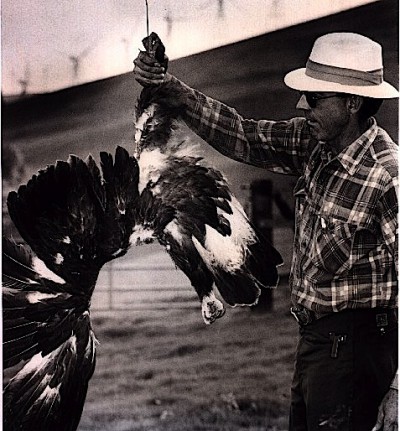 How green is this? Golden eagle ‘transitions’ to wind power.
One issue that annoys RE zealots, like a burr under a frisky pony’s saddle blanket, is the wind industry’s rampant bird and bat slaughter. It’s an inconvenient truth to be sure. But, as with everything that the wind industry does, if you can’t keep a straight face while lying about it any more, then pull out all stops and cover it up.
The wholesale slaughter of millions of birds and bats – includes rare, endangered and majestic species, like America’s iconic bald and golden eagles. The default response from the wind industry is to lie like fury and – when the corpses can no longer be hidden and the lying fails – to issue court proceedings to literally bury those facts (see our post here).
The hackneyed retort from the wind cult is that cars, cats and tall buildings…
View original post 710 more words
Research suggests we should take a harder look at the benefits of organic foods
20 Dec 2018 Leave a comment
I always wondered what would happen to organic farming if included in the carbon trading system along with the rest of agriculture
The Green Party’s food policy may need revisiting, in the light of research published in the past week.
The policy was introduced in May 2017 by Green Party MP Mojo Mathers, who lost her list place in Parliament at the general election.
How we produce, distribute and consume food is of critical importance to growing
resilient healthy communities, minimising our ecological footprint and maintaining a
stable economy, she said. That’s why food policy lies at the heart of Green policy.
Mather said:
“Aotearoa New Zealand can reap multiple benefits from a healthy and equitable food system that ensures environmental protection, social connection, and healthy communities.”
View original post 1,311 more words


Recent Comments