Tullock Lecture: Richard Epstein
20 Dec 2018 Leave a comment
in applied price theory, applied welfare economics, Austrian economics, economics of regulation, industrial organisation, labour economics, labour supply, law and economics, occupational choice, occupational regulation, politics - USA, poverty and inequality, property rights, Public Choice, rentseeking, Richard Epstein, survivor principle Tags: employment law, employment regulation, Uber
Documentary Review
19 Dec 2018 Leave a comment

 They Shall Not Grow Old is an astonishing documentary. The familiar herky-jerky and often grainy scratched silent footage of the Western Front during the First World War has been entirely transformed by Peter Jackson in his film that was screened nationwide on December 17th and will be screened again on December 27th. The one-hundred year old original stilted footage that has always seemed to belong to a different and lost era has been restored with the application of technological processes to feel very lifelike and modern. The soldiers in They Shall Not Grow Old are once again made real.
The footage, drawn from the hundreds of hours of film that was shot on hand cranked cameras and is held at the Imperial War Museum, has been cleaned, sped up, and colorized with sounds of war and some music added in. The film narration is excerpted from oral history interviews with…
View original post 242 more words
Book Review
18 Dec 2018 Leave a comment
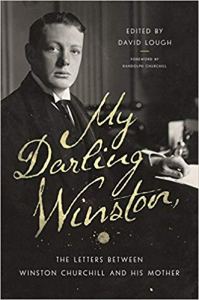 Winston Churchill was famously ignored by his mother and father during his childhood, although perhaps no more so than any other aristocratic parents ignored their children in the Victorian age. They would diligently rush to his side on the occasions when he fell terribly ill, but neither parent spent nearly any time with their son and they seemed particularly disinterested in him. Lord Randolph rarely saw Winston and, perhaps attributed to the effects of his fatal illness, subjected him by letter to cruel rebukes and smashing broadsides. Lady Randolph was bored by both by Winston and his brother Jack and did not bother much to see them, as Andrew Roberts notes she saw her sons a mere 13 times in the first seven months of 1882 (for comparison, she had tea with her friend Lady Blanche Hozier 26 times in that span). Parental affection and attention was delegated to the…
View original post 245 more words
Coup-Proofing, Military Defection, and the Arab Spring: (Tullock Vindicated!)
17 Dec 2018 Leave a comment
in applied price theory, comparative institutional analysis, constitutional political economy, defence economics, economics of bureaucracy, Public Choice Tags: Arab Spring, economics of revolutions, Gordon Tullock, military coups

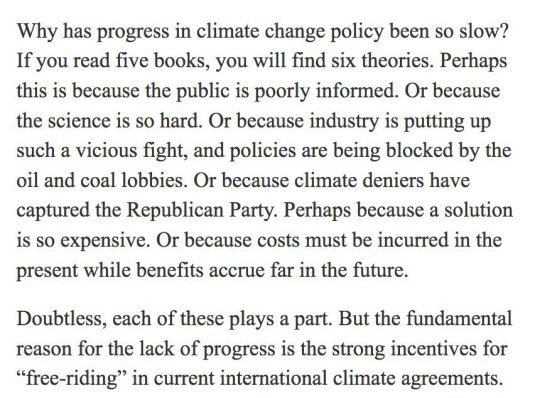
Note to a jetlagged @jamespeshaw from William Nordhous
16 Dec 2018 Leave a comment
in applied price theory, economics of bureaucracy, environmental economics, global warming, income redistribution, international economic law, International law, politics - Australia, politics - New Zealand, politics - USA, property rights, Public Choice, public economics, rentseeking Tags: climate activists, free riding, game theory
Forging ahead, falling behind and fighting back: British economic growth from the industrial revolution to the financial crisis (
16 Dec 2018 Leave a comment

Nick Crafts can be viewed as the doyen of British economic history. His major publications date back to the 1970s – a favorite of mine is this piece from 1977 on the role played by chance in determining whether the Industrial Revolution would occur in England or France. He is also the joint author of the Crafts-Harley interpretation of the Industrial Revolution. But, perhaps because the majority of his research focuses on British economic history, he remains highly underrated outside of the UK. His new book Forging ahead, falling behind and fighting back: British economic growth from the industrial revolution to the financial crisis summarizes much of his research.
I’ve reviewed it for the Economic History Review. But given the whims of academic publishing, it may be a long time until my review appears in print so I’ve decided to post a preview of my draft below.
**************************
Why was…
View original post 1,185 more words
Gender Ideology and Science
14 Dec 2018 Leave a comment
if you draw a random man and a random woman from the population, and you bet that the woman is more aggressive/less agreeable, you’d be correct about 40% of the time. But if you walked into a roomful of people everyone of whom had been selected to be the most aggressive person out of a 100, almost every one of them would be male.

A fresh report from the front lines comes from (who else) Jordan Peterson: The gender scandal – in Scandinavia and Canada Excerpts in italics with my bolds.
Men and women are similar. But importantly different. No matter what Sweden’s feminist foreign minister says.
Part One (Scandinavia)
Over the past few weeks, I have been in Oslo, twice; Helsinki, twice; Stockholm, twice; and Copenhagen, once. One of the trips to Stockholm was only for press interviews and television. The other six trips were part of my 12 Rules for Life tour, which has now covered 100 cities. The reason for the dual visits? We arranged relatively smaller venues for the lectures in those Scandinavian towns and they sold out immediately. Scandinavians are interested in what I am saying. They are radically over-represented among those who view my YouTube lectures.
In the last lecture, in Helsinki, it was Finland’s Father’s Day…
View original post 2,021 more words
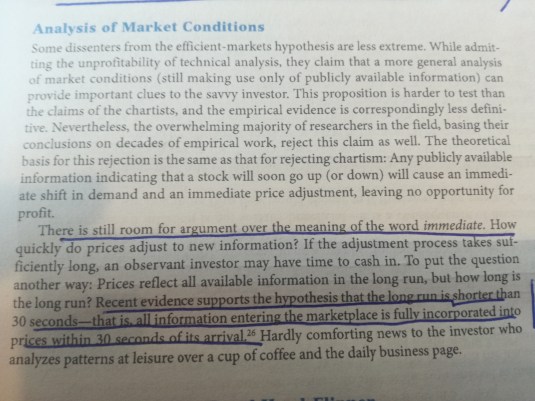
Steve Landsburg on share market efficiency
14 Dec 2018 Leave a comment
in applied price theory, entrepreneurship, financial economics Tags: efficient markets hypothesis
RIP: Prof Douglass North
13 Dec 2018 Leave a comment

The blog was on a break which got longer than planned. There has been no blogging for a while and it is quite a sad post to start off with.
Prof Douglass North passed away this week. No words can do justice to the contribution made by Prof North to institutional economics. There is a collection of tributes on MR and another one at his Univ website.
I only have couple of things to add. I was once reading his interview where he said he learnt most of his economics after his PhD! Moreover, he mugged and cleared his written comprehensive exams (a set of exams in a Phd program one has to clear before writing the dissertation). But the people on his oral viva figured he knew very little about economics. They could not fail him as his written scores were really good! Sometimes inefficiency in the system…
View original post 2,582 more words
The role of transaction costs in Douglass North’s understanding of economic history
13 Dec 2018 Leave a comment
Nice paper by Rosolino Candela of George Mason University:
The purpose of this chapter is an attempt to reconstruct the evolution of North’s approach to understanding economic history. Underlying this evolution has been an increasing recognition of the role that transaction costs play in explaining the economic performance of different societies through time. I argue that, as a by-product of North’s emphasis on transaction costs throughout his scholarship, he transitioned from a neoclassical to an Austrian understanding of the process of economic change.
The implications of North’s growing emphasis on transactions costs throughout his career was a growing importance of other complementary features of economic theory, shared by Austrians, to explain processes of institutional change throughout economic history. These features of Austrian economic theory include: methodological subjectivism; competition and discovery under uncertainty; a dynamic conception of learning through time; and the role of ideology in structuring the patterns of meaning and purpose…
View original post 4 more words


Recent Comments