Blackouts, deaths and civil unrest: Warning over Scotland’s rush to go green
01 Dec 2018 Leave a comment

 Image credit: BBC Scotland
Sooner or later, preferring ideology to practicality in electricity generation is going to cause trouble. But are leaders aware of the issues, or in Scotland’s case do they just assume the rest of the UK will bale them out in an emergency?
H/T The GWPF
Scotland faces being plunged into darkness for days says The Herald Scotland, possibly resulting in deaths and widespread civil disobedience, due to the country’s over-reliance on green energy, a new report has warned.
A massive gap in the electricity system caused by the closure of coal-fired power stations and growth of unpredictable renewable generation has created the real prospect of complete power failure.
View original post 194 more words
David Friedman. Rights Enforcement Without Government
01 Dec 2018 Leave a comment
in applied price theory, comparative institutional analysis, constitutional political economy, David Friedman, defence economics, economics of crime, history of economic thought, law and economics Tags: anarchocapitalism

phil magness vs. nancy maclean: a knockout punch?
30 Nov 2018 Leave a comment
James Buchanan is not really that well known among economists. He is a boring speaker and a dense writer.
Milton Friedman will be turning in his grave if he discovered that all that work he put into newspapers and TV was a waste of time because James Buchanan was secretly running everything from his desk by doing nothing

 Parents in Virginia continued to hold classes after segregationists successfully closed public schools. In September 1958, UPI circulated this story about Virginia parents who opposed segregation and continued to hold classes in the home of economist Warren Nutter.
Nancy MacLean’s book, Democracy in Chains, on James Buchanan and public choice makes a very disturbing claim. Namely, that James Buchanan, and other public choice scholars, were aligned with segregationists. If true, this is very important to know. But if it is false, the record needs to be cleared up. Immediately.
Phil Magness has been on a year long mission to verify and critique MacLean’s book. More so than any other critic, Magness has spent hour after hour hunting down sources and finding new materials. In case after case, he finds errors. Some minor, some egregious. Phil recently announced that he’s found direct evidence that one of MacLean’s major historical claims…
View original post 501 more words
Inflation-indexed bonds: are they telling us anything?
30 Nov 2018 Leave a comment

Data from New Zealand’s inflation-indexed bond market has been a bit of a mystery for some time.
If one looks at US data, the gap between conventional and indexed government bond yields – the “breakeven” or implied inflation expectation – makes sense. Here is the data for the last five years or so.
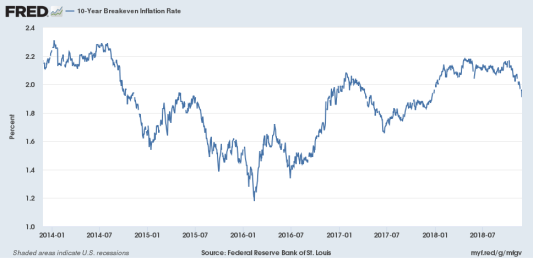
The US inflation target is around 2 per cent and for the last couple of years the breakevens have been pretty close to that. There was a period of real weakness in 2015/16 but it didn’t last that long, and even then the breakevens were only averaging around 1.5 per cent. If you were inclined to focus on the severe limitations US monetary policy will face in the next serious recession, you might even think 2 per cent breakevens for the average of the next 10 years is a bit high – after all, the Fed…
View original post 1,288 more words
Doug Allen “The Duel of Honor – screening for unobserved social capital”
30 Nov 2018 Leave a comment
in applied price theory, comparative institutional analysis, economic history, economics of crime, human capital, law and economics, property rights Tags: asymmetric information, screening, signalling
The Open Society Foundations & the transgender movement
29 Nov 2018 Leave a comment

by Michael Biggs
Michael Biggs is Associate Professor of Sociology at the University of Oxford and Fellow of St Cross College. He researches social movements and collective protest.
The transgender movement has transformed cultural norms and social institutions at breathtaking speed. Most of us, becoming acquainted with the trans issue for the first time, are astonished to discover the extent of the gender revolution. The movement has accomplished in a few years what the movements for women’s and for gay and lesbian rights took many decades to achieve.
Part of the explanation is the amount of money behind transgenderism. The Gender Industrial Complex, as we may call it, has many components. Lucrative sponsorship comes from pharmaceutical companies and medical providers. Charities originally established to fight for homosexual rights (like Human Rights Campaign in the United States and Stonewall in Britain) wield large budgets. Last but not least, three American billionaires…
View original post 939 more words
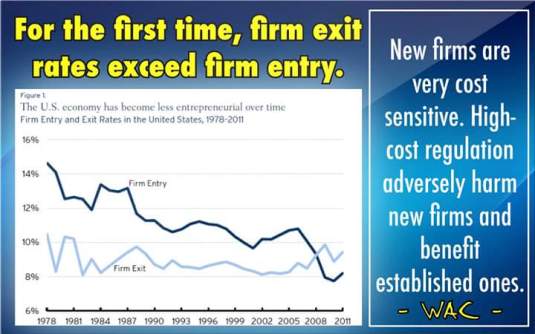
Robert Lucas wrote a 1978 paper predicting less self-employment because of rising wages
29 Nov 2018 Leave a comment
in applied price theory, economic history, entrepreneurship, human capital, industrial organisation, labour economics, labour supply, occupational choice, survivor principle Tags: creative destruction
BEFORE Mann Made Climate Change, Chicago Was Buried Under A Mile Of Ice
29 Nov 2018 Leave a comment

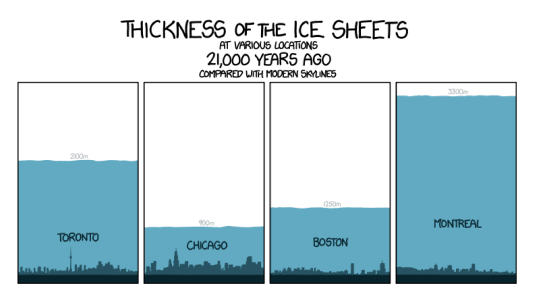 Thickness Of The Ice Sheets Compared With Modern Skylines
THE Laurentide Ice Sheet was a massive sheet of ice that covered millions of square kilometers, including most of Canada and a large portion of the northern United States.
THE last advance covered most of northern North America between 95,000 and 20,000 years ago.
THIS ice sheet was the primary feature of the Pleistocene epoch in North America, commonly referred to as the ice age. It was up to 2 mi (3.2 km) thick in Nunavik, Quebec, Canada.
PRIOR to the intervention of humans – when the climate was ‘stable’ – Chicago was buried under a mile of ice :
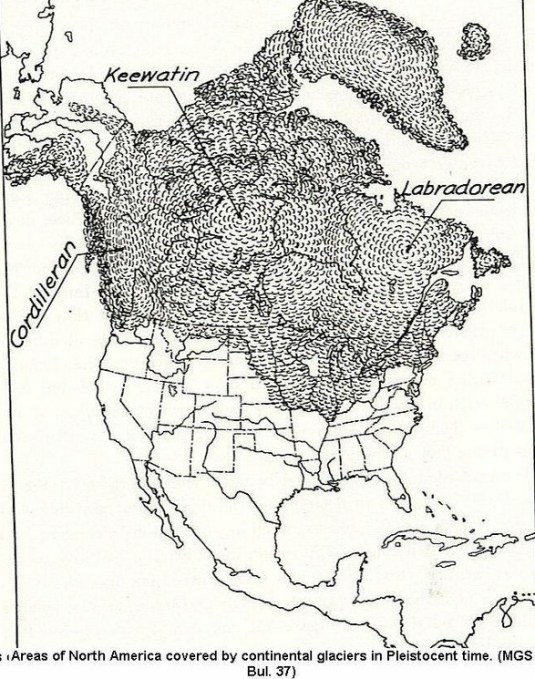 Before Mann Made Climate Change | Real Science
 The maximum extent of glacial ice in the north polar area during the Pleistocene period included the vast Laurentide ice sheet in eastern North America.
*
SNOWPACK
IN order for glaciers and ice sheets to…
View original post 1,824 more words
Sweden Not a Socialist Success
29 Nov 2018 1 Comment
in applied price theory, applied welfare economics, comparative institutional analysis, economic growth, economic history, economics of education, economics of regulation, entrepreneurship, health economics, macroeconomics, politics - USA Tags: Sweden
‘Straight Left” from Tankie Faction in the Communist Party of Great Britain to the Heart of the Labour Party.
28 Nov 2018 Leave a comment


Straight Left.
“The hatred and contempt with which each side treats the others—as also the bewilderment and distress of the silent majority of Party loyalists—seems now to exceed that in the Labour Party at the height of Bennism. In the Eurocommunist camp, as then on the Labour Left, it is typically expressed in generational terms—‘Why don’t you just die?’ was the shout of one of the new wave ‘pluralists’ when, at a recent aggregate, an old-timer attempted to speak.
Whereas in previous Communist crises, such as those of 1939–40 or 1956, the factory branches remained solid or even increased in strength, while it was the ‘intellectuals’ who were then wracked by doubt, this time it is the industrial comrades who have been ready to put their Party loyalties in question. In their majority they seem to have rallied to the Morning Star. Trade unionists—‘white, male, middle-aged’, as they were recently…
View original post 1,954 more words
New Paper: Normalized hurricane damage in the continental United States 1900–2017
28 Nov 2018 Leave a comment

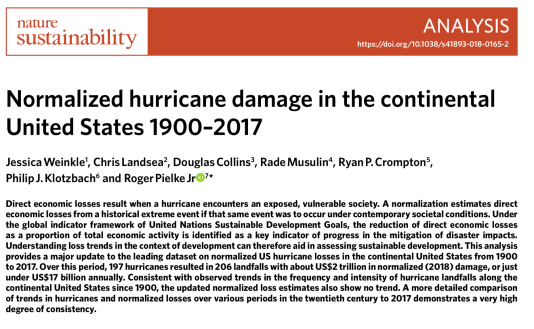 Our major update to the CONUS normalized hurricane loss dataset has now been published, after several years of effort and an intensive review process by Nature Sustainability. Abstract in the image above.
Weinkle et al. 2018.Normalized hurricane damage in the continental United States 1900–2017, Nature Sustainability. (Link)
Email me at rpielkejr at gmail if you’d like a copy. Happy to take any questions via Twitter, rogerpielkejr.
Heterogeneous agent macroeconomics has a long history, and it raises many questions
28 Nov 2018 Leave a comment

A cornerstone of thoughtful and lazy criticisms of mainstream macroeconomics alike is the idea that macroeconomists have spent 40 years just writing infinitely lived representative agent models (in which all agents behave the same way and are eternal), and isn’t it a ridiculous assumption? To which mainstream macroeconomics invariably respond: “heterogeneous agent models are all over the place,” which is in turn invariably met with “yes, but this is a very recent development.” I have myself long considered the development of heterogeneous agent macro as a response to the 2008 crisis. Then I began working on the history of economics at Minnesota, and I realized that by the mid-1980s, heterogeneous agent models were alreadyall over the place. Much of the current discussions on the-state-of-macro are premised on a flawed historical narrative. And acknowledging that representative agent models have long coexisted with heterogeneous agent models of various stripes raises a…
View original post 2,471 more words


Recent Comments