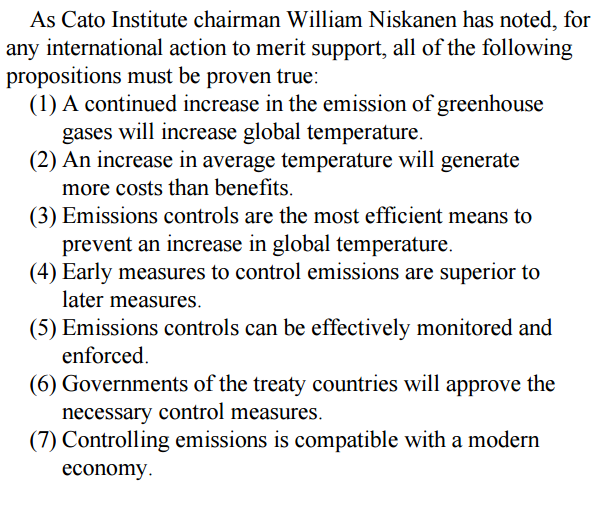
When is international action on global warming justified?
07 May 2016 Leave a comment
in applied price theory, development economics, energy economics, environmental economics, global warming Tags: carbon tax, carbon trading, climate alarmism, global warming
Recycling Dumpster Diving: A "Victimless" Crime?
06 May 2016 Leave a comment
in applied price theory, economics of crime, environmental economics, law and economics, property rights Tags: recycling

“Each week my family separates our recyclables from our regular trash. The former are put in our blue bin and are placed out on the curb for pickup on Wednesday mornings.
Last Tuesday night, I walked to Westwood Village to attend a dinner when I saw two individuals diving into all of my neighbours’ recycling bins (which were on the street curb) to extract the recyclables.
These "entrepreneurs" had a large truck filled with plastic bottles and aluminium cans that they were clearly loading up to take to a place to collect the recyclables fees. Is this a crime?
I view it as an economic crime for the following reason. The only reason this "trash treasure" was easy to access in the blue bins on the street was because the well meaning law abiding citizens wasted their time sorting their trash and kindly placing it outside.
Our tax dollars goes to the unionized guys who drive the recyclable trucks to pick this stuff up. If there is nothing to pick up, because the pirates have stolen the treasure, then recyclable trucks are losing $ as they are bringing in no revenue. So, this operating profit loss is just a transfer from the city to the pirates. My tax dollars and my time are being used to transfer $ to pirates.
The environment is no cleaner and is likely to dirtier because of the duplication of transportation (the recycling truck and the dirty private pirate trucks). I saw the same thing in Berkeley. What is to be done? A green cop shooting tranquilizer darts?”
Source: Environmental and Urban Economics: Recycling Dumpster Diving: A "Victimless" Crime?
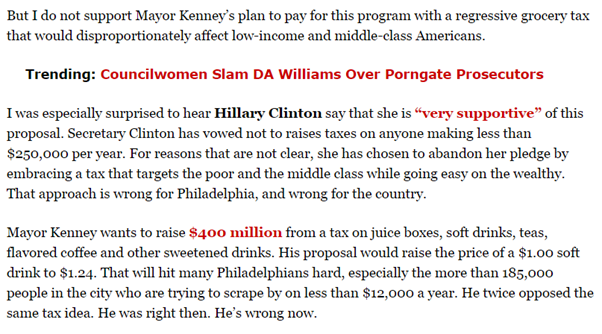
Straight talking from @BernieSanders on #sugartaxes @JordNZ
06 May 2016 Leave a comment
in applied price theory, health economics, income redistribution, politics - USA, Public Choice, rentseeking Tags: 2016 presidential election, do gooders, heavy-handed Samaritans, meddlesome preferences, nanny state, regressive taxes, sin taxes, soda taxes, sugar taxes
How much do you get paid if you can pick winners? @JulieAnneGenter @simonjbridges
05 May 2016 Leave a comment
in applied price theory, comparative institutional analysis, entrepreneurship, fisheries economics, politics - New Zealand Tags: entrepreneurial alertness, hedge fund managers, industry policy, picking winners, superstar wages, superstars
Electric cars have joined the long list of mendicant mendicant businesses that have been backed by the New Zealand government of late. Picking winners again.
The payrolls of entire government departments in New Zealand are not enough to hire a single successful hedge fund manager to pick winners for their political masters. To get on the list of the top 25 hedge fund managers, you need to earn at least $300 million a year.
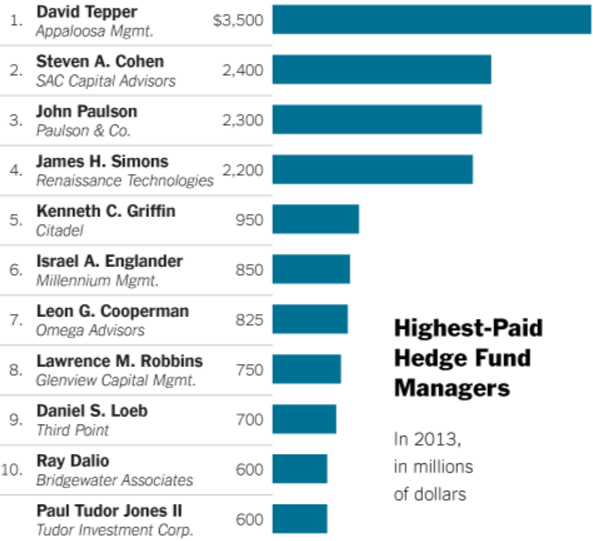
The 25 highest-earning hedge fund managers and traders made a combined $12 billion in 2015, slightly less than the $12.5 billion the 25 top-earning hedge fund managers together made in 2014.
Why do investment advisors sell and often give away their sage advice? If their insights were any good, they could trade on the share market before others caught on and make a killing!
I will give a personal example based on the skills of bureaucracies in picking winners. The test of my hypothesis is based on the transferability of human capital across jobs.
My graduate school professors in Japan included many retired bureaucrats from the Ministry of Finance and MITI. These agencies were heralded by Joe Stiglitz and others for picking winners and guiding Japanese companies to choose the right technologies and what to export.
The skills that my graduate school professors learned at picking winners over their careers with the Ministry of Finance and MITI in the high-growth years in the 1970s would now be available to them in their retirements to trade on their own account.
Page 32 of "An Illustrated Guide to Income" more economic #dataviz at: bit.ly/12SEI9p http://t.co/HYm0II2UNI—
Catherine Mulbrandon (@VisualEcon) May 08, 2013
My graduate school professors should quickly become very rich after retiring because of the skills they learned in picking winners while at the Ministry of Finance and MITI, which should cross over into their private share portfolios. The rich lists world-wide should be full of retired industry and finance ministry bureaucrats.
Instead, my graduate school professors took the train and bus to work and their families lived off their salaries in standard sized Japanese government apartments. All looked forward to their annual bonus of 5.15 months salary.
If governments are any good at picking winners, people should be willing to pay big time to get jobs at ministries of finance and ministries of international trade and industry to get access to their unique and highly secret skills they learn therein on how to pick winners.
I am still waiting for that tell-all book by an insider on these skills. Why is there no Picking Winners for Dummies on Amazon kindle as yet?
why the world isn’t even more corrupt than what we observe
04 May 2016 Leave a comment
in applied price theory, development economics, economic history, economics, economics of crime, economics of regulation, entrepreneurship, Gordon Tullock, growth disasters, growth miracles, income redistribution, law and economics, Public Choice, rentseeking Tags: bribery and corruption, Tullock paradox
How High Would You Make the Minimum Wage? We Asked L.A. Residents.
02 May 2016 Leave a comment
in applied price theory, applied welfare economics, labour economics, minimum wage Tags: expressive voting, living wage
How Do You Deal With Painful Truths? Left vs. Right
02 May 2016 Leave a comment
in applied price theory, applied welfare economics, comparative institutional analysis, constitutional political economy, economics of media and culture Tags: expressive voting, rational irrationality
The 3 keys to school choice success
02 May 2016 Leave a comment
in applied price theory, economics of education, economics of media and culture Tags: School choice
The Fifteen Dollar Minimum Wage is NONSENSE – YouTube
01 May 2016 Leave a comment
in applied price theory, applied welfare economics, labour economics, minimum wage Tags: expressive voting, living wage
The Fifteen Dollar Minimum Wage is NONSENSE
Landmarking Is Turning New York City Into a Life-Sized Historical Diorama
01 May 2016 1 Comment
in applied price theory, applied welfare economics, economics of regulation, urban economics Tags: landmark preservation, zoning
Source: Landmarking Is Turning New York City Into a Life-Sized Historical Diorama – Hit & Run : Reason.com
Does “Fair Trade” Help?
29 Apr 2016 Leave a comment
in applied price theory, development economics, economics, gender, growth disasters, growth miracles, labour economics, labour supply Tags: fair trade
Oops, I overestimated the cost of doing nothing about global warming
28 Apr 2016 Leave a comment
in applied price theory, applied welfare economics, environmental economics, global warming, Public Choice Tags: carbon pricing, carbon tax, climate alarmism, cost benefit analysis, expressive voting, mitigation and adaptation, rational irrationality
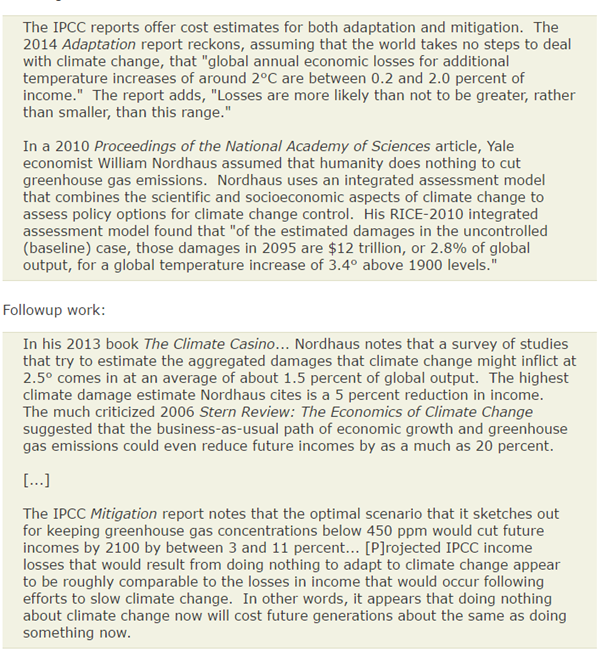
Source: Global Warming, Cost-Benefit Analysis, and The End of Doom, Bryan Caplan | EconLog | Library of Economics and Liberty from Ron Bailey (2016) The End of Doom: Environmental Renewal in the Twenty-first Century.
The cost of regulation in the USA
27 Apr 2016 Leave a comment
in applied price theory, applied welfare economics, comparative institutional analysis, economic growth, economic history, economics of regulation, macroeconomics, politics - USA Tags: cost of economic regulation, endogenous growth theory
Why Private Investment Works & Govt. Investment Doesn’t
27 Apr 2016 1 Comment
in applied price theory, comparative institutional analysis, constitutional political economy, economic history, economics of media and culture, economics of regulation, industrial organisation, survivor principle Tags: industry policy, picking winners, The fatal conceit, The pretence to knowledge


Recent Comments