Texas won a big victory in the United States Court of Appeals in the long struggle over floating buoy barriers in the Rio Grande River to help block unlawful migration. In United States v. Abbott, the court ruled 11-7 in an en banc decision against the Biden Administration over the barrier. It is an interesting decision […]
See Socialists, Knowledge of History and Agency. These are letters to the editor of The WSJ in response to an article about socialism by Joseph Epstein. The one below reminded me of a 1992 article by Robert Samuelson in Newsweek. “Joseph Epstein’s “Socialists Don’t Know History” (op-ed, May 30, 2019) on the abysmal historical knowledge…
In an interesting new paper Federal Reserve economists Marianna Kudlyak, Murat Tasci and Didem Tüzemen look at what happens to job vacancy postings when the minimum wage increases. The vacancy data in our analysis come from the job openings data from the Conference Board as a part of its Help Wanted OnLine (HWOL) data series. […]
The minimum wage will tend to increase unemployment among low-skill workers, often minorities. To many people that’s an argument against the minimum wage. But to progressives at the opening of the 20th century that was an argument for the minimum wage–progressive’s demanded minimum wages to get women and racial minorities out of the work force. […]
Justice Joe Williams in his 2013 paper Lex Aoteoroa made a case for Māori tikanga being recognized as New Zealand’s “first law”. Tikanga existed prior to New Zealand’s development of a legal system based on the British model. Without written language pre-European Māori tikanga is not well documented. However, its customs and norms governed, for […]
The Reserve Bank’s latest round of consultation on a possible central bank digital currency (CBDC) closes today. The thick and probably expensive (at least one of the documents was produced jointly with the consultancy firm Accenture) set of consultation documents came up a few months ago. I thought I had run out of time to […]
Anyone watching and trying to understand last Sunday’s Q&A where Jack Tame interviewed Debbie Ngarewa-Packer will realise that she seems to be beyond reason. Tame tried to examine bits of her blather and her obvious misuse of words, but she immediately slithered like an eel under a rock and made louder assertions about how Maori “korero”…
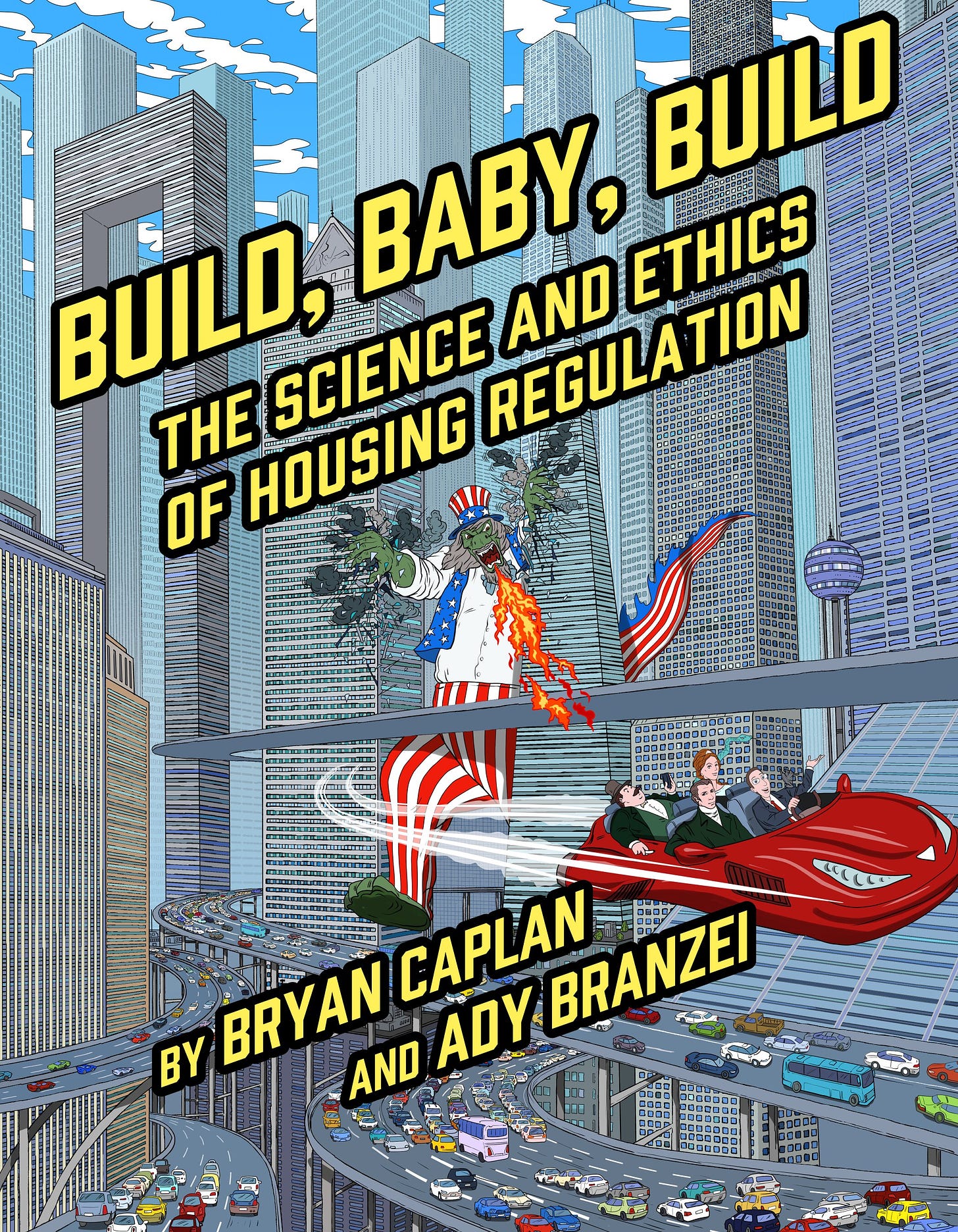
I pitch Build, Baby, Build in today’s New York Times. No illustrations, but a bunch of cool graphs cooked up by Sara Chodosh of the NYT data analytics team. The original title was “The Panacea Policy,” but now it’s “Yes in My Backyard: The Case For Housing Deregulation.” And for you, dear readers, it’s ungated!…
I’m not a political pundit, but I’m guessing that yesterday’s despicable assassination attempt on Donald Trump increases the likelihood that he reclaims the White House. That’s probably not good news for trade policy (though Biden has been just as bad), but it will be very good news for housing policy. Not because of what Trump […]
One of my favorite economic journal articles is by Barry Weingast and has the short title “Market Preserving Federalism” (MPF). In this paper, Weingast lays out the conditions necessary for two tenuous equilibria: A) Federalism & B) Federalism that preserves a market economy. Given that we just celebrated Independence Day in the USA, it seems […]
Here is one excerpt: What few appreciate is that the overregulation of housing has blocked a classic American path: moving to a higher-wage part of the country to secure a better life. A paper by the economists Peter Ganong and Daniel Shoag shows that housing costs now routinely outweigh wage gains: While janitors and waiters do indeed […]
The outcome of the French assembly election of 2024 appears to have set up a situation that could be described as the “ideal” way that semi-presidential systems are meant to operate, based on how such governance models were articulated by their original theorists.
Americans contribute disproportionately toward the pharmaceutical innovation from which we all benefit, but their tolerance for subsidising the rest of the world is on the wane… Eric Crampton writes If philosophy students remember one thing from their lectures on Immanuel Kant in undergraduate classes, it is his categorical imperative. It’s easy to remember […]
That phrasing comes from Arnold Kling, right? It is also the topic of my latest Bloomberg column. Here is one bit: Unfortunately, the US already was setting a bad example for the British. Recent plans from the Biden administration called for a broadly similar approach to housing policy, namely subsidizing demand. Earlier this year, Biden called for […]
A guest post by Gary Lindsay responding to the speech by Infrastructure Minister Chris Bishop: Chris Bishop’s speech regarding infrastructure has been a long time coming. It’s great that a government is finally serious about the massive infrastructure deficit that has been building since the major (necessary) cuts in 1984. Correcting a 40 year infrastructure […]
Why Evolution is True is a blog written by Jerry Coyne, centered on evolution and biology but also dealing with diverse topics like politics, culture, and cats.
In Hume’s spirit, I will attempt to serve as an ambassador from my world of economics, and help in “finding topics of conversation fit for the entertainment of rational creatures.”





Recent Comments