Ruth Richardson’s submission on the Treaty Principles Bill is excellent. I’ve copied it below.
Ruth Richardson on the Treaty Principles Bill
Ruth Richardson on the Treaty Principles Bill
07 Jan 2025 Leave a comment
in comparative institutional analysis, constitutional political economy, discrimination, economic history, income redistribution, law and economics, politics - New Zealand, property rights, Public Choice, rentseeking Tags: constitutional law
Some Links
03 Jan 2025 1 Comment
in applied price theory, comparative institutional analysis, constitutional political economy, defence economics, economic history, economics of crime, economics of regulation, industrial organisation, international economics, International law, law and economics, politics - USA, war and peace
TweetArnold Kling ponders producers versus parasites. A slice: What I notice is that the elites on the Republican side tend to earn a living as producers. They make things that other people want or need. In contrast, elites on the Democratic side include many people one may think of as parasites. They depend on producers…
Some Links
Te Pati Maori promise retrospective legislation
02 Jan 2025 Leave a comment
in comparative institutional analysis, constitutional political economy, economics of regulation, industrial organisation, law and economics, politics - New Zealand, property rights Tags: constitutional law
Te Pati Maori have written to organisations saying that if they are part of a Labour-led Government, they will pass retrospective legislation to punish organisations for actions that were entirely legal. You wonder how much more they need to do, to have media hold them to the same account as any other political party. They […]
Te Pati Maori promise retrospective legislation
Argentina facts of the day
29 Dec 2024 Leave a comment
in budget deficits, comparative institutional analysis, development economics, economic growth, economics of bureaucracy, economics of regulation, F.A. Hayek, financial economics, fiscal policy, growth disasters, income redistribution, international economics, labour economics, law and economics, liberalism, libertarianism, macroeconomics, Milton Friedman, monetarism, monetary economics, property rights, Public Choice, rentseeking, unemployment Tags: Argentina
Argentina’s bonds have already rallied dramatically. One gauge of the nation’s hard-currency debt, the ICE BofA US Dollar Argentina Sovereign Index, has generated a total return of about 90% this year. Meanwhile, the S&P Merval Index has risen more than 160% this year through Monday, far outpacing stock benchmarks in developed, emerging and frontier markets […]
Argentina facts of the day
Treaty Principles Submissions – Hobsons Pledge Lend A Hand
24 Dec 2024 Leave a comment
in comparative institutional analysis, constitutional political economy, law and economics, politics - New Zealand, property rights Tags: constitutional law
If you haven’t already done yours here is a helping hand from Hobsons Pledge so now you will have no excuse not to get to it. SUBMISSIONS CLOSE AT 11.59PM ON 7 JANUARY 2025!!!!! You can use the following as a guide – I am going to – but, use your own words and under […]
Treaty Principles Submissions – Hobsons Pledge Lend A Hand
My Submission On The Treaty Principles Bill
22 Dec 2024 Leave a comment
in comparative institutional analysis, constitutional political economy, economic history, law and economics, liberalism, Marxist economics, politics - New Zealand, property rights Tags: constitutional law
Sent in a few minutes ago. Principles of the Treaty of Waitangi Bill I thank you for the opportunity to make a Submission on this very important Treaty Principles Bill which I support very strongly for a number of reasons – not least of those being the undemocratic way the the Labour Government in the […]
My Submission On The Treaty Principles Bill
Call in the Bailiffs: How the NZ Government’s Green Investment Fund Turned Itself Into an Unpleasant Predatory Lender and Debt Collection Agency.
16 Dec 2024 1 Comment
in applied price theory, comparative institutional analysis, energy economics, entrepreneurship, environmental economics, law and economics, politics - New Zealand, property rights Tags: solar power
The just resigned Chair of the NZ Green Investment Fund (NZGIF) and Chancellor of Auckland University, Cecilia Tarrant, previously worked at Morgan Stanley Bank in New York, starting in 1997 and finishing in 2009. She’s a very nice person, a lawyer by training, and Structured Products expert, in particular on Mortgage Backed Securities. The collapse of…
Call in the Bailiffs: How the NZ Government’s Green Investment Fund Turned Itself Into an Unpleasant Predatory Lender and Debt Collection Agency.
Has an Anonymous Political Donor to Schools Sabotaged National, ACT & NZ First? Will Children be Educated Not to Vote for them, as of Next Week?
12 Dec 2024 Leave a comment
in comparative institutional analysis, economics of education, politics - New Zealand Tags: constitutional law
The State-owned Broadcaster has just announced, “Every high school in NZ is set to receive a copy of a new book about the Treaty of Waitangi following a surprise donation by an [anonymous] Auckland couple”. One News says the book, “Understanding Te Tiriti”, is “a guide to NZ’s founding document”. Except that’s not the book’s…
Has an Anonymous Political Donor to Schools Sabotaged National, ACT & NZ First? Will Children be Educated Not to Vote for them, as of Next Week?
The Nobel Prize lectures in economics
12 Dec 2024 Leave a comment
in applied price theory, comparative institutional analysis, constitutional political economy, development economics, economics of crime, economics of regulation, growth disasters, growth miracles, history of economic thought, law and economics, property rights, Public Choice
Why are no trillion dollar companies being created in Europe?
07 Dec 2024 1 Comment
in applied price theory, comparative institutional analysis, economics of regulation, entrepreneurship, human capital, industrial organisation, labour economics, labour supply, law and economics, occupational choice, poverty and inequality Tags: employment law
That is the theme of a new Substack by Pieter Garicano, here is one excerpt: These answers, according to a recent paper by Olivier Coste and Yann Coatanlem, two French investors, miss the point: the reason more capital doesn’t flow towards high-leverage ideas in Europe is because the price of failure is too high. Coste estimates that, […]
Why are no trillion dollar companies being created in Europe?
Andrew Le Sueur: Finally, separation of powers in Jersey?
05 Dec 2024 Leave a comment
in comparative institutional analysis, constitutional political economy, economic history, economics of bureaucracy, economics of crime, law and economics, property rights, Public Choice, public economics Tags: British politics, constitutional law

The question of separating constitutional powers in Jersey is more complex than it appears. Here’s why. Jersey and Guernsey are unique globally in having constitutions that in the ancient office of Bailiff fuse together the roles of chief justice and presiding officer of their respective courts and parliaments. As I argue, this is further complicated […]
Andrew Le Sueur: Finally, separation of powers in Jersey?
The Missing Myths
04 Dec 2024 Leave a comment
in applied price theory, comparative institutional analysis, constitutional political economy, discrimination, economic history, economics of climate change, economics of information, economics of media and culture, economics of regulation, energy economics, entrepreneurship, environmental economics, environmentalism, financial economics, gender, global warming, health economics, human capital, income redistribution, labour economics, labour supply, law and economics, liberalism, libertarianism, Marxist economics, occupational choice, politics - USA, poverty and inequality, property rights, Public Choice, rentseeking Tags: Age of Enlightenment, crime and punishment, criminal deterrence, free speech, gender wage gap, law and order, political correctness, racial discrimination, regressive left, sex discrimination
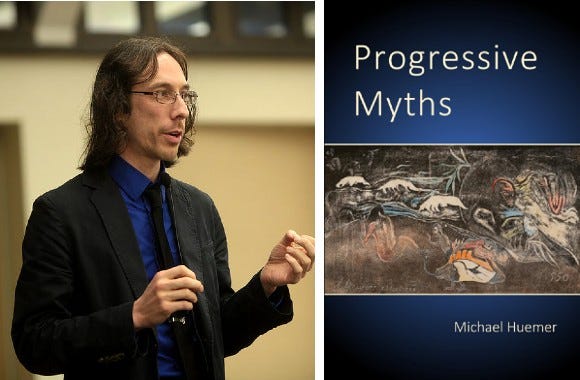
Michael Huemer’s Progressive Myths is the best book on wokeness. One of its many strengths is its focus on basic facts. As the author explains:I have selected beliefs that can be debunked fairly quickly and forcefully. Many other progressive beliefs require long argumentation and subjective judgment calls to assess. About these more difficult issues, I…
The Missing Myths
The no-confidence vote in France
04 Dec 2024 Leave a comment
in comparative institutional analysis, constitutional political economy, fiscal policy, law and economics, macroeconomics Tags: France
The French National Assembly is scheduled to vote tomorrow (4 Dec.) on a vote of no confidence against the government of Premier Michel Barnier. The premier has been in office only three months, having been appointed following (with some lag) the snap election President Emmanuel Macron had called in July, and which–predictably, given the timing–did […]
The no-confidence vote in France
Paul Krugman Is Right…albeit Selectively and Hypocritically
04 Dec 2024 Leave a comment
in applied price theory, comparative institutional analysis, economic history, economics of bureaucracy, economics of regulation, entrepreneurship, income redistribution, industrial organisation, international economics, law and economics, politics - USA, property rights, Public Choice, public economics, rentseeking Tags: tarrifs
I like profits. But let me qualify that statement. I like profits that are the result of businesses providing goods and services that consumers value. Those profits are earned. By contrast, I don’t like it when businesses get in bed with government and get money via cronyism, bailouts, subsidies, protectionism, or industrial policy. Those profits […]
Paul Krugman Is Right…albeit Selectively and Hypocritically
Another corporate welfare failure
02 Dec 2024 Leave a comment
in applied price theory, comparative institutional analysis, energy economics, entrepreneurship, environmental economics, financial economics, global warming, income redistribution, industrial organisation, politics - New Zealand, Public Choice, rentseeking, survivor principle Tags: climate alarmism
The Herald reported: The Government has $115 million at risk from the collapse of SolarZero. Finance Minister Nicola Willis said she was seeking urgent advice on the SolarZero situation. She had no further comment. NZ Green Investment Finance – a “green investment bank” created by the previous Government to fund environmentally-friendly businesses – made a $145m…
Another corporate welfare failure
 Utopia, you are standing in it!
Recent Comments