Vernon Smith reviews Joe Stiglitz’s book The Road to Freedom: Stiglitz did work in the abstract intellectual theoretical tradition of neoclassical economics showing how the standard results were changed by asymmetric or imperfect information. He is oblivious, however, to the experimental lab and field empirical research showing that agent knowledge of all such information is […]
Smith Reviews Stiglitz
Smith Reviews Stiglitz
24 Apr 2025 Leave a comment
in applied price theory, Austrian economics, comparative institutional analysis, economics of information, economics of regulation, entrepreneurship, experimental economics, history of economic thought, industrial organisation
Long-Run Effects of Trade Wars
24 Apr 2025 Leave a comment
in applied price theory, applied welfare economics, comparative institutional analysis, development economics, econometerics, history of economic thought, industrial organisation, labour economics, labour supply, politics - USA, unemployment Tags: 2024 presidential election, free trade, tariffs, unintended consequences
This short note shows that accounting for capital adjustment is critical when analyzing the long-run effects of trade wars on real wages and consumption. The reason is that trade wars increase the relative price between investment goods and labor by taxing imported investment goods and their inputs. This price shift depresses capital demand, shrinks the […]
Long-Run Effects of Trade Wars
My debate with Dani Rodrik about tariffs and free trade
22 Apr 2025 Leave a comment
in applied price theory, applied welfare economics, comparative institutional analysis, development economics, economic history, history of economic thought, industrial organisation, international economic law, international economics, labour economics, politics - USA, unemployment Tags: 2024 presidential election, free trade, tariffs
This occurred in Knoxville, you can watch it here. Lots of fun, and p.s. I am more of a free trader than he is. We did have some disagreements.
My debate with Dani Rodrik about tariffs and free trade
Victor Davis Hanson Should Stick to the Classics
18 Apr 2025 Leave a comment
in applied price theory, comparative institutional analysis, economic history, history of economic thought, industrial organisation, international economics, politics - USA Tags: 2024 presidential election, free trade, tarrifs
TweetHere’s a letter to The Daily Signal. Editor: Suppose I submitted to you an essay in which Thucydides is described as a first-century Roman senator who wrote a biography of Charlemagne – would you publish it? Of course not. The ignorance of such an essay would be palpable. But I would never write such a…
Victor Davis Hanson Should Stick to the Classics
Uneducated vs educated
03 Apr 2025 Leave a comment
in comparative institutional analysis, constitutional political economy, economics of bureaucracy, economics of education, economics of information, economics of media and culture, international economics, law and economics, liberalism, Marxist economics, politics, property rights, Public Choice Tags: Brexit, British politics, political psychology
Political battles historically have been framed as contests between left-wing and right-wing ideologies, with clear distinctions based on policy preferences and socio-economic class interests. However, contemporary political dynamics reveal a new axis of conflict: the division between the educated and the uneducated. This emerging distinction marks a significant departure from traditional political alignments, reshaping electoral […]
Uneducated vs educated
Prebs is Right – a 4 Year Parliamentary Term is no panacea to NZ’s stagnation. The problem is neither the Nats nor Labour have had a plan since 1993.
03 Apr 2025 Leave a comment
in comparative institutional analysis, constitutional political economy, economic growth, economic history, law and economics, macroeconomics, politics - New Zealand, Public Choice Tags: constitutional law
In an excellent article in the Herald, Richard Prebble (or “Prebs” as we call him) argues the proposals presented by National-ACT for a…
Prebs is Right – a 4 Year Parliamentary Term is no panacea to NZ’s stagnation. The problem is neither the Nats nor Labour have had a plan since 1993.
The Protectionism Edition of Economics Humor
01 Apr 2025 Leave a comment
in applied price theory, applied welfare economics, comparative institutional analysis, economic history, history of economic thought, income redistribution, industrial organisation, international economics, politics - USA, Public Choice, rentseeking, survivor principle Tags: 2024 presidential election, free trade, tarrifs

It appears that Trump wants to repeat the mistakes of the 1930s with a global trade war. That is going to be very bad news for workers, consumers, taxpayers, manufacturers, farmers, and exporters. But there are two bits of good news. At least for small slices of the populations First, lobbyists will get rich as […]
The Protectionism Edition of Economics Humor
What does India want – and what is New Zealand willing to give?
25 Mar 2025 Leave a comment
in applied price theory, comparative institutional analysis, development economics, economic history, economics of education, growth disasters, growth miracles, human capital, income redistribution, industrial organisation, international economic law, international economics, labour economics, labour supply, occupational choice, politics - New Zealand, poverty and inequality, Public Choice, rentseeking, survivor principle Tags: India, preferential trade agreements
Chris Trotter writes – What does India want from New Zealand? Not our dairy products, that’s for sure, it’s got plenty of those. Indeed 45 percent of the Indian population are small-scale farmers, most of them running a few head of cattle – not to eat, you understand – but to milk. If it once […]
What does India want – and what is New Zealand willing to give?
The Grumpy Economist on Foreign aid: “send a person a fish every day, and he forgets how to fish.”
20 Mar 2025 Leave a comment
in applied price theory, comparative institutional analysis, development economics, economic history, growth disasters, growth miracles Tags: overseas aid
John Cochrane recommends the Economist article Aid cannot make poor countries rich. From 2004 to 2014, foreign aid increased by 75%, but it didn’t help: 2004, William Easterly: aid was just as likely to shrink the world’s poorest economies as to help them grow. 2005, World Bank: grants and loans did not move the needle…
The Grumpy Economist on Foreign aid: “send a person a fish every day, and he forgets how to fish.”
*Progressive Myths*: The Kling Club Convo
14 Mar 2025 Leave a comment
in applied price theory, comparative institutional analysis, constitutional political economy, economic history, entrepreneurship, history of economic thought, income redistribution, industrial organisation, labour economics, law and economics, liberalism, Marxist economics, politics - USA, property rights, Public Choice, rentseeking Tags: The Great Enrichment
Long ago, I co-blogged for EconLog with Arnold Kling. Now he’s running a book club for Liberty Fund. Last month, Arnold invited me and philosopher Rachel Ferguson to discuss Mike Huemer’s new Progressive Myths. Enjoy!
*Progressive Myths*: The Kling Club Convo
Boettke on the Socialist Calculation Debate
14 Mar 2025 Leave a comment
in applied price theory, Austrian economics, comparative institutional analysis, constitutional political economy, economics of information, entrepreneurship, history of economic thought, industrial organisation, law and economics, property rights Tags: economics of planning
An excellent EconTalk episode with Pete Boettke on the socialist calculation debate. I like Boettke on the three Ps. The three Ps–property, prices, and profits and loss. Property incentivizes us. Prices guide us. Profits lure us to new changes and losses discipline us. Today, “incentives matter” is often considered the first lesson of economics. But […]
Boettke on the Socialist Calculation Debate
Working paper: Why nationalize the production of public goods?
09 Mar 2025 Leave a comment
in applied price theory, comparative institutional analysis, constitutional political economy, economic history, economics of bureaucracy, entrepreneurship, health economics, history of economic thought, Public Choice, public economics, rentseeking
I have a new working paper out. It proposes a price theory-based explanation of why states nationalize the production of “public goods” (i.e., non-excludable and non-rivalrous). This is different than existing explanations as the theory ignores whether private provision is efficient or superior to public provision. I call it the “redistributive engine” theory whereby the […]
Working paper: Why nationalize the production of public goods?
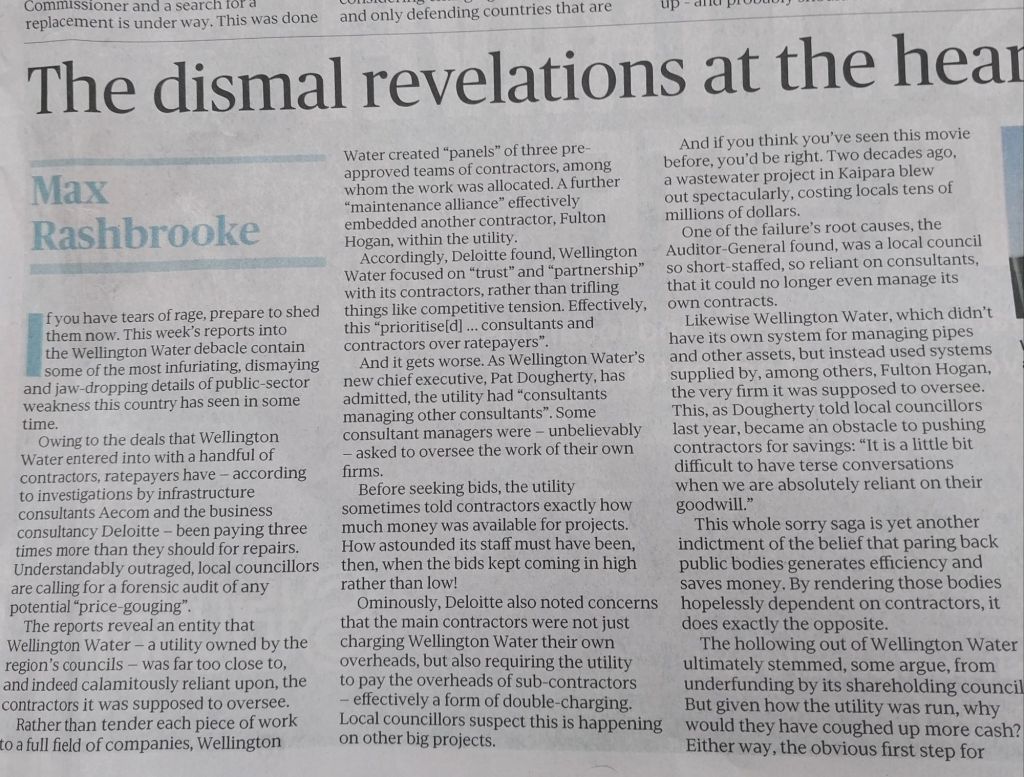
Max Rashbrooke has been kidnapped again to be replaced by a neoliberal doppelganger
08 Mar 2025 Leave a comment
in applied price theory, comparative institutional analysis, economics of bureaucracy, industrial organisation, managerial economics, market efficiency, organisational economics, politics - New Zealand, Public Choice, public economics Tags: privatisation
Hire Don’t Fire at the FDA
26 Feb 2025 Leave a comment
in applied price theory, comparative institutional analysis, economics of regulation, health economics, politics - USA Tags: 2024 presidential election, drug lags
As a longtime critic of the FDA, you might expect me to support firing FDA employees—not so! My focus has always been on reducing approval time and costs to speed drugs to patients and increase the number of new drugs. Cutting staff is more likely to slow approvals and raise costs. To be fair, we’re […]
Hire Don’t Fire at the FDA


Recent Comments