Brexit: the Movie
15 May 2016 Leave a comment
in applied price theory, applied welfare economics, comparative institutional analysis, constitutional political economy, economic history, economics of regulation, industrial organisation, international economics Tags: Brexit, Common market
What If There Were No Prices? Railroad Thought Experiment
15 May 2016 Leave a comment
in applied price theory, applied welfare economics, Austrian economics, comparative institutional analysis, constitutional political economy, entrepreneurship Tags: market process
Trekonomics: The Final Frontier (w/ Manu Saadia)
09 May 2016 Leave a comment
in applied price theory, applied welfare economics, Austrian economics, comparative institutional analysis, constitutional political economy, development economics, economics of regulation, environmental economics, history of economic thought, industrial organisation, international economics, law and economics, property rights Tags: star trek
The Coase Theorem
08 May 2016 Leave a comment
in applied price theory, applied welfare economics, Austrian economics, comparative institutional analysis, constitutional political economy, economics of regulation, environmental economics, history of economic thought, industrial organisation, law and economics, property rights, Ronald Coase Tags: Coase theorem
Johan Norberg on Tax Havens
07 May 2016 Leave a comment
in comparative institutional analysis, entrepreneurship, public economics Tags: bribery and corruption, tax havens
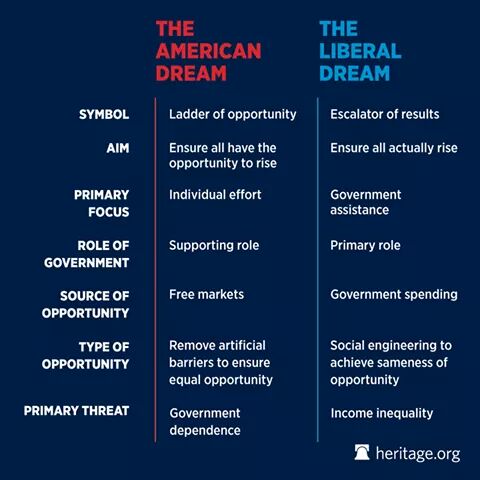
Be careful for what you wish for when using irrationality as a rationale for the scope of government
07 May 2016 Leave a comment
in applied price theory, comparative institutional analysis, constitutional political economy, economics of information, Public Choice Tags: behavioural public choice, growth of government, rational irrationality, size of government

Source: Gary Lucas and Slavisa Tasic‘s "Behavioral Public Choice and the Law" (West Virginia Law Review, 2015) via Bryan Caplan
Psychological Bias as a Driver of Financial Regulation
06 May 2016 Leave a comment
in comparative institutional analysis, constitutional political economy, economics of bureaucracy, economics of regulation, financial economics, Public Choice Tags: behavioural public choice, rational irrationality
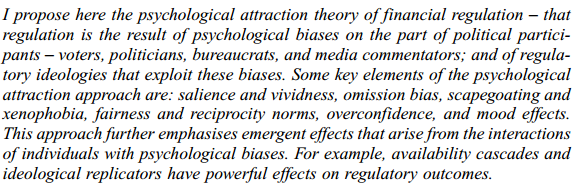
“Psychological Bias as a Driver of Financial Regulation,” David Hirshleifer, European Financial Management, 14(5), November, (2008):856-874.
How much do you get paid if you can pick winners? @JulieAnneGenter @simonjbridges
05 May 2016 Leave a comment
in applied price theory, comparative institutional analysis, entrepreneurship, fisheries economics, politics - New Zealand Tags: entrepreneurial alertness, hedge fund managers, industry policy, picking winners, superstar wages, superstars
Electric cars have joined the long list of mendicant mendicant businesses that have been backed by the New Zealand government of late. Picking winners again.
The payrolls of entire government departments in New Zealand are not enough to hire a single successful hedge fund manager to pick winners for their political masters. To get on the list of the top 25 hedge fund managers, you need to earn at least $300 million a year.
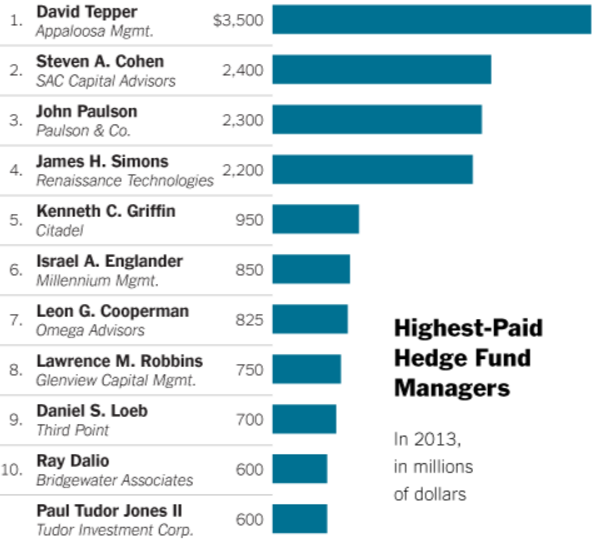
The 25 highest-earning hedge fund managers and traders made a combined $12 billion in 2015, slightly less than the $12.5 billion the 25 top-earning hedge fund managers together made in 2014.
Why do investment advisors sell and often give away their sage advice? If their insights were any good, they could trade on the share market before others caught on and make a killing!
I will give a personal example based on the skills of bureaucracies in picking winners. The test of my hypothesis is based on the transferability of human capital across jobs.
My graduate school professors in Japan included many retired bureaucrats from the Ministry of Finance and MITI. These agencies were heralded by Joe Stiglitz and others for picking winners and guiding Japanese companies to choose the right technologies and what to export.
The skills that my graduate school professors learned at picking winners over their careers with the Ministry of Finance and MITI in the high-growth years in the 1970s would now be available to them in their retirements to trade on their own account.
Page 32 of "An Illustrated Guide to Income" more economic #dataviz at: bit.ly/12SEI9p http://t.co/HYm0II2UNI—
Catherine Mulbrandon (@VisualEcon) May 08, 2013
My graduate school professors should quickly become very rich after retiring because of the skills they learned in picking winners while at the Ministry of Finance and MITI, which should cross over into their private share portfolios. The rich lists world-wide should be full of retired industry and finance ministry bureaucrats.
Instead, my graduate school professors took the train and bus to work and their families lived off their salaries in standard sized Japanese government apartments. All looked forward to their annual bonus of 5.15 months salary.
If governments are any good at picking winners, people should be willing to pay big time to get jobs at ministries of finance and ministries of international trade and industry to get access to their unique and highly secret skills they learn therein on how to pick winners.
I am still waiting for that tell-all book by an insider on these skills. Why is there no Picking Winners for Dummies on Amazon kindle as yet?
Deirdre McCloskey and George Will discuss bourgeois inquality
05 May 2016 Leave a comment
in comparative institutional analysis, constitutional political economy, development economics, economic history Tags: Deirdre McCloskey
How Do You Deal With Painful Truths? Left vs. Right
02 May 2016 Leave a comment
in applied price theory, applied welfare economics, comparative institutional analysis, constitutional political economy, economics of media and culture Tags: expressive voting, rational irrationality
The renewable energy curse – does corruption turn clean energy into dirty? @GarethMP
30 Apr 2016 Leave a comment
in comparative institutional analysis, constitutional political economy, energy economics, environmental economics, global warming, Public Choice, rentseeking Tags: European Union, expressive voting, green rent seeking, Italy, renewable energy, solar power, wind power
Massimo Tavoni and Caterina Gennaioli published a nice paper showing that corruption and violence was higher in the high wind provinces of Italy after the installation of wind generators. They built on earlier work about countries with abundant renewable resources and weak institutions. The main question in their paper
… is whether an increase in the expected returns of investments in wind energy, following the introduction of the new policy regime based on a green certificate system, has driven economic agents, namely bureaucrats and entrepreneurs, to engage more in rent seeking activities.
As they studied Italy, there is no surprise about the answer which was yes. High winds ensure high returns of the wind farm investment, but whether this translates into more bribery depends on institutional quality. There was more corruption, and so especially in high-wind provinces of Italy.
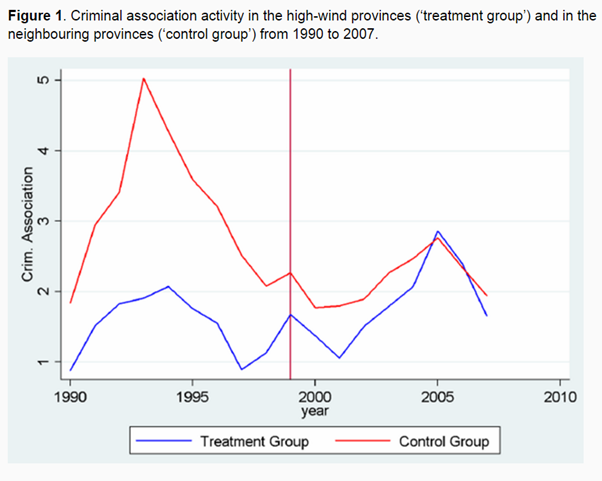
Source: Green policy and corruption | VOX, CEPR’s Policy Portal.
The construction of an average wind park is associated with an increase of criminal association activity of 6%. Italy will have more corruption than elsewhere in the old European Union.
The wider problem is renewable energy is a celebrity technology. In the context of expressive politics, so many cheer for solar and wind power that standards drop in terms of who qualifies for subsidies and who should lose support when their investments do not turn out as promised.
https://twitter.com/CountCarbon/status/715136022414299138
Wind power is not new, it is intermittent, is unsuitable for modern work, and is land constrained but it is still subsidised. Green rent seeking is a real risk even in countries with the best political institutions.
Two myths about multinationals by Tyler Cowen
30 Apr 2016 Leave a comment
in comparative institutional analysis, development economics, economics, economics of media and culture, entrepreneurship, growth disasters, growth miracles, industrial organisation, survivor principle Tags: multinational corporations
The cost of regulation in the USA
27 Apr 2016 Leave a comment
in applied price theory, applied welfare economics, comparative institutional analysis, economic growth, economic history, economics of regulation, macroeconomics, politics - USA Tags: cost of economic regulation, endogenous growth theory
Why Private Investment Works & Govt. Investment Doesn’t
27 Apr 2016 1 Comment
in applied price theory, comparative institutional analysis, constitutional political economy, economic history, economics of media and culture, economics of regulation, industrial organisation, survivor principle Tags: industry policy, picking winners, The fatal conceit, The pretence to knowledge


Recent Comments