Candidate Lessig’s Bad Example
11 Oct 2015 Leave a comment
in comparative institutional analysis, constitutional political economy, economic history, politics - USA, Public Choice, rentseeking Tags: campaign finance reform, campaign finance regulation

Denis Healey (1959) on the moral righteousness of @jeremycorbyn
05 Oct 2015 Leave a comment
in comparative institutional analysis, constitutional political economy, Public Choice, rentseeking Tags: British politics, Denis Healey, Leftover Left, Twitter left
Denis Healey's speech to Labour conference after 1959 defeat. http://t.co/BTdbfJj147—
Stephen Bush (@stephenkb) October 03, 2015
Denis Healey, writing in 1989. http://t.co/wTSehilpoB—
Stephen Bush (@stephenkb) October 03, 2015
Economic liberty and human flourishing: A discussion with Deirdre McCloskey, Susan Shell, and Yuval Levin
04 Oct 2015 Leave a comment
in comparative institutional analysis, constitutional political economy, development economics, economic history, Marxist economics Tags: Deirdre McCloskey, The Great Enrichment, The Great Fact
10 Reasons You Might Be A Liberal
03 Oct 2015 Leave a comment
in constitutional political economy, liberalism Tags: capitalism and freedom
Deirdre McCloskey on Bourgeois Equality: How Ideas, Not Capital, Changed the World
02 Oct 2015 Leave a comment
in applied price theory, constitutional political economy, economic growth, economic history, liberalism Tags: Deirdre McCloskey, The Great Enrichment, The Great Fact
This chart shows one of humanity's greatest modern accomplishments vox.com/2015/8/13/9145… http://t.co/QSxzps2i3Z—
Vox (@voxdotcom) August 13, 2015
@NZGreens @JulieAnneGenter are right! Government cars should go electric!
01 Oct 2015 Leave a comment
in constitutional political economy, economics of bureaucracy, politics - New Zealand, transport economics
Ministerial cars going electric is a great idea. The range limitations and range anxiety inherent to electric cars would mean ministers will find it much more difficult to do their jobs and therefore will have less time each day to mess up the economy and regulate unnecessarily.

One of the most productive things I ever saw the Green MPs do in Wellington was taking the bus to and from work.
I could not be happier when I saw Green coleaders Russel Norman and Metiria Turei waiting at a bus stop. They are just waiting, they will not working with a colleague, they were not working on their phones. They were just standing there doing nothing. That was the most productive moments of their times in parliament.

Every second a Green MP spends waiting for a bus and travelling on a bus and arranging to fit in with bus timetables is one second less spent making New Zealand a poorer country and deterring investment from coming to New Zealand through their high tax and heavy regulation policies.
The politics of marijuana in the USA
30 Sep 2015 Leave a comment
in comparative institutional analysis, constitutional political economy, economics of crime, law and economics, politics - Australia, politics - New Zealand, politics - USA, Public Choice Tags: economics of federalism, laboratory federalism, marijuana decriminalisation, meddlesome preferences, medical marijuana, nanny state
In representative democracy that is a unitary state such as New Zealand, the issue on marijuana decriminalisation is who will change their vote to vote against a party who advocates marijuana decriminalisation under a MMP system where all elections are close.
A plurality of Americans back marijuana reform. Another 20% don't care. Only 3 in 10 oppose.
msnbcmedia.msn.com/i/MSNBC/Sectio… http://t.co/UlvBT1D0ms—
Christopher Ingraham (@_cingraham) September 29, 2015
In a strong federal state, where some states allow citizen initiated referendums to change the law, it is possible to pioneer reform without that backlash. Then laboratory federalism takes over. Subsequent to the decriminalisation of marijuana or medical marijuana by various state governments, the Congress defunded federal marijuana drug law enforcement in states who had decriminalised marijuana. That major reform was underreported.
RT @oxfamnz @Oxfam what halved global poverty in 15 years? @NZGreens @RusselNorman @GreenpeaceNZ
30 Sep 2015 Leave a comment
in comparative institutional analysis, constitutional political economy, development economics, economic history, growth disasters, growth miracles, liberalism, Public Choice Tags: capitalism and freedom, Leftover Left, New Zealand Greens, Oxfam, The Great Enrichment, The Great Escape, The Great Fact, Twitter left
How can we eradicate #poverty by 2030? @Winnie_Byanyima wef.ch/1QvSVPW #development http://t.co/reBsT24BU3—
World Economic Forum (@wef) September 24, 2015
@syed17005919 @Noahpinion Look at what happened in a "world where corporations rule:" http://t.co/tAbbJW1Gvd—
David Andolfatto (@dandolfa) June 28, 2015
In 1980, the average American was 42x wealthier than the average Chinese. Now it's 4x wapo.st/1j6YcDc http://t.co/7afGdDf6mp—
Ana Swanson (@AnaSwanson) September 22, 2015
Parliament debates the Sustainable Development Goals today. But how did the MDGs fare? bit.ly/1gbcH6W http://t.co/r12PKVmPzK—
Commons Library (@commonslibrary) September 10, 2015
How the UN works: Set an unverifiable goal and then claim you achieved it. goo.gl/onJjCm http://t.co/bKm7zgeynH—
Steve Milloy (@JunkScience) September 29, 2015
How did the MDGs fare?
27 Sep 2015 Leave a comment
in comparative institutional analysis, constitutional political economy, development economics, economic history, growth disasters, growth miracles Tags: do gooders, MDG, ODA, overseas aid, United Nations
Parliament debates the Sustainable Development Goals today. But how did the MDGs fare? bit.ly/1gbcH6W http://t.co/r12PKVmPzK—
Commons Library (@commonslibrary) September 10, 2015
More reasons to let @jeremycorbyn be Corbyn – non-voters believe much the same things as voters
24 Sep 2015 1 Comment
in constitutional political economy, income redistribution, Marxist economics, Public Choice Tags: British politics, expressive voting, rational ignorance, rational irrationality, Twitter left, voter demographics
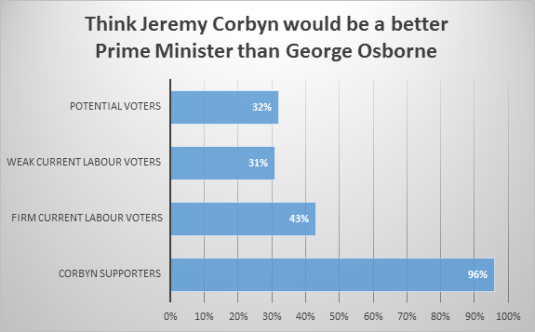
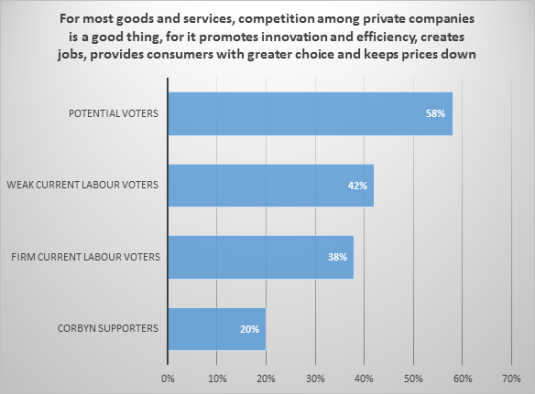
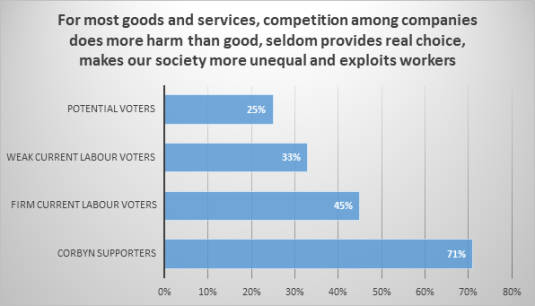
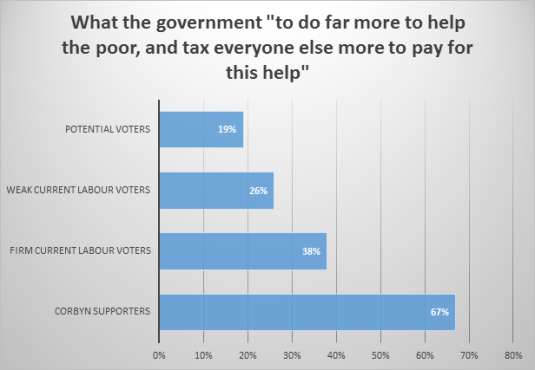
It is vital to permanent Tory rule that Jeremy Corbyn stay staunch to the principles and electoral strategy on which he was elected by Labour Party members and supporters to be their leader and alternative Prime Minister.
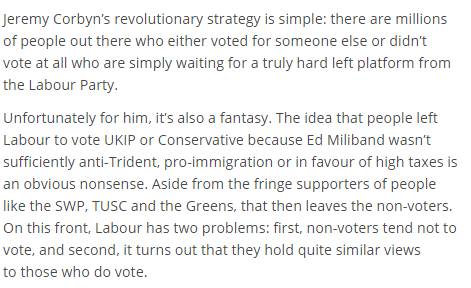
Source: The huge shock coming down the track for the Corbynites | Conservative Home
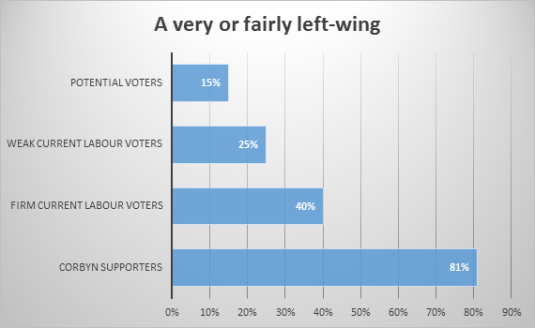
Source: New polling data shows the challenge facing Jeremy Corbyn
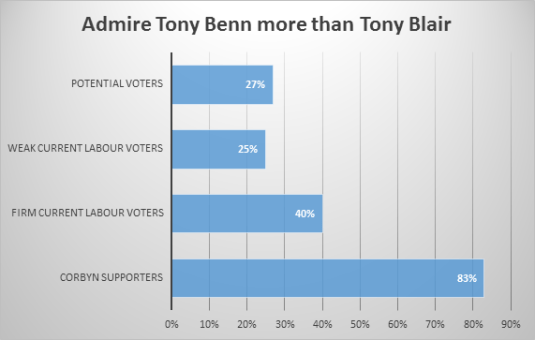
Source: New polling data shows the challenge facing Jeremy Corbyn
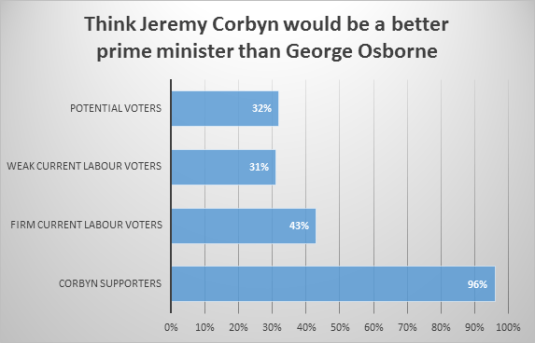
Source: New polling data shows the challenge facing Jeremy Corbyn
Source: New polling data shows the challenge facing Jeremy Corbyn
Source: New polling data shows the challenge facing Jeremy Corbyn
Source: New polling data shows the challenge facing Jeremy Corbyn
Source: New polling data shows the challenge facing Jeremy Corbyn
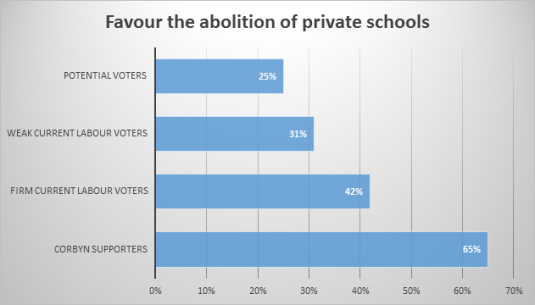
Source: New polling data shows the challenge facing Jeremy Corbyn
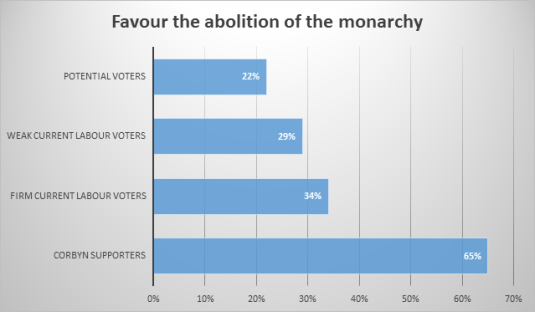
Source: New polling data shows the challenge facing Jeremy Corbyn
Peter Kellner: Measuring the gap between Corbyn’s supporters and Labour’s target voters – y-g.co/1izSpph http://t.co/f1NaNL4xgt—
(@YouGov) September 25, 2015
If Economists Are So Smart, Why Is Africa So Poor?
23 Sep 2015 Leave a comment
in constitutional political economy, development economics, economic history, growth disasters, growth miracles

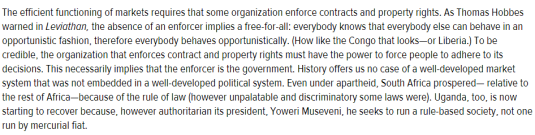
Source: Stephen Haber, Douglass C. North, and Barry R. Weingast If Economists Are So Smart, Why Is Africa So Poor? | Hoover Institution
 Utopia, you are standing in it!
Recent Comments