

Richard Epstein, George Soros, and Bruce Caldwell Discuss Hayek’s Constitution of Liberty
22 Dec 2014 Leave a comment
in comparative institutional analysis, constitutional political economy, F.A. Hayek, liberalism, Richard Epstein Tags: Bruce Caldwell, Constitution of Liberty, FA Hayek, Richard Epstein
Brad de Long on the difference between the Left and Social Democrats
22 Dec 2014 Leave a comment
in applied price theory, comparative institutional analysis, constitutional political economy, economics of bureaucracy, Marxist economics, Public Choice Tags: Brad De Long, Leftover Left, Social Democrats





On the great social value of lying to free speech and political discussion
12 Dec 2014 Leave a comment

The economics of federalism: states as decentralized competitors and political markets
08 Dec 2014 Leave a comment

Modern democracy: the power to replace governments at periodic elections
07 Dec 2014 Leave a comment
in constitutional political economy, Public Choice Tags: checks and balances, constitutional political economy, public choice, retrospective voting
Citizens do have sufficient knowledge and sophistication to vote out leaders who are performing poorly or contrary to their wishes. Modern democracy is government subject to electoral checks.
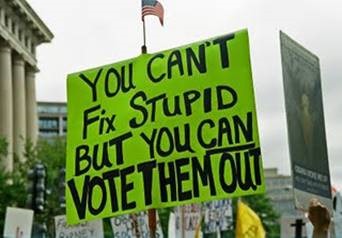
The power of the electorate to turn elected officials out of office at the next election gives elected officials an incentive to adopt policies that do not outrage public opinion and administer the policies with some minimum honesty and competence.
A representative democracy enables the adult population, at very little cost in time, money or distraction from private pursuits commercial or otherwise:
- to punish at least the flagrant mistakes and misfeasance of officialdom,
-
to assure an orderly succession of at least minimally competent officials,
-
to generate feedback to the officials concerning the consequences of their policies,
-
to prevent officials from (or punish them for) entirely ignoring the interests of the governed, and
-
to prevent serious misalignments between government action and public opinion.
Enough of politics and elections, I have a life to lead, don’t you? Too many want to remake democracy with the faculty workshop as their model.

Such deliberation has demanding requirements for popular participation in the democratic process, including a high level of knowledge and analytical sophistication and an absence, or at least severe curtailment, of self-interested motives.


Recent Comments