This video, professionally made and showing Kiri Tamihere-Waititi doing what can only be called ranting about her oppression and that of the Māori people, and then winding up by calling for the overthrow of the New Zealand, has caused a stir in that country. I am told that Tamihere-Waititi is a powerful member of Te […]
Māori Party political leader curses and rants on video, calling for overthrow of New Zealand’s government
Māori Party political leader curses and rants on video, calling for overthrow of New Zealand’s government
24 Jul 2024 Leave a comment
in constitutional political economy, economics of crime, law and economics, politics - New Zealand, Public Choice Tags: constitutional law, free speech, Maori economic development, political correctness, regressive left
Is France about to demonstrate “ideal” semi-presidentialism in action?
12 Jul 2024 Leave a comment
in comparative institutional analysis, constitutional political economy, law and economics, Public Choice Tags: France
The outcome of the French assembly election of 2024 appears to have set up a situation that could be described as the “ideal” way that semi-presidential systems are meant to operate, based on how such governance models were articulated by their original theorists.
Is France about to demonstrate “ideal” semi-presidentialism in action?
Can Democracy Survive the “Defenders of Democracy”?
11 Jun 2024 Leave a comment
in comparative institutional analysis, constitutional political economy, economics of crime, law and economics, politics - USA Tags: 2016 US presidential election, 2020 presidential election, 2024 presidential election

Below is my column in The Hill on the latest calls to protect democracy with distinctly undemocratic measures. Former presidential candidate Hillary Clinton insisted that the 2024 election was our D-Day, suggesting that voters would have to fight the GOP like the Nazis in World War II. Clinton previously called on Europe to censor American […]
Can Democracy Survive the “Defenders of Democracy”?
Leftists Against Growth: Honest, but Wrong
10 Jun 2024 Leave a comment
in comparative institutional analysis, constitutional political economy, development economics, economic growth, economic history, macroeconomics Tags: constitutional law
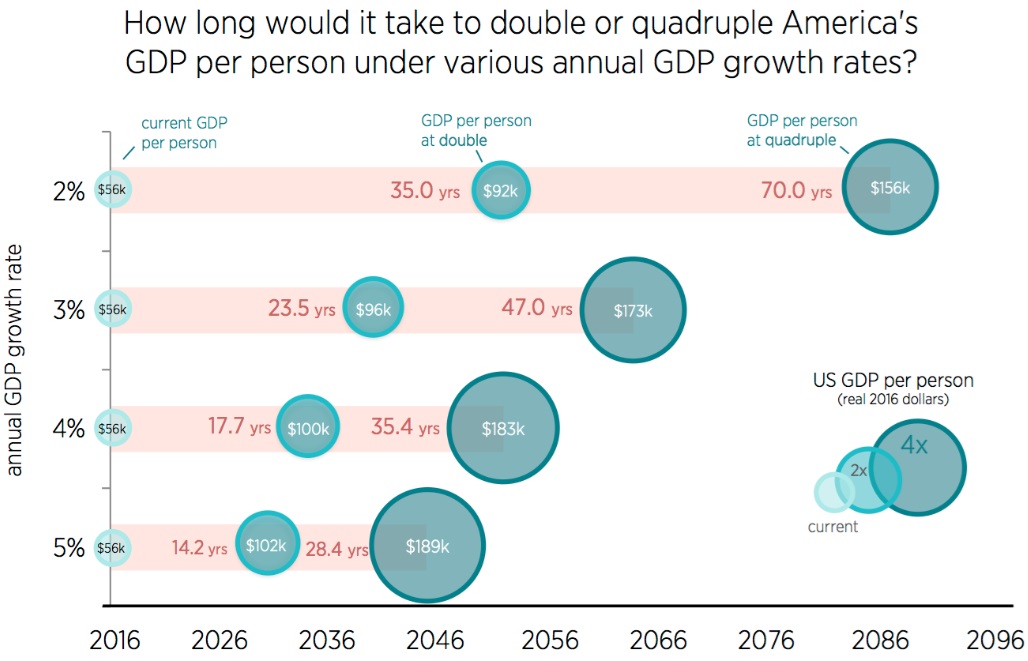
Just as trend lines are important for fiscal policy, they are perhaps even more important when looking at economic performance. Even small difference in annual growth rates, for instance, can lead to big changes in prosperity within a couple of decades. And enormous changes over longer periods of time. All of which explains why I’m […]
Leftists Against Growth: Honest, but Wrong
Did the British Empire REALLY Drive the Industrial Revolution? IEA Debates
06 Jun 2024 Leave a comment
in applied price theory, comparative institutional analysis, constitutional political economy, economic history, economics of bureaucracy, growth disasters, growth miracles, income redistribution, Public Choice, rentseeking Tags: Age of Discovery, age of empires, economics of colonialism
Nicholas Kilford: Interpreting The Devolution Statutes
05 Jun 2024 Leave a comment
in comparative institutional analysis, constitutional political economy, law and economics Tags: British constitutional law, British politics, Scotland

*Editors’ Note: This post is part of the ‘Unwritten Constitutional Norms and Principles Blog Series’* Throughout the life of devolution, the courts appear to have diverged on how to properly determine the scope and limits of devolved lawmaking power, and the extent to which norms and principles not expressly contained in the text of the […]
Nicholas Kilford: Interpreting The Devolution Statutes
“Democracy is on the Ballot”: California Democrats Seek to Prevent Voters from Approving New Taxes
01 Jun 2024 Leave a comment
in constitutional political economy, income redistribution, law and economics, Public Choice, public economics Tags: constitutional law

“Democracy is on the ballot.” That mantra of President Joe Biden and other democrats has suggested that “this may be our last election” if the Republicans win in 2024. A few of us have noted that the Democrats seem more keen on claiming the mantle of the defenders of democracy than actually practicing. Democrats have […]
“Democracy is on the Ballot”: California Democrats Seek to Prevent Voters from Approving New Taxes
‘Arguments Libertarians shouldn’t make’ with David Friedman
30 May 2024 Leave a comment
in applied price theory, comparative institutional analysis, constitutional political economy, David Friedman, defence economics, economic history, economics of crime, environmental economics, history of economic thought, law and economics, liberalism, libertarianism
The Rise and Decline and Rise Again of Mancur Olson
09 May 2024 Leave a comment
in applied price theory, comparative institutional analysis, constitutional political economy, development economics, economic history, growth disasters, growth miracles, history of economic thought, income redistribution, industrial organisation, law and economics, property rights, Public Choice, public economics, rentseeking

Mancur Olson’s The Rise and Decline of Nations is one of my favorite books and a classic of public choice. Olson may well have won the Nobel prize had he not died young. He summarized his book in nine implications of which I will present four: 2. Stable societies with unchanged boundaries tend to accumulate […]
The Rise and Decline and Rise Again of Mancur Olson
Why Socialism Won’t Die
26 Apr 2024 Leave a comment
in applied price theory, comparative institutional analysis, constitutional political economy, development economics, economic history, economics of bureaucracy, entrepreneurship, growth disasters, history of economic thought, income redistribution, industrial organisation, law and economics, liberalism, Marxist economics, property rights, Public Choice Tags: economics of socialism

“to employ a hundred people is… exploitation, but to command the same number [is] honorable.” That’s an actual book by the way, explaining that although communism has failed in the past across different nations, races and cultures, it might work in the future where machines can create anything we want. Think Star Trek’s replicator technology. […]
Why Socialism Won’t Die
Why the Global Free Market Will Save the World
23 Apr 2024 Leave a comment
in applied price theory, applied welfare economics, comparative institutional analysis, constitutional political economy, development economics, economic growth, economic history, energy economics, environmental economics, global warming, growth disasters, growth miracles, health economics, history of economic thought, income redistribution, labour economics, law and economics, liberalism, macroeconomics, Marxist economics, politics - Australia, politics - New Zealand, politics - USA, poverty and inequality, property rights, Public Choice, public economics, rentseeking Tags: anticapitalist mentality, capitalism and freedom
MICHAEL BASSETT: MAORI PUSH FOR PARALLEL GOVERNMENT STRUCTURES
21 Apr 2024 Leave a comment
in comparative institutional analysis, constitutional political economy, economics of bureaucracy, income redistribution, law and economics, liberalism, Marxist economics, politics - New Zealand, property rights, Public Choice, public economics Tags: constitutional law
If you think there is a move afoot by the radical Maori fringe of New Zealand society to create a parallel system of government to the one that we elect at our triennial elections, you aren’t wrong. Over the last few days we have seen calls from one or two Iwi for prior consultation with…
MICHAEL BASSETT: MAORI PUSH FOR PARALLEL GOVERNMENT STRUCTURES
Deirdre McCloskey: Innovation Begins in Our Minds
09 Apr 2024 Leave a comment
in applied price theory, applied welfare economics, comparative institutional analysis, constitutional political economy, development economics, economic history, entrepreneurship, growth miracles, history of economic thought
Cuba Libre
05 Apr 2024 Leave a comment
in applied price theory, comparative institutional analysis, constitutional political economy, development economics, economic history, economics of bureaucracy, economics of crime, growth disasters, history of economic thought, human capital, income redistribution, industrial organisation, labour economics, labour supply, law and economics, liberalism, Marxist economics, politics - USA, poverty and inequality, Public Choice, public economics, rentseeking Tags: Cuba
Martin Gurri has a very good, deep-dive on the current situation in Cuba. The wreckage of the Cuban economy really can’t be exaggerated. The perpetual blackouts are an apt symbol of a country that is headed for the dark ages. For the first time since the revolution, Cuba is begging the United Nations for food aid. Nearly […]
Cuba Libre
Anthony Willy on the SOE case and partnership fiction
01 Apr 2024 Leave a comment
in comparative institutional analysis, constitutional political economy, economic history, International law, law and economics, politics - New Zealand, property rights, Public Choice, public economics Tags: constitutional law
Former Judge and barrister Anthony Willy has an excellent post on the famous SOE case which is held up to have decided that the Treaty of Waitangi was a partnership. He demolishes this argument by quoting, well the actual judgment. The case was about acting in good faith. Well worth a read.
Anthony Willy on the SOE case and partnership fiction
 Utopia, you are standing in it!
Recent Comments