A guest post by Lucy Rogers: Today (as of the time of writing) I saw Associate Professor Michael Mawson of the theology faculty at Auckland University advertise on Facebook an event hosting Professor Miguel De La Torre, a Cuban academic specialising in liberation theology. The event is to be held at the Maclaurin Chapel at […]
Guest Post: Criticising Cuba
23 Aug 2024 Leave a comment
in comparative institutional analysis, constitutional political economy, development economics, economic history, economics of crime, growth disasters, history of economic thought, law and economics, liberalism, Marxist economics, politics - New Zealand, Public Choice Tags: Cuba
How Chlöe Swarbrick struggled to accept the PM’s position on sovereignty
21 Aug 2024 Leave a comment
in comparative institutional analysis, constitutional political economy, economic history, law and economics, liberalism, Marxist economics, politics - New Zealand, property rights, Public Choice Tags: constitutional law
Bob Edlin writes – Historian and former Labour Government cabinet minister Michael Bassett, in an article posted here earlier today, said those who spend time on the web examining the Treaty of Waitangi will find claims there are four or even five articles when officially there have never been more than three. Bassett went on […]
How Chlöe Swarbrick struggled to accept the PM’s position on sovereignty
The (Non) Mystery of Economic Growth
13 Aug 2024 Leave a comment
in applied price theory, comparative institutional analysis, constitutional political economy, development economics, economic growth, economic history, economics of bureaucracy, growth disasters, growth miracles, income redistribution, law and economics, macroeconomics, property rights, Public Choice, rentseeking Tags: The Great Enrichment

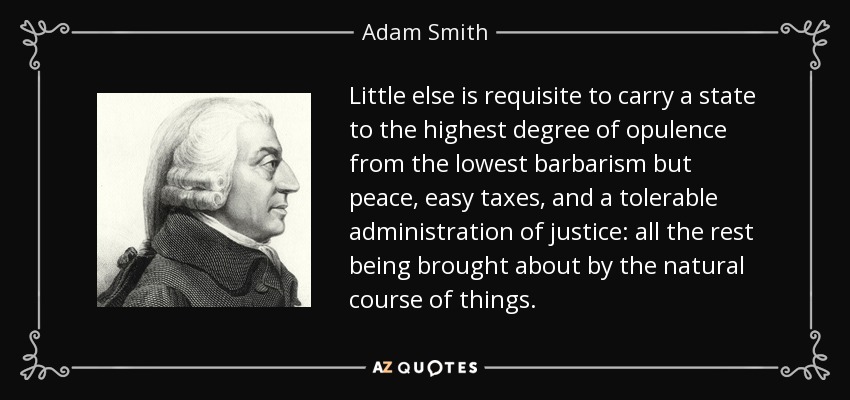
The recipe for economic growth is not complicated. You can put it in very simple terms, as Adam Smith did a few hundred years ago. Or you can develop and utilize data-heavy indexes like the ones published by the Fraser Institute and Heritage Foundation. In either case, the result will be the same. If you […]
The (Non) Mystery of Economic Growth
Jurisdiction Stripping or Court Killing? The “No Kings Act” is a Decapitation of the Constitution
08 Aug 2024 Leave a comment
in comparative institutional analysis, constitutional political economy, economics of crime, law and economics, politics - USA, property rights Tags: constitutional law

Senate Majority Leader Chuck Schumer (D., N.Y.) has introduced the “No Kings Act” with great fanfare and the support of most of his Democratic colleagues. Liberal groups have heralded the measure to legislatively reverse the ruling in Trump v. United States. It is obviously popular with the press and pundits. It is also entirely unconstitutional in […]
Jurisdiction Stripping or Court Killing? The “No Kings Act” is a Decapitation of the Constitution
Fast Takes on *Build, Baby, Build*: David Schleicher
07 Aug 2024 Leave a comment
in comparative institutional analysis, constitutional political economy, economics of bureaucracy, economics of regulation, income redistribution, law and economics, politics - USA, property rights, Public Choice, rentseeking, urban economics Tags: housing affordability, land supply
I met Yale Law’s David Schleicher when he was still a law professor at GMU. Back then, we argued about the best model of non-rigged one-party democracy, often seen in major cities… and Singapore. Since then, David’s become a powerful academic voice for YIMBY. Last month, David joined me for another Fast Take on Build,…
Fast Takes on *Build, Baby, Build*: David Schleicher
Communism still doing well in Cuba
05 Aug 2024 Leave a comment
in comparative institutional analysis, constitutional political economy, development economics, economic history, economics of bureaucracy, economics of crime, growth disasters, income redistribution, labour economics, labour supply, law and economics, Marxist economics, property rights, Public Choice, public economics Tags: Cuba
The Miami Herald reports: A stunning 10% of Cuba’s population — more than a million people — left the island between 2022 and 2023, the head of the country’s national statistics office said during a National Assembly session Friday, the largest migration wave in Cuban history. Isn’t it such a weird coincidence that the queue […]
Communism still doing well in Cuba
Don’t Mess with Texas: Fifth Circuit Rules Against the Biden Administration in Buoy Dispute on Southern Border
02 Aug 2024 Leave a comment
in comparative institutional analysis, constitutional political economy, defence economics, income redistribution, labour economics, labour supply, law and economics, liberalism, Marxist economics, politics - USA, property rights, Public Choice Tags: 2024 presidential election, economics of immigration

Texas won a big victory in the United States Court of Appeals in the long struggle over floating buoy barriers in the Rio Grande River to help block unlawful migration. In United States v. Abbott, the court ruled 11-7 in an en banc decision against the Biden Administration over the barrier. It is an interesting decision […]
Don’t Mess with Texas: Fifth Circuit Rules Against the Biden Administration in Buoy Dispute on Southern Border
Joseph Schumpeter, Capitalism and Intellectuals
01 Aug 2024 Leave a comment
in comparative institutional analysis, constitutional political economy, development economics, economic growth, economic history, history of economic thought, macroeconomics
See Socialists, Knowledge of History and Agency. These are letters to the editor of The WSJ in response to an article about socialism by Joseph Epstein. The one below reminded me of a 1992 article by Robert Samuelson in Newsweek. “Joseph Epstein’s “Socialists Don’t Know History” (op-ed, May 30, 2019) on the abysmal historical knowledge…
Joseph Schumpeter, Capitalism and Intellectuals
Tikanga, law and information asymmetry
27 Jul 2024 Leave a comment
in comparative institutional analysis, constitutional political economy, economic history, law and economics, politics - New Zealand, property rights Tags: constitutional law
Justice Joe Williams in his 2013 paper Lex Aoteoroa made a case for Māori tikanga being recognized as New Zealand’s “first law”. Tikanga existed prior to New Zealand’s development of a legal system based on the British model. Without written language pre-European Māori tikanga is not well documented. However, its customs and norms governed, for […]
Tikanga, law and information asymmetry
Māori Party political leader curses and rants on video, calling for overthrow of New Zealand’s government
24 Jul 2024 Leave a comment
in constitutional political economy, economics of crime, law and economics, politics - New Zealand, Public Choice Tags: constitutional law, free speech, Maori economic development, political correctness, regressive left
This video, professionally made and showing Kiri Tamihere-Waititi doing what can only be called ranting about her oppression and that of the Māori people, and then winding up by calling for the overthrow of the New Zealand, has caused a stir in that country. I am told that Tamihere-Waititi is a powerful member of Te […]
Māori Party political leader curses and rants on video, calling for overthrow of New Zealand’s government
Is France about to demonstrate “ideal” semi-presidentialism in action?
12 Jul 2024 Leave a comment
in comparative institutional analysis, constitutional political economy, law and economics, Public Choice Tags: France
The outcome of the French assembly election of 2024 appears to have set up a situation that could be described as the “ideal” way that semi-presidential systems are meant to operate, based on how such governance models were articulated by their original theorists.
Is France about to demonstrate “ideal” semi-presidentialism in action?
Can Democracy Survive the “Defenders of Democracy”?
11 Jun 2024 Leave a comment
in comparative institutional analysis, constitutional political economy, economics of crime, law and economics, politics - USA Tags: 2016 US presidential election, 2020 presidential election, 2024 presidential election

Below is my column in The Hill on the latest calls to protect democracy with distinctly undemocratic measures. Former presidential candidate Hillary Clinton insisted that the 2024 election was our D-Day, suggesting that voters would have to fight the GOP like the Nazis in World War II. Clinton previously called on Europe to censor American […]
Can Democracy Survive the “Defenders of Democracy”?
Leftists Against Growth: Honest, but Wrong
10 Jun 2024 Leave a comment
in comparative institutional analysis, constitutional political economy, development economics, economic growth, economic history, macroeconomics Tags: constitutional law

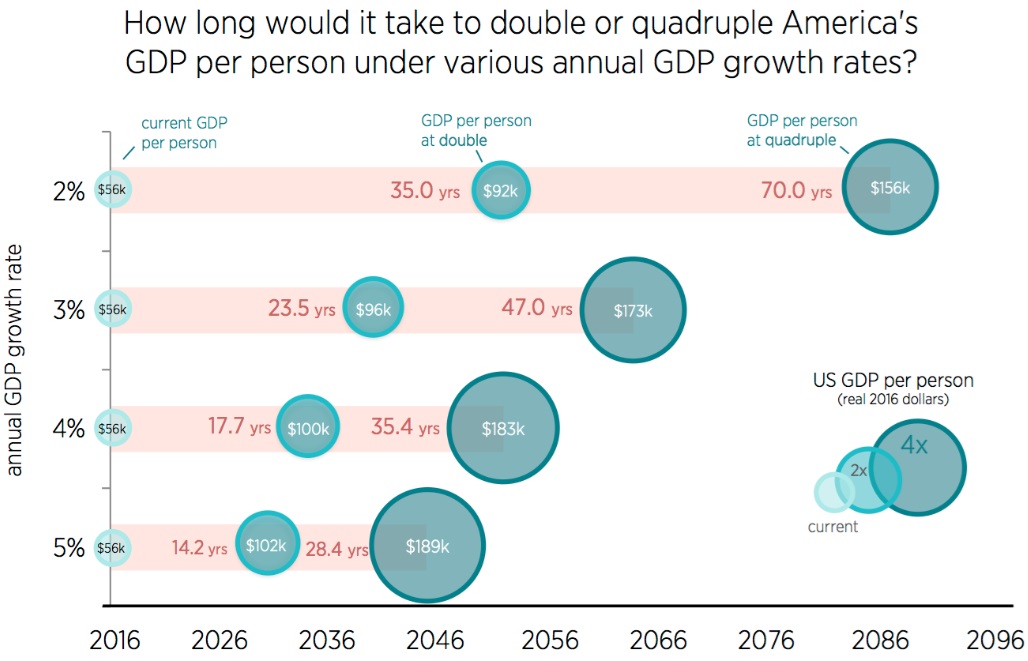
Just as trend lines are important for fiscal policy, they are perhaps even more important when looking at economic performance. Even small difference in annual growth rates, for instance, can lead to big changes in prosperity within a couple of decades. And enormous changes over longer periods of time. All of which explains why I’m […]
Leftists Against Growth: Honest, but Wrong
Did the British Empire REALLY Drive the Industrial Revolution? IEA Debates
06 Jun 2024 Leave a comment
in applied price theory, comparative institutional analysis, constitutional political economy, economic history, economics of bureaucracy, growth disasters, growth miracles, income redistribution, Public Choice, rentseeking Tags: Age of Discovery, age of empires, economics of colonialism
Nicholas Kilford: Interpreting The Devolution Statutes
05 Jun 2024 Leave a comment
in comparative institutional analysis, constitutional political economy, law and economics Tags: British constitutional law, British politics, Scotland

*Editors’ Note: This post is part of the ‘Unwritten Constitutional Norms and Principles Blog Series’* Throughout the life of devolution, the courts appear to have diverged on how to properly determine the scope and limits of devolved lawmaking power, and the extent to which norms and principles not expressly contained in the text of the […]
Nicholas Kilford: Interpreting The Devolution Statutes
Recent Comments