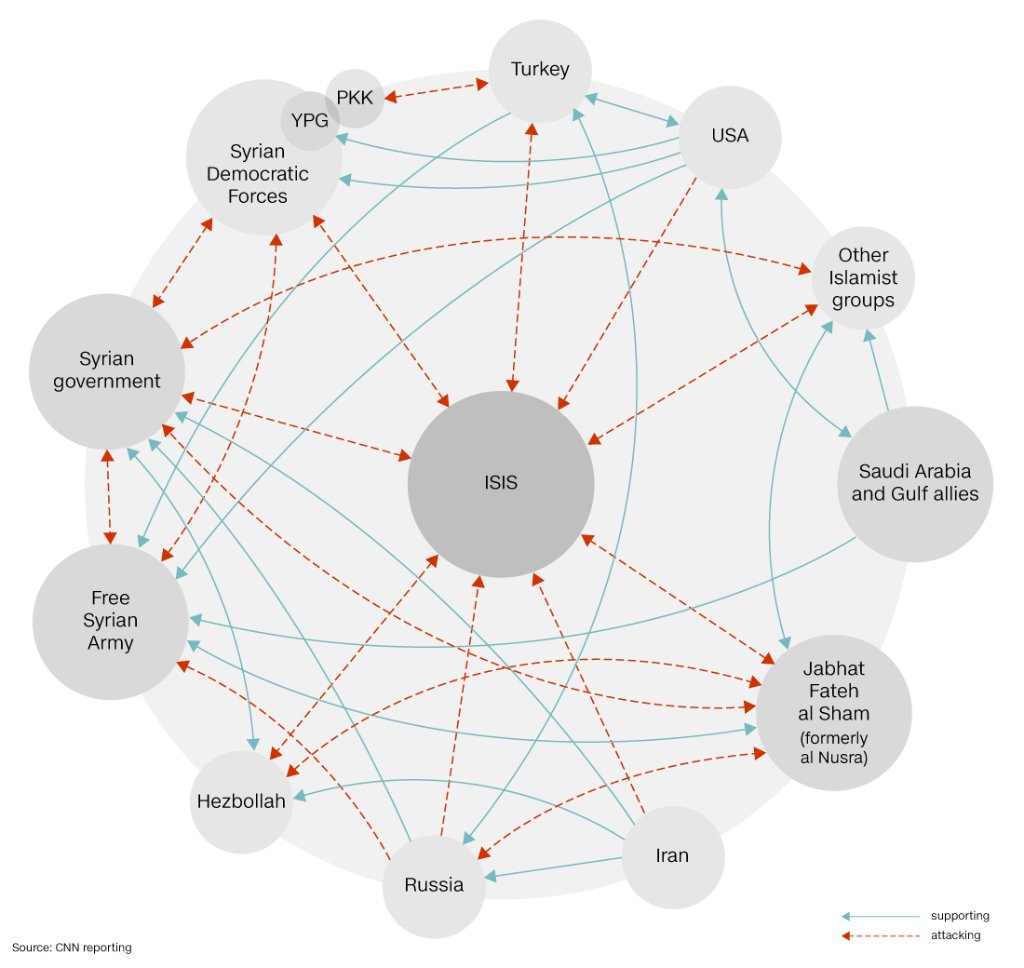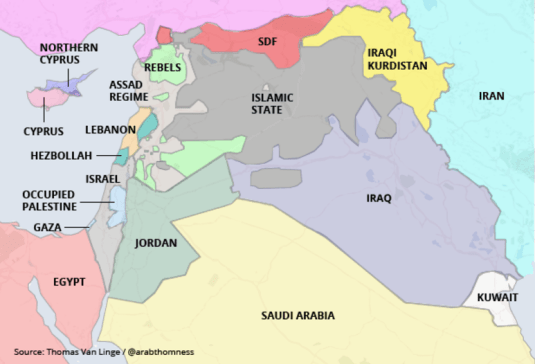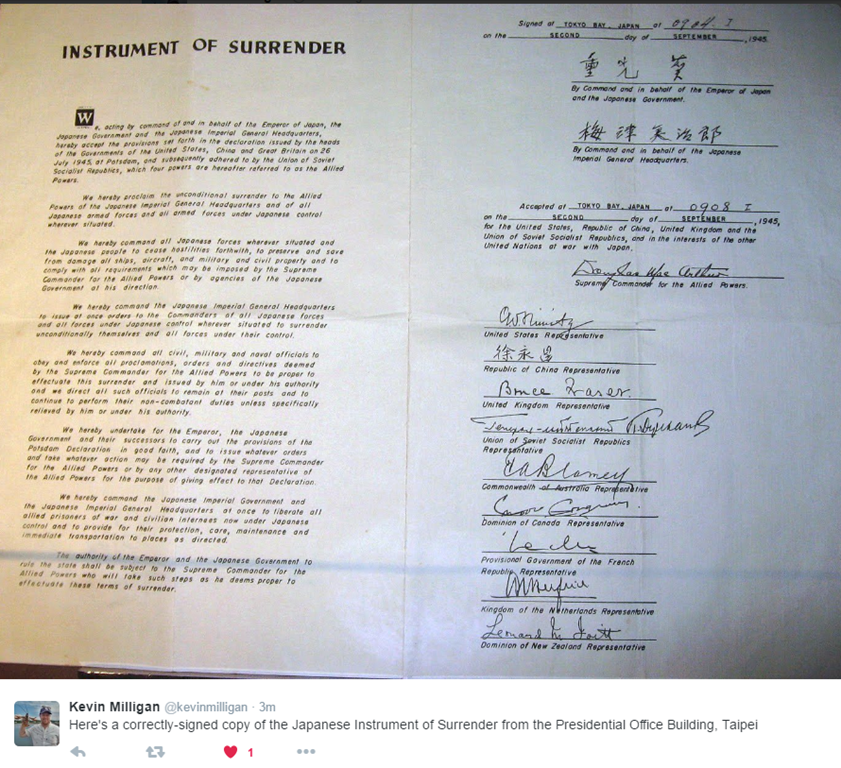
#Russia’s growing number of client states #Syria #RussiaVsISIL #Ukraine #Putin
05 Jul 2016 Leave a comment

Countries established by the peace conference at Paris
05 Jul 2016 2 Comments
in defence economics, economic history Tags: Europe, World War I

Source: Map of Europe showing countries as established by the peace conference at Paris – Vivid Maps
Where do ISIS foreign fighters come from and why?
04 Jul 2016 Leave a comment
in defence economics, labour economics, occupational choice
ISIS foreign fighters are not driven by economic deprivation or inequality. In What Explains the Flow of Foreign Fighters to ISIS? (NBER Working Paper No. 22190),Efraim Benmelech
and Esteban F. Klor found that many foreign fighters come from countries with high levels of economic development, low income inequality, and highly developed political institutions.
Foreign ISIS recruits come largely from prosperous, ethnically and linguistically homogeneous countries. As Alan Krueger explains in a discussion of terrorism is an occupational choice:
One of the conclusions from the work of Laurence Iannaccone—whose paper, “The Market for Martyrs,” is supported by my own research—is that it is very difficult to effect change on the supply side.
People who are willing to sacrifice themselves for a cause have diverse motivations. Some are motivated by nationalism, some by religious fanaticism, some by historical grievances, and so on. If we address one motivation and thus reduce one source on the supply side, there remain other motivations that will incite other people to terror.
Malcontents join the jihadists today for the same reasons they joined the Red Brigade, the Japanese Red Army Faction and Baader-Meinhof gang in the 1970s and 1980s. Plenty of young people were attracted to communism in previous generations as a way of sticking it to the man.
Now as then economic conditions were good as were political freedoms. Italy, Japan and Germany were all at the peak of recoveries from war. Japanese incomes are doubled in the previous decade. Germany and Italy were rich countries. As Alan Krueger explains:
Despite these pronouncements, however, the available evidence is nearly unanimous in rejecting either material deprivation or inadequate education as important causes of support for terrorism or participation in terrorist activities. Such explanations have been embraced almost entirely on faith, not scientific evidence.
Each generation has its defining oppositional identity. Radical Islam is the oppositional identity of choice for today’s angry young men and women. Mind you, they have to buy Islam for dummies to understand what they’re signing up for.
In previous generations, it was communism, weird Christian sects, eco-terrorism, animal liberationist terrorism and a variety of domestic terrorists of the left and right with conspiratorial motivations. Look at the level of diversity of the angry young men and women on the domestic terrorists list of the FBI.
One jihadists when interviewed said that 30 years ago he would probably have become a Communist as his vehicle for venting his frustrations.
What @jeremycorbyn @NZGreens and too many libertarians share on national security
28 Jun 2016 Leave a comment
in defence economics, libertarianism, Marxist economics, war and peace

Source: Michael Walzer (2002), Dissent Magazine, Can There Be a Decent Left?
Odd @SundayStarTimes story on surveillance of New Zealand mosques
26 Jun 2016 Leave a comment
in defence economics, economics of crime, economics of religion
The Sunday Star Times today took an unfortunate big brother angle to a one-page feature story who second half was about cooperation between New Zealand Muslims and the police and security services. Like any law-abiding people, they report potential criminal behaviour and mentally disturbed people.

Source: Marked by their religion – is the threat of homegrown terrorism real? | Stuff.co.nz.
The fact that these wannabe jihadists go blabbing about their plans at the local mosque despite knowing that their leadership and members are open about reporting suspicious behaviour to the police shows how stupid these people are.
That does not mean that these wannabe jihadists are not dangerous, but they are still stupid. Being completely useless appears to not disqualify them from joining either Al Qaeda or ISIS.
There are ratbags attracted to many large groups, be they secular or religious. Plenty of parties on the left and the right have at their wings a few wild men and one or two potentially violent people who are often off their medication. There are rat-bags everywhere.
#YesPrimeMinister approach of @jamespeshaw 2 fighting #ISIS
23 Jun 2016 Leave a comment
in defence economics, economics, politics - USA, war and peace Tags: foreign policy, Iraq, ISIS, New Zealand Greens, Syrian Civil War, war on terror
The Greens this week has decided to offer every support short of real help to those being massacred and brutalised by ISIS
“The NZDF deployment to Iraq does not make us safer, but puts New Zealand troops at risk and makes New Zealanders unnecessary targets of ISIL.
“We condemn the horrific violence of ISIL. New Zealand should be using its leverage as a member of the UN Security Council to curb ISIL’s access to funding and arms, not keeping our troops in danger for another year and a half,” said Mr Shaw.
This is straight out of the Yes Prime Minister episode on how the Foreign & Commonwealth Office explains how it helps foreign nations in trouble from invasion and tyranny. A 4 stage plan on how to do nothing.
In his recent speech before the House of Commons on further assistance to those fighting ISIS since Syria, Labour Party foreign office spokesman Hilary Benn described this as walking to the other side of the road.
An In-Depth Interview with Ayaan Hirsi Ali on Islam and the Defense of Western Civilization
23 Jun 2016 Leave a comment
in defence economics, economics of religion, liberalism
A Conversation With Ayaan Hirsi Ali
23 Jun 2016 Leave a comment
in defence economics, liberalism, libertarianism Tags: Age of Enlightenment, free speech, Middle-East politics, political correctness, religious tolerance, war against terror
Tony Benn v Hilary Benn on war votes
22 Jun 2016 Leave a comment
in defence economics, war and peace Tags: just wars, Middle-East politics
Nighttime Satellite Map of Syria Before and After the Start of the Civil War
18 Jun 2016 Leave a comment
Bill Maher: Sanders Supporters Are “Used To Getting Shit For Free”; That’s Not Socialism, It’s “Santa-ism”
13 Jun 2016 Leave a comment
in applied price theory, applied welfare economics, defence economics, economic history, economics of education, economics of media and culture, economics of regulation, environmental economics, industrial organisation, politics - USA, survivor principle Tags: 2016 presidential election, Twitter left
First Motion Picture Unit: Army Air Forces” on YouTube
12 Jun 2016 Leave a comment
in defence economics, economic history, economics, economics of media and culture Tags: World War II
Archive Video Of The D-Day Normandy Landings
06 Jun 2016 Leave a comment
in defence economics, economics, war and peace Tags: D-Day, World War II
Eisenhower recalls sacrifices of #DDay, 20 years later
06 Jun 2016 Leave a comment
in defence economics, economics, war and peace Tags: D-Day, World War II
Listening to this video reminds me of the performance evaluation General MacArthur gave of Major Eisenhower in the 1930s. He said that in a war this man should go straight to the top. I can see why he also quickly and easily became president when he wanted to such is his remarkable insight.

Recent Comments