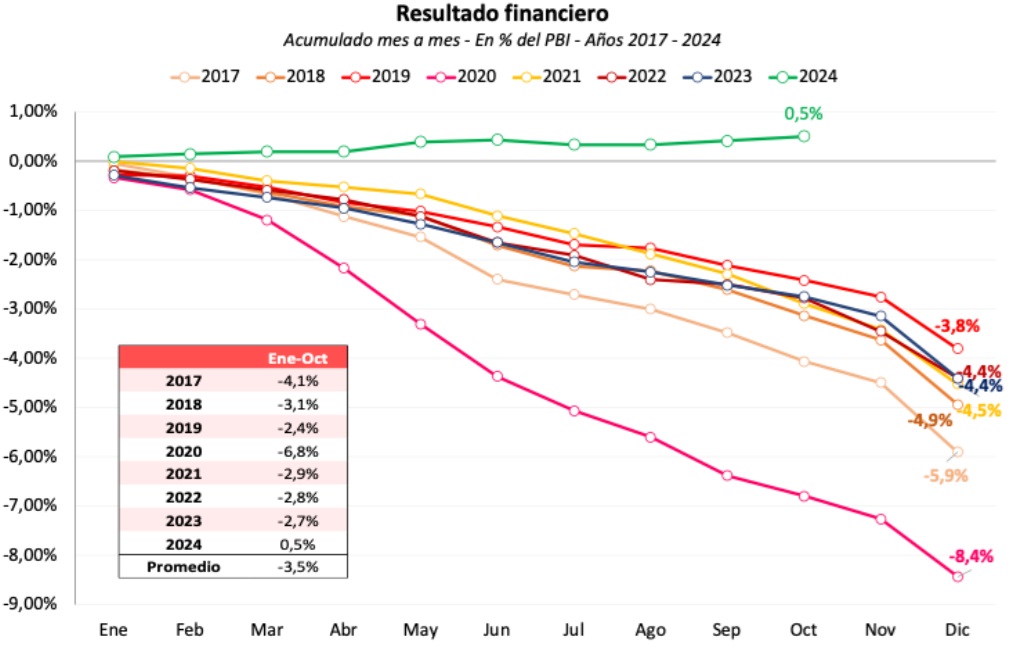
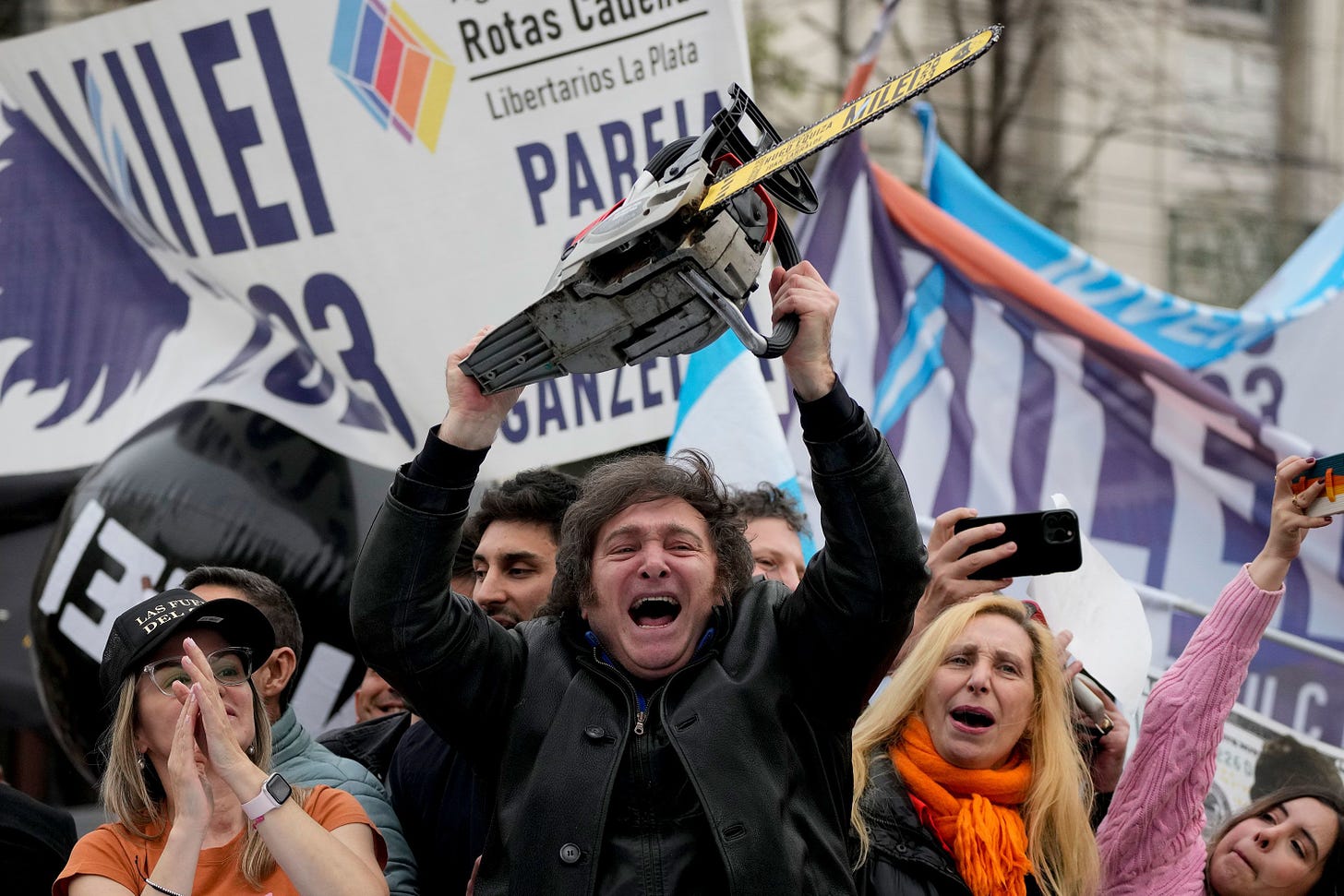
It’s easy to mock economists. Consider the supposedly prestigious left-leaning academics who asserted in 2021 that Biden’s agenda was not inflationary. At the risk of understatement, they wound up with egg on their faces.* Today, we’re going to look at another example of leftist economists making fools of themselves. It involves Argentina, where President Javier […]
Argentina’s bonds have already rallied dramatically. One gauge of the nation’s hard-currency debt, the ICE BofA US Dollar Argentina Sovereign Index, has generated a total return of about 90% this year. Meanwhile, the S&P Merval Index has risen more than 160% this year through Monday, far outpacing stock benchmarks in developed, emerging and frontier markets […]
I am sad to hear about the passing of Manmohan Singh at age 92. Singh was perhaps the most influential Indian policymaker in the last five decades. An Oxbridge educated trade economist, he became India’s most important technocrat in the 1980s and 1990s – occupying every top position in economic policy – finance secretary; deputy […]
Criminals turn college campuses into recruitment hubs, recruiting chemistry students in Mexico with big paydays.By Natalie Kitroeff and Paulina Villegas of The NY Times. Excerpts:”In their quest to build fentanyl empires, Mexican criminal groups are turning to an unusual talent pool: not hit men or corrupt police officers, but chemistry students studying at Mexican universities.People…
Bashar al-Assad has been the President of Syria since 2000, inheriting power from his father, Hafez al-Assad. His presidency has been marked by widespread human rights abuses, war crimes, and violations of international law, particularly during the Syrian Civil War that began in 2011. As the leader of the Syrian government, Assad’s policies and military […]
Here is a gloomy account from Vladimir Mirov: Ruble depreciation will contribute to inflation even further, as Russia is continued to be heavily reliant on imports – this is a kind of self-sustaining spiral. I also strongly disagree with those who say that cheaper ruble is “good” for exporters and the budget. Exporters have yet […]
Bryan Caplan and Daniel Klein both opine on Milei and populism, Dan being very enthusiastic, while Bryan praising Milei but more reserved in his praise of populism. I too am a big fan of Milei, and I think he is still on a good track. If his reforms do not succeed, likely it will not […]
In the pantheon of charitable music events, few stand as tall as Band Aid, the groundbreaking 1984 charity supergroup. Conceived by Bob Geldof of the Boomtown Rats and Midge Ure of Ultravox, Band Aid was formed to combat the devastating famine in Ethiopia, a crisis that had gripped global attention. Their mission: to raise funds […]
My dear friend and colleague Dan Klein wrote this. He loves feedback, so please share your thoughts in the comments. And he’d especially appreciate reactions from friends Shikha Dalmia and Nils Karlson, which I’d definitely be glad to run.P.S. Dan asked me to link to the latest Milei news.I define popuphobe as someone who propagates…
By Paul Homewood One of our readers sent me this correspondence he had with the BBC a few weeks ago: Below is a letter I wrote at the beginning of October to Tony Grant, the editor of Radio 4’s ‘From our Own Correspondent’: Dear Mr Grant, I listened with disbelief at your piece […]
Why Evolution is True is a blog written by Jerry Coyne, centered on evolution and biology but also dealing with diverse topics like politics, culture, and cats.
“We do not believe any group of men adequate enough or wise enough to operate without scrutiny or without criticism. We know that the only way to avoid error is to detect it, that the only way to detect it is to be free to inquire. We know that in secrecy error undetected will flourish and subvert”. - J Robert Oppenheimer.



 Utopia, you are standing in it!
Recent Comments