Passed along to me by the excellent Gonzalo Schwarz, I will not double indent: “Against all odds, Javier Milei achieved a major national victory, surpassing the expectations of polls that had predicted a technical tie, and doing so in a context where markets were deeply pessimistic and heavily dollarized. Despite having most of the media […]
Agustín Etchebarne on Milei and the election
Agustín Etchebarne on Milei and the election
29 Oct 2025 Leave a comment
in development economics, growth disasters, growth miracles, liberalism, libertarianism Tags: Argentina
Another Libertarian Landslide in Argentina
28 Oct 2025 Leave a comment
in development economics, growth miracles, liberalism, libertarianism Tags: Argentina

The good part about being a libertarian or classical liberal is that you are always morally and economically correct. The bad part is that very few elections ever produce unambiguously happy outcomes. Here’s my list: 1980 presidential election in the United States. 1994 and 2010 congressional elections in the United States.* 2016 vote for Brexit […]
Another Libertarian Landslide in Argentina
The Out-Sized Importance of Today’s Mid-Term Elections in Argentina
27 Oct 2025 Leave a comment
in budget deficits, development economics, economic growth, fiscal policy, growth disasters, growth miracles, macroeconomics, monetary economics Tags: Argentina

I explained two months ago that Argentina’s mid-term elections are critically important, and here’s some of what I said in an interview with Austin Peterson. I’ll be paying close attention to the results later today for three reasons. The mid-term elections will determine whether Milei has legislative support for the additional reforms that are desperately […]
The Out-Sized Importance of Today’s Mid-Term Elections in Argentina
The Costs and Benefits of British Colonialism
20 Oct 2025 1 Comment
in comparative institutional analysis, constitutional political economy, development economics, economic history, growth disasters, growth miracles Tags: age of empires, economics of colonialism
The British Empire, which at its height ruled over a quarter of the world’s population and landmass, remains one of the most consequential forces in global history. Its legacy is deeply contested: defenders emphasize the spread of law, education, and infrastructure, while critics highlight the violence, exploitation, and cultural destruction it entailed. A balanced assessment […]
The Costs and Benefits of British Colonialism
Sorry, But Pope Leo Is Mistaken
13 Oct 2025 Leave a comment
in applied price theory, development economics, economics of religion, growth disasters, growth miracles Tags: The Great Enrichment
TweetHere’s a letter to a new correspondent. Mr. __: Thanks for sharing Sohrab Ahmari’s tweet, which I’d not otherwise have noticed. It is, frankly, pathetically inept. In order to criticize the pro-free-market Acton Institute, Ahmari favorably quotes Pope Leo’s assertion that “pseudo-scientific data are invoked to support the claim that a free market economy will…
Sorry, But Pope Leo Is Mistaken
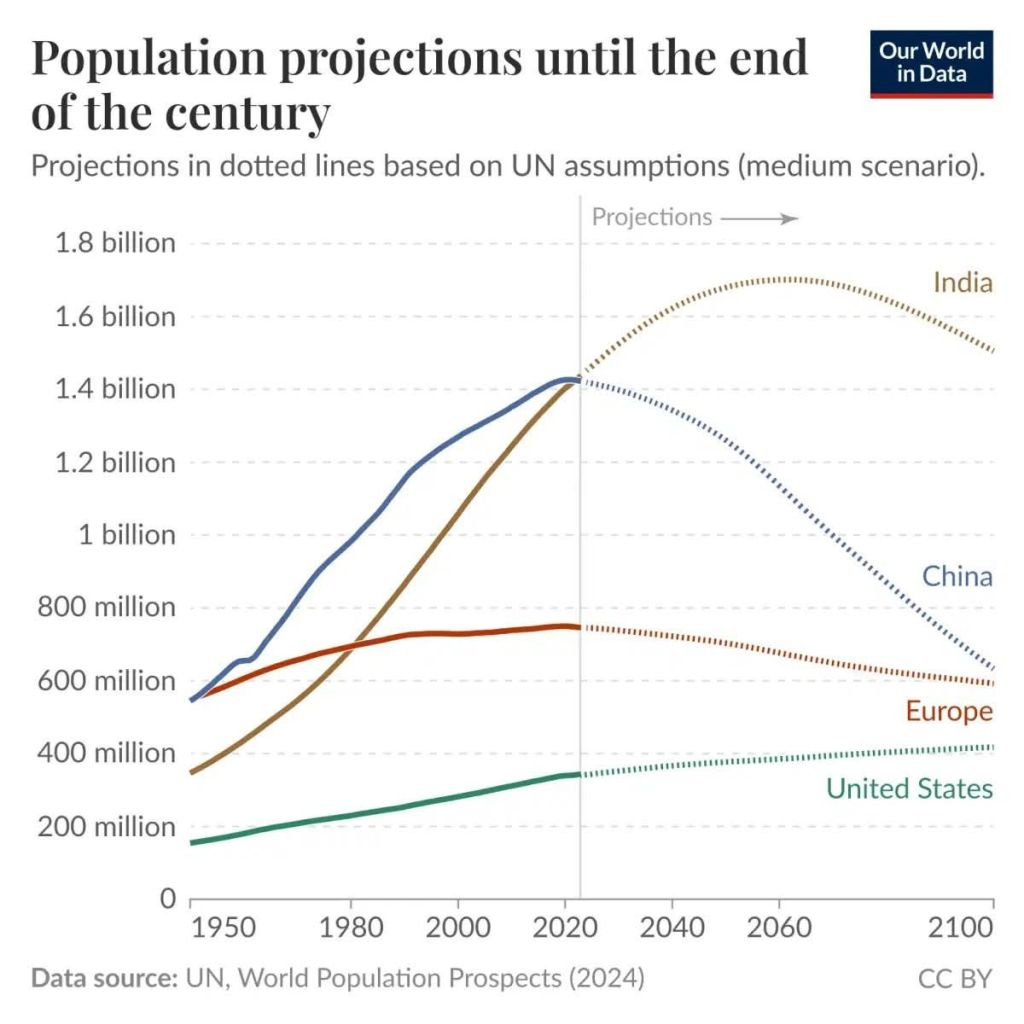
The population bust
02 Oct 2025 Leave a comment
in development economics, economic history, growth miracles, labour economics, labour supply, population economics Tags: ageing society, China, population bust
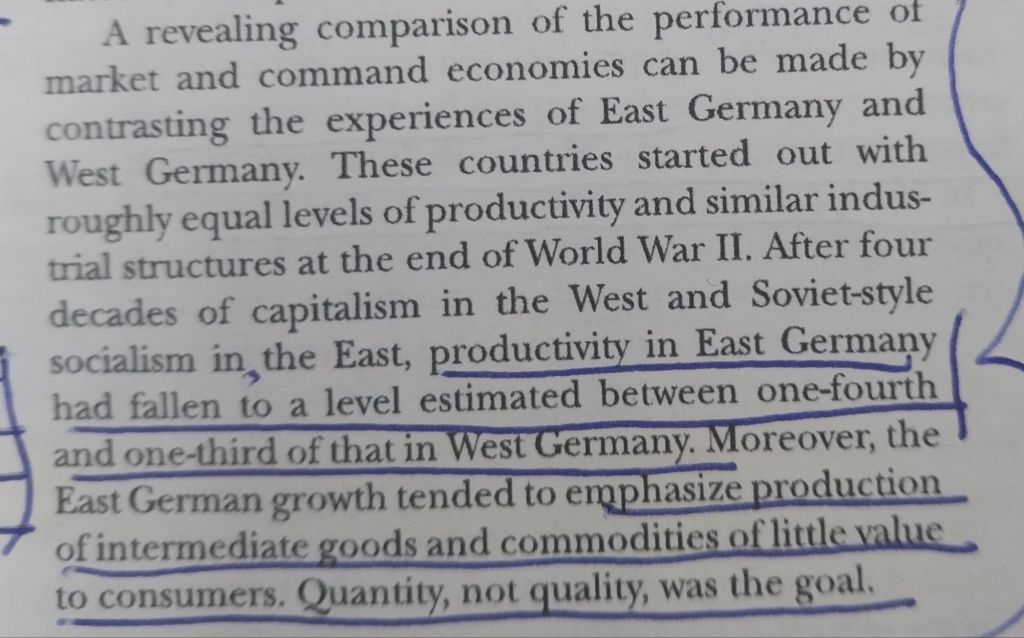
Samuelson on socialism
25 Sep 2025 Leave a comment
in applied price theory, development economics, economic history, growth disasters, growth miracles, history of economic thought, Marxist economics Tags: East Germany, economics of central planning, West Germany
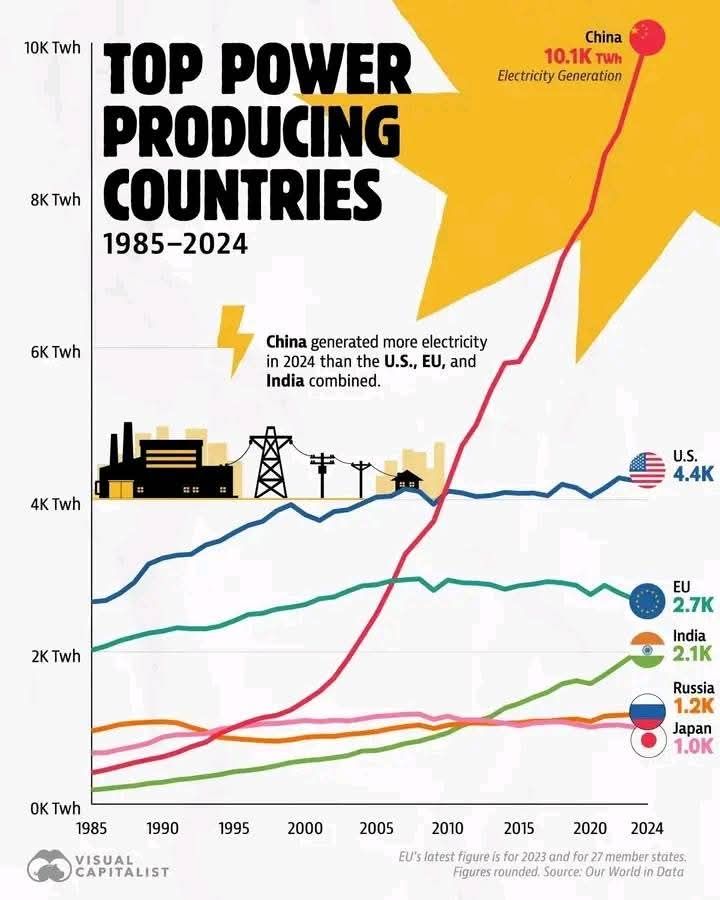
Power supply
07 Sep 2025 Leave a comment
in development economics, economic history, energy economics, growth miracles Tags: China
China Still Building Coal Power Plants
04 Sep 2025 Leave a comment
in development economics, economics of climate change, energy economics, environmental economics, environmentalism, global warming, growth miracles Tags: China, coal power

By Paul Homewood China continues to burn more and more coal, according to dw.com: China burned more coal at power plants between January and July of 2025 than at any time since 2016, despite massive renewable capacity, according to new environmental research report. The report, published by the Center for Research on Energy and […]
China Still Building Coal Power Plants
Inside India’s endless trials
03 Sep 2025 1 Comment
in comparative institutional analysis, development economics, economic history, economics of crime, growth disasters, growth miracles, law and economics, property rights Tags: India
The FT’s Krishn Kaushik covers the courts in India: …in one recent example a Delhi court concluded a property dispute after 66 years. Both the original litigants were dead. Still, the lawyer for one of the warring parties cautioned that the conclusion was in fact not the end, as the ruling would be appealed. Three […]
Inside India’s endless trials
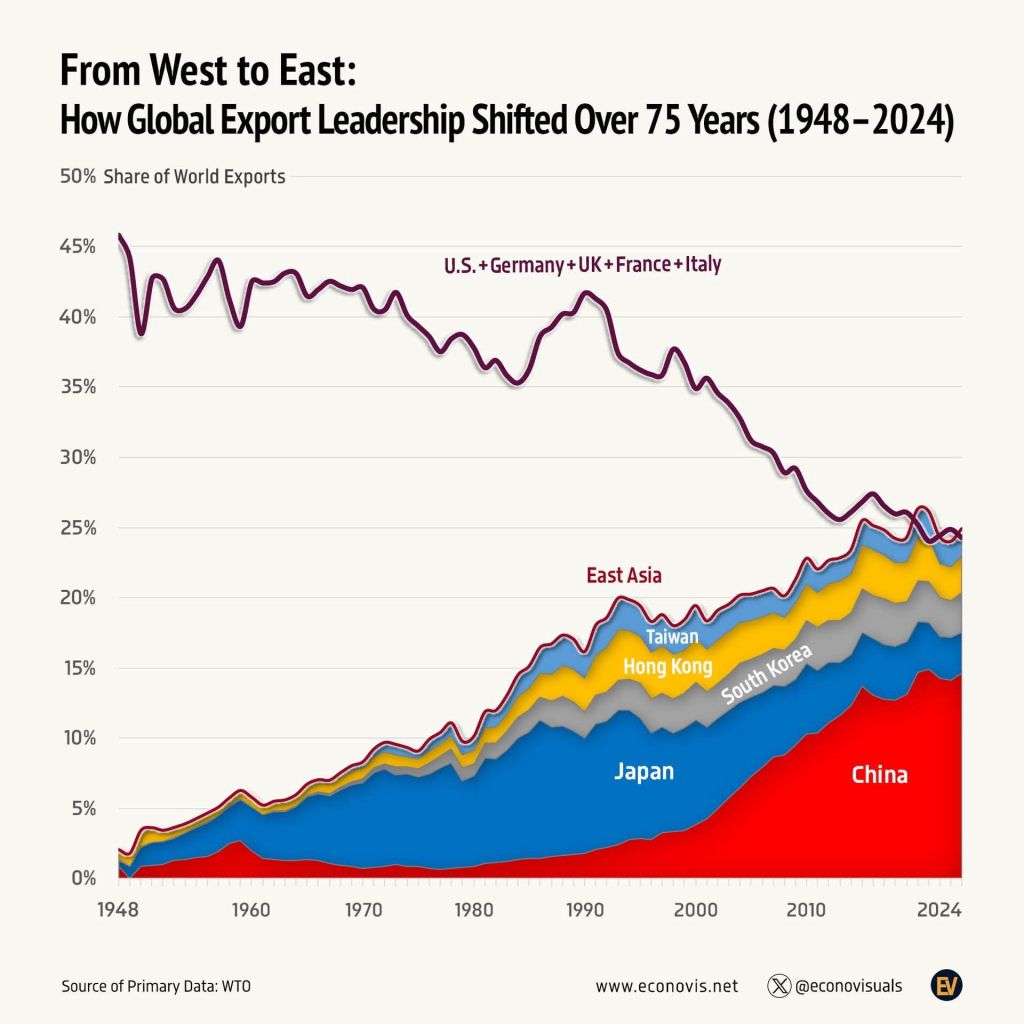
Exports
31 Aug 2025 Leave a comment
in development economics, economic history, growth miracles, international economics Tags: free trade
More On Alleged Chinese Dumping
24 Aug 2025 Leave a comment
in applied price theory, development economics, economic history, entrepreneurship, growth miracles, history of economic thought, industrial organisation, international economics, politics - USA, Public Choice, rentseeking Tags: free trade, tariffs
TweetHere’s a second note to a commenter at my Facebook page. Mr. Schlomach: Commenting on my Facebook page, you allege that China ‘dumps’ goods in the U.S. and, in doing so, “has used our love of cheap stuff to suck our country of strategically critical technology/industry.” By suggesting that your fellow Americans buy stuff simply…
More On Alleged Chinese Dumping
A Great Enrichment
06 Aug 2025 Leave a comment
in development economics, economic history, growth disasters, growth miracles, transport economics, urban economics Tags: India

The Tragedy of India’s Government-Job Prep Towns
04 Aug 2025 Leave a comment
in applied price theory, development economics, economics of bureaucracy, economics of regulation, growth disasters, growth miracles, labour economics, labour supply, occupational choice, Public Choice Tags: India
In Massive Rent-Seeking in India’s Government Job Examination System I argued that the high value of government jobs has distorted India’s entire labor market and educational system. India’s most educated young people—precisely those it needs in the workforce—are devoting years of their life cramming for government exams instead of working productively. These exams cultivate no […]
The Tragedy of India’s Government-Job Prep Towns
Expanding the Milei Miracle: Trade Liberalization
25 Jul 2025 Leave a comment
in development economics, growth disasters, growth miracles, international economics, liberalism, libertarianism Tags: Argentina, tariffs

Part I of this series celebrated Javier Milei’s amazing success, Part II pointed out that labor market liberalization is still a big challenge, while Part III noted that the tax system still needs to be fixed. This final video in the series explains the need for free trade. As noted in the video, Milei inherited […]
Expanding the Milei Miracle: Trade Liberalization
 Utopia, you are standing in it!
Recent Comments