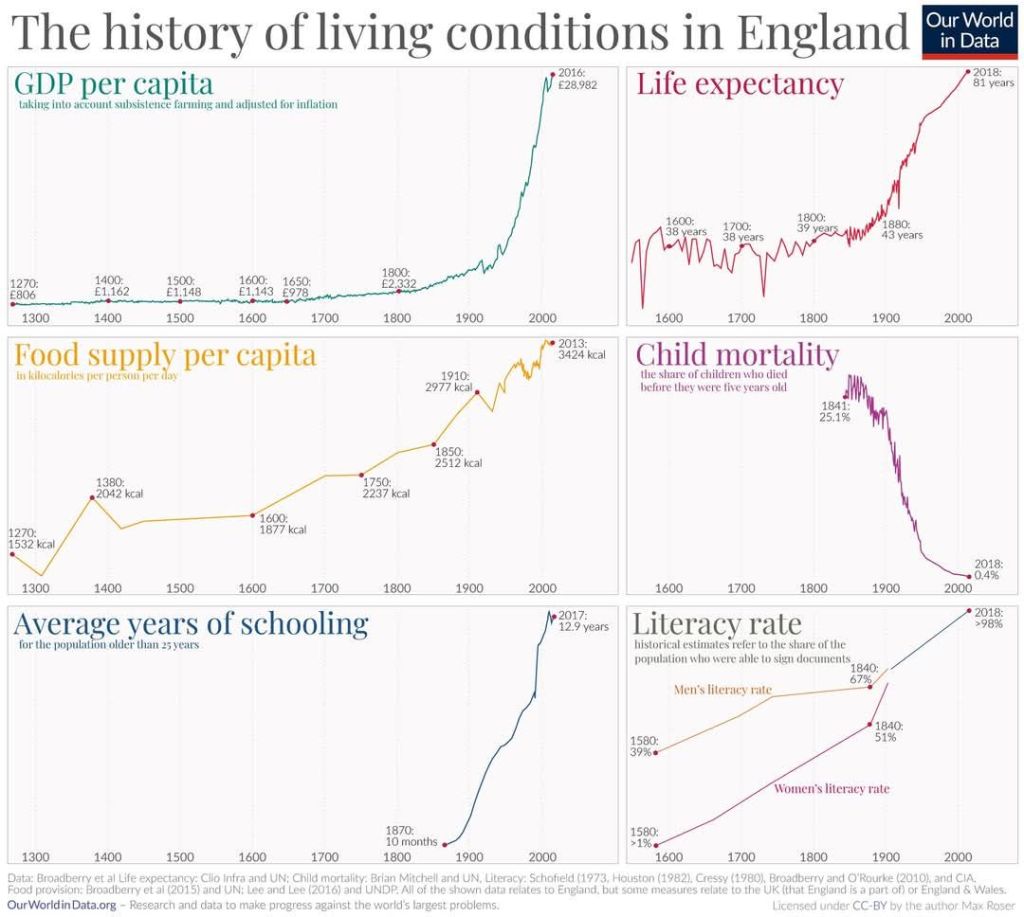
The Great Enrichment
27 Dec 2024 Leave a comment
in development economics, economic history, growth miracles
Coal Use Hits Record High in 2024 Thanks to India and China
23 Dec 2024 Leave a comment
in development economics, economics of climate change, energy economics, environmental economics, environmentalism, global warming, growth miracles Tags: China
The only takeaways from the coal use data are that countries with sensible leaders are looking to the energy needs of their citizens and that climate is too complex an issue to attribute to a gas that is 0.04% of Earth’s atmosphere.
Coal Use Hits Record High in 2024 Thanks to India and China
New Study: Achieving A ‘Net Zero’ Emissions Policy Would Have A ‘Negligible’ 0.28°C Climate Effect
14 Dec 2024 1 Comment
in applied price theory, applied welfare economics, development economics, economics of climate change, energy economics, environmental economics, environmentalism, global warming, growth miracles, politics - Australia, politics - New Zealand, politics - USA

Cost-benefit analyses affirm it would be better to abandon Net Zero policy initiatives and instead “do nothing” about greenhouse gas emissions. New research finds CO2’s largest possible climate impact is “negligible.” The cumulative expected temperature change in doubling CO2 from 400 to 800 ppm is only 0.81°C at most, and this is “certainly not cause…
New Study: Achieving A ‘Net Zero’ Emissions Policy Would Have A ‘Negligible’ 0.28°C Climate Effect
The Nobel Prize lectures in economics
12 Dec 2024 Leave a comment
in applied price theory, comparative institutional analysis, constitutional political economy, development economics, economics of crime, economics of regulation, growth disasters, growth miracles, history of economic thought, law and economics, property rights, Public Choice
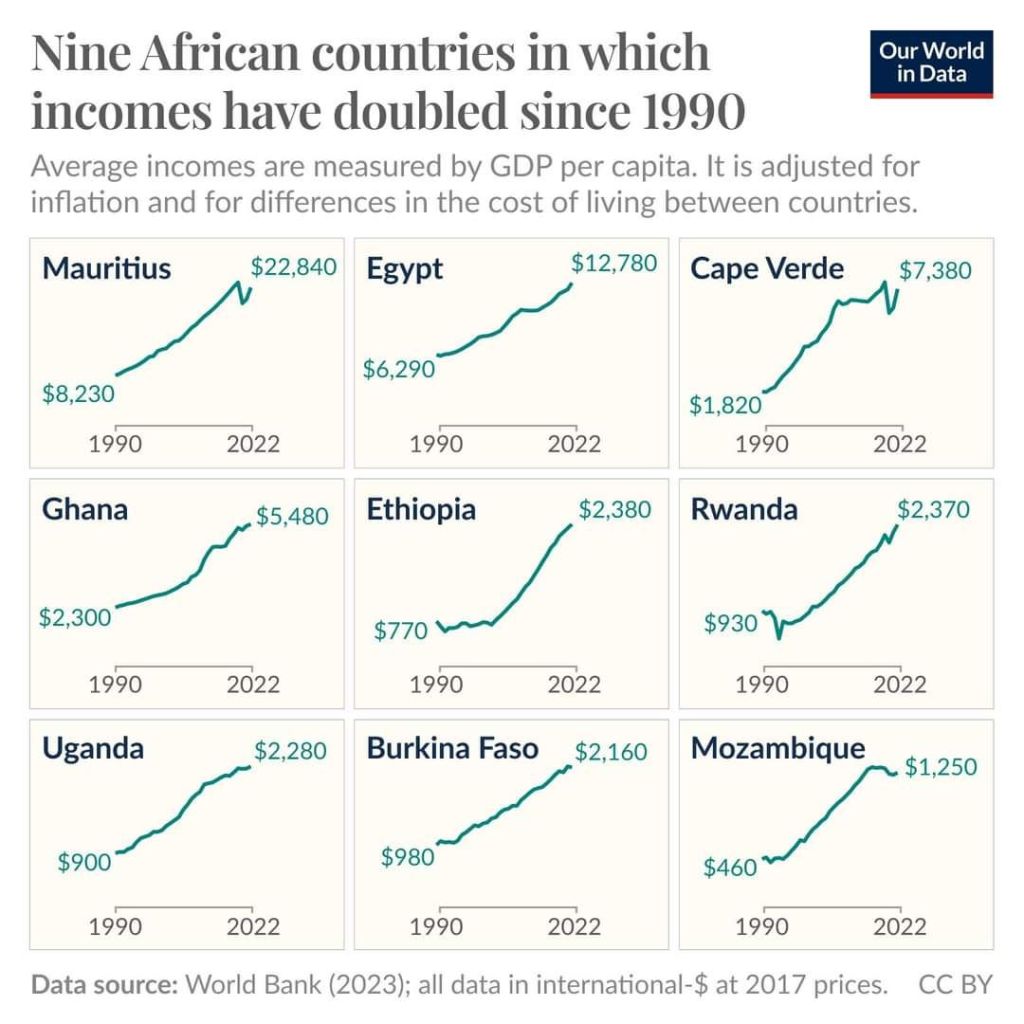
Africa
09 Dec 2024 Leave a comment
in development economics, economic history, growth disasters, growth miracles Tags: Africa
The South Korean autogolpe attempt
04 Dec 2024 Leave a comment
in development economics, economics of crime, growth miracles, law and economics Tags: South Korea
South Korean President Yoon Suk-yeol, elected in 2022, declared martial law. Given the conditions for which martial law is justified in the constitution (see below) were clearly not in place, this was a power usurpation–an autogolpe. Or an attempted one. It collapsed within about a matter of hours, with the National Assembly voting to annul […]
The South Korean autogolpe attempt
So Much for the one child policy
01 Dec 2024 Leave a comment
in development economics, economic history, economics of love and marriage, growth miracles, human capital, labour economics, labour supply, law and economics, population economics Tags: China

COP29 Leaves Poor Countries Fuming
24 Nov 2024 Leave a comment
in development economics, energy economics, environmental economics, global warming, growth disasters, growth miracles Tags: climate activists, climate alarmism

By Paul Homewood So the whole charade trundles on for another year: https://www.bbc.co.uk/news/live/c8jykpdgr08t
COP29 Leaves Poor Countries Fuming
#climateemergency
22 Nov 2024 Leave a comment
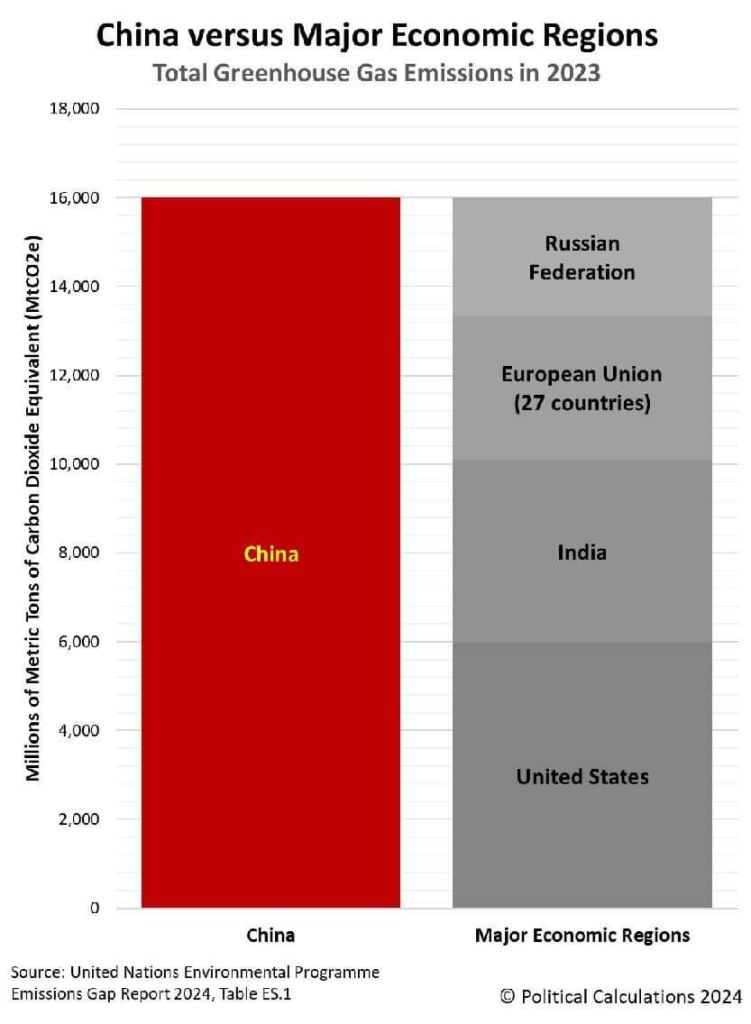
in development economics, energy economics, environmental economics, global warming, growth miracles Tags: China
DON BRASH: HOW ARE THEY GOING?
01 Nov 2024 Leave a comment
in defence economics, development economics, growth miracles, international economics, politics - New Zealand Tags: China
It is just over a year since last year’s general election, and nearly a year since the new coalition Government was formed. How are they going? When I speak to Rotary Club audiences and similar, I talk about the five big challenges facing New Zealand: 1) Our long-standing under-performance compared with other developed countries (and…
DON BRASH: HOW ARE THEY GOING?
UN report claims nations must close ‘huge emissions gap’ in new climate pledges and deliver immediate action, or 1.5°C is lost
28 Oct 2024 Leave a comment
in development economics, energy economics, environmental economics, global warming, growth miracles Tags: climate alarmism

Does anyone seriously think any of these demands will be met? They’ve all been made before and the CO2 graph continues its steady rise, while assorted predictions of climate mayhem fail to show up. Some nations have swallowed the net zero dogma but many more haven’t, making increasing use of coal, gas and oil to […]
UN report claims nations must close ‘huge emissions gap’ in new climate pledges and deliver immediate action, or 1.5°C is lost
The Puzzle of Japan’s Economy: When Productivity Gains Are Outside National Borders
26 Oct 2024 Leave a comment
in development economics, economic growth, economic history, growth miracles, labour economics, labour supply, macroeconomics, population economics Tags: economics of fertility, Japan
In total size, Japan’s economy is fourth-largest in the world, just behind Germany for third-largest. In per capita GDP, Japan is ahead of Spain and South Korea, although well behind Italy and France. With a life expectancy at birth of 84 years, ,Japan has one of the highest levels in the world. Clearly, Japan has…
The Puzzle of Japan’s Economy: When Productivity Gains Are Outside National Borders
Reflections on United Arab Emirates
23 Oct 2024 Leave a comment
in applied price theory, comparative institutional analysis, constitutional political economy, development economics, economic history, economics of bureaucracy, economics of crime, energy economics, growth miracles, income redistribution, labour economics, labour supply, law and economics, liberalism, libertarianism, property rights, Public Choice Tags: Dubai, economics of immigration

On my way to India, I connected through Abu Dhabi, capital city of the United Arab Emirates (UAE). During my one-day layover, I toured not only Abu Dhabi, but its more famous sister-city, Dubai. Here are my main thoughts.In Dubai, these are not empty words.Per-capita, UAE is the most amazing country I’ve ever seen. With…
Reflections on United Arab Emirates
Reflections on India
16 Oct 2024 1 Comment
in applied price theory, comparative institutional analysis, constitutional political economy, development economics, economic growth, economic history, economics of bureaucracy, growth disasters, growth miracles, history of economic thought, income redistribution, law and economics, macroeconomics, Marxist economics, property rights, Public Choice, public economics, regulation, rentseeking Tags: economics of colonialism, India

I’m back from my first trip to India, where I visited Mumbai, Delhi, Agra, and Amritsar. I enjoyed fine company in all four cities. In Mumbai, my new friend Sachin Aggarwal, head of the local EconTalk Club, rolled out the red carpet — and ACX Mumbai joined the festivities. (Thank you, Scott Alexander, for creating…
Reflections on India
Acemoglu, Johnson and Robinson Win Nobel Prize for Institutions and Prosperity
15 Oct 2024 Leave a comment
in applied price theory, comparative institutional analysis, constitutional political economy, development economics, economic growth, economic history, economics of bureaucracy, economics of regulation, growth disasters, growth miracles, history of economic thought, income redistribution, macroeconomics, Public Choice, public economics, rentseeking
The Nobel prize goes to Daron Acemoglu, Simon Johnson and James Robinson for their work on institutions, prosperity, and economic growth. Here is a key piece summarizing their work: Institutions as a Fundamental Cause of Long-Run Growth. This paper develops the empirical and theoretical case that differences in economic institutions are the fundamental cause of […]
Acemoglu, Johnson and Robinson Win Nobel Prize for Institutions and Prosperity
 Utopia, you are standing in it!
Recent Comments