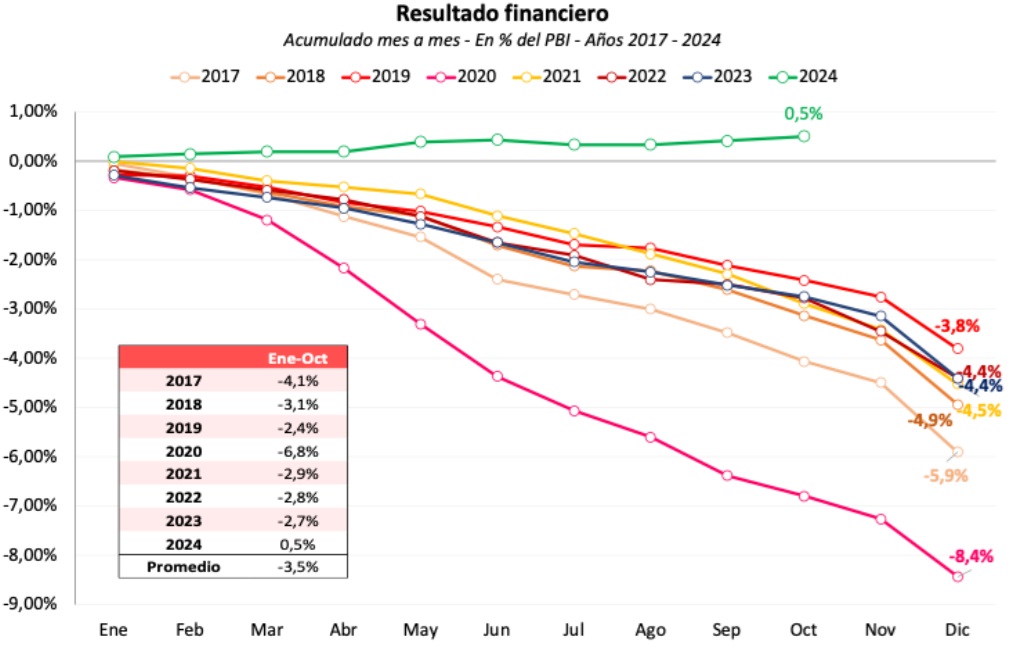
It’s easy to mock economists. Consider the supposedly prestigious left-leaning academics who asserted in 2021 that Biden’s agenda was not inflationary. At the risk of understatement, they wound up with egg on their faces.* Today, we’re going to look at another example of leftist economists making fools of themselves. It involves Argentina, where President Javier […]
I am sad to hear about the passing of Manmohan Singh at age 92. Singh was perhaps the most influential Indian policymaker in the last five decades. An Oxbridge educated trade economist, he became India’s most important technocrat in the 1980s and 1990s – occupying every top position in economic policy – finance secretary; deputy […]
The only takeaways from the coal use data are that countries with sensible leaders are looking to the energy needs of their citizens and that climate is too complex an issue to attribute to a gas that is 0.04% of Earth’s atmosphere.
Cost-benefit analyses affirm it would be better to abandon Net Zero policy initiatives and instead “do nothing” about greenhouse gas emissions. New research finds CO2’s largest possible climate impact is “negligible.” The cumulative expected temperature change in doubling CO2 from 400 to 800 ppm is only 0.81°C at most, and this is “certainly not cause…
South Korean President Yoon Suk-yeol, elected in 2022, declared martial law. Given the conditions for which martial law is justified in the constitution (see below) were clearly not in place, this was a power usurpation–an autogolpe. Or an attempted one. It collapsed within about a matter of hours, with the National Assembly voting to annul […]
It is just over a year since last year’s general election, and nearly a year since the new coalition Government was formed. How are they going? When I speak to Rotary Club audiences and similar, I talk about the five big challenges facing New Zealand: 1) Our long-standing under-performance compared with other developed countries (and…
Does anyone seriously think any of these demands will be met? They’ve all been made before and the CO2 graph continues its steady rise, while assorted predictions of climate mayhem fail to show up. Some nations have swallowed the net zero dogma but many more haven’t, making increasing use of coal, gas and oil to […]
In total size, Japan’s economy is fourth-largest in the world, just behind Germany for third-largest. In per capita GDP, Japan is ahead of Spain and South Korea, although well behind Italy and France. With a life expectancy at birth of 84 years, ,Japan has one of the highest levels in the world. Clearly, Japan has…
Why Evolution is True is a blog written by Jerry Coyne, centered on evolution and biology but also dealing with diverse topics like politics, culture, and cats.
In Hume’s spirit, I will attempt to serve as an ambassador from my world of economics, and help in “finding topics of conversation fit for the entertainment of rational creatures.”





Recent Comments