In total size, Japan’s economy is fourth-largest in the world, just behind Germany for third-largest. In per capita GDP, Japan is ahead of Spain and South Korea, although well behind Italy and France. With a life expectancy at birth of 84 years, ,Japan has one of the highest levels in the world. Clearly, Japan has…
The Puzzle of Japan’s Economy: When Productivity Gains Are Outside National Borders
The Puzzle of Japan’s Economy: When Productivity Gains Are Outside National Borders
26 Oct 2024 Leave a comment
in development economics, economic growth, economic history, growth miracles, labour economics, labour supply, macroeconomics, population economics Tags: economics of fertility, Japan
Slides Against Sohrab Ahmari
25 Oct 2024 Leave a comment
in development economics, human capital, labour economics, labour supply, poverty and inequality Tags: economics of immigration

Opening statements at my Steamboat Institute debate on open borders versus Sohrab Ahmari were so brief that I failed to even finish my slideshow. Since the audience didn’t get to see the whole thing, I’m sharing it here. Remember: This is the only immigration debate I’ve ever done where the resolution was explicitly about “benefit…
Slides Against Sohrab Ahmari
Reflections on United Arab Emirates
23 Oct 2024 Leave a comment
in applied price theory, comparative institutional analysis, constitutional political economy, development economics, economic history, economics of bureaucracy, economics of crime, energy economics, growth miracles, income redistribution, labour economics, labour supply, law and economics, liberalism, libertarianism, property rights, Public Choice Tags: Dubai, economics of immigration

On my way to India, I connected through Abu Dhabi, capital city of the United Arab Emirates (UAE). During my one-day layover, I toured not only Abu Dhabi, but its more famous sister-city, Dubai. Here are my main thoughts.In Dubai, these are not empty words.Per-capita, UAE is the most amazing country I’ve ever seen. With…
Reflections on United Arab Emirates
AFTERMATH: LIFE IN THE FALLOUT OF THE THIRD REICH 1945-1955 by Harald Jahner
22 Oct 2024 Leave a comment
in defence economics, development economics, economic history, war and peace Tags: Nazi Germany, World War II

(Berlin at the end of World War II) Today Germany finds itself as the strongest economic power in Europe, in addition to possessing major military influence due to the Russian invasion of Ukraine. Its influence in Europe is strong and many of the goals of the Nazi regime during World War II have been achieved […]
AFTERMATH: LIFE IN THE FALLOUT OF THE THIRD REICH 1945-1955 by Harald Jahner
‘Gaps And Inconsistencies’: Up To $41 Billion In World Bank Climate Handouts Unaccounted For, New Report Finds
21 Oct 2024 Leave a comment
in development economics, economics of bureaucracy, energy economics, environmental economics, global warming, Public Choice
Up to $41 billion of the funds distributed to climate causes by the World Bank between 2017 and 2023 are unaccounted for due to poor accounting standards, according to an audit from Oxfam International published Thursday.
‘Gaps And Inconsistencies’: Up To $41 Billion In World Bank Climate Handouts Unaccounted For, New Report Finds
Reflections on India
16 Oct 2024 1 Comment
in applied price theory, comparative institutional analysis, constitutional political economy, development economics, economic growth, economic history, economics of bureaucracy, growth disasters, growth miracles, history of economic thought, income redistribution, law and economics, macroeconomics, Marxist economics, property rights, Public Choice, public economics, regulation, rentseeking Tags: economics of colonialism, India

I’m back from my first trip to India, where I visited Mumbai, Delhi, Agra, and Amritsar. I enjoyed fine company in all four cities. In Mumbai, my new friend Sachin Aggarwal, head of the local EconTalk Club, rolled out the red carpet — and ACX Mumbai joined the festivities. (Thank you, Scott Alexander, for creating…
Reflections on India
Acemoglu, Johnson and Robinson Win Nobel Prize for Institutions and Prosperity
15 Oct 2024 Leave a comment
in applied price theory, comparative institutional analysis, constitutional political economy, development economics, economic growth, economic history, economics of bureaucracy, economics of regulation, growth disasters, growth miracles, history of economic thought, income redistribution, macroeconomics, Public Choice, public economics, rentseeking
The Nobel prize goes to Daron Acemoglu, Simon Johnson and James Robinson for their work on institutions, prosperity, and economic growth. Here is a key piece summarizing their work: Institutions as a Fundamental Cause of Long-Run Growth. This paper develops the empirical and theoretical case that differences in economic institutions are the fundamental cause of […]
Acemoglu, Johnson and Robinson Win Nobel Prize for Institutions and Prosperity
A Nobel for Acemoglu, Johnson, and Robinson: Institutions and Prosperity
15 Oct 2024 Leave a comment
in applied price theory, comparative institutional analysis, constitutional political economy, development economics, economic history, growth disasters, growth miracles, history of economic thought
The Sveriges Riksbank Prize in Economic Sciences in Memory of Alfred Nobel 2024 has been awarded to Daron Acemoglu, Simon Johnson and James Robinson “for studies of how institutions are formed and affect prosperity.” Each year, the Nobel Committee helpfully publishes both a “Popular information” overview of of the award and a “Scientific Background” essay that goes into greater depth.…
A Nobel for Acemoglu, Johnson, and Robinson: Institutions and Prosperity
The Great Leap Forward
03 Oct 2024 Leave a comment
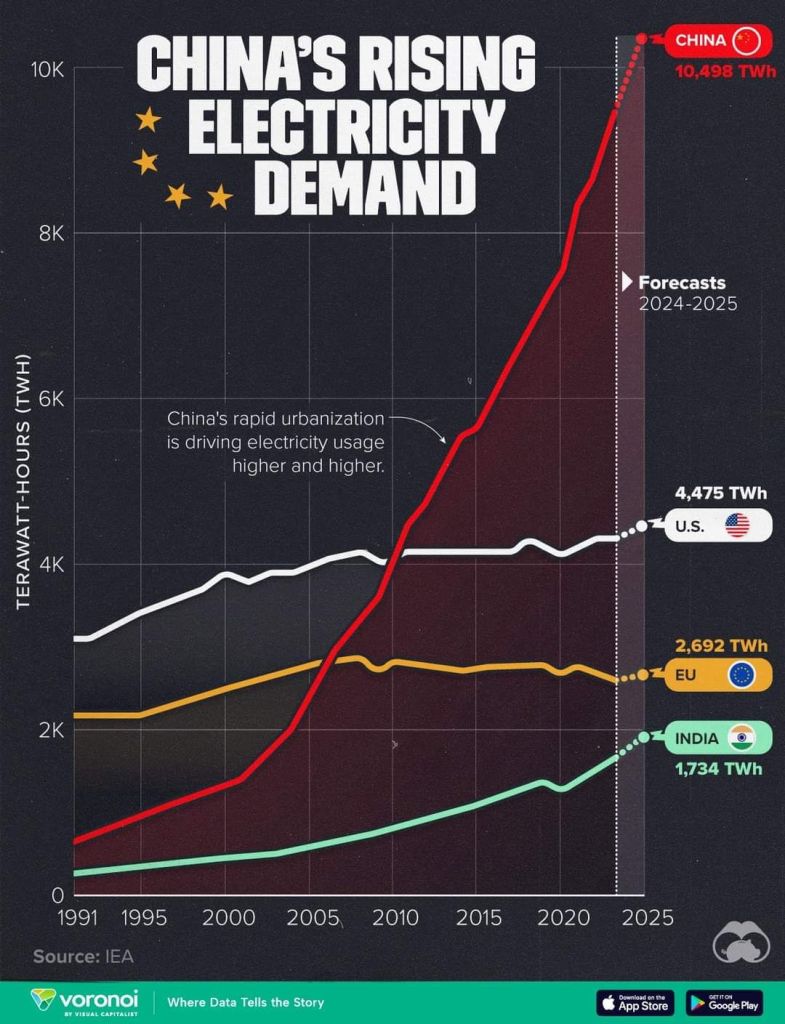
in development economics, economic history, energy economics, growth miracles Tags: China
Fake Electricity Rejected: Power Hungry Indians Ditch Pointless Solar Schemes
02 Oct 2024 1 Comment
in development economics, energy economics, environmental economics, global warming Tags: India. solar power, wind power
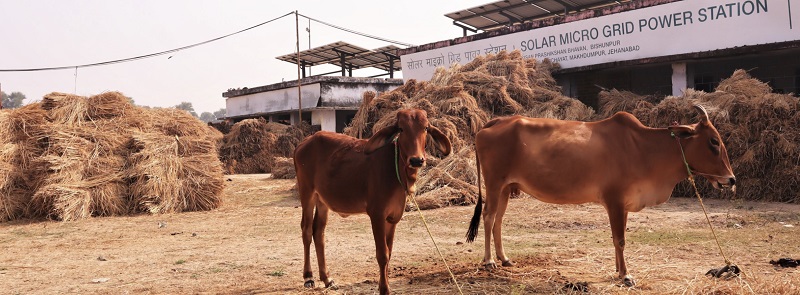
Only wealthy Westerners have the luxury of pretending to get their power from sunshine and breezes. Elsewhere, there are billions scrambling to have power delivered reliably and affordably, as if their lives and economic futures depend upon it. Which they absolutely do. For as long as cynical NGOs keep peddling ridiculously expensive solar panels – […]
Fake Electricity Rejected: Power Hungry Indians Ditch Pointless Solar Schemes
The industrial revolution
01 Oct 2024 Leave a comment
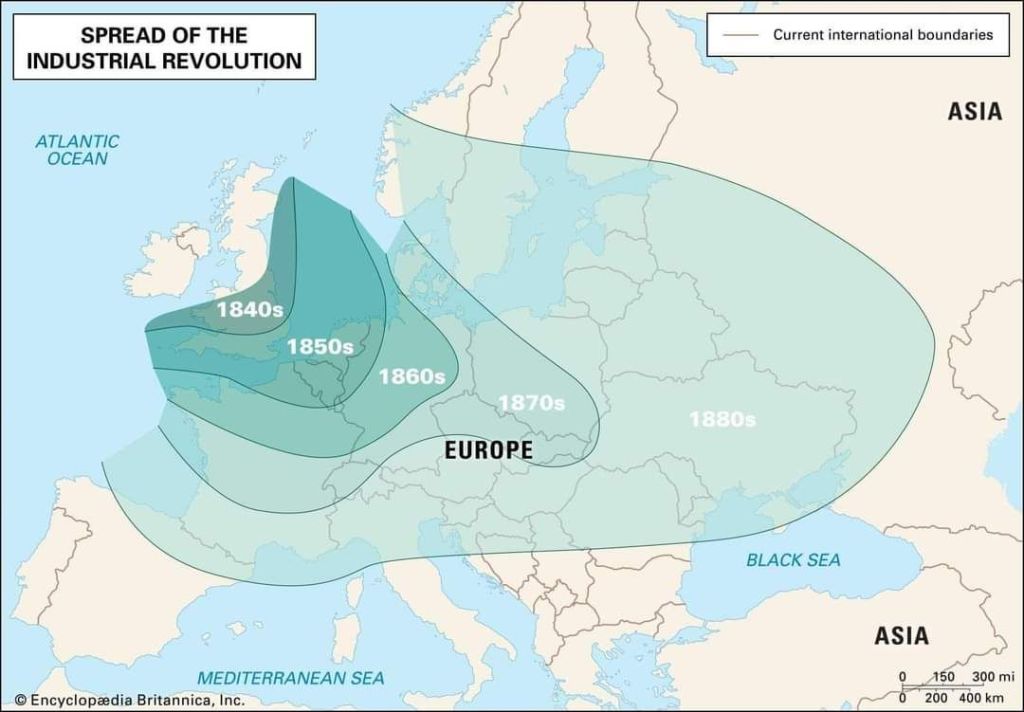
in development economics, economic history, growth miracles Tags: industrial revolution, The Great Enrichment
Historian Anthony Comegna reviews Marc-William Palen’s book Pax Economica: Left-Wing Visions of a Free Trade World
23 Sep 2024 Leave a comment
in applied price theory, development economics, history of economic thought, international economics Tags: economics of colonialism, free trade, tariffs
See When Leftists Were Free Traders: In Pax Economica, historian Marc-William Palen chronicles the left-wing history of free trade. From Reason magazine.Dr. Marc-William Palen is a historian at the University of Exeter. His Ph. D. is from The University of Texas.The review is very good. Here is the Amazon link for the book: Pax Economica:…
Historian Anthony Comegna reviews Marc-William Palen’s book Pax Economica: Left-Wing Visions of a Free Trade World
Treaty of Waitangi legal “experts” have misunderstood its economic rationale – and endangered national prosperity
20 Sep 2024 Leave a comment
in comparative institutional analysis, constitutional political economy, development economics, economic history, history of economic thought, liberalism, politics - New Zealand, Public Choice Tags: constitutional law
Rob MacCulloch writes – The underlying aim of the Treaty of Waitangi, at least in economic terms, was to promote a higher standard of living for Māori and non-Māori alike. This article’s purpose is to argue how its words were unambiguously designed to achieve that purpose, but have since been hijacked by political operatives and NZ’s legal […]
Treaty of Waitangi legal “experts” have misunderstood its economic rationale – and endangered national prosperity
It Happened Again! The New York Times Writes about Venezuela’s Collapse and Fails to Mention Socialism
16 Sep 2024 Leave a comment
in development economics, economic growth, economic history, growth disasters, history of economic thought, income redistribution, liberalism, macroeconomics, Marxist economics, politics - USA, Public Choice Tags: regressive left, useful idiot, Venezuela
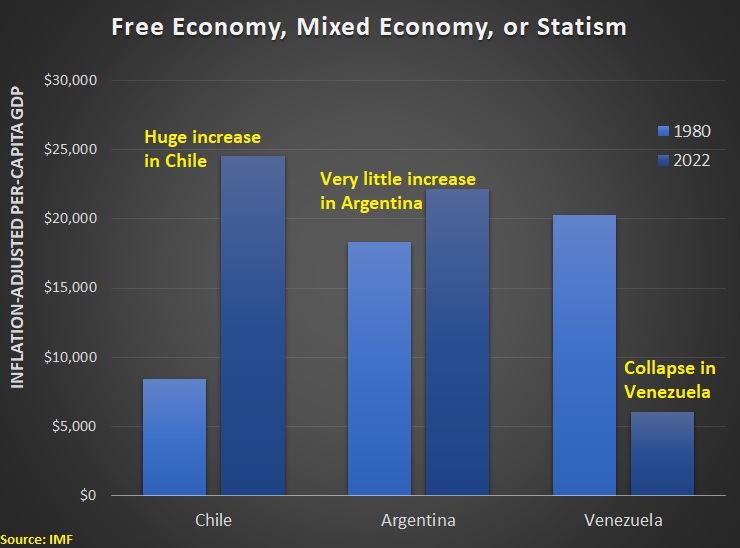
I sometimes make the theoretical case against socialism. Usually, this means exposing the flaws of the core components of the socialist ideology. Government ownership of the means of production is a recipe for resource misallocation. Central planning has a miserable track record of failure because consumer preferences are ignored. Price controls distort incentives to make […]
It Happened Again! The New York Times Writes about Venezuela’s Collapse and Fails to Mention Socialism
Friedman vs Stiglitz: Estonia and Poland vs. Argentina and Venezuela
06 Sep 2024 Leave a comment
in applied price theory, comparative institutional analysis, development economics, economic history, economics of bureaucracy, entrepreneurship, growth disasters, growth miracles, history of economic thought, income redistribution, industrial organisation, international economics, labour economics, law and economics, liberalism, Marxist economics, poverty and inequality, property rights, Public Choice, rentseeking, survivor principle Tags: Argentina, Chile, Poland, regressive left, Venezuela
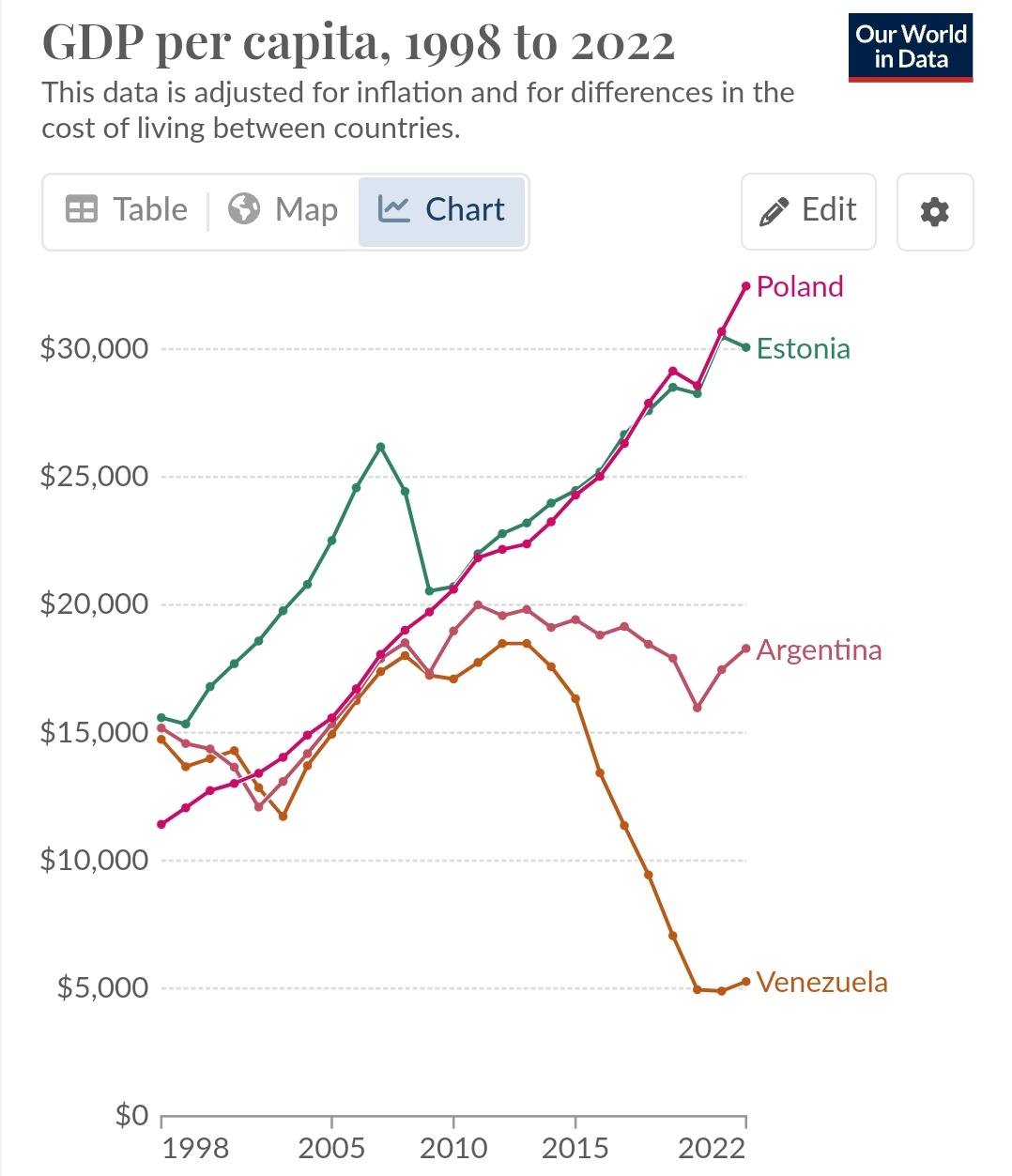
About 10 days ago, i showed that Milton Friedman was a much better economist than Joseph Stiglitz by comparing Chile (which followed Friedman’s ideas) and Venezuela (which followed Stiglitz’s ideas). It was a slam-dunk win for Friedman. Chile started poor and has become relatively prosperous. The opposite happened in Venezuela, which started relatively prosperous and […]
Friedman vs Stiglitz: Estonia and Poland vs. Argentina and Venezuela
 Utopia, you are standing in it!
Recent Comments