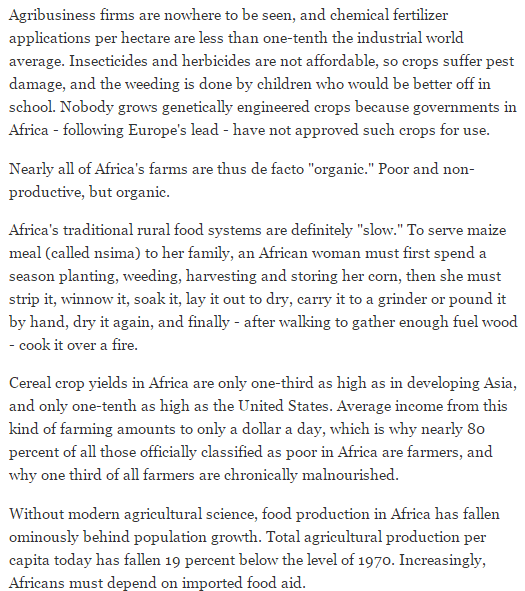
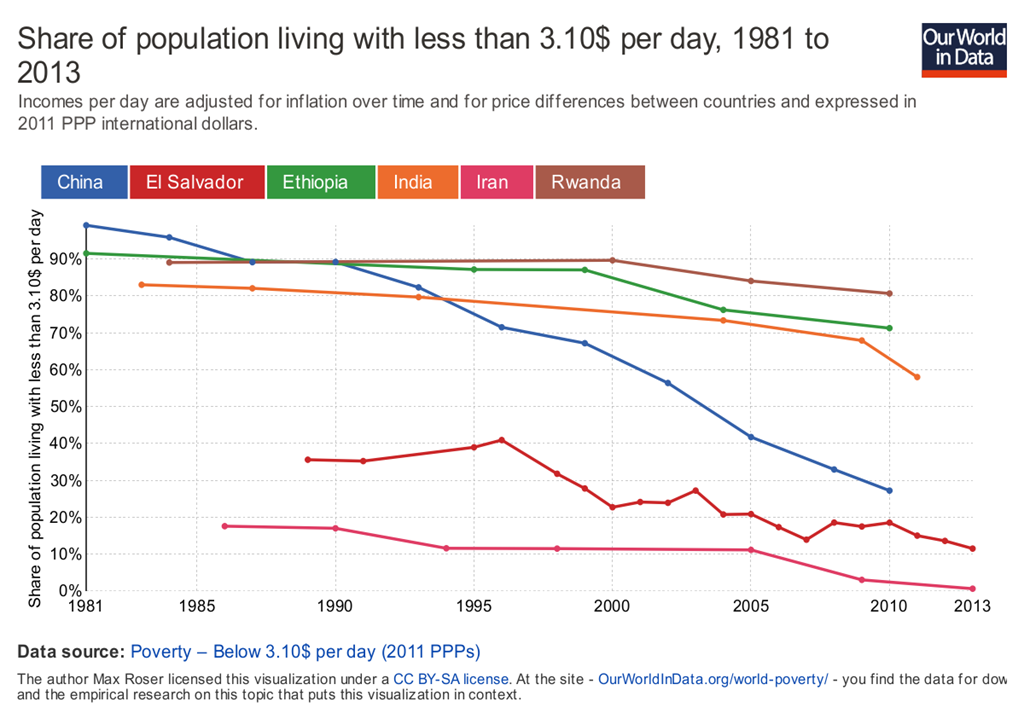
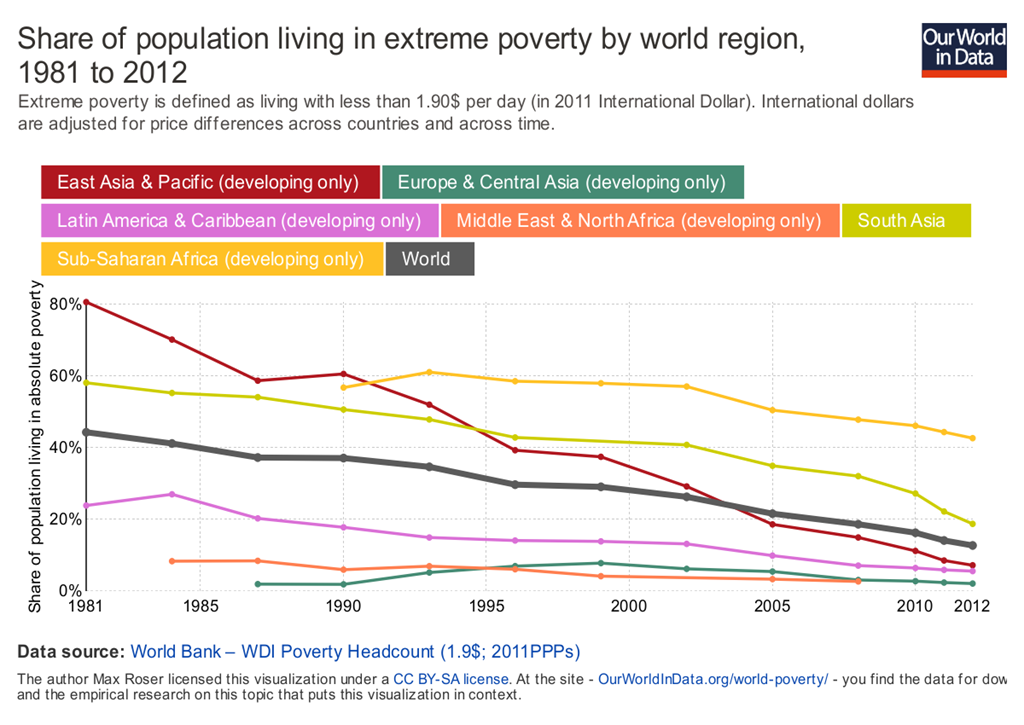
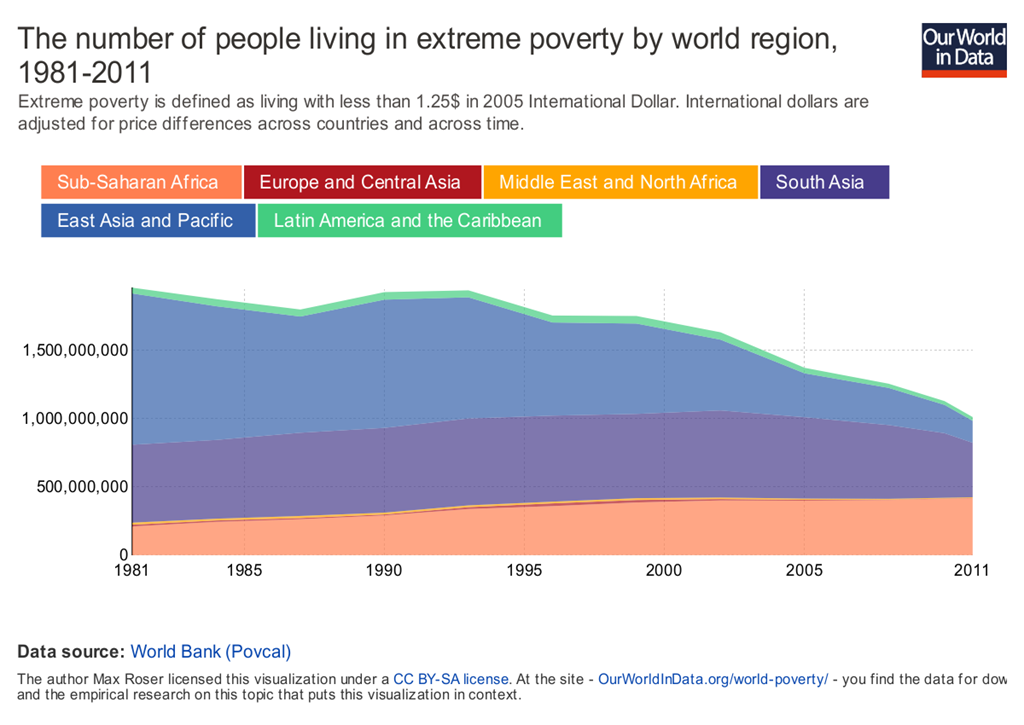
35 Years of the World Economy
04 Jul 2016 Leave a comment
in development economics, economic growth, economic history, growth disasters, growth miracles, macroeconomics Tags: The Great Escape, The Great Fact
Without one-child policy, China still might not see baby boom, gender balance
03 Jul 2016 Leave a comment
in development economics, economic history, population economics Tags: China, economics of fertility
.@GreenpeaceNZ picks & chooses its scientific consensus #GMOs #globalwarming
02 Jul 2016 Leave a comment
in development economics, environmental economics, global warming, health economics, politics - New Zealand, Public Choice, rentseeking Tags: activists, agricultural economics, antimarket bias, climate alarmism, do gooders, expressive voting, GMOs, green rent seeking, Greenpeace, Twitter left
For a generation, a campaign by the green movement against the growing of genetically modified crops has held sway across Europe. These foodstuffs are a threat to health, the environment and the small independent farmer, NGOs have argued.
As result, virtually no GM crops have been grown on Europe’s farms for the past 25 years. Yet hard evidence to support what is, in all but name, a ban on these vilified forms of plant life is thin on the ground. In fact, most scientific reports have indicated that they are generally safe, both to humans and the environment.
This point was endorsed last week when a 20-strong committee of experts from the US National Academies of Science announced the results of its trawl of three decades of scientific studies for “persuasive evidence of adverse health effects directly attributable to consumption of foods derived from genetically engineered crops”. It found none.
Instead the group uncovered evidence that GM crops have the potential to bestow considerable health benefits. An example is provided by golden rice, a genetically modified rice that contains beta carotene, a source of vitamin A. Its use could save the lives of hundreds of thousands of children who suffer from vitamin A deficiency in the third world, say scientists.
Source: The Observer view on the GM crops debate | Opinion | The Guardian
Scientists and governments around the world overwhelmingly agree that climate change is real, is largely human-induced and needs urgent action to prevent.
There is, in fact, a broad and overwhelming scientific consensus that climate change is occurring, is caused in large part by human activities (such as burning fossil fuels), and if left un-checked will likely have disastrous consequences.
Furthermore, there is solid scientific evidence that we should act now on climate change – and this is reflected in the statements by these definitive scientific authorities.
The contribution of China to The Great Escape from extreme poverty
02 Jul 2016 Leave a comment
in development economics, economic history, growth disasters, growth miracles
Poverty, Inc. | Official Trailer
02 Jul 2016 Leave a comment
in development economics, economic history, growth disasters, growth miracles Tags: The Great Escape
@Greenpeace thugs vandalise golden rice trial in #Pinas
02 Jul 2016 Leave a comment
in development economics, economics, environmental economics, environmentalism, health economics Tags: Anti-Science left, GMOs, Greenpeace, Philippines, terrorism
Deirdre McCloskey: What are the biggest misunderstandings about capitalism?
30 Jun 2016 Leave a comment
in applied price theory, comparative institutional analysis, constitutional political economy, development economics, economic history, entrepreneurship Tags: capitalism and freedom
World, high income, middle income and low income country fertility rates since 1950
28 Jun 2016 Leave a comment
in development economics, population economics Tags: demographic transition, economics of fertility, The Great Escape
Source: United Nations
The West Wing: “In This White House” (2000)
28 Jun 2016 Leave a comment
in development economics, economics of media and culture, growth disasters, growth miracles, health economics, Public Choice, public economics Tags: drug prices, intellectual monopolies, patents and copyrights
Global extreme poverty since @jeremycorbyn @BernieSanders were elected to office to fight for socialism
25 Jun 2016 Leave a comment

Adam Smith and the Follies of Central Planning
20 Jun 2016 Leave a comment
in Adam Smith, applied price theory, applied welfare economics, Austrian economics, comparative institutional analysis, constitutional political economy, development economics, history of economic thought, Public Choice Tags: central planning, The fatal conceit, The pretence to knowledge
Nighttime Satellite Map of Syria Before and After the Start of the Civil War
18 Jun 2016 Leave a comment
Neo-colonial @oxfamnz continues to bully small island states
16 Jun 2016 Leave a comment
in applied price theory, development economics, environmental economics, global warming, international economic law, international economics, public economics
Oxfam joins others on the reactionary left in seeking to bully former colonies over their economic policies, in particular, their tax policies that promote tax havens.

The Cayman Islands is a British overseas territory that chooses to stay British with limited self-government. If the British were to start bullying it over its tax haven and offshore financial centre policies, it would immediately seek independence.
This attempt by former colonial masters to bully small countries to toe their line on tax policies is not done in any way for the benefit of these former colonies and their economic development. It is old-fashioned imperialism with a new motivation, tax imperialism. The aim is to prevent capital flight and the erosion of the business tax base in developed countries.
This is a seething hypocrisy given that Oxfam was all for #TPPANoWay. It is OK to go your own way on tariffs, intellectual property and investment and other economic regulations but not taxes. Countries have a tariff sovereignty but not a tax sovereignty.
This is a self-serving neo-colonial hypocrisy. The sovereignty arguments for #TPPANoWay are identical to those for the right of countries to act as tax havens. Identical. Tariffs deny other countries export markets; tax havens deny other countries tax revenue.
Small island states were left-wing and environmentalist heroes on climate change at the most recent conference on global warming in Paris but are villains regarding tax havens. In both cases, these small countries are exercising their sovereignty regarding their foreign policies and economic policies.
Oxfam believes that the democratic rights of former colonies do not extend to shaping their own economic policies. Oxfam wants them to be put on a neo-colonial leash.

Recent Comments