Celebrating humanity's flourishing through the spread of capitalism and the rule of law
28 Apr 2014 Leave a comment
in development economics, growth miracles Tags: Robert E. Lucas
20 Apr 2014 Leave a comment
in development economics, global financial crisis (GFC), growth miracles, macroeconomics
15 Apr 2014 Leave a comment
in development economics, growth miracles, Milton Friedman, Murray Rothbard Tags: action bias, Hong Kong, illusion of competence, John Cowperthwaite, Milton Friedman
The Colonial Office sent John Cowperthwaite to Hong Kong in 1945 to serve eventually as its financial secretary from 1961.
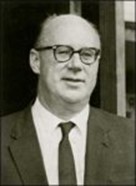
This Scotsman was very much a disciple of Adam Smith. In his first budget speech, in 1961, he said:
In the long run, the aggregate of decisions of individual businessmen, exercising individual judgment in a free economy, even if often mistaken, is less likely to do harm than the centralised decisions of a government, and certainly the harm is likely to be counteracted faster.
In his decade as financial secretary, real wages rose by 50 % and the share of the population in acute poverty fell from 50% to 15%. Milton Friedman met Cowperthwaite in 1963 and asked about the lack of economic statistics. Cowperthwaite answered:
“If I let them compute those statistics, they’ll want to use them for planning.” Friedman thought “How wise”.
Murray Rothbard got into a debate with George Stigler in the early 1960s about the dangers of collecting statistics. Rothbard argued that:
The individual consumer, in his daily rounds, has little need of statistics; through advertising, through the information of friends, and through his own experience, he finds out what is going on in the markets around him. The same is true of the business firm.
The businessman must also size up his particular market, determine the prices he has to pay for what he buys and charge for what he sells, engage in cost accounting to estimate his costs, and so on.
But none of this activity is really dependent upon the omnium gatherum of statistical facts about the economy ingested by the federal government. The businessman, like the consumer, knows and learns about his particular market through his daily experience.
… Statistics are the eyes and ears of the bureaucrat, the politician, the socialistic reformer. Only by statistics can they know, or at least have any idea about, what is going on in the economy.
… Cut off those eyes and ears, destroy those crucial guidelines to knowledge, and the whole threat of government intervention is almost completely eliminated
Cowperthwaite refused to collect economic statistics
for fear that I might be forced to do something about them
This action bias is a common bias of bureaucracies. Peter Lilley in the UK said:
…when there is a problem – a perceived political problem – officials come up with a range of options which excludes one option. I observed this when I was a humble PPS at the Department of Environment and suggested that we always ought to include this option on the list and it became known as “Lilley’s option” and that was do nothing.
Other psychological biases of bureaucracies are motivated reasoning, the focusing illusion, the affect heuristic and the illusion of competence. When Friedman asked him in 1963 to explain the mechanism which kept the Hong Kong dollar pegged to the pound, Cowperthwaite said that the Hong Kong & Shanghai Bank (through which the currency peg was operated) did not understand it:
Better they shouldn’t. They would mess it up.
His 2008 Guardian obituary noted that when asked what was the key thing that poor countries should do, Cowperthwaite once remarked:
They should abolish the office of national statistics.
The ideal faceless bureaucrat, Cowperthwaite said of his record:
I did very little. All I did was to try to prevent some of the things that might undo it.
.
13 Apr 2014 Leave a comment
in Austrian economics, constitutional political economy, development economics, entrepreneurship, law and economics, liberalism, Public Choice Tags: collapse of communism
the collapse of Communism has taught political economists several things:
first, that economic policy is always nested within a set of institutions—that there are economic/financial, political/legal, and social/cultural issues, which all must be taken into account;
second, that leadership matters throughout the transition process;
and third, that historical contingency can either work in your favour or cut against the successful transition.
And I would add a fourth one: that political power corrupts even the most informed and idealistic of individuals, such that you cannot count on ideological alignment to win the day. You have instead a small window of opportunity in which ideological alignment can be utilized to establish institutions that make it difficult for even bad men to do much harm.
In other words, the goal of our political/legal institutions should not be to ensure that the best and the brightest can govern, but instead that if the worst get in power, they can do little damage. This is the idea of a “robust political economy”.
13 Apr 2014 Leave a comment
in constitutional political economy, development economics, economics, F.A. Hayek, politics, Public Choice Tags: Daron Acemoglu, Hayek, Road to Serfdom
Gordon Tullock used Sweden to argue that the problem with The Road to Serfdom was:
“that it offered predictions which turned out to be false. The steady advance of government in places such as Sweden did not lead to any loss of non-economic freedoms.”
But was socialism good for democratic consolidations in the post-colonial third world? Was that not a better hunting ground for Hayek’s fears?
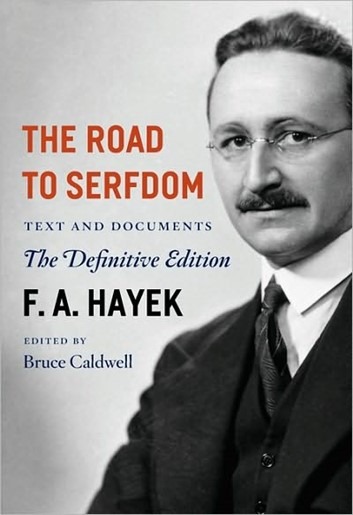
The people and parties, very often with a socialist hew, who won the election after the colonial government left town are not always all that keen to give up the reins of power.
Remember Huntington’s Two Turnover Test: when a nation moves from an emergent to a stable democracy, it must undergo two democratic and peaceful turnovers of ruling parties.
After an emerging democracy’s first turnover, the new administration often reverts to authoritarian rule. Russia under Yeltsin and Putin are examples.
Would Singapore be an example of central planning and state ownership leading to serfdom and a one-party state?
The state controls and owns firms that comprise at least 60% of the GDP through government entities. The vast majority (more than 80%) of Singaporeans live in public housing;
Although initially styling itself an anti-Communist and Social Democratic, the People Action Party (PAP) was expelled from the Socialist International in 1976 because it suppressed dissent and jailed opposition leaders. Hayek would be vindicated?!
The Index of Economic Freedom says that Singapore is a nominally democratic state ruled by the PAP since the country became independent in 1965, and that certain rights, such as freedom of assembly and freedom of speech, remain restricted
The Freedom House 2010 country report notes that Singapore is not an electoral democracy despite elections free of irregularities and mentions that all domestic newspapers, radio stations, and television channels are owned by government-linked companies, which limits free speech. The PAP has used the Government’s extensive powers to place formidable obstacles in the path of political opponents.
Daron Acemoglu has written on the role of institutions on post-colonial development in his why nations fail research agenda.
The same British colonists established different institutions in very different parts of the world:
Acemoglu has written on Singapore as a stable non-democracy that can persist without significant repression.
Singapore was able through industrialization in the post-colonial period to ease social tensions and thus eliminate the need for democratic consolidation and also the need for repression. China’s ruling elite has the same current goal.
Why has Singapore not democratized? Acemoglu suggests is it is because Singapore is a very equal society. There is no traditional wealthy landed elite and the economy relies on external capital and businesses.
Most people appear to be relatively happy with the status-quo, at least not so unhappy that they want to engage in serious, and potentially costly, collective action to induce a major change in political institutions.
All and all, political economy has come on in leaps and bounds since 1944. Hayek should be judged against the other predictions of his times. Few socialist countries in the post-colonial Third World stayed democratic for long.
12 Apr 2014 Leave a comment
in development economics, law and economics, property rights Tags: Australia, colonisation, property rights, rhino
Doug Allen in The Rhino’s Horn explains why owners sometimes reduce the value of certain attributes of their property because this reduces the incentives for others to steal it. These attributes may be of little value to you but of much greater value to those seeking to steal it.
The rhino’s horn is cut off to stop poaching. The horn is a mass of hair so removing it is painless. This is much cheaper than hiring bodyguards for every Rhino.

My garage door was tagged last year. I do not have this small tag cleaned-off because it would just invite another tagger to have a go.
Allen argued that it is cheaper to reduce the value of that part of the asset that others want to steal than spend a fortune defending it against potential theft. With regard to Australia, he said:
The country had, ironically, been discovered and claimed first by the Dutch, who at the time were a significant force in the region.
Starting in 1772, the French began their first claim to the territory. Although ignored by the British, the French sent expeditions in 1785 and 1792, making significant explorations of southern Australia and Tasmania. The French did not cease these efforts until the 1820s.
Australia was first colonised in 1788 as a penal colony. Very expensive to do, but it did fill-up the only valuable part – Sydney harbour – with 60,000 mainly riffraff and low life. This penal colony for a number of decades made the only valuable part of Australia more unattractive to other European powers to conquer. Allen explains:
In the case of Australia, the hypothesis might appear silly.
How much reduction in the first-best value to a continent can come from 60,000 convicts?
However, one must keep in mind that the only value of Australia at the end of the eighteenth century was from Sydney Harbour, Norfolk Island, and a few other strategic locations.
On these margins, the convicts could lower the value considerably
… After the War of 1812 Britain realized the strategic significance of Bermuda and subsequently established a penal colony there.
A prosperous colony is an attractive colony to conquer so imperial army and navy resources would have deployed to defending it. Prosperous locals and locally recruited troops can switch loyalties.
An empire full of prosperous colonies makes you an attractive target for other European powers to gang up on and divide the spoils. This may explain why some colonial powers had mixed feelings about developing their colonies. Robert Lucas observed that:
Stagnation at income levels slightly above subsistence is the state of traditional agricultural societies anywhere and any time. But neither did the modern imperialisms—the British included—alter or improve incomes for more than small elites and some European settlers and administrators.
France lost its once vast North American colonies through wars. Many colonies changed hands after the countless European wars as part of peace settlements.
06 Apr 2014 Leave a comment
So that the record of history is absolutely crystal clear. That there is no alternative way, so far discovered, of improving the lot of the ordinary people that can hold a candle to the productive activities that are unleashed by a free enterprise system.
05 Apr 2014 1 Comment
in development economics, economics of natural disasters, entrepreneurship, environmentalism Tags: adaptation, global warming

Matt Kahn at Environmental and Urban Economics.
04 Apr 2014 Leave a comment
in applied welfare economics, constitutional political economy, development economics, law and economics, liberalism, Public Choice
04 Apr 2014 Leave a comment
in development economics, Gordon Tullock, Public Choice Tags: industry policy, state-led development
In the early 1960s, Joan Robinson argued with a colleague about the great economic success of Korea. It was a confusing debate until a listener realised Robinson was talking about North Korea and the other about the South. Soon after this discussion, there was a military coup in South Korea.
Gordon Tullock is an interesting writer on South Korea and the consequence of this military coup saying that:
When General Park overthrew Syngman Rhee in 1961, he knew no economics, but Park knew the bureaucracy was filled with Rhee’s cronies, so he fired them all. Before a new lot of cronies got properly in place, the economy boomed.
Tullock considered that South Korea became a prosperous, open economy as a by-product of this political purge. At the time of the 1961 coup, Tullock specialised in China and Korea. He was formerly a diplomat to both countries in the late 1940s and early 1950s. Tullock published in top economic journals on China and Korea in the 1950s despite having completed only one course in economics. Tullock is one of the last great polymaths.
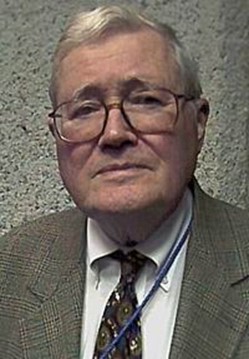
Mancur Olson argued that the accumulation of interest groups in even a previously prosperous society may lead to its economic stagnation because of this institutional sclerosis. These special interests build their power over time and start to slow down a society’s capacity to adopt new technologies and to reallocate resources in response to changing conditions, and thereby reduce the rate of economic growth.
President Park swept away these interest groups after he came to power in Korea. The rest is history. When the old political networks are disrupted, the lack of political connections forces the remain entrepreneurs to focus on productive market activities. The defeat of Germany and Japan in the war also led to the overthrow of special-interest groups that impeded growth.
A realignment of patronage is common after leadership successions in autocratic societies. These routine reallocations of patronage – Perestroika is an example – can get out of hand and destabilise the entire pre-existing rent-seeking society. This happened to the old order when President Park cleaned house in South Korea.
For a discussion of Korean industry policy, see this paper by an old class mate of mine, Heather Smith. A more general survey of the myths of state-led development in East Asia was written by Ben Powell:
Although some state industrial planning did exist in East Asian countries, when these countries were growing, they were some of the most free market in the world.
Hong Kong and Singapore are consistently ranked the top two freest countries in the world, and in 1970, when Japan and Taiwan were growing quickly, they were ranked seventh and sixteenth. Even Korea ranked in the top 20 per cent.
Although state development planning did exist in these countries, overall broader measures of the market’s relative sphere of influence in these countries show that they were far more market oriented than slower growing areas of the world.
Latin America is a good example of stagnation after an extended period of prosperity because of the accumulation of special interests and barriers to efficient production. Latin America has many more barriers to competition than the successful East Asian countries. Why are there no Latin Tigers apart from Chile?
External threats, the dynamics of internal politics, including dramatic break-ups of established interest groups, low taxes and competition in export markets were the enablers of market-led rapid development in Japan, Singapore, South Korea, Hong Kong and Taiwan. Many other under-developed nations did not grow because institutional sclerosis locked them into yesterday’s technologies and industries.
The usual suspects for natural experiments are countries with the same cultures, peoples and similar resources that are suddenly partitioned for arbitrary reasons.
These would be East and West Germany, North and South Korea and Taiwan and China. In each case, the socialist solution was left for dead by capitalism.
Taiwan and Cuba were threatened with invasion and trade sanctions by large bellicose superpower neighbours. Cuba is a dump. Taiwan changed from a rural backwater to a rich country.
I am not too sure how Mises and other Austrian economists would view the use of these natural experiments. The view of Mises on theory and history is that the correctness of a theory can be ascertained without the aid of experience. Natural experiments make no sense without a correct theory to tell us what and how to measure and what to make of our discoveries. Without a theory, we neither know where to look nor what to look for.
p.s. there was some excitement over at Reddit about the role of Chaebol. These are Korean conglomerates. The term was first used in 1984, long after the 1961 coup and after President Park was assassinated in 1979.
The Chaebol invested heavily in export-oriented manufacturing. As such, they would have zero market power and would have been subject to strong global market disciplines on both their costs and any lack of innovation. Their relative domestic size does not matter much if their markets are global.
Post-war trade liberalisation and tariff cuts gave Korean and the other East Asian Tigers much greater access to major export markets. This allowed export production to expand without limit.
Institutional reforms and imported new technologies increased employment and incomes through this explosion in exporting. This allowed the losers from the economic changes to be compensated directly or with new opportunities in the export sectors (Parente and Prescott 1999, 2005; Olson 1982, 1984; Acemoglu and Robinson 2005).
03 Apr 2014 2 Comments
in applied welfare economics, development economics, environmental economics, politics, Public Choice Tags: global warming
The great tactical victory of environmentalists is keeping the debate on the science going because even if the science is right, the economic costs are small.
Richard Tol on the scientific consensus about human-caused global warming skepticalscience.com/graphics.php?g… http://t.co/OpdRtsY1tx—
John Cook (@skepticscience) March 24, 2015
Let the climate science be settled. How much will global warming cost is the correct question for policy debate.
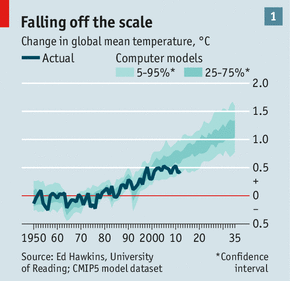
Global warming, although real, is not apt to be severe. It will lower the level of GDP by maybe 2%. The loss of one year’s income growth! Courtesy of David Friedman’s reading of the report, this is what the IPCC said this week:
With these recognized limitations, the incomplete estimates of global annual economic losses for additional temperature increases of ~2°C are between 0.2 and 2.0% of income (±1 standard deviation around the mean)
Many of the consequences of global warming will be beneficial – warmer in some places, colder in others; wetter in some places and drier in others. The sea level rises will mean local problems, not a planetary crisis.
New Zealand will have a more reliable power supply because of increased winter rainfall as well as warmer winters. Most of New Zealand’s power supply is from lakes that rely on the Spring melting of the winter snow rather than winter rainfall.
The chances of India, China and the rest of the Third World agreeing to forego or even slow their economic development to fight global warming is zero even before you consider the international collective action, verification and free rider problems.
Climate changes have a greater impact in the most under-developed countries that are yet to embrace capitalism. Agriculture provides the livelihoods of 30 per cent or more of their populations, many of whom still practice subsistence agriculture.
Yet the trend in developing countries is to be much less dependent on agriculture as a source of employment and family incomes. If per capita income in the poor countries grows in the next forty years as rapidly as it has in the forty years just past, their vulnerability to climate change should diminish.
Adaptation and richer is safer are the only games in town for both the developed and the developing worlds.
The only case for even a token carbon tax is to avoid green tariffs in the EU and USA on exports. We may as well collect the revenue for ourselves rather than let the EU and USA pocket it.
p.s The report of the IPCC yesterday was a one-day media wonder in the country where I live. I could not find a single story today in the Dominion Post, which is the paper for the political capital for New Zealand.
01 Apr 2014 Leave a comment
in development economics, politics
When a Cambodian man and his pregnant wife, having fled the Khmer Rouge, were on the bus from Sydney Airport, they quickly concluded that they were in paradise. They slept on top of the blankets of the neatly made bed at the migrant hostel in 1978 because they did not want to get into any trouble for messing up the bed and be sent back to hell. Such was their ingrained fear of arbitrary power and victimisation.
After a few weeks, they stopped stealing the sauces and other condiments from the dining hall at the hostel because they realised that the food would keep coming and there was no need to hoard. They then started to act as mentors to incoming refugees assuring them that they could sleep under the blankets, and the food would arrive three times a day, every day.
When the Salvation Army helped them and their new baby into a house in suburban Sydney, the Salvos were very embarrassed about the furniture they managed to find for them.
The Cambodian couple thought they were in paradise again. The house and furniture were better than anything they had seen in a middle-class home in their own country.
After a few years of hard work, the father saved enough to open an electrical retailing franchise store in the suburbs.
The mother went to the store one afternoon to fill in for an absent worker.
She did not come back for 7-years.
She was great at bargaining with fellow refugees. She knew that her fellow refugees only had a certain amount of money, and she bargained to find out what that was. She wrapped the goods up tightly because she knew that they took public transport home.
The word spread that her store was a good place for a bargain, and the store prospered.
Their daughter grew up to be a lawyer and wrote one of the best autobiographies I have read.
I had some Cambodian friends at graduate school in Japan in 1995 to 1997. Friendly, kind people despite growing up in hell.
They also gave me great insight into the blinding power of nationalism.
Two Cambodian friends, educated urbane people, referred to the time after the Vietnamese invasion of Cambodia as when they were a Vietnamese colony.
Another Cambodian, who no one liked, when he annoyed his Vietnamese class mates too much, they would say, “Remember 1979.”

This taunt would throw this Cambodian into a fit of nationalist pique. He raged against the invasion.
If any country would have benefited from an invasion from hell, it would have been Cambodia under Pol Pot and the Khmer Rouge by 1979. At least, the Devil waits for you to die before he torments you.
30 Mar 2014 Leave a comment
in development economics, P.T. Bauer Tags: political satire
The best of all their clips. P.T.Bauer would have been proud. The British did similar improvements in their colonies.
29 Mar 2014 1 Comment
in applied price theory, development economics, economics of bureaucracy, Marxist economics, Public Choice, technological progress, television Tags: economics of planning, star trek
About the only book I almost read in one sitting was Wild Swans. I stopped reading at 2 in the morning. This autobiography is 676 pages long. Wild Swans is the story of three generations of women and their families in 20th century China. It is the biggest grossing non-fiction paperback in publishing history.
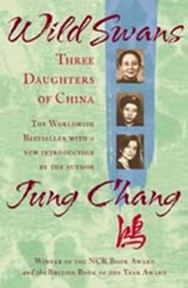
Wild Swans starts with Jung Chang’s grandmother whose feet were bound at the age of two in 1909. She was later to be a concubine to the local warlord. Her mother was a communist revolutionary in the 1940s onwards and her own story as among other things a teenage Red Guard in the Cultural Revolution. The Guardian described Wild Swan as “For many in the west, Wild Swans was their first real insight into life under the Chinese Communist party.”
I will only mention the part of it that reminded me of Steven Cheung’s analysis of how class ridden communist societies were.
A party membership card puts you above others. That card described in enormous detail what privileges you received depending on your rank in the party.
This is exactly what happened in wild swans. Jung Chang’s father was of the 14th rank while her mother was of the 17th rank. This rank decided what food you got, your accommodation, whether your parents could live with you and even the type of seat you got on the railways.
Star Trek was supposed to be a society that had abolished money and as a post-scarcity economy because everything was available through a replicator. The type of economics it is based on is cooperative economics. To quote Captain Picard:
A lot has changed in three hundred years. People are no longer obsessed with the accumulation of ‘things’. We have eliminated hunger, want, the need for possessions.
The economics of the future is somewhat different. You see, money doesn’t exist in the 24th century… The acquisition of wealth is no longer the driving force in our lives. We work to better ourselves and the rest of Humanity.
The Ferengi and their 285 rules of acquisition were a satire on capitalism. The Ferengi was originally meant to replace the Klingons as the Federation’s arch-rival but they were far too comical.
Gene Roddenberry’s love story with socialism is the most class-ridden society I have ever seen. In Star Trek, higher ranked officers had larger cabins, and most of all they always beamed back from the planet.
Anyone who beamed down with Captain Kirk dressed in those red security officer tops were expendables. Death and accommodation were class based on Star Trek.
The U.S.S. Enterprise also spent a lot of time negotiating trade treaties and visiting planets where the Earth colonists lived in agrarian poverty with famines and preventable diseases.
23 Mar 2014 Leave a comment
in constitutional political economy, development economics, Public Choice Tags: Japanese politics, Philippines, secret ballot, Thailand, vote buying
Paying for votes is common in the Philippines and Thailand. The Thai Prime Minister, on the eve of the East Asian crisis, was the rural politician Banharn Silpa-archa. His nickname was Mr. Mobile ATM because of all the bribes he handed out.

Politicians are corrupt partly because developing country politics is ‘retail politics’: helping people with small loans, mediating disputes and getting children into better schools or universities.
A vicious circle develops. Politicians take bribes to build a war chest to bribe their voters to re-elect them. More honest politicians do not win office unless they stoop to paying cash for votes.
Japan is similar. LDP politicians have personal support networks that are 50,000 or more strong which are based on giving and receiving personal favours over their entire term of office.
Robert Tollison wrote a paper on the price of votes and the history of open vote trading in Great Britain and the United States prior to the 20th century.
Tollison found that the winners from the introduction of secret ballots were the middle class because the working class could no longer sell their votes to the rich.
Because the poor tend to face extremely high costs of organization, it may have been technically possible, although economically inefficient, to organize as a bloc of voters in order to secure net wealth transfers to themselves as a group.
From the standpoint of the individual poor voter, a more attractive alternative than tilting at the windmills of redistribution would have been to sell his vote to the highest bidder…
After the passage of the secret ballot in 1872 in Great Britain, the percentage of Commons seats held by landed interests dropped like a rock.
The Thai and Filipino middle classes hate the way the votes of the rural poor can be bought with bribes (and public services paid by taxing the middle class in the cities).
The Japanese, Thai and Philippine parliaments all have multi-member constituencies where the 3, 4 or 12 candidates with the most votes are elected.
This election system forces candidates from the same party to run against each other and build personal support networks to win elections off their own mantle.
This splitting of voter support works well for incumbents who have personal name recognition and a war chest based on bribes extorted during their previous term to fund cash for votes to win re-election.
Celebrating humanity's flourishing through the spread of capitalism and the rule of law
Celebrating humanity's flourishing through the spread of capitalism and the rule of law
Celebrating humanity's flourishing through the spread of capitalism and the rule of law
Celebrating humanity's flourishing through the spread of capitalism and the rule of law
Celebrating humanity's flourishing through the spread of capitalism and the rule of law
Celebrating humanity's flourishing through the spread of capitalism and the rule of law
Celebrating humanity's flourishing through the spread of capitalism and the rule of law
Celebrating humanity's flourishing through the spread of capitalism and the rule of law
Celebrating humanity's flourishing through the spread of capitalism and the rule of law
Celebrating humanity's flourishing through the spread of capitalism and the rule of law
Celebrating humanity's flourishing through the spread of capitalism and the rule of law
Celebrating humanity's flourishing through the spread of capitalism and the rule of law
A History of the Alt-Right
Econ Prof at George Mason University, Economic Historian, Québécois
Celebrating humanity's flourishing through the spread of capitalism and the rule of law
Scholarly commentary on law, economics, and more
Beatrice Cherrier's blog
Celebrating humanity's flourishing through the spread of capitalism and the rule of law
Celebrating humanity's flourishing through the spread of capitalism and the rule of law
Celebrating humanity's flourishing through the spread of capitalism and the rule of law
Why Evolution is True is a blog written by Jerry Coyne, centered on evolution and biology but also dealing with diverse topics like politics, culture, and cats.
Celebrating humanity's flourishing through the spread of capitalism and the rule of law
A rural perspective with a blue tint by Ele Ludemann
DPF's Kiwiblog - Fomenting Happy Mischief since 2003
Celebrating humanity's flourishing through the spread of capitalism and the rule of law
The world's most viewed site on global warming and climate change
Tim Harding's writings on rationality, informal logic and skepticism
A window into Doc Freiberger's library
Let's examine hard decisions!
Commentary on monetary policy in the spirit of R. G. Hawtrey
Thoughts on public policy and the media
Celebrating humanity's flourishing through the spread of capitalism and the rule of law
Politics and the economy
A blog (primarily) on Canadian and Commonwealth political history and institutions
Reading between the lines, and underneath the hype.
Economics, and such stuff as dreams are made on
"The British constitution has always been puzzling, and always will be." --Queen Elizabeth II
Celebrating humanity's flourishing through the spread of capitalism and the rule of law
Celebrating humanity's flourishing through the spread of capitalism and the rule of law
WORLD WAR II, MUSIC, HISTORY, HOLOCAUST
Undisciplined scholar, recovering academic
Celebrating humanity's flourishing through the spread of capitalism and the rule of law
Res ipsa loquitur - The thing itself speaks
In Hume’s spirit, I will attempt to serve as an ambassador from my world of economics, and help in “finding topics of conversation fit for the entertainment of rational creatures.”
Researching the House of Commons, 1832-1868
Reflections on books and art


Recent Comments