In yesterday’s column, I celebrated the huge victory for Javier Milei and his libertarian LLA party in Argentina’s mid-term elections. Today, let’s contemplate the consequences. Starting with this video. The above video is from an interview yesterday with the great Ross Kaminsky of KOA in Denver. He wanted to know the big-picture meaning of Sunday’s […]
Implications of the (Second) Libertarian Landslide in Argentina
Implications of the (Second) Libertarian Landslide in Argentina
29 Oct 2025 Leave a comment
in budget deficits, development economics, economic growth, fiscal policy, growth disasters, growth miracles, liberalism, libertarianism, macroeconomics Tags: Argentina
Agustín Etchebarne on Milei and the election
29 Oct 2025 Leave a comment
in development economics, growth disasters, growth miracles, liberalism, libertarianism Tags: Argentina
Passed along to me by the excellent Gonzalo Schwarz, I will not double indent: “Against all odds, Javier Milei achieved a major national victory, surpassing the expectations of polls that had predicted a technical tie, and doing so in a context where markets were deeply pessimistic and heavily dollarized. Despite having most of the media […]
Agustín Etchebarne on Milei and the election
Another Libertarian Landslide in Argentina
28 Oct 2025 Leave a comment
in development economics, growth miracles, liberalism, libertarianism Tags: Argentina

The good part about being a libertarian or classical liberal is that you are always morally and economically correct. The bad part is that very few elections ever produce unambiguously happy outcomes. Here’s my list: 1980 presidential election in the United States. 1994 and 2010 congressional elections in the United States.* 2016 vote for Brexit […]
Another Libertarian Landslide in Argentina
The Out-Sized Importance of Today’s Mid-Term Elections in Argentina
27 Oct 2025 Leave a comment
in budget deficits, development economics, economic growth, fiscal policy, growth disasters, growth miracles, macroeconomics, monetary economics Tags: Argentina

I explained two months ago that Argentina’s mid-term elections are critically important, and here’s some of what I said in an interview with Austin Peterson. I’ll be paying close attention to the results later today for three reasons. The mid-term elections will determine whether Milei has legislative support for the additional reforms that are desperately […]
The Out-Sized Importance of Today’s Mid-Term Elections in Argentina
What does a Nobel Prize on ‘innovation-driven economic growth’ actually reward?
21 Oct 2025 Leave a comment
in development economics, economic growth, economic history, history of economic thought, macroeconomics

A historian’s perspective on how to deal with the Nobel frenzy I generally try to stay away from the Economics Nobel frenzy, if only because the hyper-personalization of scientific achievements it entails it at odds with how we historians understand credit dynamics in science. Economics research has become increasingly collective, drawing on expertise in theory, […]
What does a Nobel Prize on ‘innovation-driven economic growth’ actually reward?
The Costs and Benefits of British Colonialism
20 Oct 2025 1 Comment
in comparative institutional analysis, constitutional political economy, development economics, economic history, growth disasters, growth miracles Tags: age of empires, economics of colonialism
The British Empire, which at its height ruled over a quarter of the world’s population and landmass, remains one of the most consequential forces in global history. Its legacy is deeply contested: defenders emphasize the spread of law, education, and infrastructure, while critics highlight the violence, exploitation, and cultural destruction it entailed. A balanced assessment […]
The Costs and Benefits of British Colonialism
Devolution and Development
18 Oct 2025 Leave a comment
in applied price theory, development economics, economics of regulation, labour economics, law and economics, politics - New Zealand, property rights, urban economics Tags: Canada
An interesting research note from Eric Crampton and at the NZ Initiative on the benefits of devolution on development. It details how Canadian First Nations have transformed their economic fortunes and have built thousands of new homes after gaining powers for planning, zoning, tax, and infrastructure finance. A couple of examples: The Squamish Nation’s 6,000-apartment […]
Devolution and Development
A Nobel for Innovation-Driven Economic Growth: Aghion, Howitt, and Mokyr
14 Oct 2025 Leave a comment
in applied price theory, comparative institutional analysis, constitutional political economy, development economics, economic growth, economic history, history of economic thought, macroeconomics

The Sveriges Riksbank Prize in Economic Sciences in Memory of Alfred Nobel 2025 was awarded this morning for “for having explained innovation-driven economic growth.” The award was divided between Joel Mokyr ““for having identified the prerequisites for sustained growth through technological progress” to Philippe Aghion and Peter Howitt “for the theory of sustained growth through…
A Nobel for Innovation-Driven Economic Growth: Aghion, Howitt, and Mokyr
Sorry, But Pope Leo Is Mistaken
13 Oct 2025 Leave a comment
in applied price theory, development economics, economics of religion, growth disasters, growth miracles Tags: The Great Enrichment
TweetHere’s a letter to a new correspondent. Mr. __: Thanks for sharing Sohrab Ahmari’s tweet, which I’d not otherwise have noticed. It is, frankly, pathetically inept. In order to criticize the pro-free-market Acton Institute, Ahmari favorably quotes Pope Leo’s assertion that “pseudo-scientific data are invoked to support the claim that a free market economy will…
Sorry, But Pope Leo Is Mistaken
UN, EU, ICJ, Climate Cabal want to keep world’s poor impoverished
07 Oct 2025 1 Comment
in development economics, economics of climate change, energy economics, environmental economics, environmentalism, global warming, law and economics Tags: climate alarmism
Poor and developing nations need to band together, finance their own energy infrastructure, development, health and prosperity – and tell the carbon colonialists to take a hike.
UN, EU, ICJ, Climate Cabal want to keep world’s poor impoverished
The population bust
02 Oct 2025 Leave a comment
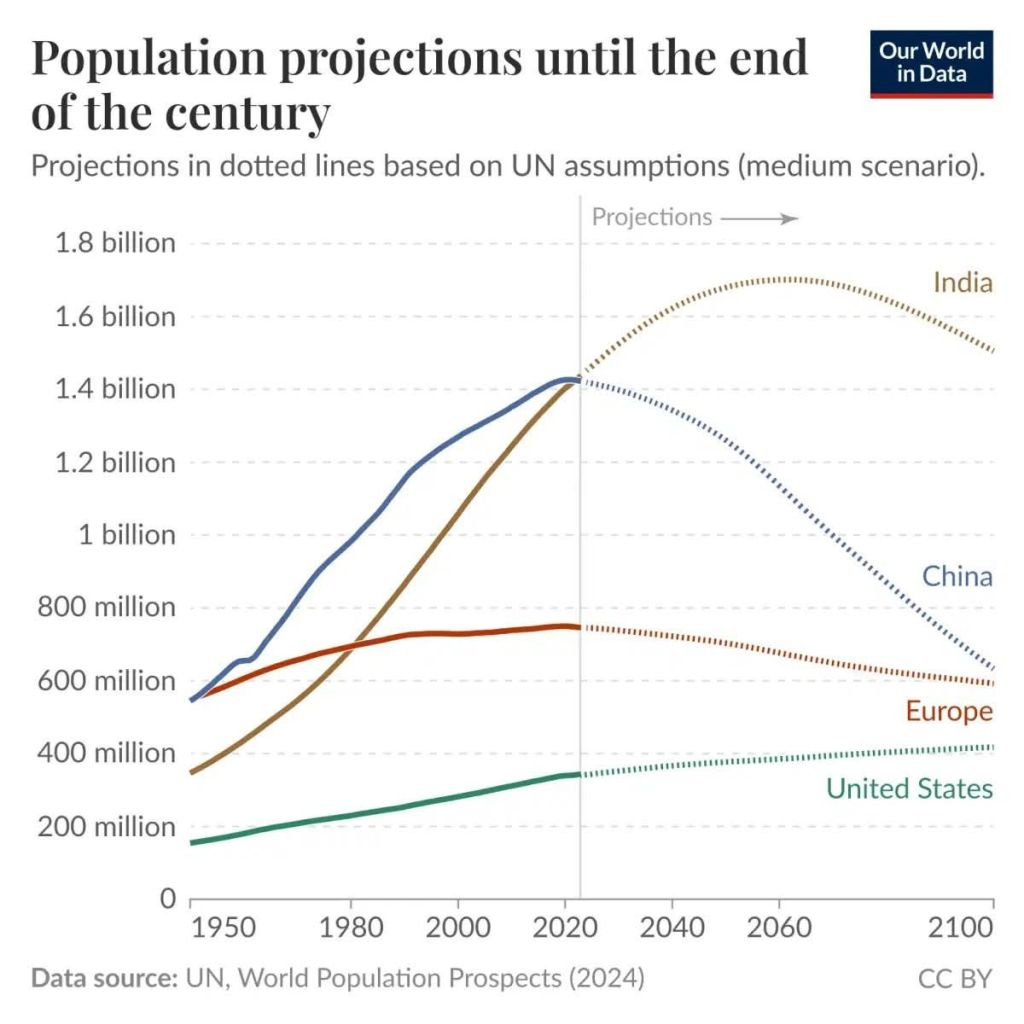
in development economics, economic history, growth miracles, labour economics, labour supply, population economics Tags: ageing society, China, population bust
Economics of Trade Sanctions
26 Sep 2025 1 Comment
in applied price theory, defence economics, development economics, economic history, economics of regulation, industrial organisation, international economics Tags: trade sanctions
The exercise of US foreign policy (along with the European Union and the United Nations) has been increasingly characterized by the use (or threat) of trade sanctions. What do we know about how such sanctions work? Gabriel Felbermayr, T. Clifton Morgan, Constantinos Syropoulos, and Yoto V. Yotov review the evidence in “Economic Sanctions: Stylized Facts…
Economics of Trade Sanctions
Colonisation was liberation
25 Sep 2025 1 Comment
in constitutional political economy, development economics, economic history, politics - New Zealand Tags: Age of Discovery, age of empires, economics of colonialism
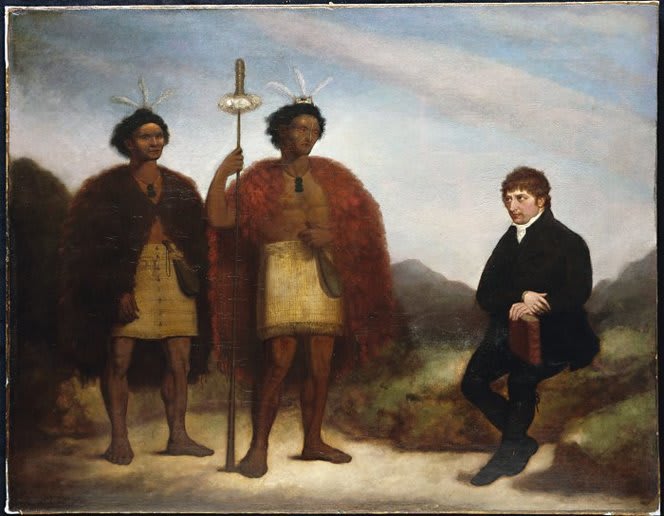
It is striking how often the loudest voices in New Zealand’s race debate come from those who have the faintest connection to being Māori. The same individuals who enjoy cushy jobs and generous salaries often exploit a sliver of Māori ancestry to advance themselves, however they spend their days decrying colonisation as if it were…
Colonisation was liberation
Samuelson on socialism
25 Sep 2025 Leave a comment
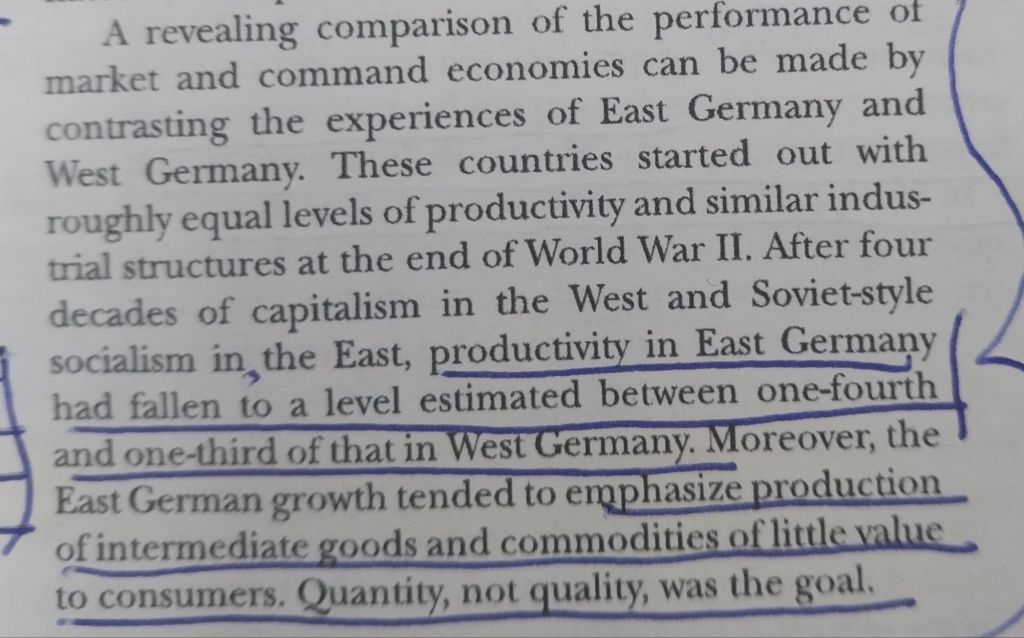
in applied price theory, development economics, economic history, growth disasters, growth miracles, history of economic thought, Marxist economics Tags: East Germany, economics of central planning, West Germany
Vernon Smith on Donald Trump’s Protectionism
11 Sep 2025 Leave a comment
in applied price theory, development economics, economic history, economics of bureaucracy, history of economic thought, income redistribution, international economics, politics - USA, Public Choice, rentseeking Tags: free trade, tariffs

TweetMy emeritus Nobel-laureate colleague, Vernon Smith, sent the following email to me in response to this post. I share Vernon’s note with his kind permission. Don, Trump, like all businesspersons turned political, wants government favors, that is Mercantilism which is as bad today as when Adam Smith railed against such cozy relationships. Same for labor…
Vernon Smith on Donald Trump’s Protectionism


Recent Comments