Power supply
07 Sep 2025 Leave a comment
in development economics, economic history, energy economics, growth miracles Tags: China
China Still Building Coal Power Plants
04 Sep 2025 Leave a comment
in development economics, economics of climate change, energy economics, environmental economics, environmentalism, global warming, growth miracles Tags: China, coal power

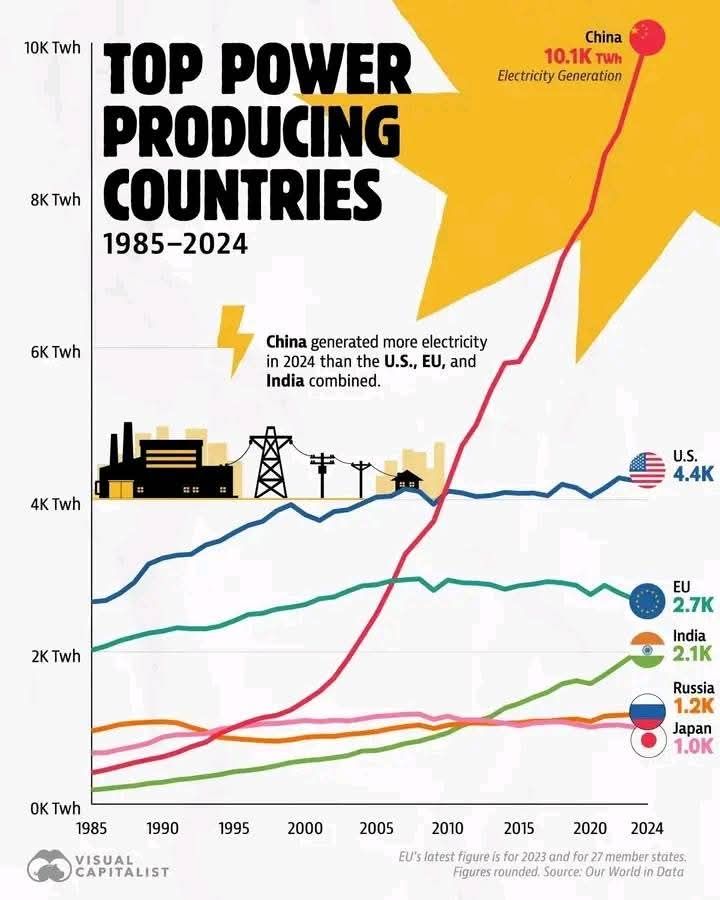
By Paul Homewood China continues to burn more and more coal, according to dw.com: China burned more coal at power plants between January and July of 2025 than at any time since 2016, despite massive renewable capacity, according to new environmental research report. The report, published by the Center for Research on Energy and […]
China Still Building Coal Power Plants
Inside India’s endless trials
03 Sep 2025 1 Comment
in comparative institutional analysis, development economics, economic history, economics of crime, growth disasters, growth miracles, law and economics, property rights Tags: India
The FT’s Krishn Kaushik covers the courts in India: …in one recent example a Delhi court concluded a property dispute after 66 years. Both the original litigants were dead. Still, the lawyer for one of the warring parties cautioned that the conclusion was in fact not the end, as the ruling would be appealed. Three […]
Inside India’s endless trials
Exports
31 Aug 2025 Leave a comment
in development economics, economic history, growth miracles, international economics Tags: free trade
The Ongoing Tragedy of Cuban Socialism
30 Aug 2025 Leave a comment
in applied price theory, development economics, econometerics, economic history, economics of bureaucracy, growth disasters, history of economic thought, industrial organisation, law and economics, Marxist economics, property rights, Public Choice Tags: Cuba

I’ve written several articles about the failure of Cuban socialism (2024, 2022, 2021, 2019, and 2016). My leftist friends almost always respond by claiming that U.S.-imposed trade restrictions are the primary reason for Cuba’s terrible economy. Since I like free trade, I certainly agree that trade restrictions are bad for growth (a lesson I wish […]
The Ongoing Tragedy of Cuban Socialism
Civitas Institute’s Tariff Symposium
28 Aug 2025 Leave a comment
in applied price theory, applied welfare economics, development economics, history of economic thought, international economics, politics - USA Tags: tarrifs
TweetThe Civitas Institute at UT-Austin just published a superb symposium on tariffs, with contributions by Richard Epstein, Samuel Gregg, Dirk Mateer, Dominic Pino, and my intrepid Mercatus Center colleague, Veronique de Rugy. Below are some slices. “The Man Who Knew Too Little: Donald Trump on Tariffs” (Richard Epstein): It is a dangerous state of affairs…
Civitas Institute’s Tariff Symposium
The Most Important Election(s) of 2025
28 Aug 2025 Leave a comment
in applied price theory, Austrian economics, development economics, economic growth, economics of regulation, fiscal policy, growth disasters, labour economics, labour supply, law and economics, liberalism, libertarianism, macroeconomics, monetary economics, Public Choice, unemployment Tags: Argentina

Javier Milei has generated amazingly good results in just 20 months. But more reform is needed to undo the damage of 80 years of Peronism, which is why I explain that Argentina’s mid-term elections will be very important. Milei wants to turn Argentina into the world’s freest economy. That won’t be possible so long as […]
The Most Important Election(s) of 2025
More On Alleged Chinese Dumping
24 Aug 2025 Leave a comment
in applied price theory, development economics, economic history, entrepreneurship, growth miracles, history of economic thought, industrial organisation, international economics, politics - USA, Public Choice, rentseeking Tags: free trade, tariffs
TweetHere’s a second note to a commenter at my Facebook page. Mr. Schlomach: Commenting on my Facebook page, you allege that China ‘dumps’ goods in the U.S. and, in doing so, “has used our love of cheap stuff to suck our country of strategically critical technology/industry.” By suggesting that your fellow Americans buy stuff simply…
More On Alleged Chinese Dumping
Milei’s Achievements…and Challenges
17 Aug 2025 1 Comment
in development economics, economic growth, economics of bureaucracy, economics of regulation, fiscal policy, growth disasters, income redistribution, industrial organisation, labour economics, law and economics, liberalism, libertarianism, macroeconomics, Marxist economics, monetary economics, property rights, Public Choice, public economics, rentseeking, unemployment Tags: Argentina

I’m back in Argentina, the South American country with the world’s best leader. What Javier Milei has accomplished is amazing. And the economic effects have been wonderful. One of my meetings earlier this week was with Marcelo Elizondo, the head of the International Chamber of Commerce for Argentina. He shared a presentation with me that […]
Milei’s Achievements…and Challenges
Hitler’s British appeasers admitting fault
16 Aug 2025 1 Comment
in development economics, war and peace
1. The public face of appeasement after 1939When Britain went to war in September 1939, prominent supporters of appeasement such as Neville Chamberlain (then still Prime Minister) and Lord Halifax publicly shifted their stance, claiming that they had pursued appeasement to buy time for rearmament and preserve peace as long as possible. This allowed them to avoid […]
Hitler’s British appeasers admitting fault
A Great Enrichment
06 Aug 2025 Leave a comment
in development economics, economic history, growth disasters, growth miracles, transport economics, urban economics Tags: India

The Tragedy of India’s Government-Job Prep Towns
04 Aug 2025 Leave a comment
in applied price theory, development economics, economics of bureaucracy, economics of regulation, growth disasters, growth miracles, labour economics, labour supply, occupational choice, Public Choice Tags: India
In Massive Rent-Seeking in India’s Government Job Examination System I argued that the high value of government jobs has distorted India’s entire labor market and educational system. India’s most educated young people—precisely those it needs in the workforce—are devoting years of their life cramming for government exams instead of working productively. These exams cultivate no […]
The Tragedy of India’s Government-Job Prep Towns
El Salvador lengthens future presidential terms, abolishes term limits
02 Aug 2025 1 Comment
in constitutional political economy, development economics, law and economics Tags: El Salvador
Constitutional changes have been approved in El Salvador that will increase the length of the presidential term from five to six years and remove (any pretense) of presidential term limits (AP news). Incumbent President Nayib Bukele is already serving a second term, despite the existing constitution supposedly prohibiting immediate presidential reelection. He was elected initially […]
El Salvador lengthens future presidential terms, abolishes term limits
Should Catalonia receive more financial independence?
26 Jul 2025 Leave a comment
in constitutional political economy, development economics, Federalism, fiscal policy, macroeconomics, Public Choice, public economics Tags: Spain
Jesús details how Spain already operates one of the most decentralized fiscal systems in the world, “more latitude than most U.S. states,” he notes, yet Catalonia now seeks the bespoke privileges long enjoyed by the Basque Country and Navarra. The Regional Authority Index rates how much self‑rule and shared rule each country’s sub‑national governments actually wield. In its last […]
Should Catalonia receive more financial independence?
Expanding the Milei Miracle: Trade Liberalization
25 Jul 2025 Leave a comment
in development economics, growth disasters, growth miracles, international economics, liberalism, libertarianism Tags: Argentina, tariffs

Part I of this series celebrated Javier Milei’s amazing success, Part II pointed out that labor market liberalization is still a big challenge, while Part III noted that the tax system still needs to be fixed. This final video in the series explains the need for free trade. As noted in the video, Milei inherited […]
Expanding the Milei Miracle: Trade Liberalization


Recent Comments